

In 2012 there were nearly 35,000 cases of child abuse in Kentucky. If that fact alone wasn’t startling enough, consider that research indicates that a third of abused children grow up to be abusive parents.
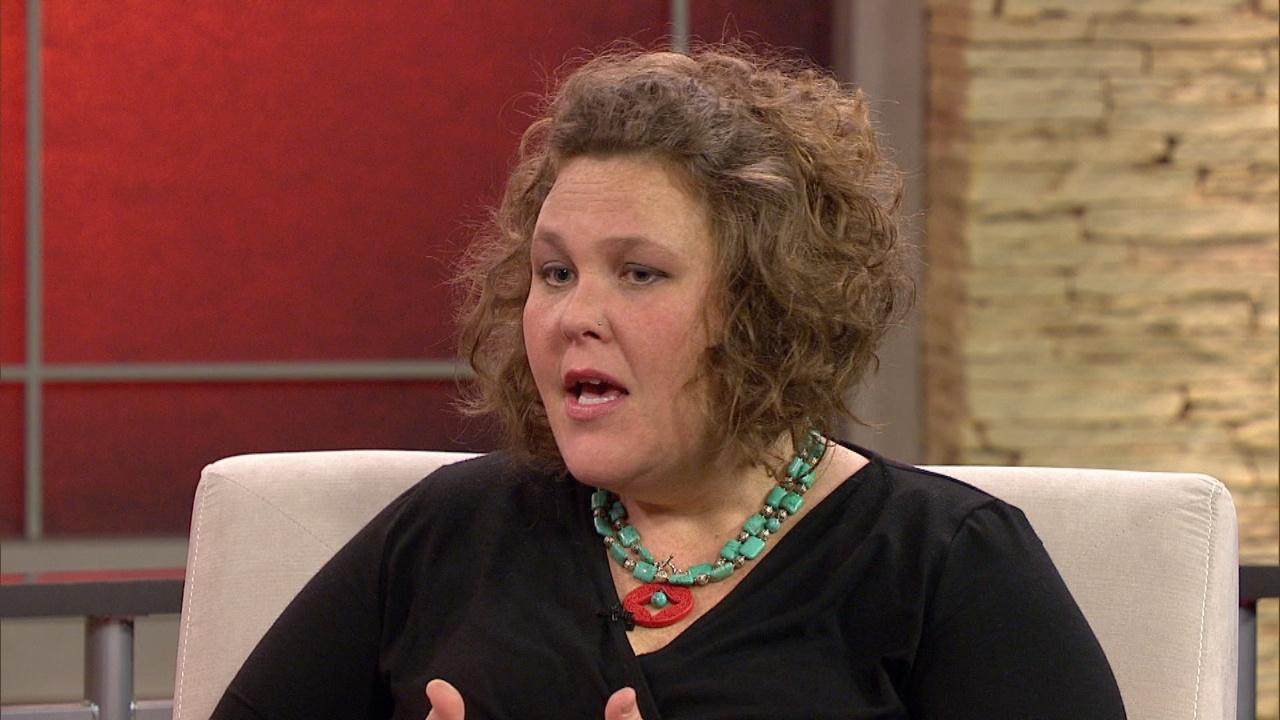
The Exploited Children’s Help Organization (ECHO) works to reduce the incidence and impact of child abuse in Louisville and surrounding communities. For National Child Abuse Prevention Month, KET’s Renee Shaw spoke with ECHO Executive Director Kendell Nash about the group’s work.
The Dangers Facing Children
Nash says children can be at risk of abduction, neglect, and physical, sexual, or emotional abuse in a variety of ways. Despite a common misconception that strangers pose the most danger, Nash says violence is mostly likely to occur at the hands of someone known by the child. As examples, she points to the facts that mothers are the most frequent perpetrators of physical abuse, whereas child abduction by a total stranger accounts for less than 1 percent of all abduction cases.
Those children who try to escape by running away frequently turn to prostitution to support themselves, according to Nash. She explains that runaways have been prime targets for human trafficking, but now with social media, Nash says traffickers are using Facebook, Snapchat, and other sites to target troubled children who stay at home.
“There are kids who live with their parents the whole time they’re being trafficked,” Nash says. “So it’s really important to know what your kid is doing online.”
In fact, since the state started tracking human trafficking and forced prostitution in 2013, there have been 97 reported cases involving 125 alleged victims.
Social and Cultural Factors
Nash says ECHO works with the public and teachers to help detect signs of abuse such as bruising around the torso, ears, and neck – places where a child usually wouldn’t be injured in normal daily activities.
But Nash cautions that social and economic factors can make it tricky to determine if actual abuse or emotional neglect has occurred. She says a family’s poverty may cause a child to look or act as if he or she is being neglected. Or a parent who doesn’t have an affectionate personality may lead a child to seek emotional support elsewhere.
The customs of Louisville’s diverse refugee and immigrant groups can also create challenges for child protection authorities. Nash points to a case where a teacher reported bruises on a child’s back, which turned out to be the result an alternative medical technique practiced in some Asian countries known as cupping therapy.
“Even other American-born cultures have different perceptions on what abuse is… different perceptions on child rearing,” Nash explains. “So we need to… make sure that we’re taking those things into account and not dismissing people’s culture but also not excusing behavior that’s not okay in our culture.”
Kentucky law requires people to report cases of suspected child abuse to the state child protection hotline (877-597-2331). Nash says the operators are well-versed at helping a caller sort through the details of an abuse report, and tracking that information for future reference. She adds that callers to the hotline can remain anonymous.
Teaching Kids How to Stay Safe
Since 1983 ECHO has provided prevention education and support services for children who are hurt or missing and their families. Nash says the bulk of her group’s work takes place in schools where they teach children from kindergarten through high school personal safety strategies to help avoid being the victim of abuse, bullies, online predators, and sexual assault. Nash says that prevention training can begin as early as three years old and encourages children to “say no, get away, and tell someone” about an incident or threat of abuse.
ECHO also supports children who encounter the court system. Nash says they help kids who face testifying to get comfortable with the courtroom setting by taking them into an empty courtroom and letting them sit in the judge’s chair, witness stand, and jury box. ECHO volunteers also staff a special playroom in Jefferson County Family Court where children can stay while their parents or guardians conduct their court business.
 KET’s education coverage is part of American Graduate: Let’s Make it Happen, a public media initiative made possible by the Corporation for Public Broadcasting.