

In a state faced with widespread poverty and an economy still recovering from the recession, many Kentuckians find themselves turning to a variety of social service agencies for assistance.
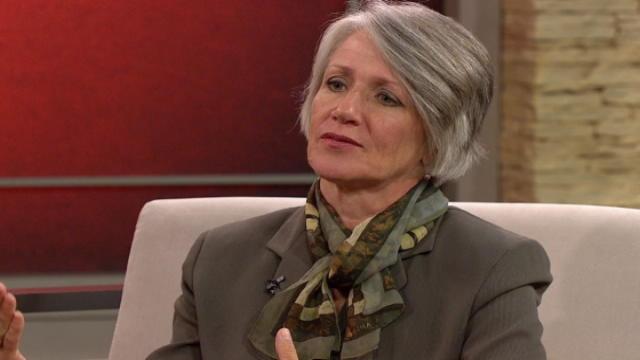
Two such groups based in Lexington were featured recently on Connections with Renee Shaw.
Dress for Success
In its first year of operation, Dress for Success has helped more than 100 women find jobs and provided them with a wardrobe of clothing suitable for their work environments.
Analisa Wagoner, co-founder and executive director of the Lexington chapter of Dress for Success, says the international non-profit works with disadvantaged women to provide them with professional attire, undergarments, shoes, and accessories as well as career counseling services to guide them through writing a resume, applying and interviewing for a job, and navigating the workplace. The group also sponsors brown-bag lunch events and mentorship programs.
The clients for the local organization have ranged from 16 to 67 years of age, according to Wagoner. Some are domestic violence survivors, some have done prison time, and many are uncertain about the professional image they need to portray to be successful in jobs today.
The clothing Dress for Success provides the women comes from donations, which are accepted on Tuesdays and Thursdays at their Winchester Road offices. The organization also hosts a popular Recycle the Runway fundraising event, which features fashion ensembles created by Lexington area designers from articles of used clothing. (This year’s event is scheduled for October 7.)
In the future, Wagoner hopes to expand the operation to serve women in 11 additional counties, as well as launch a three-month workshop series and networking groups where recently employed women can meet with established leaders in their professions.
“It’s one thing to get a job, it’s another thing to keep a job so we want to make sure we’re with them for the long-haul,” Wagoner explains. “If you stumble along the way, we’re here to continue being a resource for you.”
God’s Pantry Food Bank
When a person in central and eastern Kentucky turns to their local food pantry or social service agency for grocery items to feed their family, chances are that food passed through God’s Pantry Food Bank in Lexington. The organization sources food from all over the country and distributes it to 300 non-profits in 50 counties in the commonwealth.
God’s Pantry CEO Marian Guinn says hunger, food insecurity (which is the likelihood that an individual will experience hunger over the course of a year), and proper nutrition remain significant problems for many Kentuckians. But, she explains, their clients may not fit most people’s conception of someone at risk for hunger. Guinn says most of the individuals and families served are not homeless and many are working at least one job.
“This economic decline that we’ve experienced in the past few years has helped many people recognize how close all of us are to financial distress,” Guinn says. “For the people that we’re serving, a good percentage of them are working but they’re working at very low-paying jobs, making less than $10,000 a year.”
Guinn also says their clients tend to have small families of one or two children, suffer from low educational attainment, and live in areas that have limited job prospects. She says the problem disproportionately affects children and older Kentuckians; she’s even seen a number of senior citizens who have taken over care of their grandchildren when the parents are unable to provide for their kids.
In the last fiscal year, God’s Pantry distributed 26 million pounds of food to its member agencies. Guinn says the organization is expanding its infrastructure and sourcing network to enable it to provide more than 30 million pounds of food in the coming year.
“We believe that hunger is a solvable problem,” Guinn says. “By becoming involved with God’s Pantry Food Bank, making contributions of food or money, actively involving yourself as a volunteer, or advocating on behalf of the issues that are important to this population, you can join us and solve this problem.”