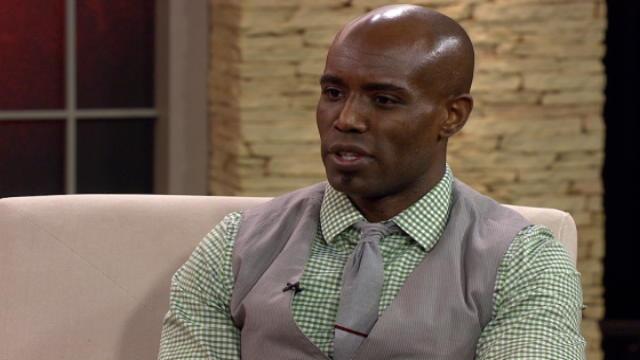


As the social stigma against those with mental health issues declines, Louisville psychologist Kevin Chapman says more individuals are seeking help for anxiety, depression and other common concerns.
He explains these conditions as well as an effective treatment for them on a recent episode of Connections with Renee Shaw.
Definitions of Anxiety and Depression
Chapman says everyone experiences anxiety at some point in their lives. For example, he points to a fear of public speaking as one of the most common anxiety-production situations for Americans. But Chapman says anxiety becomes a problem when it impairs normal life activities. This could be when a person avoids social interactions, is no longer able to drive, or can’t fulfill their regular job duties. Chapman says if the aversion lasts for more than a six months, the individual may need to seek professional assistance.
He’s quick to point out that anxiety is different from introversion and depression. Chapman explains that introversion is a personality trait that is usually conditional. A person may feel uncomfortable in certain social situations but not in others.
Depression is an emotional disorder involving an extreme version of sadness, which may be accompanied by feelings of hopelessness, guilt, fatigue, or a lack of energy. In contrast, Chapman describes anxiety as a hyper-vigilance or over-preparation for some event that may or may not occur in the future. He says anxiety can be symptomatic of depression, and that it’s common for individuals with one condition to experience the other.
Treatment Techniques
Chapman says one of the most successful treatments for anxiety and other disorders is Cognitive Behavioral Therapy (CBT). The technique teaches individuals how to understand the role their thoughts (or cognition) play in influencing their emotional states.
As part of the CBT process, Chapman says he teaches his clients about the components common to all situations a person might experience: the cognitive component (how they think about themselves, the world, and other people); a physical component (increased heart rate, shortness of breath, or other bodily reactions); and the behavioral response to the situation. From there, Chapman says he can point out ways of thinking that can trap a person, such as automatically assuming that you will perform badly in a certain situation.
“And you teach them that it’s not changing negative thoughts to positive thoughts, because that’s unrealistic,” Chapman says. “But it’s more so how do I teach you to appraise social situations in a different way.”
Over time, Chapman says CBT gives patients the tools to handle life events more productively, and provides them with evidence that proves they are competent to handle those situations.
Another technique Chapman employs is to encourage his patients to do what he calls “anchoring in the present.” He says many of our emotional responses to things rarely reflect what’s happening in the moment, but are based more on our reaction during a similar situation in the past, or on what we anticipate might happen in the future.
By anchoring in the present, which Chapman describes as being more aware of our current surroundings and focusing on what is happening in this moment, we can then better process our emotions in their appropriate context.
Other Common Concerns
Chapman says there can be a family component to anxiety, but it’s not a trait that’s passed down genetically. He describes it as a phenomenon of temperament and personality style that parents unintentionally model for their children.
Chapman acknowledges it’s important for parents to offer life lessons and corrective behaviors for their children. But when those lessons become too intrusive or extreme, the child can start to view the world as a dangerous and scary place.
During the course of the interview, Chapman explains a few other mental health concerns. Chapman says the clinical manifestation of fear is panic, which can include light-headedness, shortness of breath, and heart palpitations. So a panic attack may be a normal but exaggerated response to a specific situation.
He says obsessive-compulsive disorder (OCD) is the result of a combination of biological factors (such as disregulation of neurotransmitters in the brain) combined with environmental stimuli. If a person fears that certain things in his or her life are out of control, they may try to compensate by developing a repetitive ritual in an attempt to alleviate that fear. Chapman says cognitive behavioral therapy is an excellent treatment for those with OCD.