

Last summer when Raymond Burse agreed to a second turn at the helm of Kentucky State University, the plan was for him to serve as interim president for one year.
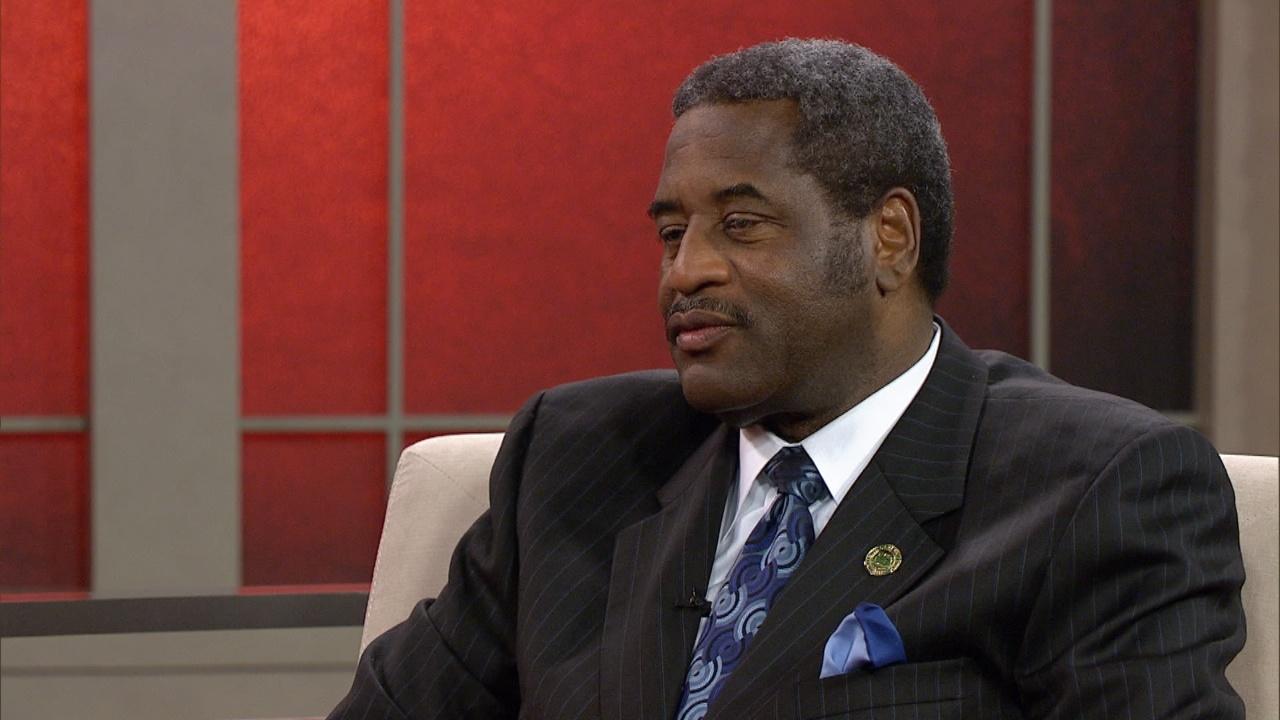
But he soon realized he would need more time to achieve his goals for the historically black university. So now Burse is contracted to lead the school until at least 2018. He appeared on KET’s Connections with Renee Shaw to discuss his decision to make a longer-term commitment and his vision for KSU.
Burse initially served as president of Kentucky State from 1982 to 1989. He returned to that position last July after nearly two decades as an attorney and executive at General Electric. Burse says he was only a few months into his interim posting when he realized one year wasn’t enough to accomplish what he wanted to do at KSU. The turning point came in a conversation with a student who described the personal challenges she faced that might prevent her from graduating.
“I said, ‘Raymond, you can’t leave here until you do something really impactful to make certain that individuals like her have an opportunity to get a good education at Kentucky State,’” Burse recalls.
Burse Brings a National Spotlight to KSU
The Hopkinsville native and Harvard Law School graduate made headlines last summer when he gave up $90,000 of his own salary to boost the pay of 24 minimum-wage employees at the Frankfort campus. Burse doesn’t know most of the workers who benefited from the raise, but he says he wanted them to understand their importance to the institution and that he appreciates their efforts.
It wasn’t long before the story went viral and Burse was interviewed on several national newscasts. The media came calling again last fall when KSU dropped 645 students for unpaid bills, some of them totaling $40,000.
“Over the years, students were allowed to come, enroll, and enter without fulfilling their financial obligations,” Burse says. “So students got into the routine [of] ‘I don’t have to pay Kentucky State, I can go, live in their dormitory, eat their food, go to class, have a good time for a year, get all my grades, but I don’t have to pay them.’”
Burse says dropping those who owed the school money sent a message to other students and to staff who overlooked the unpaid bills that the university would take its financial matters seriously. Now, some 70 percent of those students who were dropped have been readmitted in good standing.
Financial and Classroom Issues
That move wasn’t just a matter of tough love for students. KSU faced a $7 million deficit when Burse returned to the campus. With the changes he’s already made, Burse says the deficit is down $4.5 million. With additional cost-saving measures and increasing enrollments, Burse says he hopes to start next fiscal year with a balanced budget.
In addition to the financial problems, overall enrollment at KSU is lower than when Burse first held the president’s job (enrollment in fall 2013 was 2,533), and graduation rates at the school have declined for 10 straight years. Burse contends the school must get back to the fundamentals of education.
“I think the beginning point starts in the classroom with every instructor, every teacher having the commitment to the success of every student,” Burse says.
To improve academic outcomes, Burse instituted a mandatory class attendance policy. When there is an absence, instructors are encouraged to reach out to the student and connect them with campus support services if there’s an issue.
“Part of what we’re doing is returning to what is the essence and roots of historically black colleges and universities – they were nurturing environments.”

KET’s education coverage is part of American Graduate: Let’s Make it Happen, a public media initiative made possible by the Corporation for Public Broadcasting.