

HEALTH EXPERTS PUSH FOR COMMUNITY-BASED APPROACH TO THE DISEASE
What would you do if you spent billions of dollars over several decades to solve a problem, but the problem only got worse?
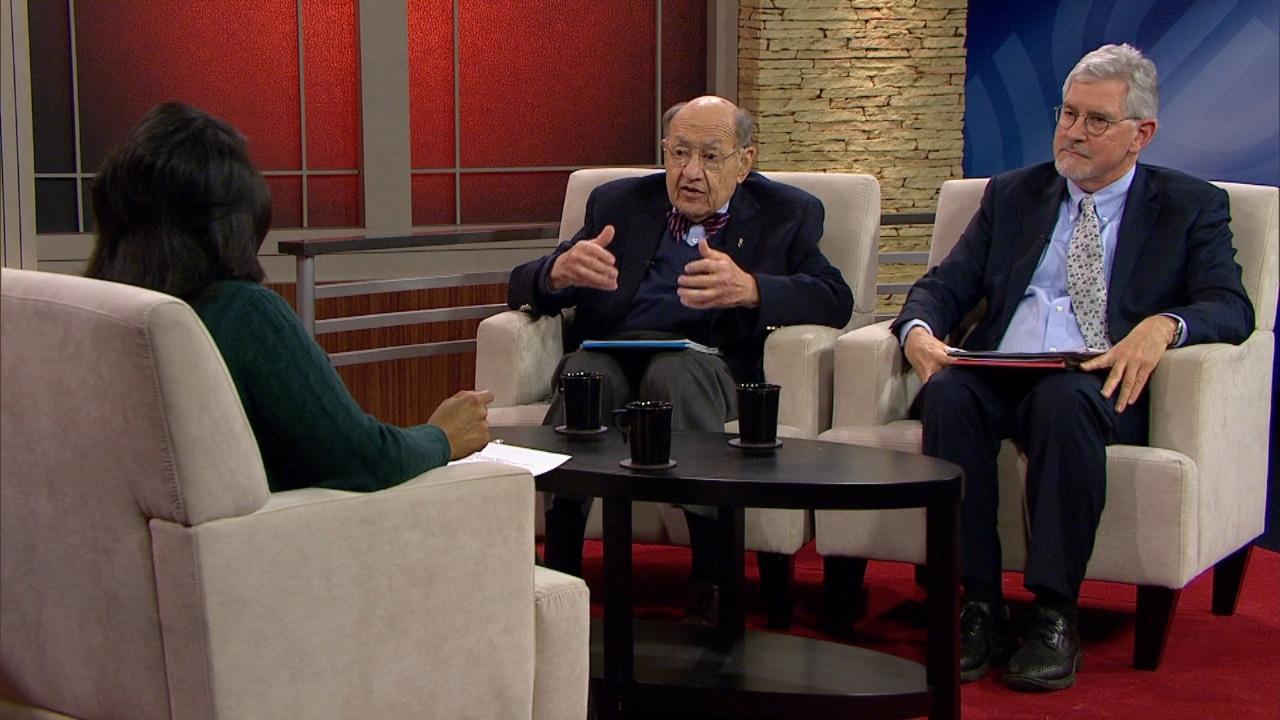
That’s the question that Dr. Gilbert Friedell and Isaac Joyner seek to answer in their book, “The Great Diabetes Epidemic: A Manifesto for Control and Prevention.” The two appeared on KET’s Connections with Renee Shaw to discuss how they think the spread of diabetes can be addressed in the United States.
First, Some Numbers
The U.S. Centers for Disease Control and Prevention estimate that more than 29 million Americans have diabetes and some 5,000 adults are newly diagnosed with the condition every 24 hours. Joyner, who is a public health policy analyst, says about 1 in 10 adult Americans have diabetes today, whereas in the 1950s, that ratio was about 1 in 100.
The Kentucky Cabinet for Health and Family Services reports that 359,000 adults in the commonwealth had been diagnosed with diabetes in 2013. The prevalence of diabetes among adults in the state has risen from 3.5 percent in 1995 to 10.6 percent in 2013. The cabinet estimates that another 289,000 Kentuckians are pre-diabetic, which means they are at high risk of developing diabetes in the five to 10 years.
With those kinds of statistics and the dramatic increase in diabetes cases over the years, Friedell and Joyner contend doctors, public health officials, and political leaders must change how they look at the disease.
“What we’re saying is you have to treat this epidemic – which it is – as a public health problem, not just blame the victim for a series of poor choices in their health and how they live,” explains Friedell, a director emeritus of the Markey Cancer Center at the University of Kentucky.
A Call for More Screening
Treating and managing someone who is diagnosed with full diabetes is expensive. In addition to medicine and monitoring costs, complications from the condition, including heart and kidney disease, vision problems, and amputations, place a significant financial burden on the health care system. Joyner estimates Kentucky spends upwards of $6 billion a year for diabetes-related care, and about $1 billion of the state’s Medicaid budget goes to treating the disease.
“This is a societal problem,” Friedell adds. “It’s an expense for all of us, not just individual with diabetes.”
Friedell and Joyner say that early diagnosis and intervention are keys to addressing the epidemic and reducing those costs. They say a simple procedure known as an A1C blood test can determine in just a few minutes whether a person may be diabetic or pre-diabetic. Although any doctor can do the test, Friedell says he wants to see health departments, community groups, and churches offer screenings so more people can be tested.
Intervention and Self-Care
Joyner says those patients diagnosed with diabetes need help to manage the condition and forestall the expensive complications that can accompany the disease.
Patients who are determined to be pre-diabetic need to follow a care plan that will prevent them from developing full diabetes. “You have an opportunity there, a window there to reverse that course through diet, exercise and those kinds of things that really can prevent someone from developing diabetes,” Joyner explains.
Friedell further advocates for what he calls community-based diabetes councils to help diabetics and pre-diabetics better manage their condition. He’d also like to see greater implementation of a successful CDC program that forms diabetes patients into small teams for weekly meetings designed to support and encourage them through the self-care process.
Friedell acknowledges these steps might be expensive, but will result in long-term savings.
“We’re talking about something which is damaging our health and our wealth,” Friedell argues. “And to do something about it is going to cost us something, but whatever it takes is going to be less than what we’re now spending to fail.”