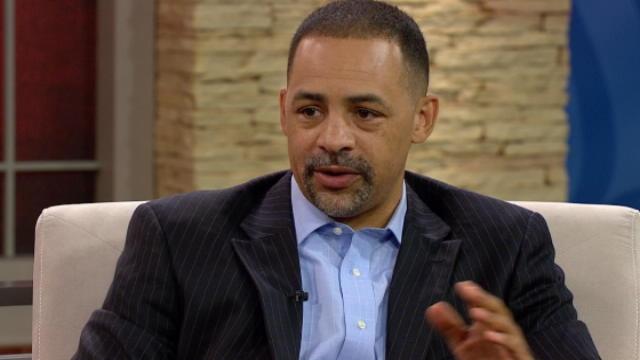


Chris Rabb says his highly accomplished family has been his greatest influence on his life and work. His grandfather was the only African-American doctor in Shelbyville during the 1930s and ‘40s. His grandparents pushed Rabb’s father to rise beyond his Jim Crow childhood to become an internationally renowned eye surgeon. And Chris Rabb is a Yale-educated business consultant who specializes in social entrepreneurship.
He joined Renee Shaw on this weekend’s edition of Connections to discuss his life and his book, “Invisible Capital: How Unseen Forces Shape Entrepreneurial Opportunity.” In addition to his teaching and consulting, Rabb has worked as a legislative aide in the U.S. Senate and as a trainer for the White House Conference on Small Business.
Rabb says he encourages his Temple University students and clients to think beyond the specific aspects of their business plans. He encourages them to consider what really matters most in their lives, because that will influence the financial decisions they make.
“If you only look at our assets in terms of how much money we have in the bank, we’re missing the big picture,” Rabb explains. “Ultimately what we want most is not tons of money, but what one would like to do that often requires money.”
A Few Definitions
Rabb says he likes to explain the terms he frequently uses to help people better understand his approach to entrepreneurship. For example:
Income is where you work for money, whereas wealth is where money works for you. He says capital is wealth that creates more wealth.
Invisible capital, the subject of Rabb’s book, influences financial capital. It includes three things:
- Human capital encompasses our personal knowledge, skills, training, and expertise.
- Social capital is not only who you know, but who knows you and what they think about you. It’s about symbiotic relationships that may be formal or informal; they can come from family connections, work contacts, or church or social relationships. Rabb says everybody has social capital, regardless of his or her socio-economic status.
- And cultural capital concerns the values we use to navigate different personal and professional environments. Rabb says individuals who are exposed to many different life situations or are taught things like networking as a child have a head start on those who have to learn those lessons later in life.
“It comes down to authenticity. It’s hard to be authentic if you do not feel comfortable in whatever situation you’re in,” Rabb explains. “You deserve to be wherever you choose to land and feel comfortable about yourself without having to get the affirmation of others.”
Donald Trump vs. Warren Buffet style of entrepreneurship
Rabb acknowledges the privileges he gained in his life simply by being born into an upper-middle-class family that set high expectations for him. But he contends those benefits come with the responsibility to help open doors for others who aren’t as lucky as he was. Rabb says that kind of self-awareness is critical to how he wants to live his life, and why he prefers Warren Buffett to Donald Trump, who Rabb contends represents “the worst form of American entrepreneurship.”
Although the New York real estate mogul was born into a wealthy family and attended the best schools, Trump says anyone can be like him if they buy his books or attend his seminars. “Most white people will never have the level of privilege that he has,” Rabb argues. “It is unfair for him to suggest that someone from eastern Kentucky has the same shot that he had growing up in this environment where he had access to all of these things.”
Buffet, on the other hand, readily acknowledges that he wouldn’t be where he is today if he had been born female in the 1930s because, as Rabb explains, women had much fewer opportunities then.
Rabb also says Trump’s wealth is built more on predation and exploitation. He argues there can be many kinds of capitalism, but the one he prefers promotes sustainable communities instead of preying on them. Rabb encourages people to create enterprises that are additive to society, rather than those that “suck the blood out of folks,” such as payday lending services.