

Imagine donning a virtual reality helmet, not to play some fantastic new video game or to experience an imaginary voyage into deep space, but to get relief from an everyday phobia or anxiety.
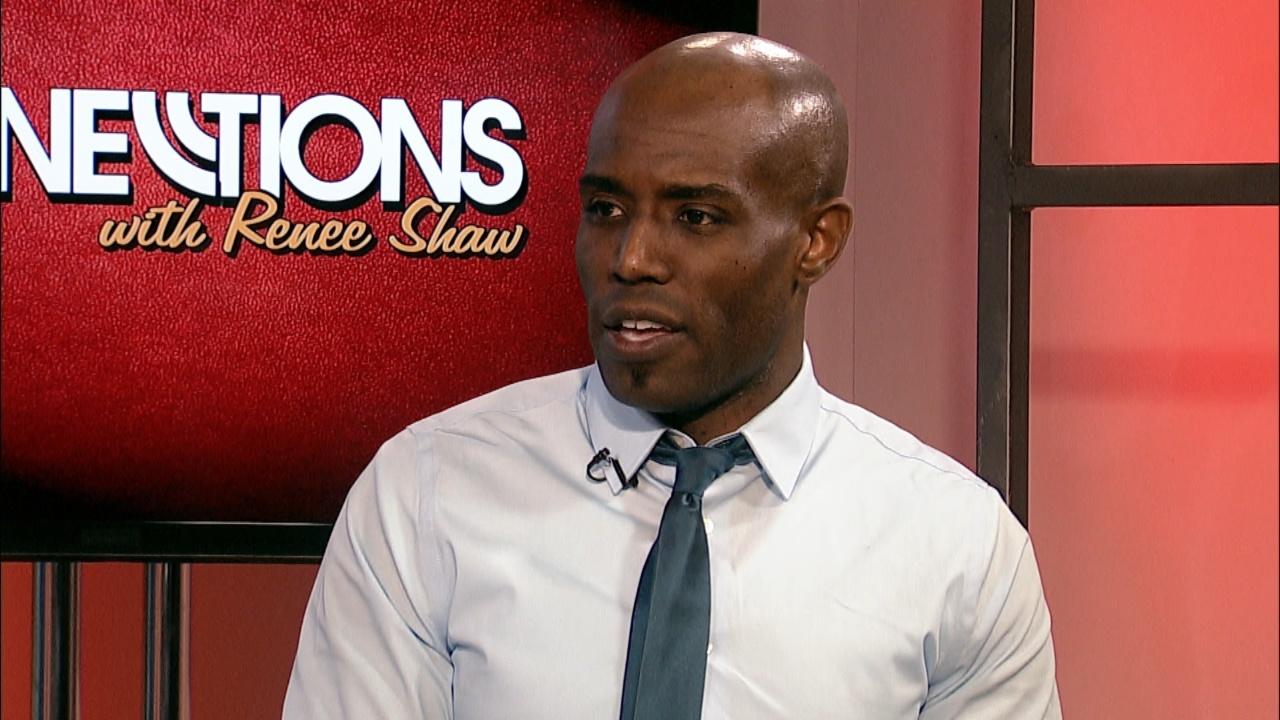
That’s one treatment now available to patients who suffer from common mental health issues, according to licensed clinical psychologist Kevin Chapman. He discussed anxiety disorders and therapy options on a recent edition of KET’s Connections with Renee Shaw.
When Fears Become Debilitating
The National Institute of Mental Health says anxiety disorders affect about 40 million American adults each year. Those conditions can range from general anxiety, phobias, and panic attacks, to obsessive-compulsive behavior and post-traumatic stress disorder.
Chapman says anxiety is a normal human response and that in manageable amounts, anxiety can help keep us safe in dangerous or uncomfortable situations. The problem, Chapman says, is when the anxiety, fear, or panic become so frequent that they impact family, social, and business relationships or routine daily activities.
He notes that anxiety isn’t limited to adults. Chapman says children and teenagers often have similar feelings that may result in a desire to avoid going to school if there is a fear of being ridiculed, or in academic performance anxiety if they worry they aren’t smart enough.
Using the Virtual World to Tackle Real Life Fears
The good news is these conditions are highly treatable, according to Chapman. One such therapy employs virtual reality to expose a patient to anxiety-producing situations but in a simulated environment. The process begins by exploring the nature of the patient’s fears (such as a fear of flying) and how they typically respond to that fear (avoiding airplane travel). The therapist will help the patient understand how some aspects of the fear may not be factually accurate (the vast majority of plane flights are smooth and safe).
After this basic cognitive work, Chapman says the patient is exposed to the virtual simulation, usually by wearing a special headset that fills the field of vision. A sophisticated computer manages a variety of stimuli so the patient can experience the fearful situation in a carefully controlled manner.
The Louisville psychologist says the goal is for the body to learn new ways to respond to those stimuli so that the patient can tolerate the uncomfortable situation. He says virtual reality therapy can be used to address a variety of fears from flying and storms, to public speaking or social interactions. Chapman says some patients find relief from one long virtual reality session, or after nine or 10 shorter sessions.
New Ways of Thinking
Chapman explains that another goal of behavior therapy is to help patients develop what he calls flexible thinking skills.
“What we pay attention to in a situation has a substantial impact on our emotional experience,” Chapman says. “So we’ve learned over time, particularly people who are prone to anxiety and depression, to pay attention to threatening cues.”
For example, imagine giving a speech to 100 colleagues, almost all of whom are enjoying your presentation. But you notice three people in the audience who look unhappy. You will feel very differently if you choose to focus on the 97 engaged people versus the three disgruntled people who are likely thinking about something that has nothing to do with you.
“[If I] learn to be more flexible in the way that I appraise or interpret situations, then my emotional experience will be much different,” Chapman says.
Another key is helping patients understand that people’s behaviors are separate from their identities. Chapman says that’s especially true for those with performance anxieties. So an athlete who has one poor game can understand that he or she is still a good person even if the game-winning play was botched.
Help Is Available
Given the treatability of anxiety-related issues, Chapman encourages people to seek help from a qualified therapist. He suggests doing some online research to find a counselor who specializes in your specific fear or phobia rather than simply going to a generalist.
As for the cost of counseling, many health insurance policies now cover mental health services. Chapman also says therapists usually have discounted or sliding fee scales for patients with limited incomes. And he reports that some psychologists even provide pro bono services.