

The traditional response to domestic violence has been to prosecute perpetrators and provide support services for victims. But a growing trend among anti-violence advocates seeks to prevent the abuse from occurring in the first place.
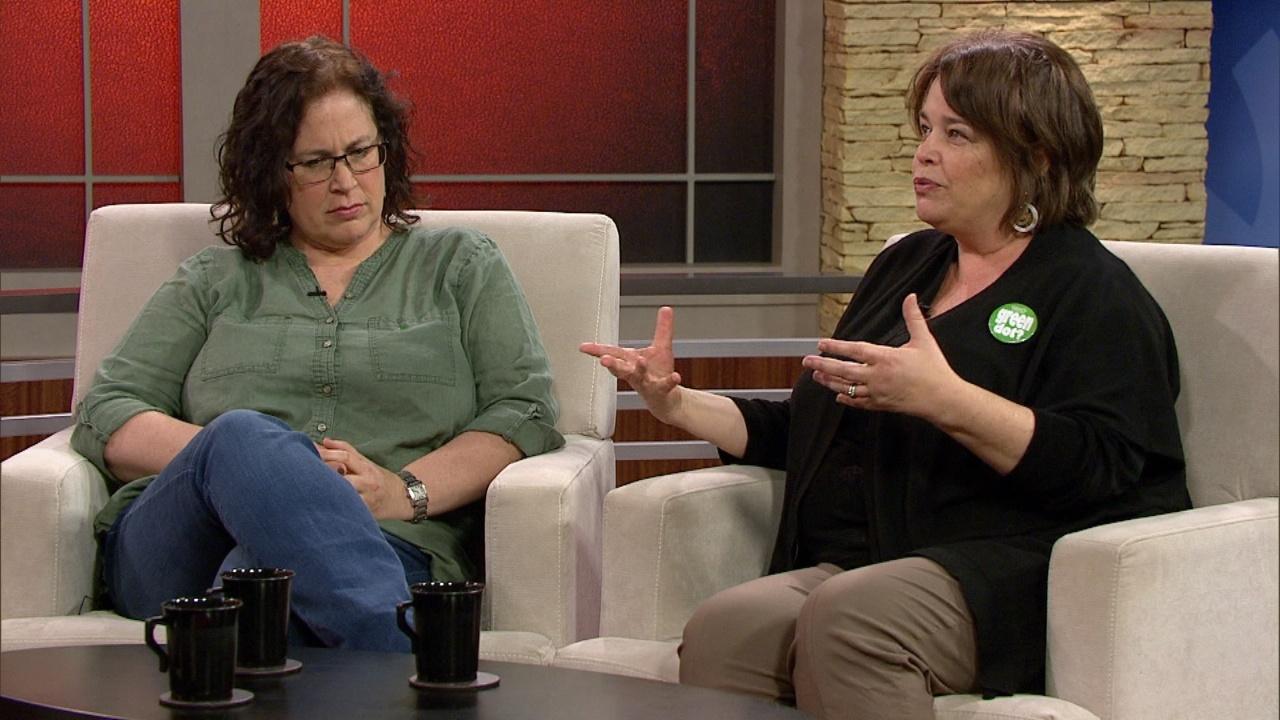
Dorothy Edwards is a leading voice in the prevention movement. She is founder and executive director of Green Dot, etc., a violence intervention training program she launched at the University of Kentucky in 2006. On KET’s Connections Edwards joined Diane Fleet, assistant director of GreenHouse17, to discuss the Green Dot strategy and how it’s being implemented in Lexington.
What Is Green Dot
Green Dot teaches bystanders safe and simple ways to intervene to prevent an act of violence from happening. The person may directly confront the potential perpetrator, they may alert an authority figure who can step in, or they may create a distraction to disrupt the unfolding event.
Edwards says the Green Dot name comes from epidemic maps that researchers use to document the spread of things like a disease outbreak or criminal activity. In her example, the red dots signify incidents of domestic abuse, date-related violence, sexual assault, or bullying in a community. Edwards says she decided that each one of those red dots needed to be replaced with a green dot to indicate the violence that had been prevented.
“Green dots are just small, individual, manageable moments – decisions people can make to make it less likely that red dots get on the map,” Edwards said.
Making a Complex Problem Easy to Address
Edwards acknowledges that intervening in a tense situation is challenging for most people. She says a bystander may fear being embarrassed, putting him or herself in physical danger, or jeopardizing a social or familial relationship. That’s why she believes the training Green Dot offers can be so powerful.
“With the skills you already have, you can do these small things that are already in your comfort zone,” Edwards said.
GreenHouse 17’s Diane Fleet adds that she likes how Green Dot takes a complex social problem and breaks it down into easily accessible strategies that any one can use to prevent violence. The organization is partnering with other Lexington agencies to expand Green Dot activities in central Kentucky.
“It’s not something [where] you have to go to 2,000 hours of training, you don’t have to have a master’s degree to do it,” Fleet said. “It’s beautifully simplistic that it kind of builds on … the human spirit and the resiliency that people have.”
Green Dot has grown from its origins at UK to being implemented in schools (kindergarten through high school), colleges, and community organizations across America, as well as in the military and in prisons. Edwards says research indicates that schools using the Green Dot program have experienced a 50 percent decrease in violence.
Moving from Response to Prevention
Diane Fleet says it’s common to stigmatize women who have experienced intimate partner violence as victims rather than survivors. Her agency, GreenHouse 17, formerly known as the Bluegrass Domestic Violence Program, provides shelter and support services to women and children in abusive situations.
Fleet says it’s critical to reframe the conversation away from making the victim somehow responsible for the abuse they experienced to a focus of preventing the violence from ever happening. Edwards adds that she hopes society can shift from labeling people as victims and perpetrators to seeing both men and women as allies in the solution. She says mobilizing a community full of bystanders willing to intervene is crucial to reducing rates of domestic violence, sexual assault, and bullying.
“Creating a culture that’s inhospitable to violence, creating a culture that says this will not be tolerated, that’s one of the things that will bring down perpetration,” Edwards said.
 KET’s education coverage is part of American Graduate: Let’s Make it Happen, a public media initiative made possible by the Corporation for Public Broadcasting.