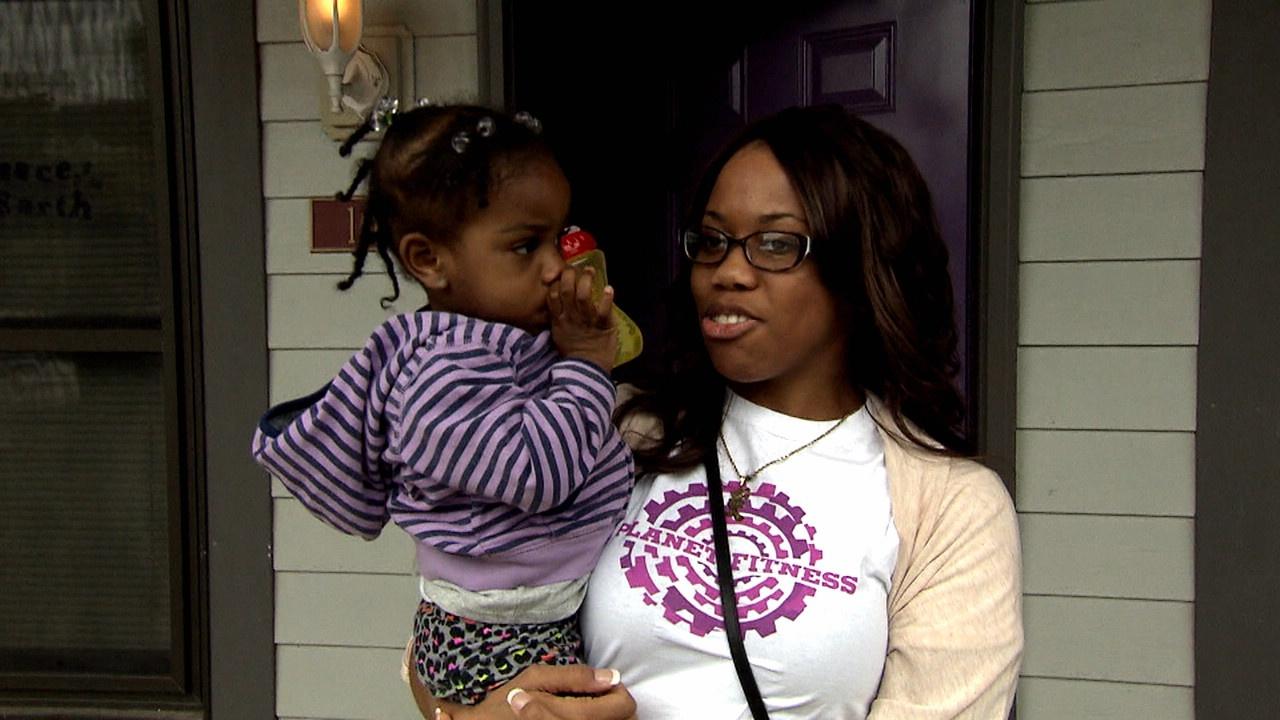


The student-residents of Family Scholar House prove that nothing succeeds like success. In the past nine years, some 250 clients of the Louisville-based non-profit have moved from homelessness to earning college degrees. About three-quarters of them left government assistance within months of completing their studies and now hold good-paying jobs in their chosen fields.
Cathe Dykstra, president, CEO, and chief possibility officer of Family Scholar House, appeared on KET’s Connections to discuss the educational and economic transformation the organization fosters.
The Family Scholar House helps single parents and their children achieve self-sufficiency by providing secure housing, child care, financial assistance, and other support services that enable the parents to earn college degrees. The organization operates four residential campuses in Louisville than can house more than 200 families. Their non-residential services reach some 2,000 additional families in Louisville, Carrollton, and Pikeville, as well as the Indiana towns of Sellersburg and Ferdinand.
“We are ending the cycle of poverty one family at a time,” says Dykstra.
Feeding a ‘Pilot Light of Hope’
Most of the single parents in the program are 25 to 32 years old, but Dykstra says a few are in their upper 40s. She says many Family Scholar House parents are mothers, but the group also serves about a dozen single fathers. To be eligible for the program, Dykstra says the parents must have a high school diploma or GED, qualify for low-income housing, have physical custody of their children, and want to go to college.
“I’m not looking for the brightest; we don’t do IQ testing or SATs. I’m looking for the most motivated, and in most cases their motivation is their children,” Dykstra says. “If you’re that motivated, it won’t matter how smart you are, we can help you get that college degree.”
Despite a rigorous selection process, competition for admission into the program is stiff. Dykstra says the average wait time to enter a Family Scholar House can be as long as two years. But even during that time, Dykstra says the organization feeds “that little pilot light of hope” in prospective students through tutors and mentors who prepare them academically and support them emotionally.
“We’ve had some of our families who lost the support of their family of origin because they wanted to do better,” Dykstra says. “I see that as a calling for us to replace what they’ve lost… We provide that social service network that makes them feel like they’re part of something bigger.”
Teaching a Range of Life Skills
Once accepted into the program, students must attend an accredited institution and major in an accredited degree program. In Louisville students have 13 colleges or universities from which they can choose. Dykstra says a majority of her students go into nursing or other health-related professions, while many others have chosen special education, justice administration, or social work.
Dykstra says students must maintain a minimum 2.0 grade point average. If they fall below that GPA, they get one semester of suspension. If they don’t improve after that, Dykstra says the student is asked to leave the program.
“It breaks my heart to do that,” Dykstra says, “but if I don’t make them leave, I’ve failed two families, the one that needs to leave and the one that’s waiting. And with 939 families on the waiting list, we take that very seriously.”
While they pursue their degrees, residential and non-residential student-parents receive tutoring to help with their coursework as well as help with life skills like healthy relationships and money management. The organization even teaches interested students about home ownership.
When the parents are busy with their schooling, Dykstra says their children attend professional child care provided by the program. The kids also receive life-skills training ranging from reading fundamentals to how to be a good friend. Some activities include the parents and their children so they can help each other learn new skills.
Poised for Growth
Family Scholar House provides all of these services on an annual budget of about $1.3 million and with a staff of 12 people and about 1,500 volunteers. Dykstra says the organization receives some federal support through low-income housing tax credits for capital building projects like its four residential facilities. While it does get a small grant from the city of Louisville, Dykstra says the rest of its funding comes from private grants and donations.
Even with a relatively small budget, the organization is poised for growth. Dykstra says new programs are slated to open in Covington, Indianapolis, and Fairmont, W.Va.
Dykstra says she relishes her job, especially her role as the organization’s Chief Possibility Officer. She worked in banking and for the Center for Women and Families in Louisville before joining the predecessor to Family Scholar House. Now she says she gets to explore, create, and collaborate on a wide range of activities.
“Any opportunity we have to lift a family out of poverty, multiple families out of poverty, and then bolster the economic stability of a whole community, is a possibility I want to explore,” Dykstra says.
 KET’s education coverage is part of American Graduate: Let’s Make it Happen, a public media initiative made possible by the Corporation for Public Broadcasting.