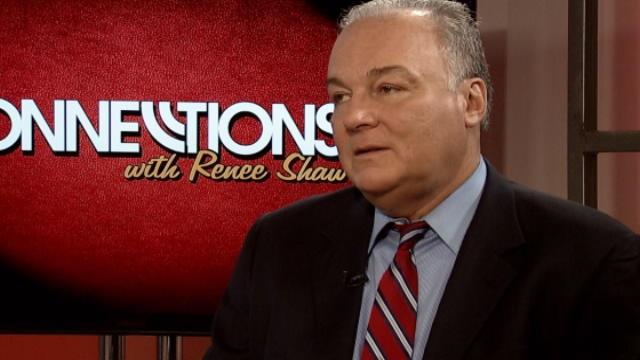


On any given day, there are 1,900 people incarcerated in Metro Louisville. And about 20 percent of them, according to Jefferson County District Court Judge David Holton, are veterans.
Many of those former servicemen and women bring special challenges to the criminal justice system, including post-traumatic stress disorder, mental health problems, and chemical addictions.
Holton led the effort to create the state’s first Veterans Treatment Court (VTC) in Jefferson County. The court is for vets suffering from significant health or substance abuse issues who also face non-violent criminal charges. The program diverts those cases from the traditional court system, and provides the veterans with a rigorous treatment and rehabilitation process to help them turn around their lives.
Holton described the court on a recent edition of Connections with Renee Shaw.
How the Veterans Treatment Court Works
According to Holton, police identify any veteran who is arrested in Kentucky and alert prosecutors, the courts, and veterans affairs officials. He says once a vet is in the criminal justice system, the case is reviewed by those parties to determine if the individual is a candidate for VTC. In order to be a candidate, the vet must be facing the possibility of a substantial prison sentence and be willing to complete the 18-month treatment program. (Veterans who have committed sexual or violent crimes are ineligible to participate.)
“They’re made aware this is not a walk in the park, this is not a get-out-of-jail-free card,” says Holton.
The treatment regime for the vets in the program includes daily check-ins, random home visits, curfews, frequent drug screenings, substance abuse counseling, twice weekly meetings with other VTC participants, and work or community service requirements. The vets who fail the program are returned to criminal courts to face their original jail sentences.
The Jefferson County VTC recently honored the first four veterans to complete the program. Another 20 are currently undergoing the treatment process, and Holton says he’d like to see double that number going through the program in the future.
“That’s what we’re here for, to try to turn people’s lives around,” Holton says.
New Courts Across Kentucky
The VTC in Louisville launched in 2012 and was funded for its first three years by a $350,000 federal grant as well as in-kind support from the state Administrative Office of the Courts. Holton says he’s seeking money to continue the program once the initial grant runs out next fall.
“It’s much less expensive to treat people on the front end than it is to incarcerate them on the back end,” Holton says. “So for every dollar that we spend treating these men and women, we keep them out of our jails and out of our prison system. It’s money well spent.”
The VTC concept was created in the court system of Buffalo, New York, in 2008 to help reduce the number of vets prosecuted through the drug and mental health courts there. Holton says he was so intrigued by the idea that he wanted to bring it to Kentucky, where there are about 340,000 veterans.
In addition to the Jefferson County VTC, similar courts now exist in Christian, Fayette, and Hardin counties. Holton says efforts are underway to launch a court system in Boone, Kenton, and Campbell counties as well.