

It’s a long way from a trailer park in Lotts Creek, Kentucky, to a corporate suite in San Francisco. But that’s the journey Jonathan Beatty made before returning to his home state on a mission to create positive change in the commonwealth.
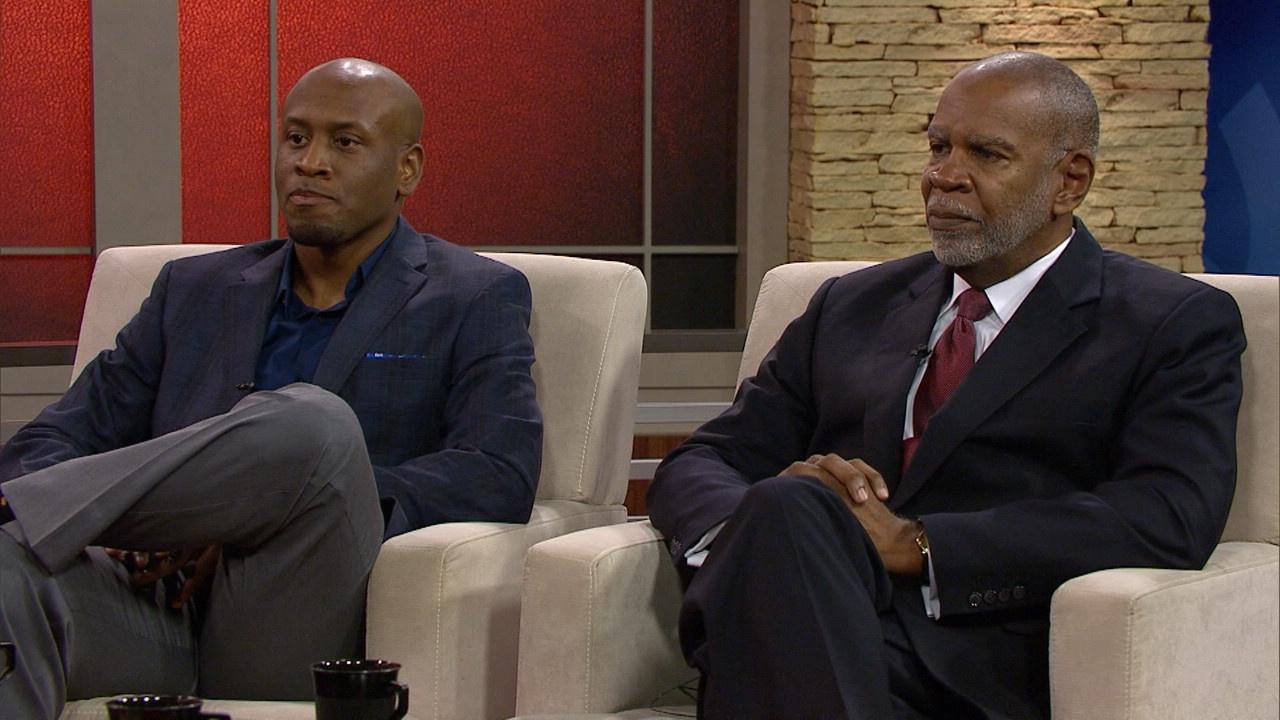
Now the social entrepreneur has partnered with the United Way of the Bluegrass to tackle illiteracy with the simple idea that all children should have a book to call their very own. Beatty and UWBG President and CEO Bill Farmer appeared on KET’s Connections with Renee Shaw to discuss the initiative.
The Fast Track Takes a Detour
“I’m about as country as you can get,” Beatty says of his Appalachian childhood. But his parents set Beatty’s path out of Hazard by stressing the value of education, although neither of them had a college degree.
With their encouragement, Beatty graduated from the University of Kentucky with degrees in marketing and management, as well as a M.B.A. in finance. He spent seven years at Procter & Gamble in Cincinnati before going to San Francisco to work as a financial manager.
Beatty’s career path took a detour after he read a June 2014 article in The New York Times headlined, “What’s the Matter with Eastern Kentucky.” Citing the persistent poverty, chronic health issues, and poor educational attainment, the story concluded Beatty’s home region was the hardest place in the nation to live.
“So I decided to come back and use my business skills, my business experience in order to create change,” Beatty said. “For me as a Hazard native, as a UK alum, it was very important to go back home to help the people who’ve enabled me to get to that successful level.”
Books Can Change Lives
Beatty moved back to Lexington and started Servonta Strategic Philanthropy, which he says is part e-commerce company and part marketing agency that partners non-profit agencies with socially conscious businesses. Among Servonta’s first project was a crowd-funding initiative to buy books for needy children.
“What we discovered is that 60 percent of children in low income homes do not have access to a single book,” Beatty said, “and something as simple as a book is life-changing for a child.”
The Get LIT Kentucky project raised about $7,000 to purchase books for impoverished children in central and eastern Kentucky. Beatty’s new project, called Bands for Books, will sell wrist bands similar to the popular LiveStrong bands that benefit cancer patients. The proceeds from Bands for Books will be used to purchase books, which United Way of the Bluegrass will distribute to children across the region.
UWBG President and CEO Bill Farmer says he immediately saw the potential synergy between his agency’s Big Bold Goal to lift 20,000 local families out of poverty by the year 2020 and Beatty’s literacy project.
“If you cannot read, you cannot learn. And if you cannot learn, you cannot earn,” Farmer said.
“You have to have books in the home,” Farmer continued. “Being able to read to your child is extremely important. You’re setting a tone in which the child will be a life-long reader and a life-long learner, and that’s the precursor to being successful in life.”
The Tough Job of Running a Non-Profit
As an African-American child in the 1960s, Farmer says he wasn’t allowed to get books from his local public library in eastern North Carolina. Once he read the few books his family had at home, Farmer says his mother made him read the dictionary.
Like Beatty, Farmer left the corporate world to pursue a goal of helping those in need. He spent 30 years with Time Warner Cable before joining the United Way in Lexington. He says his work with the non-profit is the toughest job he’s ever had.
“It’s not about just raising funds,” Farmer said. “It’s whether or not you can actually change the way that people think of themselves and how communities really address issues and concerns.”
Professional Problem Solvers
With nearly half of Kentucky children unable to read at grade level by fourth grade, Farmer and Beatty have their work cut out for them. But the two men see their partnership as a valuable example of how for-profit companies and non-profit agencies can work together to improve their communities. They also see their business backgrounds as an asset in the fight.
“In corporate, they teach you to be professional problem solvers,” Beatty said. “[So] let’s find the solutions and stop talking about the problems.”
 KET’s education coverage is part of American Graduate: Let’s Make it Happen, a public media initiative made possible by the Corporation for Public Broadcasting.