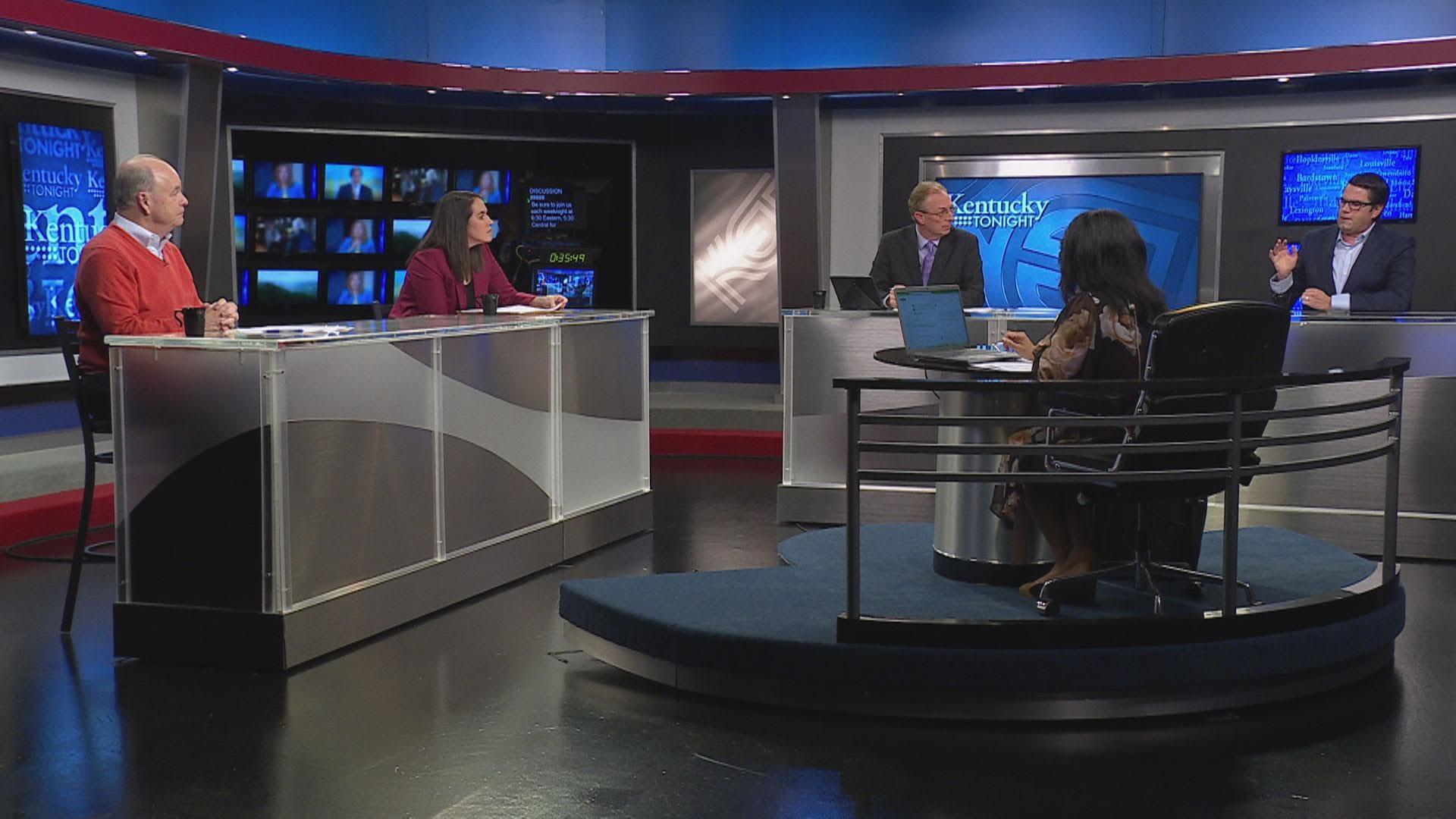
With the dust mostly settled from the 2024 elections and President-Elect Donald Trump’s team in transition mode, Republicans and Democrats are wondering what’s next for their respective parties.
For Democrats who saw control of the White House and the U.S. Senate slip away, it’s a time of intense self-examination. Kelsey Coots, Democratic strategist and principal of Blue Dot Consulting in Louisville, says she thinks many Americans simply don’t trust Democrats to make their lives simpler and more secure.
“They’re being told the economy is booming... but then they go to the grocery store and they cannot afford groceries,” says Coots. “We have to change course, we need to be focused on economic populism, and when people are angry and they have every right to be so, we have to listen to them.”
Former Kentucky Congressman Mike Ward, who is now a Democratic consultant in Louisville, says his party continues to struggle with how to deliver clear, concise arguments for their policy positions. He also says the campaign of Vice President Kamala Harris focused too much on demonizing Trump by calling him a threat to democracy and a fascist.
“That argument just was silly... People are ok with an authoritarian if they’re doing what they want them to do,” says Ward. But for his Democratic colleagues, he adds, “We need to meet people where they are... and talk about fixing the problems that people think that we have.”
The truncated campaign season also hurt Democrats, according to Ward. He contends President Joe Biden should have exited the race two years ago instead of waiting until this past summer. He says that prevented the party from selecting a nominee around which all Democrats could coalesce.
Steve Robertson, former chair of the Republican Party of Kentucky, agrees, saying Democrats didn’t have the time or opportunity to gel around their nominee, which left little enthusiasm for Harris. He contends Democrats must figure out how to balance their liberal and centrist factions so that the party can grow. He says Republicans have struggled with a similar dynamic for decades among various far-right wings of the GOP.
“It was a painful process, but we wrapped our arms around a larger collation of conservatives,” says Robertson. “Because of that I think we do a much better job of finding a common voice in the Republican Party, and that’s what the Democratic Party needs to do.”
A Victory or a Mandate for Republicans?
It appears now that Trump won the Electoral College and the popular vote, which no Republican has done since 2004. Given those victories, Robertson says he expects the president-elect to “come out with his gloves on and start swinging” once he takes office in January.
But Republican strategist Tres Watson of Capitol Reins PR in Lexington cautions Trump and his team not to misread the results. He argues the election proved that the country is center-right politically, and that the incoming administration should not try to go too far to the right.
“I do think there is a mandate to return to those kind of fiscal conservative- and on social issues stay-out-of-my-way type values that have been a hallmark of the country since its founding,” says Watson.
Although a compelling issue for some voters, Watson says abortion and reproductive rights still couldn’t trump the economic uncertainty many Americans felt when going to the polls. He also says the argument that Donald Trump poses a threat to democracy backfired on Democrats. He contends many voters actually see Democrats as imperiling democracy with their talk of ending the filibuster and expanding the U.S. Supreme Court.
As the president-elect makes his cabinet selections, Robertson says the Trump administration will pursue a strategy of disruption in its effort to overhaul the federal government. He says many things Trump wants to do will require Congressional approval, but other priorities he can do on his own, such as ending the catch-and-release immigration policy of the Biden administration. He says Trump should also start work on maintaining the federal tax cuts that are set to expire at the end of 2025.
Democrats, on the other hand, should be terrified of a second Trump term, according to Coots. She says the president-elect is filling his cabinet with unqualified “sycophants” who are eager to do Trump’s bidding and won’t question his decisions. Ward says Democrats shouldn’t waste their energies on the “crazy people” Trump is appointing, but rather focus on the results of the administration’s actions and clearly communicate those impacts to Americans using compelling spokespeople like Kentuckian Hadley Duvall, who has become a high-profile advocate for reproductive rights.
Election Impacts on the State Level
In Kentucky, the decisive defeat of the proposed amendment to the state constitution on private school funding leaves Republicans searching for a new way forward on school choice.
“Kentucky voters spoke loud and clear,” says Robertson. “However, I think that you have individuals in the Senate and the House who are focused like a laser beam on trying to figure out how do we help children get the most out of their educational experience.”
Regardless of the outcome on Amendment 2, Watson argues that it’s clear Kentuckians desire changes in their education system and that Democrats and Republicans have an opportunity to work together on those reforms. He says voters should also realize that Republicans don’t have a vendetta against educators, they simply have different ideas about how to make schools better.
Coots argues there are plenty of ways to improve public education, which she says the advertisements against Amendment 2 highlighted.
“We talked about universal pre-K, addressing the teacher shortage, (and) fully funding school transportation,” says Coots.
Whatever happens on education. Robertson says Gov. Andy Beshear needs to work with Senate President Robert Stivers (R-Manchester) and House Speaker David Osborne (R-Prospect) if he wants to be involved in the decision-making.
State lawmakers have also elected their leadership teams for the 2025 General Assembly session. In something of a surprise, Senate Republicans elected Sen. Max Wise of Campbellsville as their new Majority Floor Leader. That comes after outgoing leader Sen. Damon Thayer of Georgetown recommended Sen. Julie Raque Adams of Louisville for the job.
Watson says both Wise and Adams would be good as leader, but he says Wise represents a safe district for Republicans and therefore is in a better position to take heat for the caucus on some policy issues. He says that would’ve been trickier for Adams who must maintain her suburban Jefferson County district.
Ward and Coots say they’re excited about the new House Democratic leadership, which includes Rep. Pam Stevenson of Louisville as the new Minority Floor Leader. That makes Stevenson the first Black woman to helm a caucus in the state House.
Coots says she thinks the new leaders will quickly begin building Democratic support for candidates in the 2026 elections. To do that, she says Democrats have to have the right message and the funds to communicate that message. She says they also need to field good candidates in every race and meet voters where they are on issues.