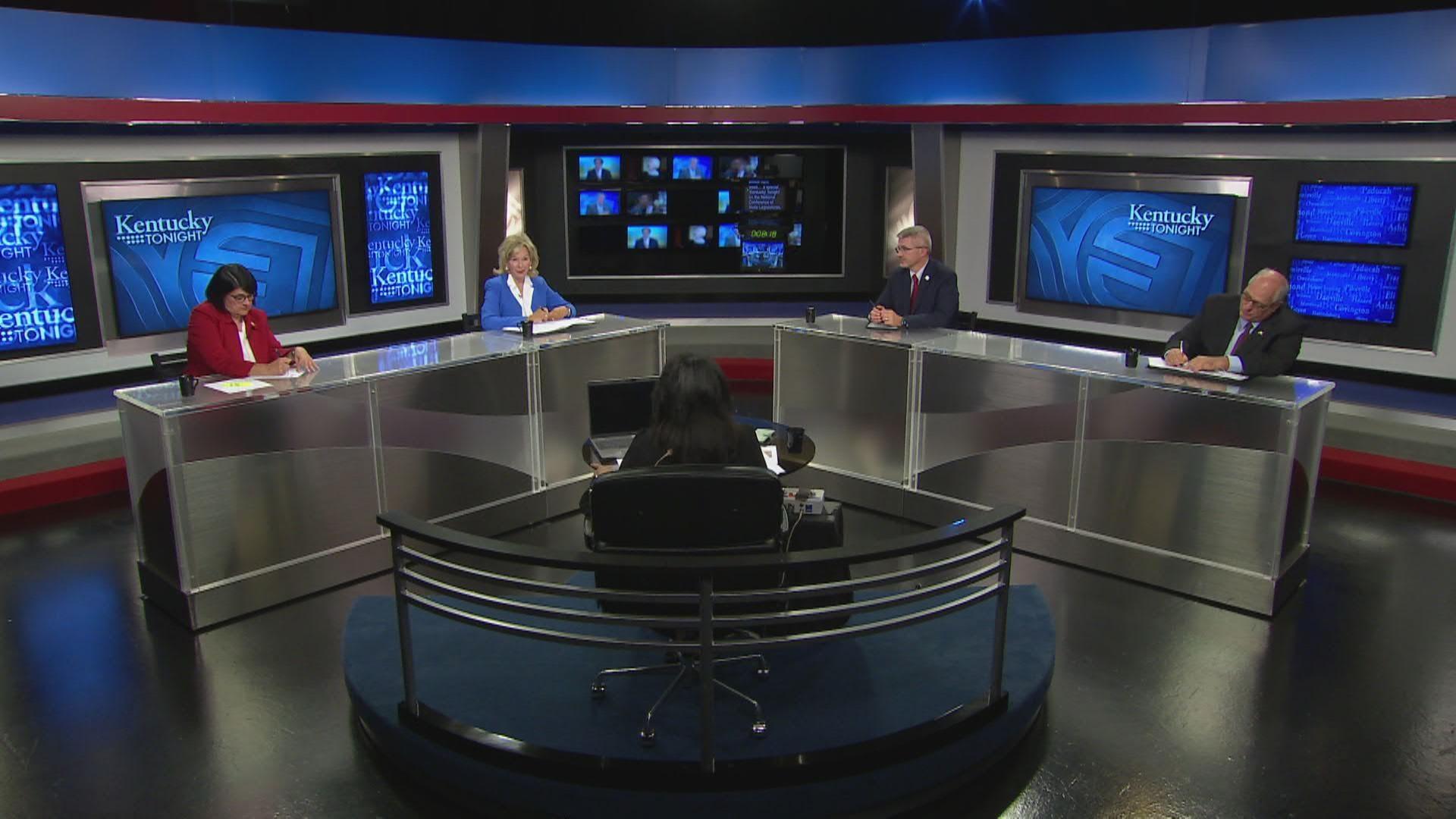
As a new school year gets underway in the commonwealth, public educators face a familiar set of challenges – from teacher and staff shortages, to student absenteeism and misconduct, to academic issues.
The state’s new Commissioner of Education Robbie Fletcher says he wants to ensure that students have vibrant learning opportunities that not only give them an excellent grounding in the fundamentals of reading, writing, and math, but also teach them how to communicate, collaborate, and be resilient, productive members of society.
But one thing that can hamper student success, according to Fletcher, is the state’s assessment and accountability system, which measures a student’s academic progress and ranks the performance of the schools that teach them.
“Personally, it’s not about ranking schools. To me it’s about where did you get the child and where did you take them,” says Fletcher. “The best accountability model is how did you show growth for an individual child.”
The commissioner says the current assessment system generates “dead data” because it tests students every May but then doesn’t report the results until October — after the student has advanced to the next grade. He says teachers need more timely data that can help them adjust instruction in the present, not months into the future.
“There’s a lot of excitement there about changing accountability so it matters now and matters in real time,” says the commissioner.
Rep. Tina Bojanowski (D-Louisville), who is a special education teacher and a member of the House Education Committee, agrees. She says accountability that allows for immediate feedback would be powerful.
“As a teacher, I want information that helps me teach my children better, not something that we don’t get until they’re in the next grade up,” says Bojanowski. “As a policymaker and keeper of the money of the state, do we want to spend millions upon millions upon millions of dollars on measurements that do nothing to help teachers in the classroom?”
Bojanowski says such a strategy wouldn’t necessarily mean more testing, but hopefully more meaningful testing. Fletcher says teachers already use universal screeners and progress monitoring to track a student’s progress, and they could be folded into a new system of accountability. But that would mean getting schools to use the same screeners so that data would be standardized across Kentucky’s 171 districts.
House Education Committee Chair James Tipton (R-Taylorsville) acknowledges that the current delay between testing and results isn’t productive, but he says changing the system would be challenging.
“I think it has some very positive possibilities,” says Tipton. But he adds, “It’s a very involved process. We have federal requirements that we have to maintain.”
Tackling Chronic Absenteeism
Students can’t learn or be tested if they’re not in school, and since the COVID-19 pandemic, chronic absenteeism has grown into a significant problem. In 2018 about 5 percent of Kentucky districts reported high or extreme amounts of chronic absenteeism, which is defined as a child missing 10 percent of school days for any reason, excused or unexcused. In 2023, 77 percent of districts reported significant chronic absenteeism.
“It’s very important for students to be in the classroom,” says Tipton. “That lost learning opportunity can have significant impact on them going forward, especially in those early, formative years when we’re building foundational skills.”
Chronic absenteeism can result from a medical condition for the student, transportation challenges, food or housing insecurity, bullying, or behavioral issues. Tipton says the school closures during the pandemic left many parents thinking their child didn’t have to attend school at all.
Fletcher says an average of 30 percent of all students suffered chronic absenteeism during the 2022-2023 school year. He adds that students who are Black, homeless, in foster care, or come from economically disadvantaged families tend to experience higher rates of chronic absenteeism. Educators say the lowest performing children who can least afford to miss school are often the ones most chronically absent.
(Being absent from school is different from truancy,” explains Fletcher. He says a truant is someone who has three unexcused absences. A habitual truant has six unexcused absences. He says the courts may get involved once the child accrues seven to ten truancy days.)
The Kentucky Department of Education is creating an advertising campaign to highlight the attendance problem. Fletcher says if students know they will be missed by their friends at school, they are more likely to want to attend. He also says children need assurance that school is a place where they can dream and succeed.
“So that instead of doing something to a child, testing a child, we’re doing something with the child to let them know that this education system is relevant to you because we’re going to get you where you want to be,” says Fletcher.
Bojanowski says she tries to help her students address their basic needs and make academic instruction as meaningful and engaging as possible. But she says that still may not overcome issues that a chronically absent child may face at home.
“It’s hard from a teacher’s perspective to feel like I can hold parents accountable for making sure their kids get to school,” says Bojanowski.
A new law does attempt to make parents more responsible for ensuring their child attends school. House Bill 611, passed by the 2024 General Assembly, requires school officials to report to the local county attorney the parents of a truant child who has more than 15 days of unexcused absences. Once a referral is made, Tipton says it will be up to the prosecutor and judge to determine how to deal with that case.
“The idea is not to be punitive to the parent, but at some point, somebody’s got to be accountable for these children to be in school,” says Tipton. “Those students need to be in the classroom.”
Bojanowski says the new law will place even more burdens on struggling families without doing anything to address the root causes of absenteeism and truancy. She also says she fears some parents will just remove their child from the public school system and homeschool them as a way to avoid dealing with the courts. Fletcher agrees, saying the state must work to ensure that homeschooling doesn’t become a way for parents to avoid the penalties of truancy.
“One of the things I would like to see is how do we hold our homeschools more accountable,” says the commissioner. “I don’t want to infringe on people’s personal rights, but on the other hand, too, we have an obligation to those children to make sure they’re getting an education so they can be productive members of society.”
Teacher Pay, Recruitment, and Retention
Staffing shortages among teachers and other school personnel remains a challenge for schools across the state. Rhonda Caldwell, executive director of the Kentucky Association of School Administrators, says it’s especially hard for districts to find special education, science, and math teachers. When schools do get interest in open positions, she says they may receive only two or three applications and the candidates may not be best qualified.
Teacher salaries also remain an issue. Even with increased school funding from the General Assembly, Caldwell says many districts were only able to increase pay by 3 to 5 percent, while a small number of schools were able to boost pay by 6 or 7 percent.
“Our lowest paid teacher in the state of Kentucky was down between $33,000 and $35,000,” says Caldwell. “A 3 percent raise on $35,000 doesn’t go very far – it basically amounts to roughly $1,000.”
Even with a pay raise, she says many teachers still wouldn’t make a living minimum wage, which she says is $49,000 for one child and one adult. That may force some educators to seek work in districts that offer higher salaries or find a new profession that pays better.
Student misconduct has also impacted teacher recruitment and retention. Tipton says he’s heard of educators and bus drivers taking early retirement because of discipline problems and threats to their personal safety. He says more training can equip teachers to better deal with unruly students. Legislation passed in the 2023 General Assembly gives teachers and school administrators more authority to remove threatening or chronically disruptive students from the classroom. Going forward, Tipton says the legislature will consider measures to limit youth access to social media platforms and to ban the use of cellphones during instructional time.
Lawmakers are also looking at how to incentivize people to enter the teaching field and make it easier to obtain certification. Tipton says there is about a 50 percent decline in the number of students going into teacher training programs. Addressing recruitment efforts, he points to an innovative initiative between Western Kentucky University and the Nelson County Public Schools that enables high school students there to start teacher training before they graduate. Then those students would only have to take two years of college before they would be certified to teach. He says other districts are exploring similar ideas to encourage young people to pursue teaching as a career.
“I think grow-your-own is a big part of recruiting,” says Tipton. “School districts have all of the potential future teachers in their classrooms on a daily basis.”