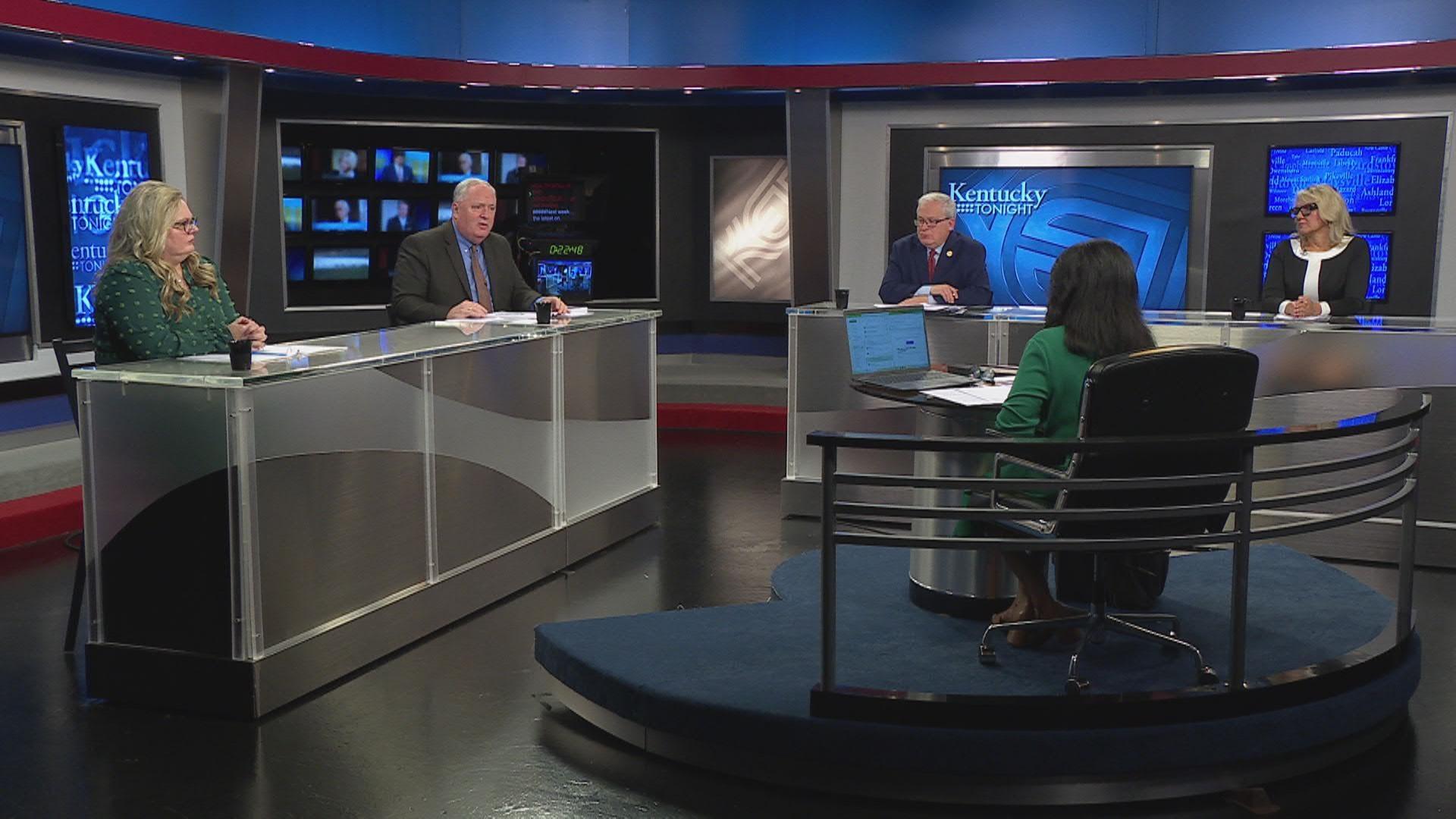
With Election Day about a week away, those for and against Amendment 2 to the Kentucky Constitution are making their final pitches to voters on the proposal. If adopted, the amendment could lead to significant changes in how primary and secondary education is funded in the state by allowing the General Assembly to direct public tax dollars to private school education. Under the current constitutional language, state dollars can only go to public schools.
Supporters have framed the amendment as about “school choice” because they contend it would lead to more and better educational options for Kentucky students and families. They say that allowing state dollars to follow the student to whatever school they attend – whether public, private, charter, or religious – would let parents, regardless of income, choose the school that best fits the needs of their children. School choice advocates also say increased competition from private schools would force public education in Kentucky to improve.
“It’s not about creating a (school) system or propping up a system. It’s about educating the students,” says Jim Waters, president of the Bluegrass Institute for Public Policy Solutions.
Opponents of the amendment argue that Kentucky public schools already suffer from insufficient funding. They fear that allowing tax dollars to also flow to privately operated schools would leave even fewer resources for public schools.
“Our public schools are already chronically underfunded,” says Jessica Hiler, president of the Fayette County Education Association. “We need smaller class sizes. We need money for that. We need more health services for kids. We need money for that. We have a teacher shortage. We need money and services for that.”
Arguments For the Amendment
For years, Republican state lawmakers have promoted charter schools as an alternative to Kentucky’s public school system, which they say is failing too many students.
“The Kentucky Summative Assessment was just released… and in that report a majority of our students still are not proficient in math and reading,” says Waters, “especially for our low-income and minority students.”
Without Amendment 2, Waters says the General Assembly can’t even talk about new school choice options for parents. But lawmakers have passed legislation to allow for public and private charter schools in the commonwealth. They also passed a bill to create a scholarship tax credit to help fund private school scholarships, but that measure has been struck down by the courts on constitutional grounds.
The majority of private schools that already operate in the state are located in Fayette, Jefferson, and Kenton Counties, according to Tom Shelton, a former school superintendent chair of the Protect Our Schools Campaign. He says two-thirds of Kentucky counties have no private school option. But advocates for Amendment 2 say that creating a funding stream will allow new private and alternative schools to open, giving more parents the option of sending their child to the local public school or to an alternative option. These private schools, they say, could implement innovative approaches to teaching that would better serve students who struggle in a traditional school setting.
And by creating state-supported educational savings accounts, vouchers, or other funding mechanisms, Amendment 2 backers say private school options would be open to families who otherwise couldn’t afford them.
“We believe that every parent regardless of socio-economic status should have that option,” says Heather LeMire, Kentucky state director of Americans for Prosperity. “Not every family has that choice right now.”
LeMire says public schools would not suffer if public dollars went to private schools. She contends data from other states similar to Kentucky proves that school choice works to improve education for everyone.
“There’s this misnomer that Kentucky is somehow unique and that the sky will fall if we implement this and our public schools will shut down,” she says. “It’s just not the case.”
Waters says Kentucky public schools have seen record levels of funding in recent years and have still failed to improve test scores and achievement gaps. He points to Florida as an example of a school-choice state where he says the public schools have improved because of the competition from private school alternatives.
“The opponents never want to talk about the performance of our system, and they never have really any solutions other than... more funding, and we’ve increased funding tremendously,” says Waters.
Arguments Against the Amendment
While the per-pupil funding for public schools known as SEEK has increased, public school advocates say it has not kept up with inflation. They also point to cuts in appropriations for other public school needs such as student transportation and professional development.
“We already have underfunded public schools where 90 percent of our students attend,” says Shelton. “Taking money away is not the answer to improving student achievement,” says Shelton.
School choice advocates say they want innovative education options for students. But Hiler says many public schools have implemented innovative approaches to instruction and could do more if they had additional funding.
Potential cuts to public education will disproportionately impact smaller and rural districts, according to Shelton. He says most of those schools already struggle for funding because they have a smaller property tax base from which to draw local revenues. If state funding for public schools goes down, he argues that local school board will be forced to cut staff or programs, or find more revenues.
“Most school districts are going to have to look at raising local property taxes and funding even more of the cost of the public education locally for the kids who are going to remain in the public schools,” he says.
Critics of Amendment 2 say many Kentuckians wouldn’t benefit from school choice because so many counties have no private school option. Shelton and Hiler also argue that private schools don’t have to meet the same accountability and transparency standards as public schools. They also can select what students they enroll, whereas public schools have to take all students.
Finally, opponents say the vast majority of school vouchers in other states have gone to students that were already enrolled in private schools, which has left little funding for minority or low-income students to attend an alternative school. Shelton also says the amount of money that Kentucky would likely be able to offer a student through a voucher program wouldn’t cover the cost of private school tuition. For example, he says a voucher for a student in Jefferson County would be capped at $2,700 a year, which is the amount of state-provided per-pupil funding there. But he says the annual tuition at one of Louisville’s Catholic high schools is as much as $16,000.
“The concept of parent choice is false,” says Shelton. “It’s misleading, it very rarely happens, especially for special education students and students in poverty. Those students will end up remaining in our public schools and will be underfunded.”
Watch or read Kentucky Tonight’s earlier discussions about Amendment 2:
Sept. 16, 2024, with Tom Shelton and Jim Waters as well as Randy Adams, a former principal in the Anderson County School district, and Matt Robbins, former superintendent of Daviess County Public Schools.
June 10, 2024, with Jim Waters as well as Kentucky Center for Economic Policy Executive Director Jason Bailey, attorney Chad Meredith, and Kentucky Education Association Vice President Joel Wolford.