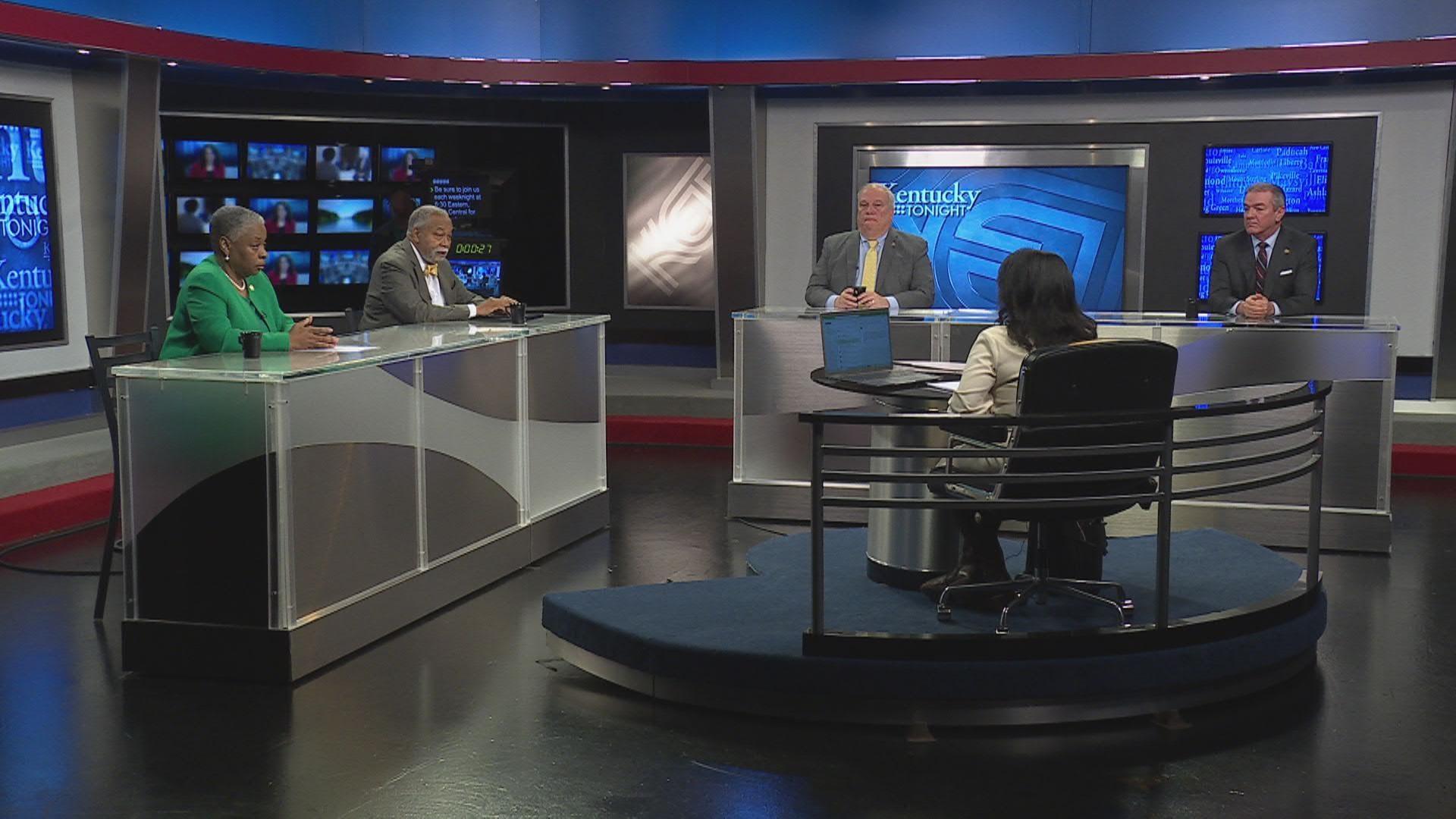
Even a major winter storm couldn’t stop state lawmakers from plowing ahead with the 2025 General Assembly. The first week of the 30-day session saw the Republican supermajorities in the House of Representatives and Senate act on procedural rules and a tax cut measure. House Speaker David Osborne (R-Prospect) says lawmakers love to pass bills, but that doesn’t mean Kentuckians should expect a hectic session this year.
“It’s going to be a relatively slow pace,” he says. “This will be a clean-up session, one where we spend a significant amount of the session making tweaks and small changes to things we’ve done in the past.”
Legislators did file a flurry of new bills in the first week, though: At least 200 in the lower chamber and close to 50 in the upper chamber. That’s after Senate President Robert Stivers (R-Manchester) says he’s asked members of his caucus to limit the number of bills they offer during this short session.
“We’re trying to tell our members if you want more deliberation.... then let’s go at a much slower pace,” says Stivers.
Republican leaders drew criticism over changes to new procedural rules approved in each chamber that Democrats and government transparency advocates fear may limit debate on key issues.
“Why are we changing the rules? The rules that we have work very well,” says Senate Minority Floor Leader Gerald Neal (D-Louisville).
Stivers says the changes are meant to better control the flow of legislation as well as promote better – and longer – debates, “but not do anything nefarious.” Osborne says floor debates in the House are rarely cut short and that the updated rules comply with Mason’s Manual of Legislative Procedure, a resource book of parliamentary rules that many state legislatures use to conduct business. He also contends that the use of so-called shell bills that get amended with new legislative content late in General Assembly sessions remains a useful procedural option for lawmakers even though it is often criticized by open-government groups.
House Democrats did propose changes to the new rules but were defeated in those efforts. House Minority Floor Leader Pamela Stevenson (D-Louisville) says her caucus will work with the rules as they are. Even with the short session, and Democrats being in the extreme minority, Stevenson says she still encourages her members to file bills they believe are worthy.
“If there’s a need in your district and you can document that need, then start doing the work they sent you here to do,” she says. “Don’t complain. If you’ve got a better idea, a better way of doing something, do the research, and file a bill.”
Tax Cut Measure Advances
Republicans acted swiftly last week on the next cut the state’s individual income tax. House Bill 1, which would drop the tax rate from 4 to 3.5 percent starting next year, cleared the House and the Senate Appropriations and Revenue Committee. It is expected to come before the full Senate for a final vote when the General Assembly reconvenes in early February.
But the GOP majority continues to face questions about whether their plan to eventually eliminate the income tax is prudent, given economic uncertainty going into the new year and the dwindling of the remaining COVID-19 relief dollars the state received from the federal government. Stivers and Osborne say future cuts are dependent on the state continuing to meet criteria outlined in the original tax cut legislation in 2022, which includes hitting certain revenue targets and maintaining a healthy balance in the Budget Reserve Trust Fund.
“This is a very sound tax reduction plan and formula that I think is very fiscally responsible and will continue to make cuts in the income tax as the budget allows,” says Osborne.
Some Republicans in Frankfort want to get to 0 faster than those targets allow. But Stivers says reducing income tax revenues too quickly could result in “catastrophic cuts” in state services.
Democrats fear the legislature might be forced to take dramatic action even before the income tax is eliminated.
“Either you’re going to cut services down or you’re going to find another source of income,” says Neal, which he adds usually comes from more sales taxes.
Even if the state sales tax were to be applied to more goods and services, Osborne says Kentucky’s levy still wouldn’t be as broadly based or as high as the sales taxes in Indiana and Tennessee, two states that are often used as comparisons to Kentucky. Stivers says Democrats also don’t account for the new economic growth and population increases the lower tax rates should generate.
Stevenson voted for HB 1 in the House last week, but she says going all the way to 0 is a different matter. She also cautions comparing potential growth in Kentucky to that of zero-income tax states like Texas, Tennessee, and Florida. She says the oil industry helps boost revenues in Texas, while entertainment and tourism are major drivers for the economies of Texas and Florida.
Revisiting Abortion, Homelessness, and DEI Policies
If short legislative sessions are for making tweaks to existing laws, as Osborne says, might the General Assembly pursue changes to the state’s abortion ban or to homelessness provisions in the Safer Kentucky Act?
Rep. Ken Fleming, a Louisville Republican, and Sen. David Yates, a Democrat from Louisville, are proposing exceptions to Kentucky’s prohibition on abortions that would include cases where the mother is a victim of rape or incest, the baby has a lethal fetal anomaly, or the woman has an ectopic pregnancy.
Osborne says abortion continues to be an active topic of debate among House Republicans, but he says it will be difficult for lawmakers to pass any exceptions while there is a pending lawsuit against the current abortion ban. Stivers says the current law already provides an exception to protect the life of the mother, which he contends includes cases of an ectopic pregnancy.
Stevenson says women with difficult pregnancies are having trouble getting the health care they need, and some are dying because lawmakers are moving too slowly on exceptions. She contends there are actions the legislature could take, saying “we just have to be brave enough to do it.”
There have also been calls to address provision in the Safer Kentucky Act (House Bill 5 from the 2024 session) that deal with homeless individuals. Those calls grew louder last month following reports that a Louisville police officer cited a pregnant homeless woman for street camping even though she was in labor at the time.
Osborne admits that was an unfortunate incident, but adds, “That was not a problem with the law itself, that was a problem with the way the law was enforced.”
The Speaker says he knows of no changes being planned for HB 5, especially since he says the feedback he’s received on the act has been overwhelmingly positive.
Stevenson disagrees with Osborne’s assessment.
“I think it’s a problem with the law because when we passed that law, we didn’t say arrest homeless people and then provide services,” says Stevenson. “We just said arrest them, and that’s the problem.”
Stevenson contends the state has sufficient revenues and funds in reserve to help the unhoused, yet she says lawmakers didn’t pursue those services. Stivers says the legislature did appropriate $22.5 million for a community care campus in Louisville that would provide housing as well as addiction and mental health treatment to unsheltered individuals.
“There is a response to that homeless person that is coming in Jefferson County, it just takes time to build that,” says Stivers.
Neal acknowledges that the availability of housing is a serious and long-term problem. but he questions why homelessness should be criminalized while the state and city work on solutions to the crisis.
“I know it’s a heavy lift,” says Neal, “and the people that get crunched potentially in this process are going to be those people in the weakest position in our society and out on our streets.”
Lawmakers may also revisit diversity, equity, and inclusion (DEI) policies at state universities. Osborne says House and Senate Republicans are conferring on language that could be used in potential legislation, which he says would likely codify changes several state universities have already made on their own. Neal questions why any legislative action is needed since the schools have changed the DEI policies that were considered objectionable.