Skip to Main Content

Uncovering Bias in Preschool Education

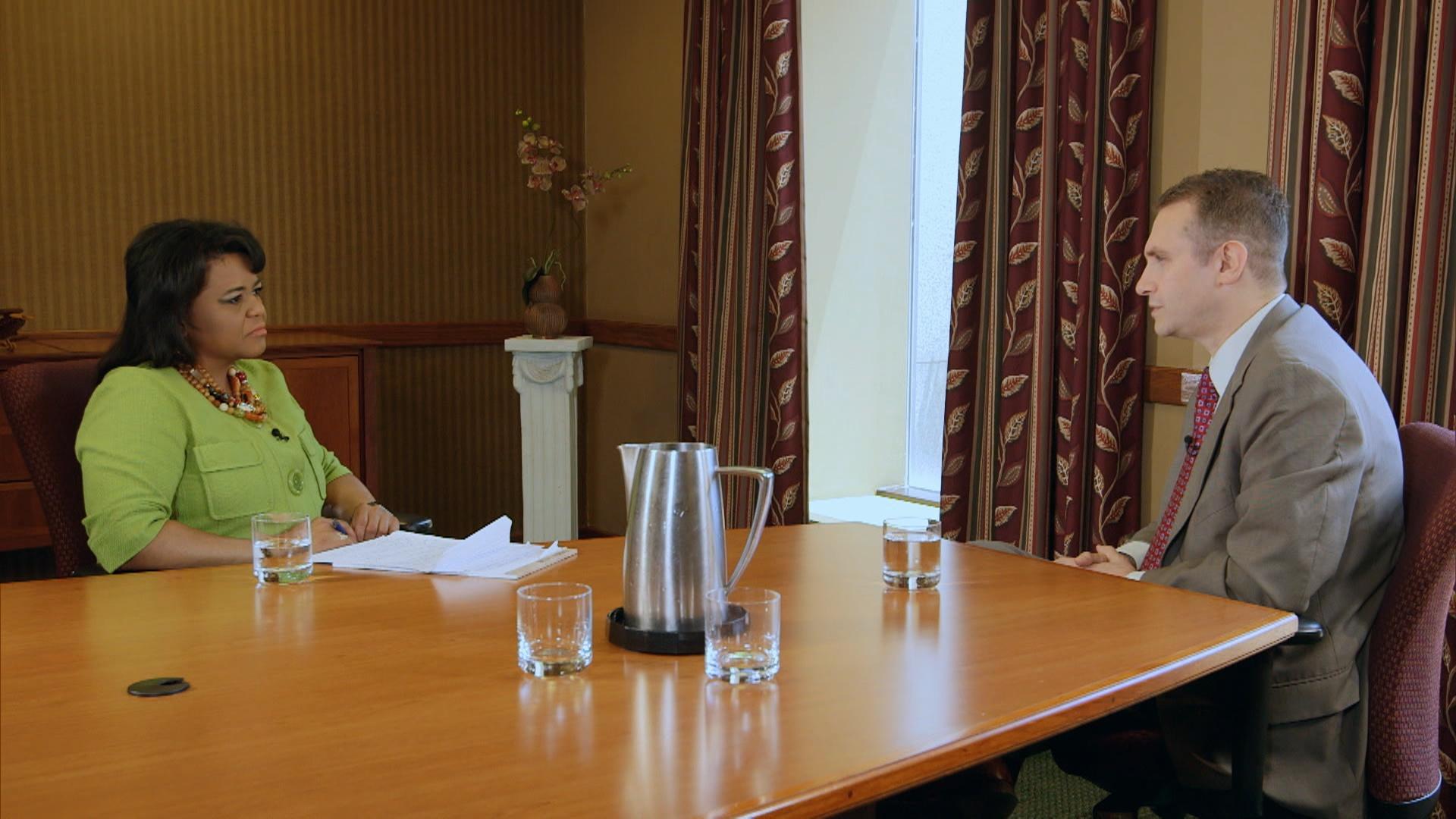
Renee's guest is Pikeville, Kentucky native Walter Gilliam, director of the Edward Zigler Center in Child Development and Social Policy and associate professor of Child Psychiatry and Psychology at the Child Study Center, Yale School of Medicine. Dr. Gilliam has talks about his research on implicit bias among preschool educators.
Season 12 Episode 40 Length 29:01 Premiere: 07/07/17

About

Connections

KET’s Connections features in-depth interviews with the influential, innovative and inspirational individuals who are shaping the path for Kentucky’s future.

From business leaders to entertainers to authors to celebrities, each week features an interesting and engaging guest covering a broad array of topics. Host Renee Shaw uses her extensive reporting experience to naturally blend casual conversation and hard-hitting questions to generate rich and full conversations about the issues impacting Kentucky and the world.


Tune-In

KET Sundays • 11:30 am/10:30 am
KET2 Sundays • 6/5 pm

Stream

Watch on KET’s website anytime or through the PBS Video App.

Podcast

The Connections podcast features each episode’s audio for listening.


Renee Shaw is the Director of Public Affairs and Moderator at KET, currently serving as host of KET’s weeknight public affairs program Kentucky Edition, the signature public policy discussion series Kentucky Tonight, the weekly interview series Connections, Election coverage and KET Forums.

Since 2001, Renee has been the producing force behind KET’s legislative coverage that has been recognized by the Kentucky Associated Press and the National Educational Telecommunications Association. Under her leadership, KET has expanded its portfolio of public affairs content to include a daily news and information program, Kentucky Supreme Court coverage, townhall-style forums, and multi-platform program initiatives around issues such as opioid addiction and youth mental health.  

Renee has also earned top awards from the Ohio Valley Chapter of the National Academy of Television Arts and Sciences (NATAS), with three regional Emmy awards. In 2023, she was inducted into the Silver Circle of the NATAS, one of the industry’s highest honors recognizing television professionals with distinguished service in broadcast journalism for 25 years or more.  

Already an inductee into the Kentucky Civil Rights Hall of Fame (2017), Renee expands her hall of fame status with induction into Western Kentucky University’s Hall of Distinguished Alumni in November of 2023.  

In February of 2023, Renee graced the front cover of Kentucky Living magazine with a centerfold story on her 25 years of service at KET and even longer commitment to public media journalism. 

In addition to honors from various educational, civic, and community organizations, Renee has earned top honors from the Associated Press and has twice been recognized by Mental Health America for her years-long dedication to examining issues of mental health and opioid addiction.  

In 2022, she was honored with Women Leading Kentucky’s Governor Martha Layne Collins Leadership Award recognizing her trailblazing path and inspiring dedication to elevating important issues across Kentucky.   

In 2018, she co-produced and moderated a 6-part series on youth mental health that was awarded first place in educational content by NETA, the National Educational Telecommunications Association. 

She has been honored by the AKA Beta Gamma Omega Chapter with a Coretta Scott King Spirit of Ivy Award; earned the state media award from the Kentucky Society of the Daughters of the American Revolution in 2019; named a Charles W. Anderson Laureate by the Kentucky Personnel Cabinet in 2019 honoring her significant contributions in addressing socio-economic issues; and was recognized as a “Kentucky Trailblazer” by the University of Kentucky Martin School of Public Policy and Administration during the Wendell H. Ford Lecture Series in 2019. That same year, Shaw was named by The Kentucky Gazette’s inaugural recognition of the 50 most notable women in Kentucky politics and government.  

Renee was bestowed the 2021 Berea College Service Award and was named “Unapologetic Woman of the Year” in 2021 by the Community Action Council.   

In 2015, she received the Green Dot Award for her coverage of domestic violence, sexual assault & human trafficking. In 2014, Renee was awarded the Anthony Lewis Media Award from the KY Department of Public Advocacy for her work on criminal justice reform. Two Kentucky governors, Republican Ernie Fletcher and Democrat Andy Beshear, have commissioned Renee as a Kentucky Colonel for noteworthy accomplishments and service to community, state, and nation.  

A former adjunct media writing professor at Georgetown College, Renee traveled to Cambodia in 2003 to help train emerging journalists on reporting on critical health issues as part of an exchange program at Western Kentucky University. And, she has enterprised stories for national media outlets, the PBS NewsHour and Public News Service.  

Shaw is a 2007 graduate of Leadership Kentucky, a board member of CASA of Lexington, and a longtime member of the Frankfort/Lexington Chapter of The Links Incorporated, an international, not-for-profit organization of women of color committed to volunteer service. She has served on the boards of the Kentucky Historical Society, Lexington Minority Business Expo, and the Board of Governors for the Ohio Valley Chapter of the National Academy of Television Arts and Sciences. 

Host Renee Shaw smiling in a green dress with a KET set behind her.

Uncovering Bias in Early Childhood Education

Biases: we all have them, says Yale University researcher Walter Gilliam. The functional ones help us navigate the hundreds of decisions we face each day. You could call those preferences.

The dysfunctional biases, and the biases we don’t realize we have – well, Gilliam says that’s where the problems can begin.

“If you’re not aware of your biases, I will guarantee you this: your biases will use you and they will change your behaviors in ways that you’re not even aware of,” he says.

So what if you’re a teacher, and your unrecognized biases cause you to treat some students differently because of their gender or race? He says that can lead to real harm to those children.

Gilliam is an associate professor of child psychiatry and psychology at the Child Study Center at Yale’s School of Medicine, and he’s the director of the Edward Zigler Center in Child Development and Social Policy at Yale. Gilliam appeared on KET’s Connections to discuss his research on how biases impact teachers who work with preschool children.

The Problem with Suspension and Expulsion
Gilliam says research indicates that African-American children are expelled from school at more than twice the rate of white children, and boys are expelled roughly four times more frequently than girls. And it’s not just older students who face suspension or expulsion: Gilliam says children as young as three, four, and five years old may be suspended from Head Start and other preschool programs.

“If the idea is that expulsion or suspension is supposed to somehow help this child, it is a bad intervention because it isn’t working,” says Gilliam, who is a native of Pikeville.

Even among the youngest children, expulsion can cause them to fall behind in their educational and social development. When school no longer makes sense to them, they can act out even more, which leads to more suspensions as the child grows older. He says the ultimate expulsion from school is when the now-young adult winds up in jail.

“[School] is a public investment in order to be able to help improve the educational outcomes of all our children,” says Gilliam. “If we kick the children out who could gain the most from it, we’re basically undercutting our own investment.”

Gilliam contends there is never a good reason for expelling a child in the vast majority of cases. Instead of removing even the most troubled students from school, he suggests they should be transferred to specialized classrooms with teachers who can give those children more individual attention based on their particular needs.

“If you provide the right kind of supports in the program to the teacher, in many cases you can actually be able to handle and manage the behaviors just fine,” Gilliam says. “Then, over time the child learns how to be able to regulate their own emotions and behaviors in the classroom.”

Learning More about Bias in the Classroom
The troubling statistics about expulsion and suspension rates for minority children got Gilliam curious as to why the disparity existed. Was it simply a matter of increased stressors in the lives of boys and African-American children that caused them to act out more?

Or was there something else at play? Could implicit bias among teachers and administrators be a factor?

Gilliam and his colleagues devised a two-part study to explore potential biases among preschool teachers. First, the teachers were asked to watch a video of four young children (a white boy and girl, and a black boy and girl) playing in a kindergarten classroom and to note when they sensed bad behavior was about to occur.

Unbeknownst to the teachers, the four children were all actors who were instructed to not show any signs of misbehavior. Special technology tracked the eye movement of each teacher to follow which child they looked at and how long they observed them.

“What we basically found was that the teachers spent more time looking at black children, but especially the black boy,” says Gilliam.

In talking with the teachers afterwards, Gilliam says they thought they were watching the boys more closely – the educators thought they had a gender bias. But in reality they were watching the African-American boy the most. And that was true regardless of the race of the teacher.

The second part of the study involved telling teachers a story about a child who exhibited challenging behaviors in the classroom. The only difference in the story the teachers heard was the name given to the student: sometimes it was a stereotypical name of a white boy or girl, sometimes it was a name generally associated with a black boy or girl.

Gilliam says they found that when white teachers heard the story and perceived that it was about a black child, the teacher considered the acting out to be normal for a minority student. When black teachers thought they were hearing about a black child, they expressed a desire to “fix” the child by getting him or her to stop acting that way now. They feared for the minority child’s safety and well-being if they continued to misbehave as they got older.

To further randomize this part of the experiment, Gilliam told some of the teachers about the home life of the fictional student. The child’s father was largely absent, and when he was around he could be violent. Mom was working three low-wage jobs and battling depression.

“If you can humanize somebody, it makes it harder to dehumanize them with biases,” says Gilliam. “That was what we were really interested in, because we’re not interested in studying implicit bias, we’re interested in changing it.”

Using Privilege to Overcome Bias
The researchers discovered that when the teachers knew more about the child’s family, they tended to reduce their bias – but only if the teacher was the same race as the student. Gilliam says if the races were different, the teacher considered the child’s behavior to be even worse after they learned about their home life.

“What we’re trying to do right now is trying to find ways in which we can help teachers gain a better cultural frame for understanding that there are segments of our population that have experienced things you haven’t had to experience,” says Gilliam.

It’s not bad that a teacher may come from a background of more privilege than their students, Gilliam says. But can the teacher be empathetic enough to use that privilege for the good?

“It’s not a shame to be of privilege,” Gilliam says. “It’s just a shame to not pay attention to it and to not use it to help people who don’t have that privilege.”

Although the social ideal may be that a child will be raised in a stable home life where dad works a good job and mom stays home to raise the kids, Gilliam says that’s not the reality for many children these days. That’s why he argues that public school systems must be properly funded so that they can provide a quality education experience to all children, especially preschoolers who may come from difficult backgrounds.

“Education in the early years of our babies’ lives cannot be overstated,” says Gilliam. “What happens in the baby’s first few years of life sets the stage for everything else that can potentially happen later on, [so] the real question is whether or not we’re willing to take that knowledge and back it up with a political will to be able to do right by our babies.”

Sponsored by:

Season 12 Episodes

Kinship Care Activist Katie Okumu

S12 E46 Length 26:27 Premiere Date 08/25/17

Photographer Carol Peachee

S12 E45 Length 28:02 Premiere Date 08/18/17

Kentucky Valley Educational Cooperative

S12 E44 Length 28:28 Premiere Date 08/11/17

Sec. Vickie Yates Brown Glisson

S12 E43 Length 29:17 Premiere Date 08/04/17

Criminal Justice Reform

S12 E42 Length 28:08 Premiere Date 07/28/17

Kayla Rae Whitaker

S12 E41 Length 28:01 Premiere Date 07/14/17

Uncovering Bias in Preschool Education

S12 E40 Length 29:01 Premiere Date 07/07/17

The Latest Data on Kentucky's Kids

S12 E39 Length 28:01 Premiere Date 06/30/17

Building Leadership Skills

S12 E38 Length 29:01 Premiere Date 06/23/17

The Ali Center's Donald Lassere

S12 E37 Length 28:46 Premiere Date 06/16/17

Improving Nutrition in the Daily Diet

S12 E36 Length 27:06 Premiere Date 06/09/17

Alzheimer's Disease

S12 E35 Length 28:19 Premiere Date 06/02/17

Innovation at the Alltech Conference

S12 E34 Length 28:33 Premiere Date 05/26/17

Political Journalist Cokie Roberts

S12 E33 Length 28:06 Premiere Date 05/22/17

2017 Rx Drug Abuse & Heroin Summit

S12 E32 Length 28:03 Premiere Date 05/12/17

Alison Lundergan Grimes

S12 E31 Length 28:37 Premiere Date 05/09/17

Sexual Trauma in the Military

S12 E30 Length 28:01 Premiere Date 05/02/17

Foster Care

S12 E29 Length 28:46 Premiere Date 04/24/17

Justice Secretary John Tilley

S12 E23 Length 29:36 Premiere Date 04/14/17

Job Training in Kentucky

S12 E22 Length 29:31 Premiere Date 03/24/17

Kentucky Tourism

S12 E21 Length 28:01 Premiere Date 02/24/17

Reducing Youth Violence

S12 E20 Length 28:21 Premiere Date 02/17/17

State Treasurer Allison Ball

S12 E19 Length 28:51 Premiere Date 02/10/17

Poverty in America

S12 E18 Length 28:02 Premiere Date 02/03/17

Homelessness in Kentucky

S12 E17 Length 28:46 Premiere Date 01/27/17

Sadiqa Reynolds

S12 E16 Length 28:06 Premiere Date 01/20/17

Cory Jewell Jensen

S12 E15 Length 28:02 Premiere Date 01/13/17

Bill Goodman

S12 E14 Length 28:37 Premiere Date 01/06/17

Promoting Health Equity

S12 E13 Length 29:01 Premiere Date 12/16/16

Kentucky's Teacher of the Year

S12 E12 Length 27:22 Premiere Date 12/09/16

Important Issues for Seniors

S12 E11 Length 28:20 Premiere Date 11/18/16

Nonprofit Organizations

S12 E10 Length 28:22 Premiere Date 11/11/16

Iris Wilbur and Colmon Elridge

S12 E9 Length 28:01 Premiere Date 11/04/16

Alzheimer's Disease

S12 E8 Length 28:32 Premiere Date 10/28/16

Activism Through Music and Art

S12 E7 Length 28:31 Premiere Date 10/21/16

Paducah's Merryman House

S12 E6 Length 28:07 Premiere Date 10/14/16

The Achievement Gap

S12 E5 Length 28:01 Premiere Date 10/07/16

Discussing Domestic Violence

S12 E4 Length 28:32 Premiere Date 09/30/16

Musician Jon Secada

S12 E3 Length 29:13 Premiere Date 09/23/16

Playwright Mitzi Sinnott

S12 E2 Length 27:12 Premiere Date 09/15/16

FDA Chief Dr. Robert Califf

S12 E1 Length 26:26 Premiere Date 09/09/16

Smoking Cessation and Pregnancy

Preview Length 29:32 Premiere Date 09/08/17

See All Episodes

caret down

TV Schedules

Upcoming

No upcoming airdates

Recent

No recent airdates

Explore KET