

Remember when Top 40 radio was mix of rock, pop, country, R&B and any other style that could climb the charts?
That’s the fusion of music coupled with a heavy dose of Latin beats that influenced singer/songwriter Jon Secada as he grew up in Miami in the early 1970s. People like Billy Joel, Marvin Gaye, Elton John, and Stevie Wonder provided the musical foundation on which Secada would build his own career as a bilingual crossover artist who has sold more than 20 million albums and earned two Grammy Awards.
“I think that’s what makes my sound a little different,” Secada says. “I’m always drawing on all these things that were a part of my youth and because I grew up in a city that was like that, that had that kind of integration and that mixture of all these different flavors.”
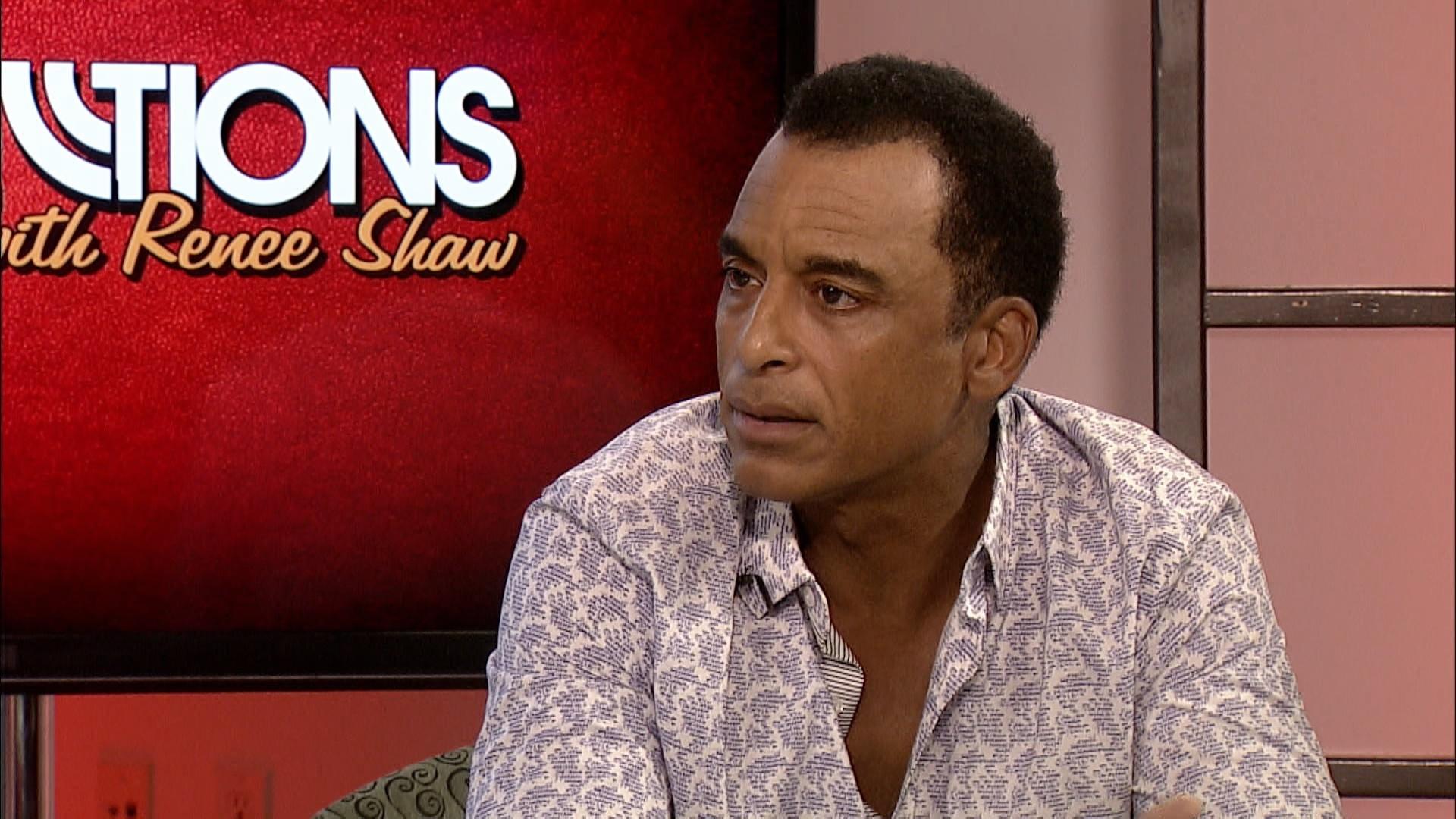
Secada visited Kentucky recently to receive the Muhammad Ali Humanitarian of the Year Award at Louisville’s Ali Center. During his visit he appeared on KET’s Connections with Renee Shaw.
Secada says he’s always considered himself a blue-collar musician – a guy who’s in the business because he loves the craft and the process of making music.
For him, that started at the University of Miami where pursued bachelor’s and master’s degrees with the intent of being a jazz musician. But after graduating from college he took a job as a backup singer to pop star Gloria Estafan. His 18 years of working with Estafan and her husband, music producer Emilio Estafan, provided Secada with invaluable training in the business of music.
“I got to really understand how music happens and what is important first,” Secada says. “It happens with the song and the writing of the song… and how you get a good song to a point where you can make it a hit.”
As his own songwriting talents developed, Secada eventually penned hits for Estafan and his own self-titled debut album that came out in 1992. That record sold 6 million copies and included hit singles “Just Another Day,” “Angel,” and “Do You Believe in Us.”
Secada also wrote songs for other rising Latin-American artists, including Jenifer Lopez and Ricky Martin, and he performed acclaimed duets with Olivia Newton-John, Frank Sinatra, and Luciano Pavarotti.
Billboard says Secada became one of the biggest adult contemporary artists of the 1990s with his blend of pop, R&B, and Latin music. He also starred on Broadway in “Grease;” was a celebrity judge on “Latin American Idol;” and operates his own talent development company.
Leaving Cuba
The trappings of success Secada has today are very different from his childhood in his native Cuba. The Castro regime imprisoned Secada’s father for political reasons for three years. When the family was finally able to leave the island, they eventually settled in south Florida when Secada was 12 years old.
“My father was the first hero in my life because I saw him do so much for me and our family,” Secada says.
While his parents ran a coffee shop, Secada began to immerse himself in the sounds of his new community and discover his talent for music.
“Being an only child, I spent a lot of time by myself,” Secada says. “Sometimes that can be a dangerous thing. For me it ended up being a positive thing – a lot of reflection time to find out who I was and what I wanted to do, and luckily I had some really good mentors along the way.”
When musical success hit, Secada says stardom wasn’t always easy. That’s when his father encouraged him to relax and reminded him just how far the family had come in just a few short years.
“Your problems are only as big as you make them,” Secada’s father told him. “At the end of the day, you’re free. You’ll always be free to do what you want as long as you do it decently and with humility.”
That piece of fatherly advice became the hook for one of Secada’s hit songs, “I’m Free.”
Giving Back
Secada’s father lived much of his life not knowing he had Hepatitis C, which eventually killed him. Watching his father’s battle with the blood-borne disease led Secada to be an advocate for Hepatitis C education and awareness.
Through his charity, Secada also supports music education scholarships, AIDS research, child welfare, and other causes. And, he was part of an advisory commission created by President George W. Bush to address the achievement gap among Hispanic American students. Secada says the opportunities and successes he’s enjoyed come with an obligation to give back.
“I’ve always really found a way to reconnect with who I am as a human being, where I come from, what my family had to do for me to have what I have,” Secada says. “I go back to who I am as an immigrant… the gift of being an American, the gift of all those things that were sent from God that made me who I am today.”