

In the past month alone, 184 children entered state care because of abuse, neglect, or other crises that required removing them from their homes.
That puts the total number of Kentucky youth now in foster care at 8,188.
Many will eventually get permanent placement with families, but hundreds of others may remain in an unimaginable limbo, unable to be reunited with their biological families yet not wanted for adoption. Officials say kids who never find that stable home life are at greater risk for poor health outcomes, lower job prospects, homelessness, incarceration, and substance abuse.
That’s why Adria Johnson is on a crusade to improve the state’s child welfare system so that every boy or girl in state care gets a good foster or adoptive home and doesn’t have to suffer those consequences.
“You have the ability to make such a difference in the life of a child,” she says.
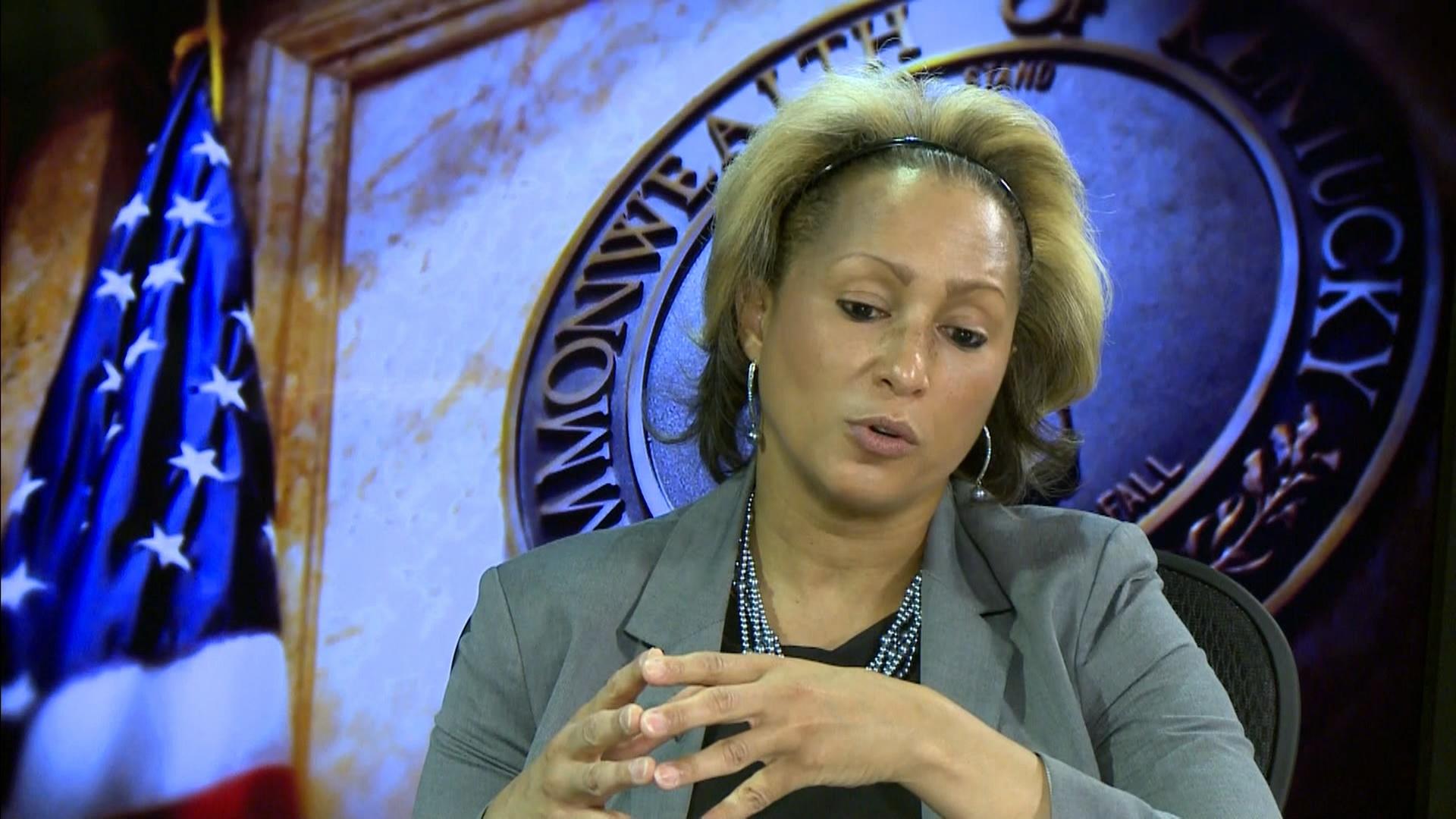
Johnson is commissioner of the Kentucky Department for Community Based Services (DCBS), the agency that oversees the state’s adoption and foster care system. She appeared on KET’s Connections to discuss how the Bevin administration and her agency are working to improve foster care in the commonwealth.
Legislation Provides New Options for Foster Children
Commissioner Johnson says the youth who are at greatest risk of lingering in the system include those with special physical or medical needs, sibling groups, minority children over the age of 2, and older teenage boys. Once a child enters state care, they’re likely to stay there for months or even years: On average that child will spend almost a third of his or her life in foster care, according to Johnson.
“That is just unacceptable,” the commissioner says. “That is re-traumatizing to a child.”
Children who aren’t adopted will usually stay in state care until they are 18 years old, but Johnson says her staff encourages those youth to apply to have their supports extended until age 21.
Once parental rights have been terminated, DCBS officials first seek to place the child with a biological family member. Child advocates have argued for several years that only allowing for blood-family placement eliminated other options the child might have for finding a good home.
That will change thanks to legislation passed earlier this year by the Kentucky General Assembly. Johnson says House Bill 180 will allow children to be placed with so-called “fictive” or non-blood kin such as a family friend, a godparent, a coach or teacher, or anyone else who has a “significant emotional relationship” with the child. She says that opens up a range of possibilities for putting a child into a home they already know.
Lawmakers also passed legislation to enable a child in foster care to get a driver’s license without the normally required signature of a parent or guardian. Johnson says this will allow foster children to enjoy the same rite of passage that their peers do, and make it easier for them to get to school or jobs.
DCBS is also working to address unintended racial disparities within the child welfare and foster care system in Kentucky. Johnson says a careful review of state data revealed several troubling problems:
- The agency receives more reports of suspected abuse and neglect of minority children, but those cases are substantiated at lower rates than for non-minority youth.
- The characteristics of the abuse and neglect reported for minority children tend to be of a more violent nature.
- And minority children face a greater likelihood of being placed in more restrictive foster care settings and are the least likely to be adopted.
“For me as an agency head, it’s why are we seeing these results and what about our practice is driving that,” Johnson says. “So we have begun looking at where our own implicit bias is impacting the way that we are intersecting with these families and these children, and how we can go about our work differently.”
Johnson says the agency is conducting intensive training with DCBS staff statewide as well as with child placement agencies and foster families to improve cultural competency and resolve any issues of racial bias in the system.
Personal Stories Fuel a Passion for the Work
The commissioner credits Gov. Matt Bevin and his wife, Glenna, for bringing a new energy to improving foster care in Kentucky. Their passion stems from a failed attempt several years ago to adopt a young girl in state care. When their application was denied, the Bevins adopted four children from Ethiopia.
The governor has pledged to overhaul foster care in the commonwealth, and he plans to hire a “czar” to improve the state’s adoption process.
For her part, Johnson says working to improve child welfare is her purpose in life. Her interest in the issue comes from her own difficult upbringing.
“I probably am not supposed to be here based on what I’ve been through,” she says.
Until she was 10 years old, home life for Johnson and her two older brothers was normal. But then her parents had marital problems and divorced, and her broken family faced poverty, hunger, and squalid living conditions. Johnson herself later became a young mother who needed temporary government assistance to support her own daughter.
She says those personal experiences now inform her work with children and families as she tries to get them the help they need while ensuring that the state system doesn’t make their lives any harder.
“Help should be temporary,” Johnson says, “but it needs to be in a way that we can help to lift you out of your circumstance so that you can achieve a level of self-sufficiency and independence…and control over your life that allow you to become a healthy individual, and allow you to function in society, and allow you to take care of yourself and your family.”