

Nonprofit organizations across America advocate for women, children, veterans, the disabled, and the elderly; help fight disease and mental illness, poverty, homelessness, addiction, and domestic violence; and enrich our lives through educational, cultural, and spiritual activities.
As important as nonprofits are to the fabric of society, they are also a significant driver of the overall economy. According to the National Council of Nonprofits, the sector contributes about $900 billion to the gross domestic product and employs 10 percent of the American workforce. Here in the commonwealth, one in nine Kentuckians works for a nonprofit organization.
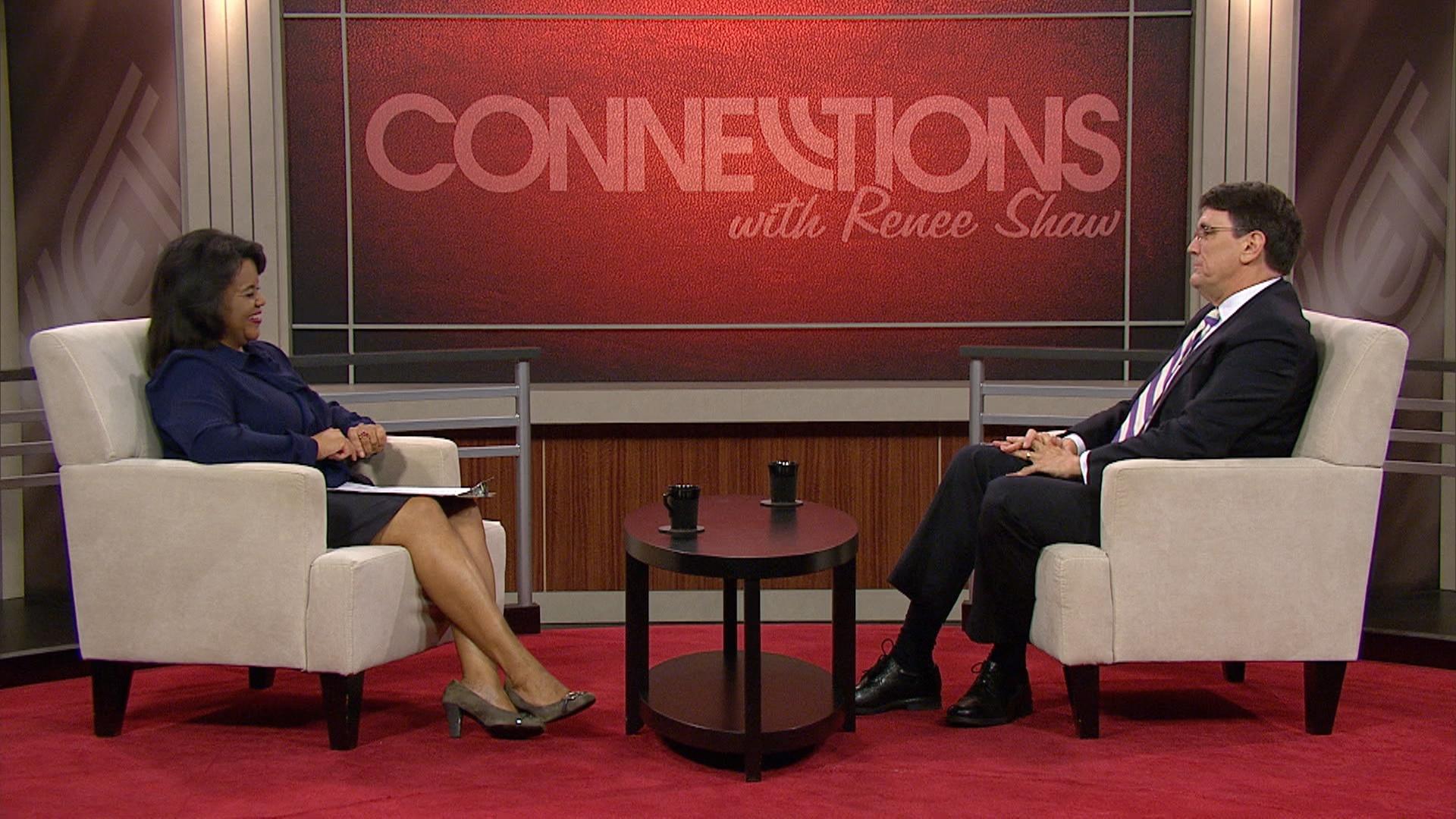
KET’s Connections explored the importance of nonprofits with David Thompson, vice president of public policy for the National Council of Nonprofits in Washington, D.C.
Challenges Facing Nonprofits
Thompson describes those who work for nonprofit organizations as a “community of optimists” who come to work every day believing they can help alleviate or even cure some of society’s biggest problems. And they tackle these issues, Thompson says, in ways that are usually more efficient and cost effective.
“Nonprofits do rush in where business and governments fear to tread,” Thompson says. “We don’t want businesses making profits off of people’s challenges and typically government doesn’t do as good a job.”
Like their for-profit counterparts, nonprofit businesses face a number of challenges these days. Thompson says many organizations still haven’t fully recovered from the recent recession. He says funding from local, state, and federal governments has declined, usually with the assumption that the nonprofits would simply make up the difference from private donors. But he says that’s not always the case.
Those donations could be further impacted as some states consider capping itemized tax deductions for charitable contributions. Thompson contends such moves only hurt the communities that nonprofits strive to serve. He says there is more giving to nonprofit groups when there is a tax incentive for making a donation. Thompson says several states that have enacted itemized deduction caps have included an exclusion for contributions to nonprofits.
The minimum wage debate presents a double-edged sword for some nonprofit groups, says Thompson. He says front-line workers who assist the economically disadvantaged support a higher minimum as way to help alleviate a host of social problems associated with poverty. But he says financial and development officers of nonprofits worry about how they would fund increased payroll costs for their own employees earning higher minimum wages.
On the regulatory side, Thompson applauds Kentucky for creating a legislative task force to find ways to streamline how nonprofits handle state government contracts. He says lawmakers want to cut red tape that makes it difficult for nonprofits to serve their communities and find ways to save taxpayer dollars.
Nonprofits and Politics
Most people are familiar with 501(c)3-designated nonprofit groups like public broadcasters, arts organizations, and entities that tackle social needs. These tax-exempt groups can earn a profit, but those moneys must be used to support the mission of the organization and not benefit the directors or other individuals in the entity. Thompson says 501(c)3s are prohibited from engaging in partisan, election-related activities.
The IRS actually has more than two dozen different categories of tax-exempt groups. One designation that often comes up during election cycles is the 501(c)4, or so-called “social welfare groups” that can represent a corporation, labor union, or some special interest. These organizations don’t have to disclose the names of their donors and are allowed to spend their funds on lobbying and other political activities related to the group’s mission.
Thompson says it’s important that people differentiate between nonpartisan, charitable nonprofits like those his council represents, and the partisan, non-charitable nonprofits pursuing a political agenda. He says the system won’t work if there are Democratic charities competing with Republican charities. He contends that the community challenges which charitable nonprofits seek to address are not partisan.
“Charitable nonprofits should be the safe haven from politics so that people aren’t questioning your message,” Thompson. “Charitable nonprofits are only successful if we garner trust. If we’re in the mud with everyone else, then we’re no more trustworthy than anyone else.”
Avoid Charity Scams
Charitable nonprofits across America are uniting for the Giving Tuesday campaign on Nov. 29. The social media initiative is designed to be an alternative to Black Friday and Cyber Monday consumerism by generating year-end giving to nonprofit groups.
As individuals consider donating to a favorite charity, Thompson warns people to always be on the lookout for scams. He says a legitimate nonprofit will never ask for a donor’s Social Security number. He also says a telephone solicitation may be suspect if the caller isn’t willing to mail you information about their organization.
If you have any concerns about charitable group or a donation request, Thompson says to contact the offices of the Kentucky Attorney General or Secretary of State. Further information about avoiding charitable giving scams is available on the attorney general’s website.
For those who want to start a nonprofit, Thompson recommends contacting the Kentucky Nonprofit Network. (KNN) He says they can provide guidance on how to apply for an IRS nonprofit designation and about state laws governing nonprofits.
The KNN can also tell you if an entity is already trying to address the issue that interests you. Thompson says it’s much easier to collaborate with an existing group than to build your own organization.
“Nonprofit work is hard, it is not glamorous,” Thompson warns. “Life’s going to get harder when you’re running a nonprofit.”