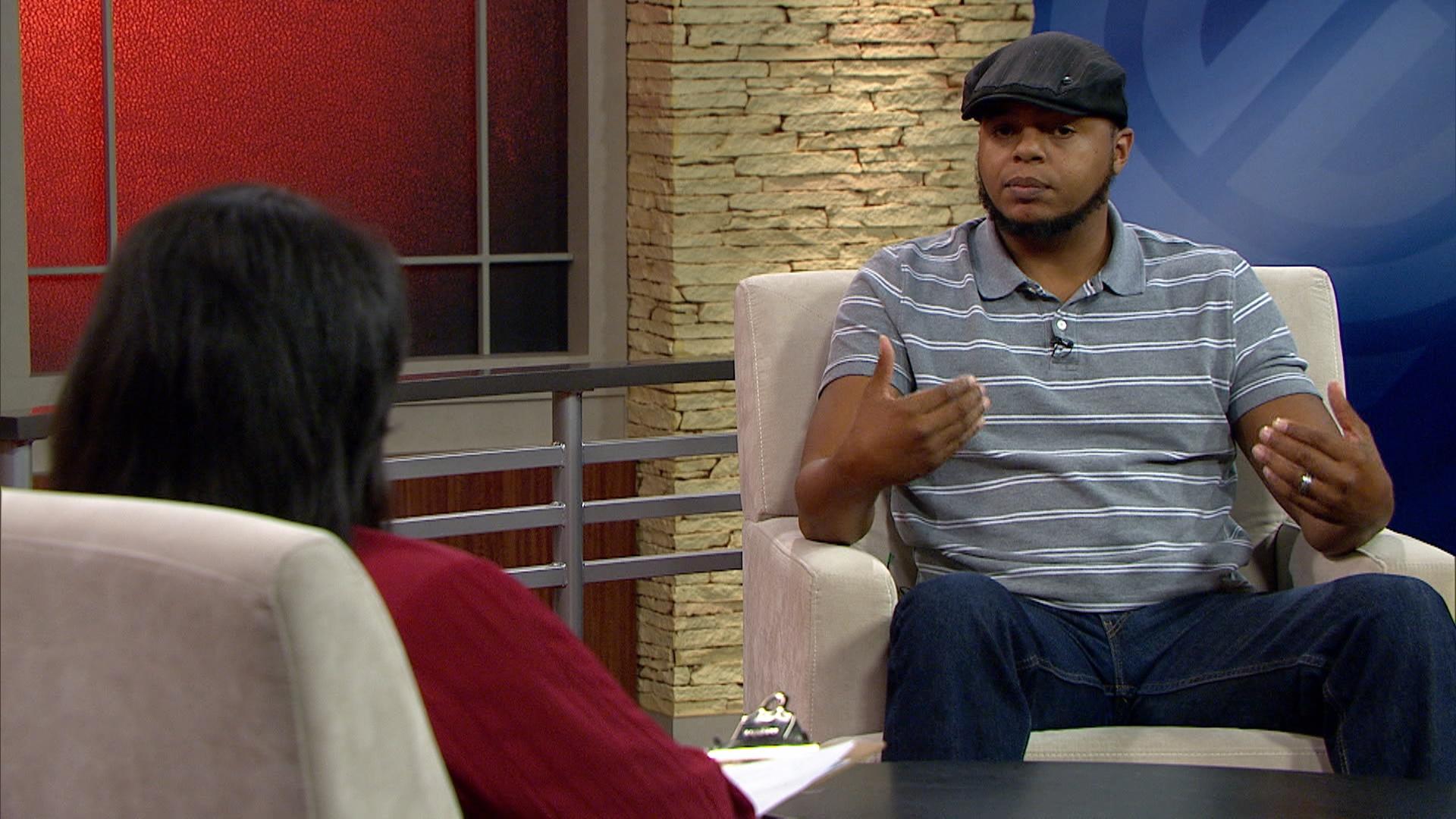


When the arts meet community activism, great things can happen. Just ask rapper Devine Carama and social worker Josh Nadzam. Carama is building on his music career to launch a number of local service projects, and Nadzam has developed a touring art studio that takes creative expression directly to children in underprivileged neighborhoods.
The two Lexington men appeared on KET’s Connections to share the passions that fuel their creativity and commitment to the community.
A Rapper With a Conscience
Devine Carama wrote his first rhyme in 1994 when he was 14 years old. That was back in the 1990s when rap and hip-hop music was finding mainstream and commercial success with artists like Tupac, Lauryn Hill, Jay-Z, and Common. But even as he enjoyed playing with raps and rhymes, his music was secondary to playing baseball. When he advanced to the minor leagues, Carama would even entertain his teammates with freestyle raps during their spring training practices.
But when an injury sidelined his baseball career, Carama wasn’t sure what to do with his life. He says he felt like a failure at sports, plus he was a single father to two daughters. So Carama decided to focus his full attention on music. And when he was saved in 2005, he found a new frame for his creative expression.
“I have no choice but to put God in my lyrics because that’s my life,” Carama says. “I come from an era where, whether it was negative or positive, you rapped about what you were living.”
Carama has produced 15 projects in the last decade. He explores a range of topics in his lyrics, from social issues to spirituality. In one rap, Carama says:
How can I lead this generation to God
If y’all think that I’m a fraud
Cause my life’s not perfect?
So I write with a purpose
and hopefully I get my life right
through these verses.
Carama says his music helped bring him to his community projects. A teacher at Lexington’s Bryan Station High School asked him to speak to a classroom of kids who liked his raps. Through that experience, he says, “something was put on my heart.” Now the hip-hop artist leads coat collection drives, mentoring programs, tutoring initiatives, and even a campaign to send bottled water to the residents of Flint, Mich.
Instead of writing lyrics that sexualize women or glorify violence like some commercially successful hip-hop artists do, Carama says he says he wants to use his God-given talents in responsible ways that can benefit his community. He says he wishes more performers would do the same.
“Today I think you have a lot of artists that are rapping about what they think will sell,” Camara says. “In return they’re carpooling our kids to ruin. … They’re not even living this lifestyle, yet they’re perpetuating the negative images and these kids are following it.”
The Healing Power of Art
The On the Move Art Studio has been on the road throughout Fayette County for about a year now. The project is the brainchild of social worker Josh Nadzam, who dreamed of using art to empower at-risk kids, but he didn’t want transportation to be a barrier to participation.
So in 2014 he acquired a vintage Streamline trailer, raised $8,000 to renovate it, and created a mobile art studio that travels to schools and neighborhoods around Fayette County to offer free art classes to children.
“I grew up in a really bad neighborhood and sometimes what happens is people with good intentions can do things in a way that’s paternalistic; they think they know what’s best for people living in those situations,” Nadzam says. “We didn’t want to do anything like that.”
Although drawing and painting may not seem like a cure for poverty, Nadzam says positive creative expression is critical for at-risk kids. He says poverty can contribute to low self-esteem in children and he sees the classes as a valuable antidote.
“It’s just been incredible the way arts can give a safe space for kids to open up,” Nadzam says. “It’s hard to feel intimidating when you have paint and crayons and markers.”
The studio relies on a cadre of volunteers to work with the children and clean up afterwards. Nadzam says that as funding for the non-profit organization that operates the project grows, he wants to add paid staff and develop a fleet of On the Move studios to visit communities across the region.
“By going into neighborhoods, if we’re there for an hour or two hours, that’s two hours that the kids are not getting in trouble, they’re not getting into violence, they’re not seeing violence, and they’re not being offered drugs or any sort of negative influences,” he says.
Nadzam says he considers Devine Carama a friend and a mentor in community activism. The two partner on an annual summer music and arts festival that’s held at a Lexington housing complex for low-income senior citizens. Nadzam says he’s disappointed that poverty issues haven’t been a greater focus in this year’s political debates. But even without more support from politicians, Nadzam says there are many ways that anyone can help a neighbor in need.
“We can’t just see an issue and then become keyboard warriors and just go on rants on social media,” Nadzam says. “We have to get out in the communities and be the change that we want to see.”