Skip to Main Content
Watch House Chambers

The Latest Data on Kentucky's Kids

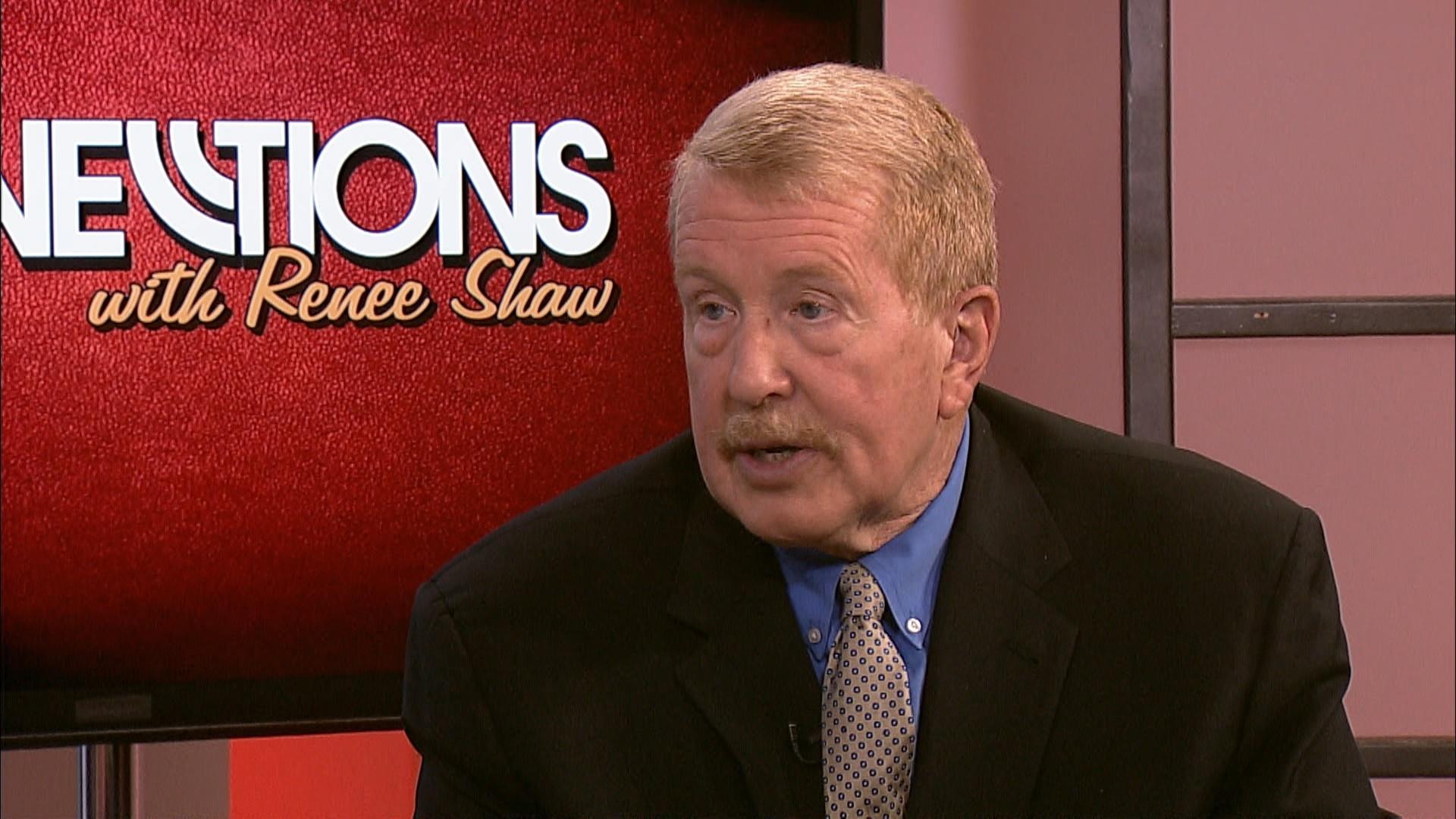
Terry Brooks, executive director of Kentucky Youth Advocates, talks about recent data in the 2017 KIDS COUNT Data Book concerning the well-being of Kentucky kids.
Season 12 Episode 39 Length 28:01 Premiere: 06/30/17

About

Connections

KET’s Connections features in-depth interviews with the influential, innovative and inspirational individuals who are shaping the path for Kentucky’s future.

From business leaders to entertainers to authors to celebrities, each week features an interesting and engaging guest covering a broad array of topics. Host Renee Shaw uses her extensive reporting experience to naturally blend casual conversation and hard-hitting questions to generate rich and full conversations about the issues impacting Kentucky and the world.


Tune-In

KET Sundays • 11:30 am/10:30 am
KET2 Sundays • 6/5 pm

Stream

Watch on KET’s website anytime or through the PBS Video App.

Podcast

The Connections podcast features each episode’s audio for listening.


Renee Shaw is the Director of Public Affairs and Moderator at KET, currently serving as host of KET’s weeknight public affairs program Kentucky Edition, the signature public policy discussion series Kentucky Tonight, the weekly interview series Connections, Election coverage and KET Forums.

Since 2001, Renee has been the producing force behind KET’s legislative coverage that has been recognized by the Kentucky Associated Press and the National Educational Telecommunications Association. Under her leadership, KET has expanded its portfolio of public affairs content to include a daily news and information program, Kentucky Supreme Court coverage, townhall-style forums, and multi-platform program initiatives around issues such as opioid addiction and youth mental health.  

Renee has also earned top awards from the Ohio Valley Chapter of the National Academy of Television Arts and Sciences (NATAS), with three regional Emmy awards. In 2023, she was inducted into the Silver Circle of the NATAS, one of the industry’s highest honors recognizing television professionals with distinguished service in broadcast journalism for 25 years or more.  

Already an inductee into the Kentucky Civil Rights Hall of Fame (2017), Renee expands her hall of fame status with induction into Western Kentucky University’s Hall of Distinguished Alumni in November of 2023.  

In February of 2023, Renee graced the front cover of Kentucky Living magazine with a centerfold story on her 25 years of service at KET and even longer commitment to public media journalism. 

In addition to honors from various educational, civic, and community organizations, Renee has earned top honors from the Associated Press and has twice been recognized by Mental Health America for her years-long dedication to examining issues of mental health and opioid addiction.  

In 2022, she was honored with Women Leading Kentucky’s Governor Martha Layne Collins Leadership Award recognizing her trailblazing path and inspiring dedication to elevating important issues across Kentucky.   

In 2018, she co-produced and moderated a 6-part series on youth mental health that was awarded first place in educational content by NETA, the National Educational Telecommunications Association. 

She has been honored by the AKA Beta Gamma Omega Chapter with a Coretta Scott King Spirit of Ivy Award; earned the state media award from the Kentucky Society of the Daughters of the American Revolution in 2019; named a Charles W. Anderson Laureate by the Kentucky Personnel Cabinet in 2019 honoring her significant contributions in addressing socio-economic issues; and was recognized as a “Kentucky Trailblazer” by the University of Kentucky Martin School of Public Policy and Administration during the Wendell H. Ford Lecture Series in 2019. That same year, Shaw was named by The Kentucky Gazette’s inaugural recognition of the 50 most notable women in Kentucky politics and government.  

Renee was bestowed the 2021 Berea College Service Award and was named “Unapologetic Woman of the Year” in 2021 by the Community Action Council.   

In 2015, she received the Green Dot Award for her coverage of domestic violence, sexual assault & human trafficking. In 2014, Renee was awarded the Anthony Lewis Media Award from the KY Department of Public Advocacy for her work on criminal justice reform. Two Kentucky governors, Republican Ernie Fletcher and Democrat Andy Beshear, have commissioned Renee as a Kentucky Colonel for noteworthy accomplishments and service to community, state, and nation.  

A former adjunct media writing professor at Georgetown College, Renee traveled to Cambodia in 2003 to help train emerging journalists on reporting on critical health issues as part of an exchange program at Western Kentucky University. And, she has enterprised stories for national media outlets, the PBS NewsHour and Public News Service.  

Shaw is a 2007 graduate of Leadership Kentucky, a board member of CASA of Lexington, and a longtime member of the Frankfort/Lexington Chapter of The Links Incorporated, an international, not-for-profit organization of women of color committed to volunteer service. She has served on the boards of the Kentucky Historical Society, Lexington Minority Business Expo, and the Board of Governors for the Ohio Valley Chapter of the National Academy of Television Arts and Sciences. 

Host Renee Shaw smiling in a green dress with a KET set behind her.

Positive Data Trends and Remaining Challenges for Kentucky’s Children

How would the commonwealth’s college basketball fans feel if their favorite team was ranked 34th in the nation instead of in the top 10?

They wouldn’t stand for it, says Kentucky Youth Advocates Executive Director Terry Brooks. So why, he asks, do they accept the fact that the state ranks 34th nationally in the overall well-being of its youngest citizens?

Brooks appeared on KET’s Connections to discuss Kentucky’s ranking in the new Kids Count Data Book from the Annie E. Casey Foundation. He also outlined several steps he thinks the state can take to bring about a revolution in child welfare.

A ‘Mixed Bag’ of Metrics
The data book groups a number of different metrics into four broad categories: economic well-being, education, health, and family and community (click here for a link to the report). The numbers for Kentucky show slight improvements in many areas, and little change or declines in other areas.

“Most states show across-the-board improvement or across-the-board decline,” Brooks says. “When you look at our report card, it’s such a mixed bag.”

In addition to the overall ranking of 34th, Kids Count has good rankings for Kentucky in education (24th) and health (22nd). In education, there are small gains in math and reading proficiency, but also a 3 percent increase since 2009 in the number of young children not in school. Every health category has improved in recent years, including fewer low-birthweight babies as well as fewer teens abusing drugs and alcohol. Kentucky continues to be slightly better than the national average in the percentage of children without health insurance.

The commonwealth ranks much lower in the other metrics: 38th for family and community, and 39th for economic factors. More than a quarter of Kentucky children live in poverty and more than a third of kids have parents who lack secure employment. The percentage of children living in single-parent families has grown worse since 2010, now topping out at 36 percent as of 2015.

Brooks says improving the economic well-being of families and children should be the top priority for legislators when they convene for the 2018 General Assembly session in January. He says economic factors have a direct impact on every other area of a child’s life, from their education to their health to the safety of their communities.

Help for Struggling Parents and Families
Kentucky Youth Advocates is promoting three ideas to help improve the lives of low-income families in the commonwealth. The first is a state earned income tax credit (EITC) that would give low-income working families a break on their taxes based on their earnings and the number of children in the home. Brooks says that would benefit families, their communities, and the commonwealth.

“We know that when that family gets to keep that money, they are not putting it in their off-shore account. They’re spending it in the local economy,” Brooks says. “It stimulates the local economy, which contributes to the state budget.”

Brooks says the federal EITC has enjoyed bipartisan support since it was introduced in the 1970s, and it has been an effective tool for fighting poverty. He says more than 30 states already offer some from of EITC to their residents. Brooks hopes the forthcoming special legislative session on tax reform will include discussion about an EITC for Kentucky.

The second economic tool Brooks suggests is to create micro-lending opportunities. That would help low income individuals with entrepreneurial ideas secure the capital they need to launch a business. Brooks says more than 20 states have such micro-lending programs. He says research indicates that Kentucky is a “poster candidate” for microenterprise.

“We are very comfortable with seed loans to Toyota or to UPS,” Brooks says.” So maybe we should become comfortable with small, reasonable, accountable startup loans [to low-income entrepreneurs].”

Finally, Brooks has an idea for a new way to deploy unemployment compensation funds. Instead of using those dollars to support people while they look for a job, he suggests funneling a portion of that money to non-profit community groups in need of help so they can hire unemployed people. Brooks says this “subsidized employment” gives those organizations the manpower they need, and an unemployed person an actual job.

“Who would not think that using unemployment dollars to get folks in the job market to have them doing honorable work, to help honorable community institutions, is not better than paying you not to work?” asks Brooks.

He adds that more than 30 states already offer some form of subsidized employment.

Health Issues
Why have health factors improved for Kentucky children even while economic factors remained stagnant? Brooks attributes that to more adults obtaining insurance coverage through the state’s Medicaid expansion and more children getting covered under the Kentucky Children’s Health Insurance Program (KCHIP), which provides free or low-cost health insurance for children under age 19 who otherwise wouldn’t have coverage.

But both of those items are at risk, says Brooks. Federal health care legislation being debated by Congress could radically change how Medicaid works and who it covers. In Kentucky, Gov. Matt Bevin has proposed an overhaul to the state’s Medicaid program that could also lead to significant changes. Brooks says he fears those steps could lead to fewer adults having health insurance, which will lead to fewer children being covered as well. He says that’s because the biggest factor determining whether a child has health coverage is if their parent has it.

“There’s lots of discussions in Frankfort as to what the next chapter of Medicaid coverage is going to look like in Kentucky,” says Brooks. “We have to make sure that folks in the governor’s office, folks in the Senate, and folks in the House know that when they talk about parent coverage, they’re really talking about kid coverage.”

As for CHIP, federal funding for that program comes up for renewal this fall, and Brooks fears it could fall victim to debates over replacing the Affordable Care Act. CHIP was created in the mid-1990s, according to Brooks, and has nothing to do with the ACA. He hopes Senate Majority Leader Mitch McConnell and the rest of Kentucky’s Congressional delegation will support a “robust” reauthorization of CHIP at the federal level so that funding for KCHIP can remain strong.

Foster and Kinship Care
With more than 8,000 Kentucky children in state care and thousands more at risk of abuse and neglect, Brooks says it’s time for a sweeping transformation of child welfare in the commonwealth.

“They deserve nothing less than a fundamental revolution to build their future,” says Brooks.

That’s why KYA is developing a broad policy agenda that will include ideas to address economic and health care issues, as well as help Kentuckians who are raising the children of family members. Brooks says more than 70,000 children live in so-called kinship care. He says these situations usually arise out of some kind of family crisis, such as when a parent faces a health problem, incarceration, or addiction.

Instead of those children going into the state’s foster care system, they wind up staying with relatives. Even though those family members essentially become foster parents, Brooks says they aren’t given the same supports the state gives certified foster families: They aren’t paid the stipend that foster parents receive, nor are they eligible for respite care, according to Brooks.

The state did offer small payments to adults providing kinship care, but former Gov. Steve Beshear ended that benefit because of state budget concerns during the recession. Brooks hopes the Bevin administration and lawmakers will restore that stipend, but the governor has resisted that idea, saying family members have a responsibility to take in young relatives in need.

“With all due respect to governor, that’s a great line, but it’s not reality,” says Brooks.

He contends many kinship caregivers have their own financial concerns even before they take on the economic burdens of raising one or more children. He also argues that helping kinship families is a more cost-effective solution than placing a child in state care.

“We know that there are a number of things that we can do to help folks in kinship care,” says Brooks. “It’s smart investments, it saves state money… and it’s better outcomes for kids.”

Sponsored by:

Season 12 Episodes

Kinship Care Activist Katie Okumu

S12 E46 Length 26:27 Premiere Date 08/25/17

Photographer Carol Peachee

S12 E45 Length 28:02 Premiere Date 08/18/17

Kentucky Valley Educational Cooperative

S12 E44 Length 28:28 Premiere Date 08/11/17

Sec. Vickie Yates Brown Glisson

S12 E43 Length 29:17 Premiere Date 08/04/17

Criminal Justice Reform

S12 E42 Length 28:08 Premiere Date 07/28/17

Kayla Rae Whitaker

S12 E41 Length 28:01 Premiere Date 07/14/17

Uncovering Bias in Preschool Education

S12 E40 Length 29:01 Premiere Date 07/07/17

The Latest Data on Kentucky's Kids

S12 E39 Length 28:01 Premiere Date 06/30/17

Building Leadership Skills

S12 E38 Length 29:01 Premiere Date 06/23/17

The Ali Center's Donald Lassere

S12 E37 Length 28:46 Premiere Date 06/16/17

Improving Nutrition in the Daily Diet

S12 E36 Length 27:06 Premiere Date 06/09/17

Alzheimer's Disease

S12 E35 Length 28:19 Premiere Date 06/02/17

Innovation at the Alltech Conference

S12 E34 Length 28:33 Premiere Date 05/26/17

Political Journalist Cokie Roberts

S12 E33 Length 28:06 Premiere Date 05/22/17

2017 Rx Drug Abuse & Heroin Summit

S12 E32 Length 28:03 Premiere Date 05/12/17

Alison Lundergan Grimes

S12 E31 Length 28:37 Premiere Date 05/09/17

Sexual Trauma in the Military

S12 E30 Length 28:01 Premiere Date 05/02/17

Foster Care

S12 E29 Length 28:46 Premiere Date 04/24/17

Justice Secretary John Tilley

S12 E23 Length 29:36 Premiere Date 04/14/17

Job Training in Kentucky

S12 E22 Length 29:31 Premiere Date 03/24/17

Kentucky Tourism

S12 E21 Length 28:01 Premiere Date 02/24/17

Reducing Youth Violence

S12 E20 Length 28:21 Premiere Date 02/17/17

State Treasurer Allison Ball

S12 E19 Length 28:51 Premiere Date 02/10/17

Poverty in America

S12 E18 Length 28:02 Premiere Date 02/03/17

Homelessness in Kentucky

S12 E17 Length 28:46 Premiere Date 01/27/17

Sadiqa Reynolds

S12 E16 Length 28:06 Premiere Date 01/20/17

Cory Jewell Jensen

S12 E15 Length 28:02 Premiere Date 01/13/17

Bill Goodman

S12 E14 Length 28:37 Premiere Date 01/06/17

Promoting Health Equity

S12 E13 Length 29:01 Premiere Date 12/16/16

Kentucky's Teacher of the Year

S12 E12 Length 27:22 Premiere Date 12/09/16

Important Issues for Seniors

S12 E11 Length 28:20 Premiere Date 11/18/16

Nonprofit Organizations

S12 E10 Length 28:22 Premiere Date 11/11/16

Iris Wilbur and Colmon Elridge

S12 E9 Length 28:01 Premiere Date 11/04/16

Alzheimer's Disease

S12 E8 Length 28:32 Premiere Date 10/28/16

Activism Through Music and Art

S12 E7 Length 28:31 Premiere Date 10/21/16

Paducah's Merryman House

S12 E6 Length 28:07 Premiere Date 10/14/16

The Achievement Gap

S12 E5 Length 28:01 Premiere Date 10/07/16

Discussing Domestic Violence

S12 E4 Length 28:32 Premiere Date 09/30/16

Musician Jon Secada

S12 E3 Length 29:13 Premiere Date 09/23/16

Playwright Mitzi Sinnott

S12 E2 Length 27:12 Premiere Date 09/15/16

FDA Chief Dr. Robert Califf

S12 E1 Length 26:26 Premiere Date 09/09/16

Smoking Cessation and Pregnancy

Preview Length 29:32 Premiere Date 09/08/17

See All Episodes

caret down

TV Schedules

Upcoming

No upcoming airdates

Recent

No recent airdates

Explore KET