

A tsunami wrapped in a hurricane…That’s how TV executive Dan Gasby describes Alzheimer’s Disease, the progressive brain disorder that robs patients of memory and other mental functions.
When Gasby’s wife, the supermodel, celebrity chef, and lifestyle maven B. Smith, was diagnosed with early onset Alzheimer’s in 2013, the couple pledged to make their journey public in hopes of helping other people facing the disease. Their day-to-day experiences are chronicled in the new book “Before I Forget.”
“When you go from being able to do basically everything to everything becoming a challenge, you stop and look back and you assess what’s important in life,” Gasby says.
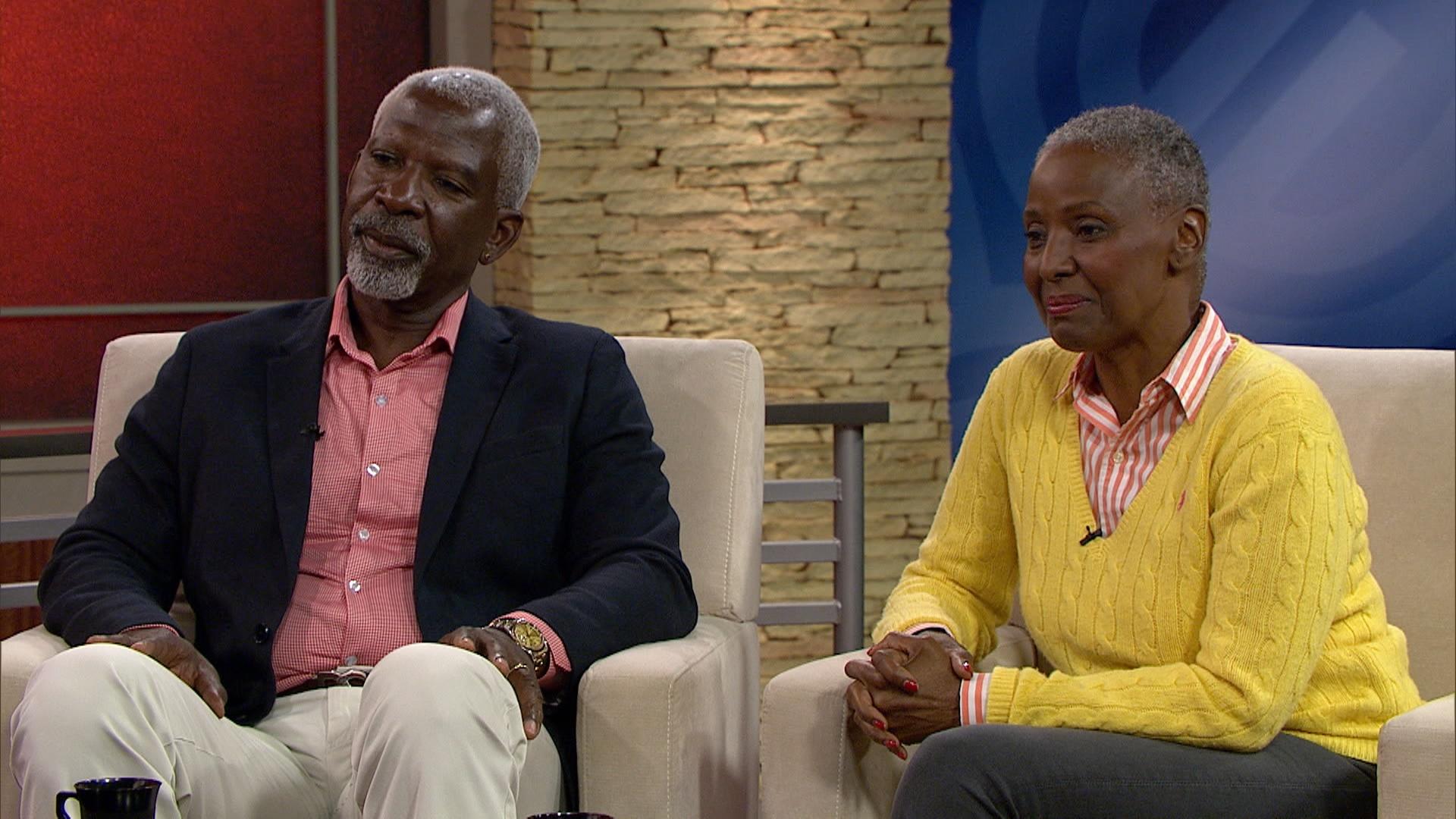
Smith and Gasby appeared on KET’s Connections to share some of the lessons they’ve learned from dealing with Alzheimer’s. Dr. Gregory Jicha with the University of Kentucky Sanders-Brown Center on Aging also discussed medical research about the disease.
Patience. Forgiveness. Acceptance.
Gasby says living with Alzheimer’s or as a caregiver for someone with the disease requires copious amounts of all three traits. He says dealing with Smith’s illness is messy and difficult, but he says they’re trying to focus on living in the moment and looking for the positives that remain in their lives.
“It’s given me a gift that I didn’t want,” Gasby says, “but it’s a gift that I’m glad I’ve got because you have to find something out of it that gets you to do more for others.”
He says being a caregiver usually isn’t a role that someone chooses. Instead he says the job goes to the person who remains after all the other family members and loved ones have stepped away from a difficult situation. Gasby admits that he does have “why me?” moments, but he always finds a way to lift himself back up and return to the work at hand.
That includes forgiving himself for mistakes he feels he’s made as a caregiver. When Smith briefly went missing in 2014, Gasby says he kicked himself and pleaded with God to bring her home safely so he could have another chance to care for her.
He says those who tend to someone with Alzheimer’s have to understand that the patient can’t be changed back to the person they once were. They must be accepted where they are in each particular situation. Even as Smith progresses through the disease, Gasby says his wife remains the nicest person he’s ever met. He says Alzheimer’s can’t change the essence of person even as dementia takes an advancing toll on cognitive abilities.
“Sweetie has challenges,” Gasby says of his wife. “We manage them. We’re not perfect but we’re in the moment and we’re in the game.”
Impacts for Minority Communities
Gasby calls Alzheimer’s a 21st century civil rights issues because of how it can disproportionately impact minorities, women, and the poor. He says blacks and Latinos are at least twice as likely to develop the disease. Of the 10,000 people diagnosed with Alzheimer’s each week, two-thirds of them are women, according to Gasby.
Then there’s the financial impact of the condition. Gasby says access to treatment protocols and 24-hour care can send families into bankruptcy.
“Alzheimer’s is something that you can’t negotiate with,” Gasby says. “It’s actually a form of domestic terrorism… This is a biological terrorist, a neurological terrorist.”
Minorities face additional risks when it comes to the disease. Dr. Gregory Jicha, a researcher with the University of Kentucky Sanders-Brown Center on Aging, says African Americans can develop Alzheimer’s an average of five to 10 years earlier than white patients. He also says other common health problems including diabetes, hypertension, and high cholesterol may also put blacks at higher risk for developing Alzheimer’s.
Jicha says doctors continue to make great strides in the disease that was first described in 1906. He says researchers are exploring a new range of early onset symptoms that affect verbal skills and visual recognition but leave memory intact. He says health officials hope to build on drug trials that appear to successfully treat the disease in animals into protocols that can be effective for humans. Jicha says the goal is to find a cure for Alzheimer’s by 2025.
Those efforts must include more patients of color participating in drug trials, according to both Gasby and Jicha.
“It’s important that all are represented [in research] so that we don’t end up finding a cure for 10 percent of the population,” Jicha says. “We need something that’s going to work for everyone.”
But minorities have not always fared well in the field of medical research. Gasby points to the infamous Tuskegee experiment in which the federal government purposefully infected black men with syphilis and then watched how the disease progressed without treatment. Gasby says he understands how that has caused people of color to avoid clinical research opportunities but he says minorities must get beyond those fears and participate more actively in Alzheimer’s research. Otherwise, he says doctors may come up with a cure that is effective for whites but not blacks or Latinos.
“We have to be honest with ourselves,” Gasby concludes. “Do we want our grandkids to suffer the same things that we’re seeing grandma dealing with today?”