

The traditional response to gun violence is usually a criminal justice approach of more cops on the streets and tougher sentences for perpetrators.
But in Metro Louisville, where there were 124 criminal homicides last year, city officials are considering a more holistic approach to the problem – one that sees it more as a public health crisis than a law enforcement issue.
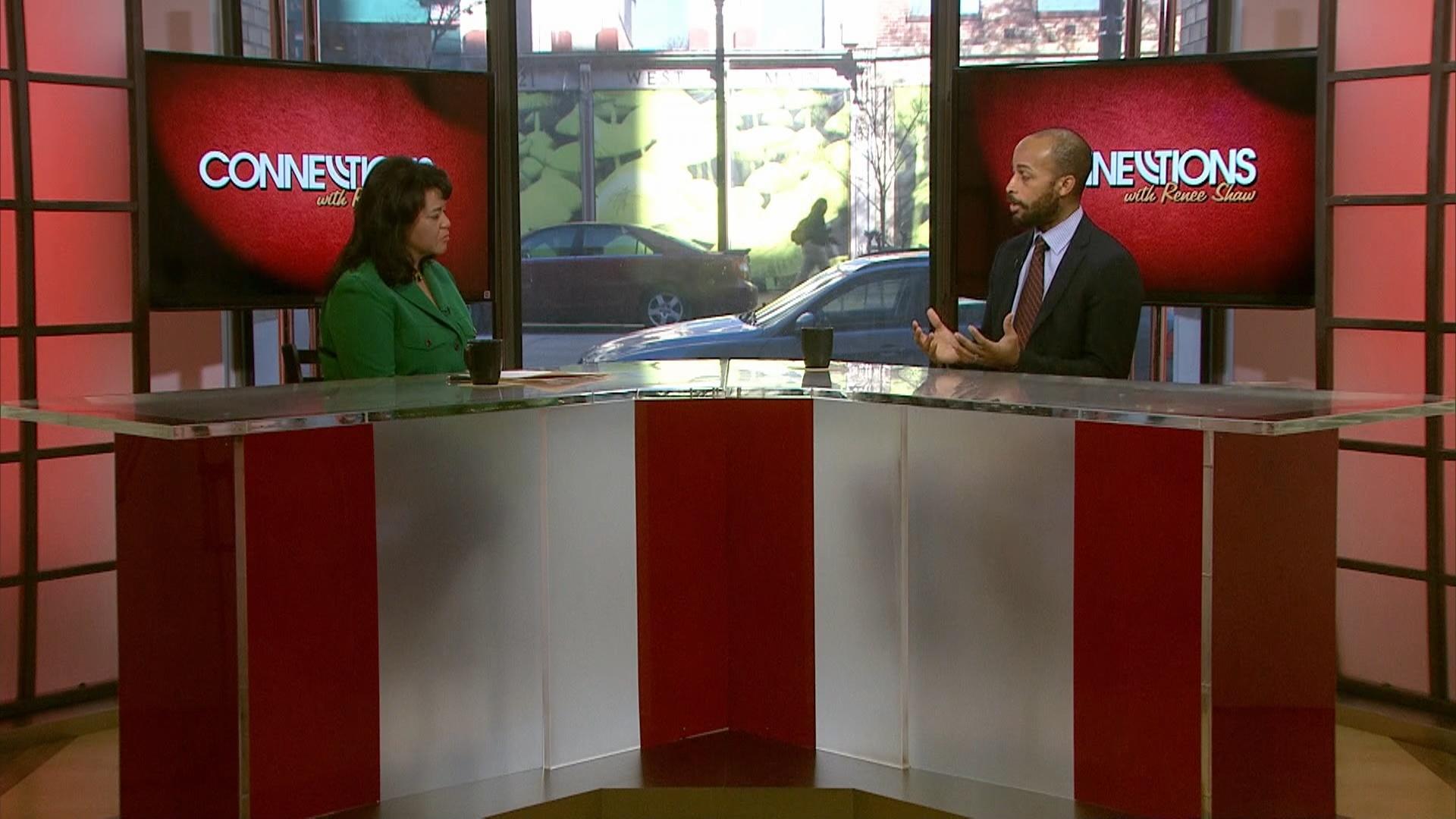
On KET’s Connections, Rashaad Abdur-Raham, director of the Louisville’s Office for Safe and Healthy Neighborhoods, discussed this new thinking about violence.
It can spread like a disease.
That’s how Abdur-Raham describes the progression of gun violence in a community. He says the people most exposed to gun activity are generally part of a social network of individuals who engage in gun violence. So the violence can spread from person to person, infecting members of that network and making gun use and retaliation a social norm for those group members.
Abdur-Raham says this public health view of violence is a challenging shift for some people who have been focused on a criminal justice response.
“For a very long time we’ve pathologized individuals,” Abdur-Raham says. “We’ve simply said these are bad people making bad decisions and therefore they must be punished very harshly.”
But Abdur-Raham argues that that only considers the symptoms of the disease of violence, not the root causes. He says those can include poverty, few job opportunities, addiction and mental health issues, poor quality schools, limited access to quality food or public green spaces, a lack of positive role models, and other issues. By focusing on those issues, Abdur-Raham says city officials can better respond with resources and social services for at-risk people and neighborhoods that can help reduce criminal activities.
Another critical factor, says Abdur-Raham, is to avoid labeling an entire community or group of people as violent when only relatively few individuals are engaging in criminal activity. For example, he says West Louisville is a large collection of diverse neighborhoods that have rich historical traditions and residents doing many good things. Yet all of West Louisville often gets stigmatized as impoverished and dangerous.
“The majority of violence occurs in very small concentrated areas and a very small number of people perpetuate that violence,” Abdur-Raham says. “So you have got a lot of great folks who are starting businesses, who are going to school, who are owning homes, who are giving back to the city, who are volunteering… and have continued to demonstrate the kind of leadership, the kind of hopefulness that defines the strength of the city.”
Violence at School
This different view of violence can also apply to students in school. Instead of simply punishing a child for engaging in negative behaviors, Abdur-Raham says educators can take a deeper look at the student’s life outside the classroom. For example, he says children may carry a gun not to use against fellow students, but rather to protect themselves as they transit dangerous territory between home and school.
By exploring the bigger issues in the child’s environment, Abdur-Raham says school officials and community leaders can then tailor a more appropriate response to help the child feel safe. He credits Jefferson County Public Schools for working to implement this “trauma-informed” approach to dealing with students. Instead of asking what’s wrong with the child, a trauma-informed perspective asks what happened to the child that could impact their ability to learn.
“What are some of the incidents or some of the obstacles or challenges that have impeded you? Is that not having food at home, is that witnessing domestic violence, is that being abused or neglected?” Abdur-Raham says. “So a trauma-informed school… asks the question, what has happened to you, and how are we more responsive to that, rather than looking at you as deficient.”
What also doesn’t work? Zero-tolerance policies towards student misconduct, says Abdur-Raham. He says fixed rules for punishments like detention, suspension, or expulsion don’t make schools safer, don’t help kids learn, or improve their behavior. What does work, according to Abdur-Raham, are positive supports and therapies that bring more structure to the classroom and to a student’s life. And those approaches aren’t as expensive as you might think.
“There’s a small investment on the front end that has a much broader return on the back end,” Abdur-Raham says. “It’s far cheaper than currently using some of those harsher disciplinary practices that lead to much greater expenses, whether it’s within a school system or within the community broadly.”
Countering Gang Culture
Whether a young offender is actually a gang member or simply engaging in gang-like behavior, Abdur-Raham says the city can do more to offer youth better alternatives to gang culture. He says gangs are effective at recruiting members because they offer young people a sense of control, power, and inclusion that is missing in their lives.
“How do we ensure that youth are getting those needs met in pro-social ways that give back to the community?” Abdur-Raham asks.
He says it will take schools, churches, businesses, and community groups working together to find ways to offer replacement opportunities so gang membership will look less attractive.
Finally if a person, especially a young person, has been charged with a crime, Abdur-Raham says there must be more ways to restore that person to being a productive member of the community. He points to Metro Louisville’s REimage initiative that offers 18- to 24-year olds with criminal backgrounds mentoring and addiction counseling as well as help completing their education and finding a job.
“The majority of people who get plugged back in to a working opportunity are incredibly loyal to that job position, are incredibly productive, and are some of the best employees you could get,” says Abdur-Raham.
“Folks who get another chance tend to do the right thing,” he says.