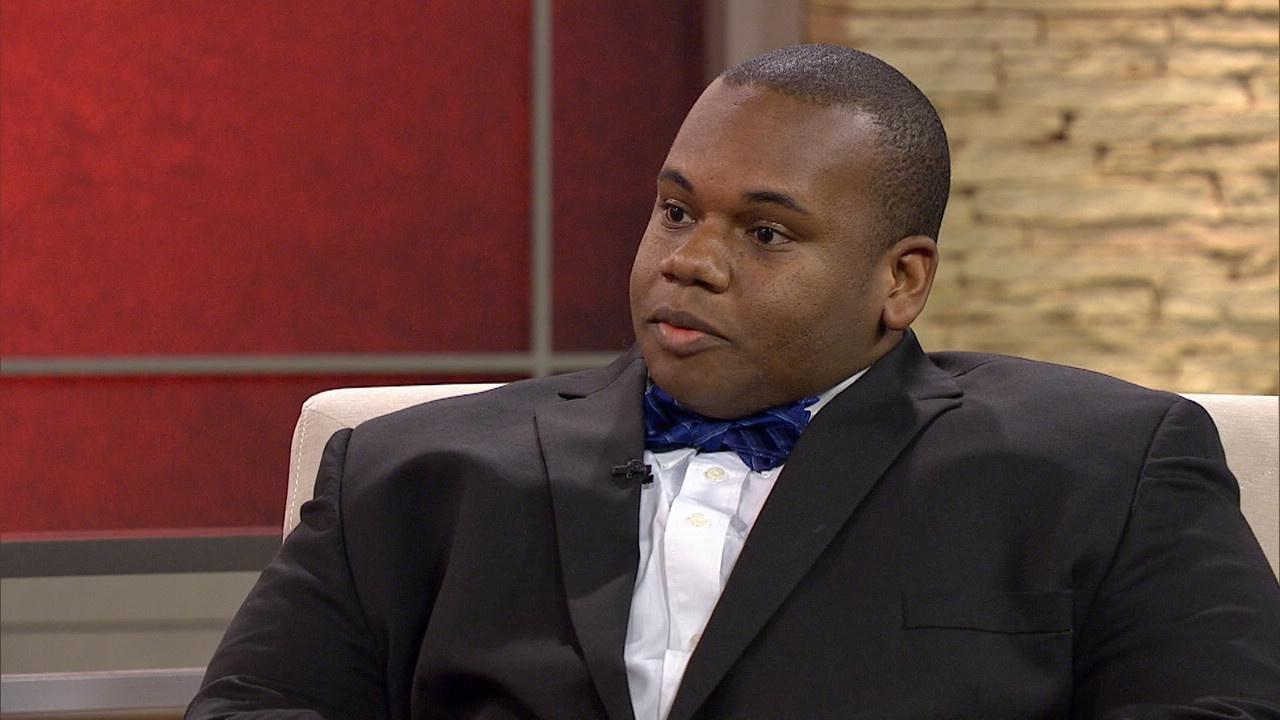


For Wayne Lewis, the shortcomings of America’s public schools are more than statistics in a report. As a former corrections officer and special education teacher, he’s seen how some kids, especially poor and minority students, fail to get high quality learning opportunities.
“I went into education because of my interest in wanting to see groups that have traditionally been marginalized get a fair shake,” Lewis says.
Now as an associate professor of education at the University of Kentucky, Lewis uses his training and his personal background to advocate for school choice. He appeared on Connections with KET’s Renee Shaw to discuss why he supports the effort to bring charter schools to the commonwealth.
Good Legislation Is Vital
Lewis says he defines charters as schools that are free and open to any student. In exchange for receiving public funding and greater latitude in teaching techniques and strategies, charters are held accountable for the academic performance of their students.
Beyond that basic definition, Lewis says charters can take many different forms, depending on the legislation that governs them. He says 42 states and the District of Columbia allow the schools, and each of them address the charter concept in their own ways.
“There’s absolutely no doubt that some states have done a much better job with crafting charter school laws and with holding charter schools accountable than other states,” Lewis says.
Kentucky legislators have debated charter schools for several years, but the push to bring them to the state now has an added advocate in Gov. Matt Bevin. He made school choice a key issue in his gubernatorial campaign last year. As they draft a charter school bill for the 2016 General Assembly, Lewis says lawmakers here can draw on the best practices from other states.
The successful states, according to Lewis, start with high thresholds for who can operate a charter school. Whether it’s a non-profit community-based organization or a for-profit entity, Lewis says they must be able to demonstrate thorough planning for curricula and instruction, staffing, funding and accounting principles, and deliverables in student performance.
If charter schools don’t have those standards in place, “then we end up with the same issues that we have with traditional public schools that for generation [after] generation have failed particular populations of students,” Lewis contends.
Addressing Achievement Gaps
When a new round of student test scores are announced in Kentucky, Lewis says education officials focus on which schools did better or worse. What they don’t talk about, he says, is how achievement gaps are getting worse in the commonwealth.
Lewis contends that low income and minority students are falling behind in reading and math in many school districts. He says achievement gaps result from a complicated mix of racial and socio-economic factors, and that parents, teachers, and communities all play a part in the problem.
“It frustrates me to no end to hear educators that can only talk about what families and communities ought to be doing without also recognizing that what schools have done and what schools are doing also play a significant role in achievement gaps,” Lewis says. “The truth is we all bear some of the responsibility for why we have the achievement gaps that we do, and we all can play a role in eliminating them.”
Lewis contends schools should hire a more diverse group of teachers who will better understand the backgrounds and life experiences of their students. He also wants schools to affirm all levels of parental involvement, regardless of how much time the parents are able to commit to their child’s education.
A Healthy Dose of Competition
But when traditional public schools fail to reduce achievement gaps, as Lewis contends they have, then something needs to change. And that’s where charter schools come in.
“I think the place where we are today is that a healthy dose of competition is needed for us to move forward,” Lewis says. “I think there needs to be competition, I think there needs to be choice because without those things, I don’t think there’s enough fire under our districts and under the state system to meet the needs of kids that traditionally haven’t been met.”
Opponents often argue that charter schools would drain financial resources away from already cash-strapped traditional schools. Lewis disputes that argument by saying that school funding already follows a student as they move between schools or districts. So Lewis contends the financial impact from charter schools should be no different.
The educator acknowledges that some specialized traditional schools like Lexington’s School for the Creative and Performing Arts or the Carter G. Woodson Academy are high quality alternatives for parents and students. But he says the demand to attend those schools far outpaces capacity, which is why he wants to see charters added to the list of public school options.
“I want to get to the place where every school that a kid attends is a school of choice, meaning the parents and the kid decided… this is the best place to meet their learning needs, whether it’s traditional public school, a magnet school, or a charter school,” Lewis says. “I don’t think anybody should be sentenced to a school or trapped in a school if they know their needs would be better met somewhere else.”
 KET’s education coverage is part of American Graduate: Let’s Make it Happen, a public media initiative made possible by the Corporation for Public Broadcasting.