Skip to Main Content

Addiction in Rural Communities

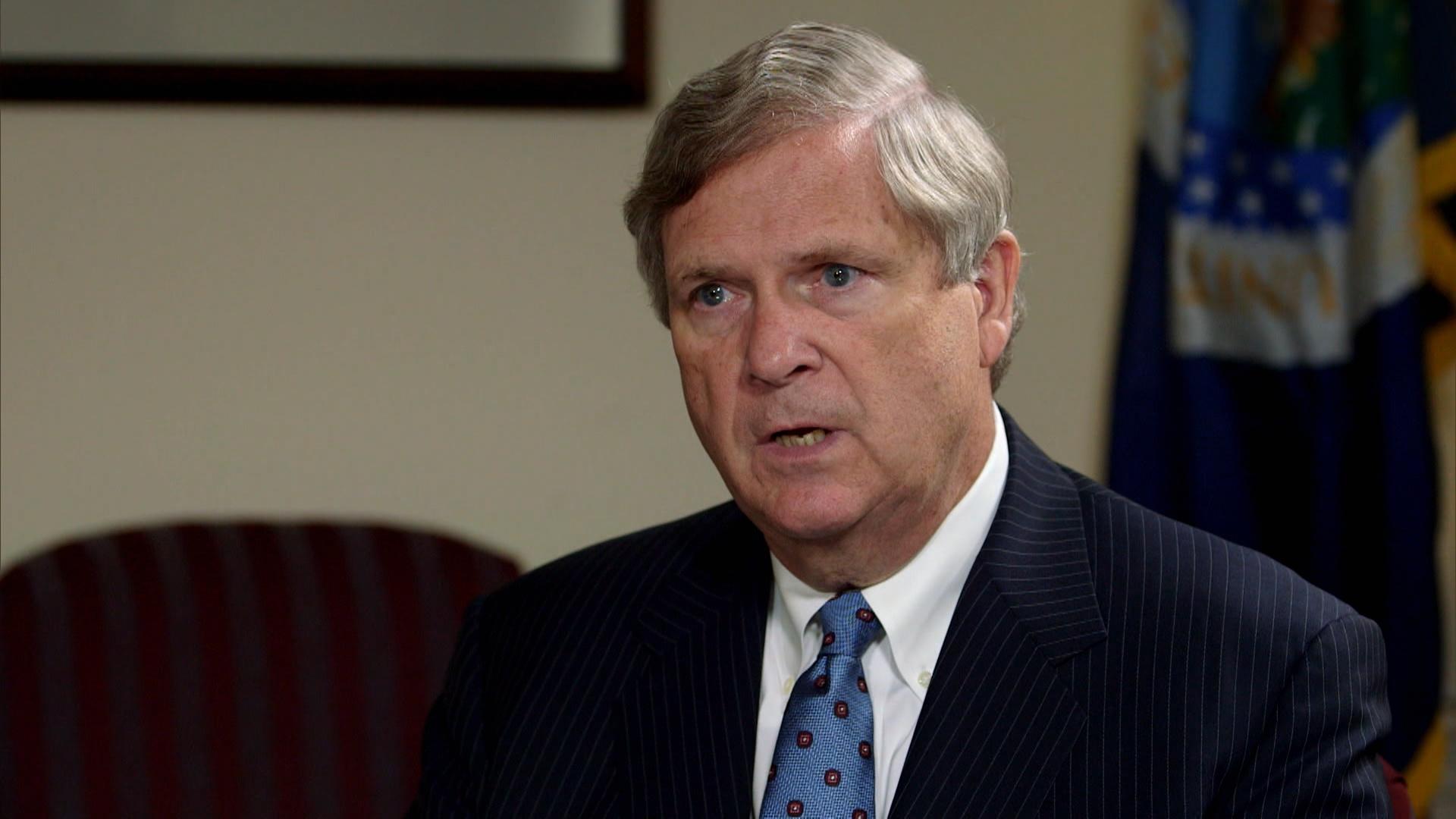
Agriculture Secretary Tom Vilsack is leading an inter-agency effort to combat the heroin and opioid crisis. The U.S. Department of Agriculture oversees a wide range of programs that benefit rural America, where the addiction problem has taken a significant toll.
Season 11 Episode 37 Length 29:26 Premiere: 07/07/16

About

Connections

KET’s Connections features in-depth interviews with the influential, innovative and inspirational individuals who are shaping the path for Kentucky’s future.

From business leaders to entertainers to authors to celebrities, each week features an interesting and engaging guest covering a broad array of topics. Host Renee Shaw uses her extensive reporting experience to naturally blend casual conversation and hard-hitting questions to generate rich and full conversations about the issues impacting Kentucky and the world.


Tune-In

KET Sundays • 11:30 am/10:30 am
KET2 Sundays • 6/5 pm

Stream

Watch on KET’s website anytime or through the PBS Video App.

Podcast

The Connections podcast features each episode’s audio for listening.


Renee Shaw is the Director of Public Affairs and Moderator at KET, currently serving as host of KET’s weeknight public affairs program Kentucky Edition, the signature public policy discussion series Kentucky Tonight, the weekly interview series Connections, Election coverage and KET Forums.

Since 2001, Renee has been the producing force behind KET’s legislative coverage that has been recognized by the Kentucky Associated Press and the National Educational Telecommunications Association. Under her leadership, KET has expanded its portfolio of public affairs content to include a daily news and information program, Kentucky Supreme Court coverage, townhall-style forums, and multi-platform program initiatives around issues such as opioid addiction and youth mental health.  

Renee has also earned top awards from the Ohio Valley Chapter of the National Academy of Television Arts and Sciences (NATAS), with three regional Emmy awards. In 2023, she was inducted into the Silver Circle of the NATAS, one of the industry’s highest honors recognizing television professionals with distinguished service in broadcast journalism for 25 years or more.  

Already an inductee into the Kentucky Civil Rights Hall of Fame (2017), Renee expands her hall of fame status with induction into Western Kentucky University’s Hall of Distinguished Alumni in November of 2023.  

In February of 2023, Renee graced the front cover of Kentucky Living magazine with a centerfold story on her 25 years of service at KET and even longer commitment to public media journalism. 

In addition to honors from various educational, civic, and community organizations, Renee has earned top honors from the Associated Press and has twice been recognized by Mental Health America for her years-long dedication to examining issues of mental health and opioid addiction.  

In 2022, she was honored with Women Leading Kentucky’s Governor Martha Layne Collins Leadership Award recognizing her trailblazing path and inspiring dedication to elevating important issues across Kentucky.   

In 2018, she co-produced and moderated a 6-part series on youth mental health that was awarded first place in educational content by NETA, the National Educational Telecommunications Association. 

She has been honored by the AKA Beta Gamma Omega Chapter with a Coretta Scott King Spirit of Ivy Award; earned the state media award from the Kentucky Society of the Daughters of the American Revolution in 2019; named a Charles W. Anderson Laureate by the Kentucky Personnel Cabinet in 2019 honoring her significant contributions in addressing socio-economic issues; and was recognized as a “Kentucky Trailblazer” by the University of Kentucky Martin School of Public Policy and Administration during the Wendell H. Ford Lecture Series in 2019. That same year, Shaw was named by The Kentucky Gazette’s inaugural recognition of the 50 most notable women in Kentucky politics and government.  

Renee was bestowed the 2021 Berea College Service Award and was named “Unapologetic Woman of the Year” in 2021 by the Community Action Council.   

In 2015, she received the Green Dot Award for her coverage of domestic violence, sexual assault & human trafficking. In 2014, Renee was awarded the Anthony Lewis Media Award from the KY Department of Public Advocacy for her work on criminal justice reform. Two Kentucky governors, Republican Ernie Fletcher and Democrat Andy Beshear, have commissioned Renee as a Kentucky Colonel for noteworthy accomplishments and service to community, state, and nation.  

A former adjunct media writing professor at Georgetown College, Renee traveled to Cambodia in 2003 to help train emerging journalists on reporting on critical health issues as part of an exchange program at Western Kentucky University. And, she has enterprised stories for national media outlets, the PBS NewsHour and Public News Service.  

Shaw is a 2007 graduate of Leadership Kentucky, a board member of CASA of Lexington, and a longtime member of the Frankfort/Lexington Chapter of The Links Incorporated, an international, not-for-profit organization of women of color committed to volunteer service. She has served on the boards of the Kentucky Historical Society, Lexington Minority Business Expo, and the Board of Governors for the Ohio Valley Chapter of the National Academy of Television Arts and Sciences. 

Host Renee Shaw smiling in a green dress with a KET set behind her.

Agriculture Secretary Takes on Crisis of Addiction in Rural Areas

It may seem like an unusual assignment to task the U.S. secretary of agriculture with finding solutions to the epidemic of heroin and prescription opioid abuse that’s sweeping the nation.

But Tom Vilsack, the former Iowa governor who is the longest serving member of President Obama’s cabinet, is up to the job. His agency, the U.S. Department of Agriculture, oversees a wide range of programs that benefit rural America, where the addiction problem has taken a significant toll.

And Vilsack grew up with a mother who abused alcohol and pills.

“My memories are, as a young child, watching my mom try to commit suicide on one occasion,” Vilsack recalls, and “having her distance herself from our family, going up into the attic of our home and drinking and taking prescription pills to ease the pain of a difficult life.”

Earlier this year, President Obama asked Vilsack to lead an inter-agency effort to address heroin and opioid abuse in rural America. The secretary appeared on Connections to discuss his ideas on how the federal government can help those with substance use disorders. The conversation is part of KET’s Inside Opioid Addiction initiative.

Addiction and Rural Communities
Although Americans aren’t suffering from more pain than they historically have, they are receiving an astounding number of prescriptions to treat that pain.

Since 1999 there’s been a 300 percent increase in the number of prescriptions written for opioid-based painkillers, according to Vilsack. In the year 2012 there were nearly 260 million prescriptions written, enough for every American adult to have a bottle, according to the Centers for Disease Control.

While those medications are generally dispensed with good intentions, Vilsack says too many people have become hooked on the painkillers. Then when they find themselves wanting a stronger high for a cheaper price, they turn to heroin.

Vilsack says the level of drug abuse is greater in rural America because the available jobs tend to be ones where people are more likely to be injured. Their visit to a doctor for relief may inadvertently send them down the path toward a deadly addiction.

But those who develop a substance abuse problem and live a small town can face additional challenges. Vilsack says more than three-quarters of rural communities lack addiction treatment facilities and professional counseling services. Then there’s the problem of getting people into treatment when it is available.

“Oftentimes it’s harder for rural folks because of their self-reliant, independent nature to acknowledge that they may have a problem, or for family members to acknowledge that there may be a problem within the family,” Vilsack says.

The Federal Government’s Response
Vilsack says his federal inter-agency effort will focus on four areas:

  • Expanding prevention education
  • Ensuring treatment availability in all parts of the country
  • Creating more support services for those in recovery
  • Helping addicts get the mental health services they need rather than sending them to jail

President Obama has requested $1.1 billion in the 2017 federal budget to combat the heroin and opioid drug crisis. Vilsack says most of that money would go towards increasing treatment facilities and expanding the use of medically assisted treatment, which uses specialized medications to help reduce the cravings for addictive drugs and the effects of detoxification among those in recovery.

The rest of the money will fund more treatment specialists, counselors, and medical professionals to deliver those services, as well as prevention and educational outreach.

“The key here is for Congress to understand it’s not enough to authorize programs that we’re already doing,” Vilsack says. “The key is that Congress combines that with additional resources so that we are really comprehensively and effectively dealing with this issue.”

The secretary also wants the Agriculture Department to take a more active role in the problem by continuing to fund telemedicine services, which uses broadband technology to connect rural doctors and health clinics to specialists around the country. Vilsack says telemedicine can be a useful tool for providing mental health counseling and substance abuse treatment in underserved areas.

The USDA also supports economic development efforts in rural communities. Vilsack says that’s critical because he contends people may be more likely to fall into addiction if they feel like there’s no hope for a better life.

“It is incumbent on us to understand the economic basis of a lot of the challenges that we face in rural America,” Vilsack says. “That’s why it’s important for us to redesign and revitalize the rural economy and I think there is a way to do that. … What people need to know is that there’s a plan, there’s a strategy, there’s a vision, and I think once they see that, then they begin thinking their tomorrow can be better than their today.”

Alternative Treatments for Pain
The fight against drug addiction will also require more of individuals, the pharmaceutical industry, and state officials, says Vilsack. He says patients who seek medical help for pain  should be willing to ask their doctor if taking an opioid-based painkiller is absolutely necessary for their condition, or if non-addictive drugs or other treatment options, like physical therapy, might work for them.

He adds that medical schools can do a better job of training their students about alternatives to traditional pain medicines and how to limit prescriptions for opioid drugs.

As for drug companies, Vilsack says they have a responsibility to reformulate their pain medications to make them less addictive, and to make it harder for addicts to abuse them.

Finally Vilsack hopes state governments continue to improve their prescription drug monitoring systems, which are designed to alert medical professionals to patients who may be abusing prescription drugs or who may be “doctor shopping” to find physicians who will prescribe them additional medications.

“The sooner we identify folks who are having trouble, who are going down the road of addiction, the easier it will be for us to help them,” says the secretary.

A Success Story
Vilsack says his mother was fortunate to have recovered from her seven-year addiction to alcohol and pills. On Christmas Day 1963, Dolly Vilsack decided to turn her life around and enter a long-term treatment program. With the support of her family, Dolly went on to reunite with her husband, learn to drive, hold a job, and live in sobriety for 14 years before her death from cancer.

Tom Vilsack says that addicts who are ready to enter recovery must have effective and readily available treatment services and the unflinching support of their families and communities to stay clean and sober. Given what he witnessed as a child, Vilsack admits it took him a long time to stop blaming his mother and see her addiction for what it was.

“I used to think when I was young that my mom was a flawed person, that her character wasn’t what it should be,” Vilsack says. “I now know that it’s a disease.”

The secretary says changing that mindset across society so that those with a substance use disorder no longer feel judged is crucial to winning the fight against addiction.

“Once we begin to make that shift in thought process, I think it’s going to be much easier to get the resources behind the prevention and the treatment and the community support for recovery.” Vilsack says.

foundation_logo2013This KET production is part of the Inside Opioid Addiction initiative, funded in part by the Foundation for a Healthy Kentucky.

Sponsored by:

Season 11 Episodes

Businessman Phil Wilkins

S11 E43 Length 26:31 Premiere Date 08/19/16

Training Business Leaders

S11 E42 Length 26:21 Premiere Date 08/12/16

NBA Great Dominique Wilkins

S11 E41 Length 27:47 Premiere Date 08/05/16

DEA Agent Gary Tuggle

S11 E40 Length 27:47 Premiere Date 07/29/16

Addiction and Public Health Reform

S11 E39 Length 29:11 Premiere Date 07/22/16

Addiction and the Criminal Justice System

S11 E38 Length 28:21 Premiere Date 07/15/16

Addiction in Rural Communities

S11 E37 Length 29:26 Premiere Date 07/07/16

Addiction and Mental Health

S11 E36 Length 29:06 Premiere Date 07/01/16

Recovery Services for Inmates

S11 E35 Length 28:26 Premiere Date 06/24/16

Veterans Treatment Court

S11 E34 Length 28:22 Premiere Date 06/17/16

Opioid Epidemic in Northern Ky.

S11 E33 Length 27:21 Premiere Date 06/10/16

Treatment Models for Addiction

S11 E32 Length 27:51 Premiere Date 06/03/16

Jazz Vocalist Jessie Laine Powell

S11 E31 Length 28:11 Premiere Date 05/27/16

Kentucky Oral Health Coalition

S11 E30 Length 28:21 Premiere Date 05/20/16

Dr. Kishonna Gray on Gaming

S11 E29 Length 28:06 Premiere Date 05/13/16

Advocating for Victims Rights

S11 E28 Length 28:46 Premiere Date 05/06/16

Advice for Parents on Coping Techniques

S11 E27 Length 28:06 Premiere Date 04/29/16

Author and Poet Crystal Wilkinson

S11 E26 Length 28:01 Premiere Date 04/22/16

Secretary Grimes on Voting Access

S11 E25 Length 28:31 Premiere Date 04/15/16

Child Abuse and Neglect

S11 E24 Length 28:01 Premiere Date 04/08/16

Overcoming Eating Disorders

S11 E21 Length 28:59 Premiere Date 02/26/16

Lt. Gov. Jenean Hampton

S11 E19 Length 28:16 Premiere Date 02/12/16

Remembering Georgia Davis Powers

S11 E18 Length 29:31 Premiere Date 02/05/16

Giving Students a Voice

S11 E17 Length 28:01 Premiere Date 01/29/16

Addressing Youth Violence

S11 E16 Length 28:11 Premiere Date 01/22/16

Professor Wayne Lewis

S11 E15 Length 28:01 Premiere Date 01/15/16

Ed. Commissioner Stephen Pruitt

S11 E14 Length 28:06 Premiere Date 01/08/16

State Sen. Julie Raque Adams

S11 E13 Length 28:31 Premiere Date 01/01/16

Kentucky First Lady Jane Beshear

S11 E11 Length 28:57 Premiere Date 12/11/15

Miss Kentucky Clark Davis

S11 E10 Length 29:03 Premiere Date 11/20/15

Ari Berman on Voting Rights

S11 E9 Length 28:01 Premiere Date 11/13/15

Poet Allison Joseph

S11 E8 Length 28:01 Premiere Date 11/06/15

Journalist Dorothy Gilliam

S11 E7 Length 28:41 Premiere Date 10/30/15

Author Jacinda Townsend

S11 E6 Length 28:01 Premiere Date 10/09/15

Kellie Blair Hardt

S11 E5 Length 28:16 Premiere Date 10/02/15

Childhood Cancer

S11 E4 Length 28:01 Premiere Date 09/25/15

Kentucky African-American Encyclopedia

S11 E3 Length 28:11 Premiere Date 09/18/15

Manny Caulk

S11 E2 Length 28:09 Premiere Date 09/11/15

25th Anniversary of the Americans with Disabilities Act

S11 E1 Length 28:31 Premiere Date 09/03/15

See All Episodes

caret down

TV Schedules

Upcoming

No upcoming airdates

Recent

No recent airdates

Explore KET