Skip to Main Content

Addiction and the Criminal Justice System

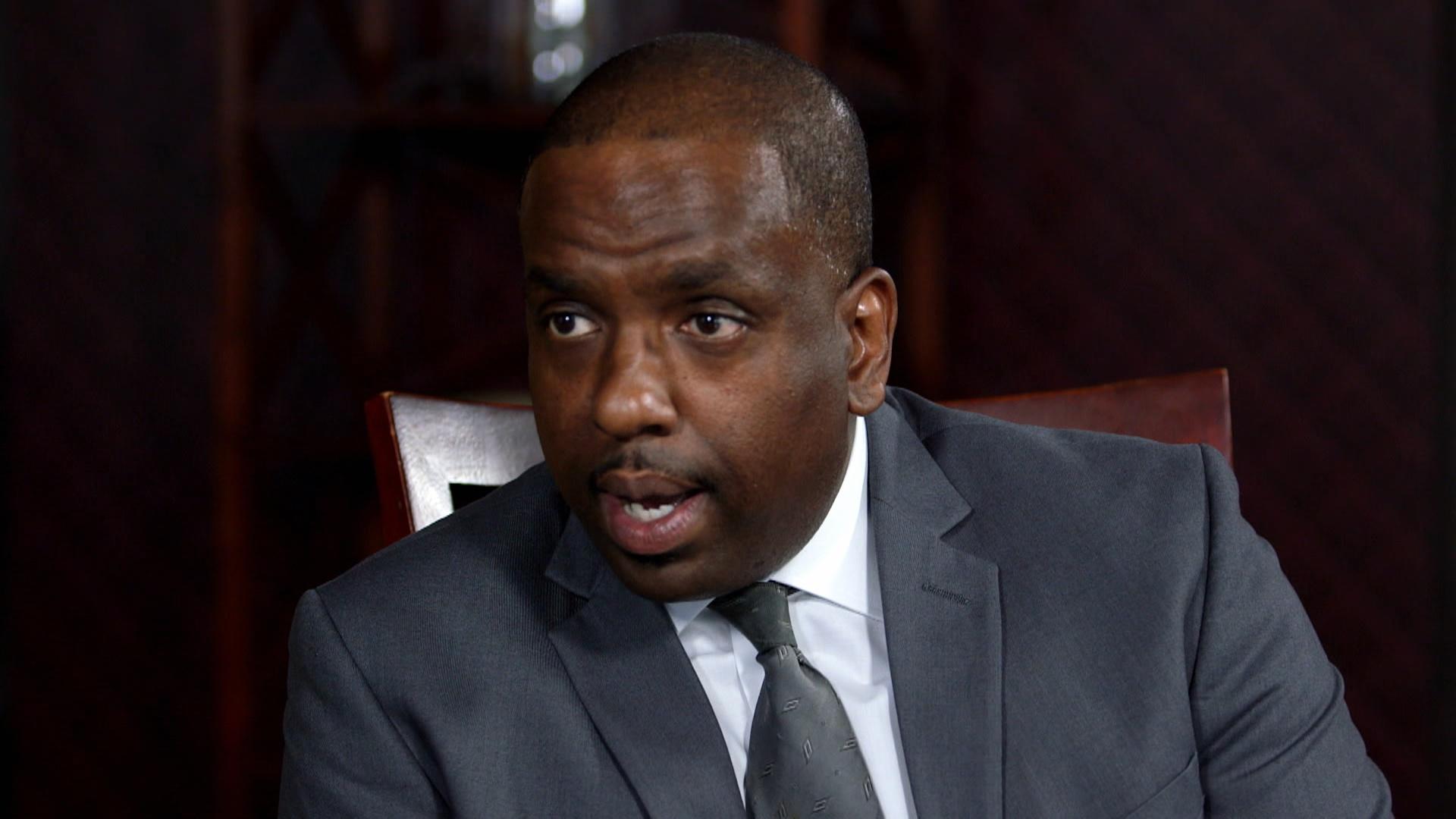
Renee's guest is Terrence Walton, chief operating officer of the National Association of Drug Court Professionals. Renee talks with Terrence Walton in Baltimore, Maryland, about the success of drug courts in helping addicts recover and reducing crime. Part of KET's "Inside Opioid Addiction" initiative, funded in part by a grant from the Foundation for a Healthy Kentucky.
Season 11 Episode 38 Length 28:21 Premiere: 07/15/16

About

Connections

KET’s Connections features in-depth interviews with the influential, innovative and inspirational individuals who are shaping the path for Kentucky’s future.

From business leaders to entertainers to authors to celebrities, each week features an interesting and engaging guest covering a broad array of topics. Host Renee Shaw uses her extensive reporting experience to naturally blend casual conversation and hard-hitting questions to generate rich and full conversations about the issues impacting Kentucky and the world.


Tune-In

KET Sundays • 11:30 am/10:30 am
KET2 Sundays • 6/5 pm

Stream

Watch on KET’s website anytime or through the PBS Video App.

Podcast

The Connections podcast features each episode’s audio for listening.


Renee Shaw is the Director of Public Affairs and Moderator at KET, currently serving as host of KET’s weeknight public affairs program Kentucky Edition, the signature public policy discussion series Kentucky Tonight, the weekly interview series Connections, Election coverage and KET Forums.

Since 2001, Renee has been the producing force behind KET’s legislative coverage that has been recognized by the Kentucky Associated Press and the National Educational Telecommunications Association. Under her leadership, KET has expanded its portfolio of public affairs content to include a daily news and information program, Kentucky Supreme Court coverage, townhall-style forums, and multi-platform program initiatives around issues such as opioid addiction and youth mental health.  

Renee has also earned top awards from the Ohio Valley Chapter of the National Academy of Television Arts and Sciences (NATAS), with three regional Emmy awards. In 2023, she was inducted into the Silver Circle of the NATAS, one of the industry’s highest honors recognizing television professionals with distinguished service in broadcast journalism for 25 years or more.  

Already an inductee into the Kentucky Civil Rights Hall of Fame (2017), Renee expands her hall of fame status with induction into Western Kentucky University’s Hall of Distinguished Alumni in November of 2023.  

In February of 2023, Renee graced the front cover of Kentucky Living magazine with a centerfold story on her 25 years of service at KET and even longer commitment to public media journalism. 

In addition to honors from various educational, civic, and community organizations, Renee has earned top honors from the Associated Press and has twice been recognized by Mental Health America for her years-long dedication to examining issues of mental health and opioid addiction.  

In 2022, she was honored with Women Leading Kentucky’s Governor Martha Layne Collins Leadership Award recognizing her trailblazing path and inspiring dedication to elevating important issues across Kentucky.   

In 2018, she co-produced and moderated a 6-part series on youth mental health that was awarded first place in educational content by NETA, the National Educational Telecommunications Association. 

She has been honored by the AKA Beta Gamma Omega Chapter with a Coretta Scott King Spirit of Ivy Award; earned the state media award from the Kentucky Society of the Daughters of the American Revolution in 2019; named a Charles W. Anderson Laureate by the Kentucky Personnel Cabinet in 2019 honoring her significant contributions in addressing socio-economic issues; and was recognized as a “Kentucky Trailblazer” by the University of Kentucky Martin School of Public Policy and Administration during the Wendell H. Ford Lecture Series in 2019. That same year, Shaw was named by The Kentucky Gazette’s inaugural recognition of the 50 most notable women in Kentucky politics and government.  

Renee was bestowed the 2021 Berea College Service Award and was named “Unapologetic Woman of the Year” in 2021 by the Community Action Council.   

In 2015, she received the Green Dot Award for her coverage of domestic violence, sexual assault & human trafficking. In 2014, Renee was awarded the Anthony Lewis Media Award from the KY Department of Public Advocacy for her work on criminal justice reform. Two Kentucky governors, Republican Ernie Fletcher and Democrat Andy Beshear, have commissioned Renee as a Kentucky Colonel for noteworthy accomplishments and service to community, state, and nation.  

A former adjunct media writing professor at Georgetown College, Renee traveled to Cambodia in 2003 to help train emerging journalists on reporting on critical health issues as part of an exchange program at Western Kentucky University. And, she has enterprised stories for national media outlets, the PBS NewsHour and Public News Service.  

Shaw is a 2007 graduate of Leadership Kentucky, a board member of CASA of Lexington, and a longtime member of the Frankfort/Lexington Chapter of The Links Incorporated, an international, not-for-profit organization of women of color committed to volunteer service. She has served on the boards of the Kentucky Historical Society, Lexington Minority Business Expo, and the Board of Governors for the Ohio Valley Chapter of the National Academy of Television Arts and Sciences. 

Host Renee Shaw smiling in a green dress with a KET set behind her.

The Role of Drug Courts in Helping Addicts Recover

Growing up in the 1980s, Terrence Walton witnessed the devastating effects of crack cocaine on individuals, families, and entire communities. He also saw the results of what he calls the federal government’s well-intentioned efforts to combat addiction.

“I think the unintended consequences of the War on Drugs ended up becoming a war on drug users and people who were living with addiction,” Walton says.

Now, of the roughly 2.5 million people imprisoned in America today, Walton says almost half of them have a substance abuse problem.

Walton is the chief operating officer of the National Association of Drug Court Professionals (NADCP), an organization that provides training and technical assistance to drug courts across America. He appeared on KET’s Connections to discuss how the specialized courts help divert criminals with drug addictions away from prison and into highly structured treatment and recovery programs.

According to the NADCP, Miami-Dade County, Fla., launched the nation’s first drug court in 1989 when judges and law enforcement officers there realized that the existing approach of jailing addicts for criminal conduct neither addressed addiction nor reduced crime.

Now, there are more than 2,000 such courts across America. Kentucky implemented its first drug court in 1996, and the courts now operate in 115 counties. In addition to getting addicts the treatment they need, the courts are also designed to reduce incarceration time, prison operating costs, and recidivism rates.

Now that the criminal justice system is battling a new addiction crisis, one rooted in prescription opioid and heroin abuse, Walton says there’s an even greater demand for drug courts.

“We need another approach that emphasizes addiction being the brain-based disorder that we know it is, and finding smart, effective, compassionate strategies for dealing with it,” Walton says.

The Evolution of Drug Courts
The drug court concept started as a way to divert low-level offenders with a substance use disorder into treatment, according to Walton. But over the years, he says they’ve discovered that the program is more effective and beneficial to those facing more serious charges for crimes like assault or domestic violence. Walton says new or low-level criminals with an addiction may be better handled by the public health system, whereas repeat offenders may need the greater structure and accountability of a drug court.

“Drug courts are for individuals who have demonstrated that they are unable to successfully complete treatment, stick with it, and avoid criminal activities,” Walton says, “not because they’re awful people, not because they’re career criminals but because they are living with an addiction that keeps tripping them up.”

Despite what critics have said of the programs, Walton contends drug courts are not “soft on crime.”

“A lot of participants who have graduated [from these programs] have said, ‘This is the hardest time I’ve ever done,’” says Walton.

Drug court programs generally involve some combination of regular counseling sessions, cognitive behavioral therapy, participation in a self-help abstinence program, frequent drug screenings, regular court check-ins, and a work or continuing education requirement. Some courts now also include what’s called medication-assisted treatment, in which participants receive drugs to help alleviate withdrawal symptoms and break their dependence on narcotics or alcohol. Those who fail to meet the court’s requirements may be returned to the traditional criminal justice system to face charges for their crime.

Walton says new research is changing how counselors treat drug court participants who continue to wrestle with their habit. He says the science of brain disorders like addiction indicates that sanctions should be levied on individuals who refuse treatment, and not on those who may suffer a relapse.

“If this drug-addicted man, woman, or young person is doing what we asked them to do, they’re going to treatment, they’re giving it their best shot, and they’re still struggling, well that’s their disorder and they shouldn’t be jailed for that,” Walton says. “As drug courts get that message, then drug courts fulfill the promise to actually reduce incarceration time.”

Steps to Recovery
Walton says about half of the nation’s drug courts employ some sort of medication-assisted treatment (MAT) that use Methadone, Buprenorphine, or other pharmaceutical to aid in the recovery process. He says the reason MATs aren’t in wider use is because some treatment providers that partner with the courts don’t offer that form of treatment. Walton says some treatment specialists simply aren’t familiar with MATs, while others may believe that the drugs used in MATs conflict with the goals of abstinence-based recovery models.

In addition to addressing the physical effects of abuse, Walton says those in recovery often have to change their thought patterns. Some addicts, he says, have spent years of their lives focused on how to get the drugs they need to stay high. He says a research-based drug court approach, one that combines counseling with MAT in a highly structured environment, has proven to be an effective intervention to introduce people to long-term recovery and health.

“Drug court graduates are taking care of their children, they’re going back to school, they’re getting jobs, they’re paying taxes, they are pursing the American dream,” Walton says. “They are finding their path and their purpose in life and that’s good for them but it’s also good for us.”

While his focus is on the criminal justice system, Walton says we all have a part to play in fighting substance abuse. He encourages citizens to advocate for more federal, state, and local funding for more and better treatment services, especially for those who can’t afford to enter private recovery programs.

“We envision a world where there is treatment court or some other appropriate response for every person in the system who is living with a substance use or mental health disorder,” says Walton. “And not just a treatment court, but one that works, one that is research-based, one that that is evidenced-based. That’s my vision.”

foundation_logo2013This KET production is part of the Inside Opioid Addiction initiative, funded in part by the Foundation for a Healthy Kentucky.

Sponsored by:

Season 11 Episodes

Businessman Phil Wilkins

S11 E43 Length 26:31 Premiere Date 08/19/16

Training Business Leaders

S11 E42 Length 26:21 Premiere Date 08/12/16

NBA Great Dominique Wilkins

S11 E41 Length 27:47 Premiere Date 08/05/16

DEA Agent Gary Tuggle

S11 E40 Length 27:47 Premiere Date 07/29/16

Addiction and Public Health Reform

S11 E39 Length 29:11 Premiere Date 07/22/16

Addiction and the Criminal Justice System

S11 E38 Length 28:21 Premiere Date 07/15/16

Addiction in Rural Communities

S11 E37 Length 29:26 Premiere Date 07/07/16

Addiction and Mental Health

S11 E36 Length 29:06 Premiere Date 07/01/16

Recovery Services for Inmates

S11 E35 Length 28:26 Premiere Date 06/24/16

Veterans Treatment Court

S11 E34 Length 28:22 Premiere Date 06/17/16

Opioid Epidemic in Northern Ky.

S11 E33 Length 27:21 Premiere Date 06/10/16

Treatment Models for Addiction

S11 E32 Length 27:51 Premiere Date 06/03/16

Jazz Vocalist Jessie Laine Powell

S11 E31 Length 28:11 Premiere Date 05/27/16

Kentucky Oral Health Coalition

S11 E30 Length 28:21 Premiere Date 05/20/16

Dr. Kishonna Gray on Gaming

S11 E29 Length 28:06 Premiere Date 05/13/16

Advocating for Victims Rights

S11 E28 Length 28:46 Premiere Date 05/06/16

Advice for Parents on Coping Techniques

S11 E27 Length 28:06 Premiere Date 04/29/16

Author and Poet Crystal Wilkinson

S11 E26 Length 28:01 Premiere Date 04/22/16

Secretary Grimes on Voting Access

S11 E25 Length 28:31 Premiere Date 04/15/16

Child Abuse and Neglect

S11 E24 Length 28:01 Premiere Date 04/08/16

Overcoming Eating Disorders

S11 E21 Length 28:59 Premiere Date 02/26/16

Lt. Gov. Jenean Hampton

S11 E19 Length 28:16 Premiere Date 02/12/16

Remembering Georgia Davis Powers

S11 E18 Length 29:31 Premiere Date 02/05/16

Giving Students a Voice

S11 E17 Length 28:01 Premiere Date 01/29/16

Addressing Youth Violence

S11 E16 Length 28:11 Premiere Date 01/22/16

Professor Wayne Lewis

S11 E15 Length 28:01 Premiere Date 01/15/16

Ed. Commissioner Stephen Pruitt

S11 E14 Length 28:06 Premiere Date 01/08/16

State Sen. Julie Raque Adams

S11 E13 Length 28:31 Premiere Date 01/01/16

Kentucky First Lady Jane Beshear

S11 E11 Length 28:57 Premiere Date 12/11/15

Miss Kentucky Clark Davis

S11 E10 Length 29:03 Premiere Date 11/20/15

Ari Berman on Voting Rights

S11 E9 Length 28:01 Premiere Date 11/13/15

Poet Allison Joseph

S11 E8 Length 28:01 Premiere Date 11/06/15

Journalist Dorothy Gilliam

S11 E7 Length 28:41 Premiere Date 10/30/15

Author Jacinda Townsend

S11 E6 Length 28:01 Premiere Date 10/09/15

Kellie Blair Hardt

S11 E5 Length 28:16 Premiere Date 10/02/15

Childhood Cancer

S11 E4 Length 28:01 Premiere Date 09/25/15

Kentucky African-American Encyclopedia

S11 E3 Length 28:11 Premiere Date 09/18/15

Manny Caulk

S11 E2 Length 28:09 Premiere Date 09/11/15

25th Anniversary of the Americans with Disabilities Act

S11 E1 Length 28:31 Premiere Date 09/03/15

See All Episodes

caret down

TV Schedules

Upcoming

No upcoming airdates

Recent

No recent airdates

Explore KET