Skip to Main Content

FIRST STEP Act - Criminal Justice Reform

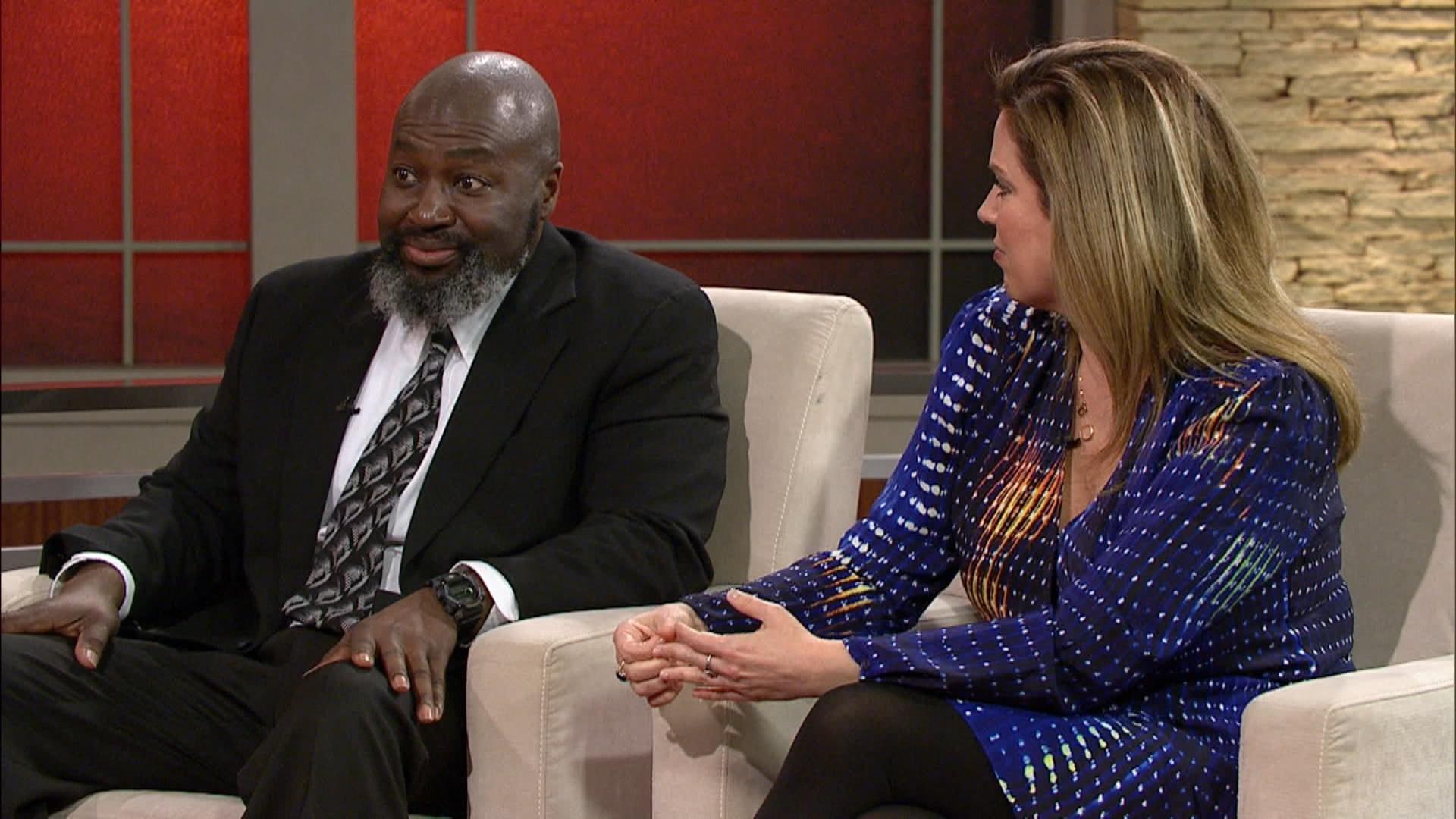
Renee welcomes Matthew Charles, former felon and prison reform advocate, and Holly Harris, executive director of the Justice Action Network, to discuss criminal justice reform and the FIRST STEP Act.
Season 14 Episode 22 Length 27:44 Premiere: 03/31/19

About

Connections

KET’s Connections features in-depth interviews with the influential, innovative and inspirational individuals who are shaping the path for Kentucky’s future.

From business leaders to entertainers to authors to celebrities, each week features an interesting and engaging guest covering a broad array of topics. Host Renee Shaw uses her extensive reporting experience to naturally blend casual conversation and hard-hitting questions to generate rich and full conversations about the issues impacting Kentucky and the world.


Tune-In

KET Sundays • 11:30 am/10:30 am
KET2 Sundays • 6/5 pm

Stream

Watch on KET’s website anytime or through the PBS Video App.

Podcast

The Connections podcast features each episode’s audio for listening.


Renee Shaw is the Director of Public Affairs and Moderator at KET, currently serving as host of KET’s weeknight public affairs program Kentucky Edition, the signature public policy discussion series Kentucky Tonight, the weekly interview series Connections, Election coverage and KET Forums.

Since 2001, Renee has been the producing force behind KET’s legislative coverage that has been recognized by the Kentucky Associated Press and the National Educational Telecommunications Association. Under her leadership, KET has expanded its portfolio of public affairs content to include a daily news and information program, Kentucky Supreme Court coverage, townhall-style forums, and multi-platform program initiatives around issues such as opioid addiction and youth mental health.  

Renee has also earned top awards from the Ohio Valley Chapter of the National Academy of Television Arts and Sciences (NATAS), with three regional Emmy awards. In 2023, she was inducted into the Silver Circle of the NATAS, one of the industry’s highest honors recognizing television professionals with distinguished service in broadcast journalism for 25 years or more.  

Already an inductee into the Kentucky Civil Rights Hall of Fame (2017), Renee expands her hall of fame status with induction into Western Kentucky University’s Hall of Distinguished Alumni in November of 2023.  

In February of 2023, Renee graced the front cover of Kentucky Living magazine with a centerfold story on her 25 years of service at KET and even longer commitment to public media journalism. 

In addition to honors from various educational, civic, and community organizations, Renee has earned top honors from the Associated Press and has twice been recognized by Mental Health America for her years-long dedication to examining issues of mental health and opioid addiction.  

In 2022, she was honored with Women Leading Kentucky’s Governor Martha Layne Collins Leadership Award recognizing her trailblazing path and inspiring dedication to elevating important issues across Kentucky.   

In 2018, she co-produced and moderated a 6-part series on youth mental health that was awarded first place in educational content by NETA, the National Educational Telecommunications Association. 

She has been honored by the AKA Beta Gamma Omega Chapter with a Coretta Scott King Spirit of Ivy Award; earned the state media award from the Kentucky Society of the Daughters of the American Revolution in 2019; named a Charles W. Anderson Laureate by the Kentucky Personnel Cabinet in 2019 honoring her significant contributions in addressing socio-economic issues; and was recognized as a “Kentucky Trailblazer” by the University of Kentucky Martin School of Public Policy and Administration during the Wendell H. Ford Lecture Series in 2019. That same year, Shaw was named by The Kentucky Gazette’s inaugural recognition of the 50 most notable women in Kentucky politics and government.  

Renee was bestowed the 2021 Berea College Service Award and was named “Unapologetic Woman of the Year” in 2021 by the Community Action Council.   

In 2015, she received the Green Dot Award for her coverage of domestic violence, sexual assault & human trafficking. In 2014, Renee was awarded the Anthony Lewis Media Award from the KY Department of Public Advocacy for her work on criminal justice reform. Two Kentucky governors, Republican Ernie Fletcher and Democrat Andy Beshear, have commissioned Renee as a Kentucky Colonel for noteworthy accomplishments and service to community, state, and nation.  

A former adjunct media writing professor at Georgetown College, Renee traveled to Cambodia in 2003 to help train emerging journalists on reporting on critical health issues as part of an exchange program at Western Kentucky University. And, she has enterprised stories for national media outlets, the PBS NewsHour and Public News Service.  

Shaw is a 2007 graduate of Leadership Kentucky, a board member of CASA of Lexington, and a longtime member of the Frankfort/Lexington Chapter of The Links Incorporated, an international, not-for-profit organization of women of color committed to volunteer service. She has served on the boards of the Kentucky Historical Society, Lexington Minority Business Expo, and the Board of Governors for the Ohio Valley Chapter of the National Academy of Television Arts and Sciences. 

Host Renee Shaw smiling in a green dress with a KET set behind her.

Criminal Justice Reform and the FIRST STEP Act

It is the stuff of nightmares.

After having served 21 years for federal drug and gun crimes, Matthew Charles got a second chance at life when he gained early release from prison under a new federal law meant to reduce racial disparities in sentencing. Charles moved to Nashville and got a minimum-wage job. He bought a car, reconnected with family, had a girlfriend, went to church, and volunteered for the local food pantry.

But two years later, the courts came back to Charles and said he had to return to prison. As a “career criminal,” he wasn’t eligible for the early release he had been granted. So, in early 2018, he turned himself back in to federal custody.

Outrage over Charles’ plight fueled passage of the federal FIRST STEP Act late last year. The wide-ranging criminal justice reform measure addresses sentencing guidelines that impacted Charles and thousands of other people locked up on drug charges. Days after President Donald Trump signed the bill into law, Charles’ public defenders were back in court, seeking his release.

On Jan. 3, Charles became a free man once again, the first to be released under the FIRST STEP Act. But his story continues to take twists and turns that illustrate the many challenges that convicted felons face when re-entering society.

Charles shared his story on KET’s Connections with Renee Shaw. The program also featured Holly Harris, executive director of the Justice Action Network, a nonprofit organization that lobbies for criminal justice reforms at the state and national level.

As a young man, Charles racked up a series of criminal charges, including larceny, assault, and gun crimes. When crack cocaine came to his neighborhood in the 1990s, he started selling it.

“I sorely regret it because now I look back and see the harm it actually had done to the community,” he says

When Charles was arrested in 1995 on federal drug charges, he was sentenced to 35 years in prison. Under drug laws at that time, sentences for people who possessed crack cocaine were far tougher than for those with powder cocaine, even though they are the same substance.

“It was based on racial disparity that affected the African-American community more than it did anything else,” says Charles.

In prison, Charles was able to turn his life around. He committed to his Christian faith and led Bible studies for other inmates. He took classes to become a law clerk and helped prisoners with their legal filings. He maintained a clean disciplinary record. In short, he was a model prisoner.

Then in 2010, the Obama Administration passed the Fair Sentencing Act, which reduced the disparity between sentences for crack and powder cocaine possession, and eliminated mandatory minimums for simple possession of crack. Charles filed a petition with the court and was able to get his sentence reduced. After two decades in prison, he was paroled in 2016.

But there was a problem. The Fair Sentencing Act didn’t cover so-called “career offenders” like Charles. That’s why two years later, the court ordered him back to prison despite everything he was able to achieve both as a model prisoner and then as a model parolee. He would have to serve another decade towards his original 35-year sentence.

“I was kind of disappointed when I had to return to prison,” Charles says today, “but because of my faith, I’ll never be bitter or angry.”

Challenges to Re-entry
The case rallied criminal justice reform advocates like Holly Harris to take up Charles’ cause.

“What was the public-safety benefit to sending Matthew Charles back to prison?” says Harris. “For two years he had been out, he had proven he was rehabilitated.”

The group advocated for a new round of sentencing reforms embodied in the FIRST STEP Act, also known as the Formerly Incarcerated Re-enter Society Transformed Safely Transitioning Every Person Act. It made the Fair Sentencing Act retroactive, which allowed career offenders like Charles eligible for the reduced sentences. Harris says there are many more people like Charles who also could benefit from the new rules.

“The sad thing is, our prisons are filled with people who are talented, who are smart, who are capable, who are good people who can really come back to society and do great things,” Harris says. “Even people who’ve committed violent crimes can change and really be assets to our community, so let’s not just lock them up and throw away the key and forget about these individuals.”

In the weeks since his second release, Charles has become something of a celebrity, appearing on cable news talks shows to advocate for prison reform. He was also a guest of President Trump at his State of the Union address in February.

But the transition hasn’t been easy for Charles. He has been unable to rent an apartment because of his criminal record and because he has no credit history. So for now, he’s staying with friends and sleeping on their couch.

“When you limit the opportunity that a person has after they’ve paid their debt to society, then you’re forcing their hand,” says Charles. “Most people don’t want to get out and then come back [to prison], but the fact that there’s not many opportunities for them once they do, then they feel that they’re being denied their dignity that they deserve.”

Charles says the housing problem could be easily addressed. He says there are tax breaks for employers who will hire former convicts, so why not provide the same incentives to landlords?

“We want that to spread throughout the city because we don’t need all the felons in one apartment complex or one neighborhood, because that would be a recipe for disaster,” he says.

More Work Remains on Prison Reform
In addition to helping former felons secure safe housing, Harris says lawmakers need to allow greater access to criminal expungement. Many states, including Kentucky, allow some people who have completed their sentences to have low-level felony convictions expunged from their records. But Harris says federal lawmakers have yet to pass any expungement legislation.

She also advocates for more funding for treatment and rehabilitation efforts, especially for inmates who suffer from a substance use disorder or a mental health problem. Harris says the FIRST STEP Act does include such provisions, but no money has been appropriated for them yet. She says states that invest in more jails rather than in helping inmates find work and housing upon release have higher rates of recidivism.

“They’re just going to return to crime, return to prison,” says Harris. “We’re no safer, we’re throwing good money after bad, and this is the cycle of failure that we’ve got to break.”

Prison should be about rehabilitation, according to Charles, rather than excessive punishment, since most inmates will eventually be released back to society. He says taxpayers should want those in prison to improve themselves so that they will be better citizens when they are released.

“They’re either going to work beside you or work with one of your family members or friends at a job,” Charles says, “so don’t you want that person coming out changed and different from how they were when they went inside?”

Sponsored by:

Season 14 Episodes

The 'I Was Here' Project

S14 E36 Length 27:42 Premiere Date 08/04/19

Mike Runyon and Sherita Miller; Wendy Kobler

S14 E35 Length 26:57 Premiere Date 07/28/19

Filmmaker Lynn Novick

S14 E33 Length 28:27 Premiere Date 07/14/19

Brent Hutchinson; Christine Thompson - Education

S14 E32 Length 27:37 Premiere Date 07/07/19

Lieutenant Governor Jenean Hampton - Youth Mental Health

S14 E31 Length 26:32 Premiere Date 06/02/19

Julie Cerel - Youth Suicide Prevention

S14 E29 Length 26:32 Premiere Date 05/19/19

Dale Suttles - Sunrise Children's Services

S14 E28 Length 27:33 Premiere Date 05/12/19

Education in Rural Eastern Kentucky

S14 E27 Length 28:13 Premiere Date 05/05/19

Joshua A. Douglas - Voting Rights Reform

S14 E25 Length 26:32 Premiere Date 04/21/19

Jay Box - Ky. Community & Technical College System

S14 E24 Length 26:32 Premiere Date 04/14/19

Author and Life Coach Colene Elridge

S14 E23 Length 26:19 Premiere Date 04/07/19

FIRST STEP Act - Criminal Justice Reform

S14 E22 Length 27:44 Premiere Date 03/31/19

Cheryl A. Oldham

S14 E21 Length 26:38 Premiere Date 02/22/19

Linda Hampton - Early Childhood

S14 E20 Length 29:47 Premiere Date 02/15/19

Donald Mason

S14 E19 Length 26:34 Premiere Date 02/08/19

Community Action Council; First 5 Lex

S14 E18 Length 28:53 Premiere Date 02/01/19

Seamus Carey

S14 E17 Length 26:57 Premiere Date 01/25/19

Michael Benson

S14 E16 Length 27:32 Premiere Date 01/18/19

Dr. Aaron Thompson

S14 E14 Length 28:13 Premiere Date 01/11/19

Mary Todd Lincoln and Lincoln Lexington Walking Tour

S14 E13 Length 28:55 Premiere Date 12/14/18

Youth Suicide

S14 E12 Length 29:22 Premiere Date 12/07/18

Jean Schumm and Amanda Gale

S14 E11 Length 28:22 Premiere Date 11/16/18

M. Christopher Brown II

S14 E10 Length 28:02 Premiere Date 11/09/18

Frank Harris

S14 E9 Length 25:17 Premiere Date 11/02/18

U.S. Rep. Andy Barr

S14 E8 Length 29:16 Premiere Date 10/26/18

Amy McGrath

S14 E7 Length 29:02 Premiere Date 10/19/18

Kevin Chapman - Youth Mental Health

S14 E6 Length 28:47 Premiere Date 10/12/18

Carol Cecil; Resa Gonzalez - Youth Mental Health

S14 E5 Length 26:03 Premiere Date 10/05/18

Joe Bargione - Youth Mental Health

S14 E4 Length 28:57 Premiere Date 09/28/18

WKU President Timothy Caboni

S14 E3 Length 28:40 Premiere Date 09/21/18

Dr. Neeli Bendapudi

S14 E1 Length 28:47 Premiere Date 09/14/18

See All Episodes

caret down

TV Schedules

Upcoming

No upcoming airdates

Recent

No recent airdates

Explore KET