Skip to Main Content
Watch House Chambers

Julie Cerel - Youth Suicide Prevention

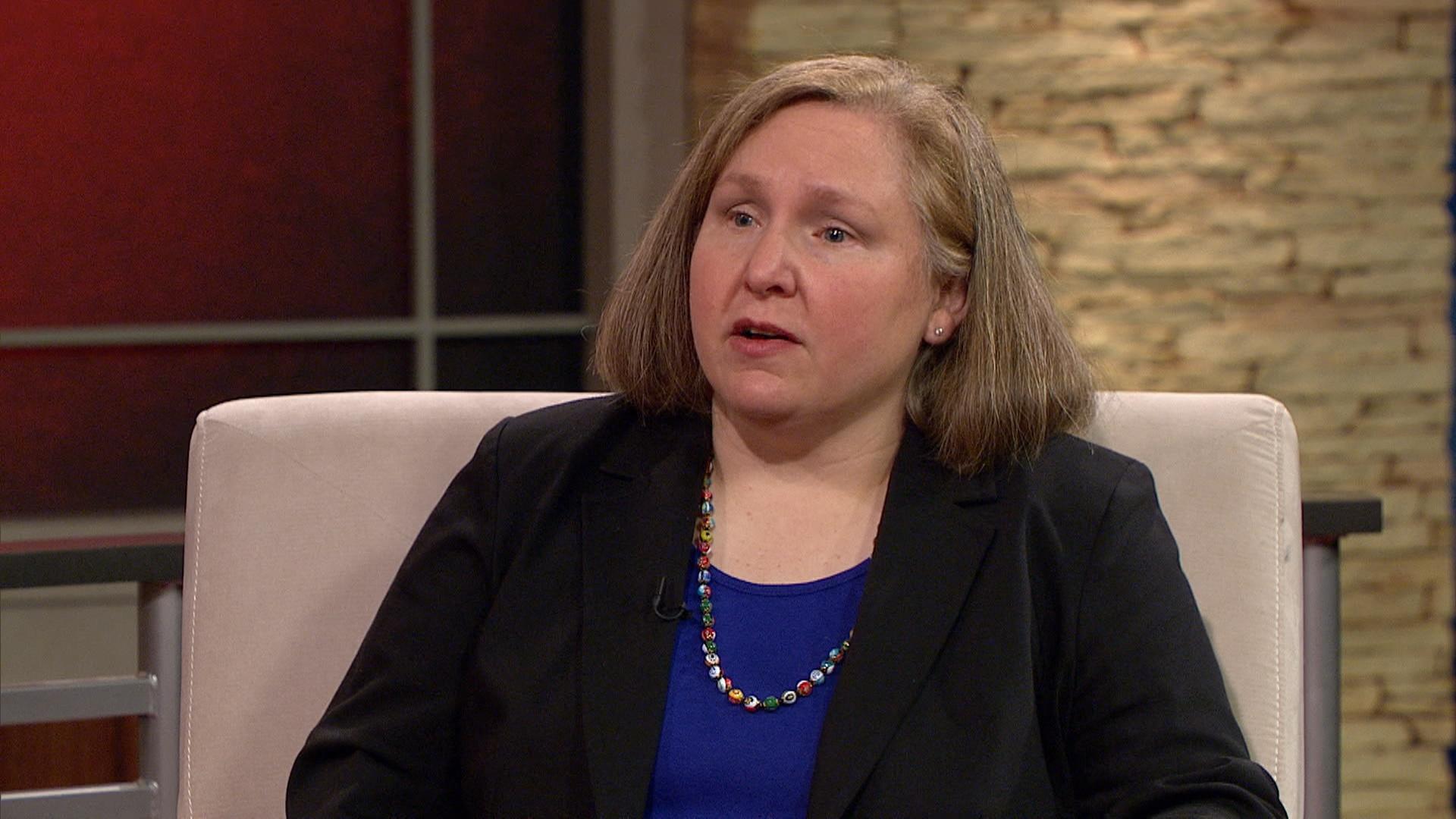
Julie Cerel, a licensed clinical psychologist and professor in the College of Social Work at the University of Kentucky, talks about the rise in youth suicide and tools to help a person in crisis.
Season 14 Episode 29 Length 26:32 Premiere: 05/19/19

About

Connections

KET’s Connections features in-depth interviews with the influential, innovative and inspirational individuals who are shaping the path for Kentucky’s future.

From business leaders to entertainers to authors to celebrities, each week features an interesting and engaging guest covering a broad array of topics. Host Renee Shaw uses her extensive reporting experience to naturally blend casual conversation and hard-hitting questions to generate rich and full conversations about the issues impacting Kentucky and the world.


Tune-In

KET Sundays • 11:30 am/10:30 am
KET2 Sundays • 6/5 pm

Stream

Watch on KET’s website anytime or through the PBS Video App.

Podcast

The Connections podcast features each episode’s audio for listening.


Renee Shaw is the Director of Public Affairs and Moderator at KET, currently serving as host of KET’s weeknight public affairs program Kentucky Edition, the signature public policy discussion series Kentucky Tonight, the weekly interview series Connections, Election coverage and KET Forums.

Since 2001, Renee has been the producing force behind KET’s legislative coverage that has been recognized by the Kentucky Associated Press and the National Educational Telecommunications Association. Under her leadership, KET has expanded its portfolio of public affairs content to include a daily news and information program, Kentucky Supreme Court coverage, townhall-style forums, and multi-platform program initiatives around issues such as opioid addiction and youth mental health.  

Renee has also earned top awards from the Ohio Valley Chapter of the National Academy of Television Arts and Sciences (NATAS), with three regional Emmy awards. In 2023, she was inducted into the Silver Circle of the NATAS, one of the industry’s highest honors recognizing television professionals with distinguished service in broadcast journalism for 25 years or more.  

Already an inductee into the Kentucky Civil Rights Hall of Fame (2017), Renee expands her hall of fame status with induction into Western Kentucky University’s Hall of Distinguished Alumni in November of 2023.  

In February of 2023, Renee graced the front cover of Kentucky Living magazine with a centerfold story on her 25 years of service at KET and even longer commitment to public media journalism. 

In addition to honors from various educational, civic, and community organizations, Renee has earned top honors from the Associated Press and has twice been recognized by Mental Health America for her years-long dedication to examining issues of mental health and opioid addiction.  

In 2022, she was honored with Women Leading Kentucky’s Governor Martha Layne Collins Leadership Award recognizing her trailblazing path and inspiring dedication to elevating important issues across Kentucky.   

In 2018, she co-produced and moderated a 6-part series on youth mental health that was awarded first place in educational content by NETA, the National Educational Telecommunications Association. 

She has been honored by the AKA Beta Gamma Omega Chapter with a Coretta Scott King Spirit of Ivy Award; earned the state media award from the Kentucky Society of the Daughters of the American Revolution in 2019; named a Charles W. Anderson Laureate by the Kentucky Personnel Cabinet in 2019 honoring her significant contributions in addressing socio-economic issues; and was recognized as a “Kentucky Trailblazer” by the University of Kentucky Martin School of Public Policy and Administration during the Wendell H. Ford Lecture Series in 2019. That same year, Shaw was named by The Kentucky Gazette’s inaugural recognition of the 50 most notable women in Kentucky politics and government.  

Renee was bestowed the 2021 Berea College Service Award and was named “Unapologetic Woman of the Year” in 2021 by the Community Action Council.   

In 2015, she received the Green Dot Award for her coverage of domestic violence, sexual assault & human trafficking. In 2014, Renee was awarded the Anthony Lewis Media Award from the KY Department of Public Advocacy for her work on criminal justice reform. Two Kentucky governors, Republican Ernie Fletcher and Democrat Andy Beshear, have commissioned Renee as a Kentucky Colonel for noteworthy accomplishments and service to community, state, and nation.  

A former adjunct media writing professor at Georgetown College, Renee traveled to Cambodia in 2003 to help train emerging journalists on reporting on critical health issues as part of an exchange program at Western Kentucky University. And, she has enterprised stories for national media outlets, the PBS NewsHour and Public News Service.  

Shaw is a 2007 graduate of Leadership Kentucky, a board member of CASA of Lexington, and a longtime member of the Frankfort/Lexington Chapter of The Links Incorporated, an international, not-for-profit organization of women of color committed to volunteer service. She has served on the boards of the Kentucky Historical Society, Lexington Minority Business Expo, and the Board of Governors for the Ohio Valley Chapter of the National Academy of Television Arts and Sciences. 

Host Renee Shaw smiling in a green dress with a KET set behind her.

Effective Tools for Youth Suicide Prevention

Suicide isn’t always linked to a diagnosed mental health issue like depression or anxiety. Sometimes it’s the result of a confluence of routine life stressors that can push a person to his or her breaking point.

Some 47,000 Americans take their own lives each year. Young people are especially vulnerable: suicide is the second leading cause of death among youth aged 15 to 24.

As KET begins a rebroadcast of its acclaimed youth mental health series You Are Not Alone, Renee Shaw sat down with Julie Cerel, a licensed clinical psychologist and professor in the College of Social Work at the University of Kentucky, to discuss her research into suicide.

Factors Contributing to Higher Suicide Rates
Between 2000 and 2016, the rate of death by suicide in the United States increased 30 percent, according to the Centers for Disease Control and Prevention. Historically more males commit suicide, but females are catching up: Suicides among women and girls increased by 50 percent in that time period.

“Fortunately most people that make one attempt will never, ever go on to make another one,” says Cerel. “But having had that one attempt, it puts some at higher risk” of dying by suicide in the future.

Cerel says they may be a number of reasons for the increase. One is that health officials are more open about acknowledging suicide as a cause of death.

“It used to be that unless there was really explicit evidence that it was a suicide,” says Cerel, “coroners or medical examiners wouldn’t call it a suicide because they thought it was helping the family.”

Media may also play a role. Cerel says coverage of celebrity suicides, especially stories that contain details of the methods used, can influence suicidal behavior in others. Some mental health professionals also attribute a recent Netflix series to a spike in suicides. Cerel says “13 Reasons Why” offered an unrealistic view of suicide that depicts how a young girl sought to use her own death as a form of revenge against the people who tormented her.

“Unfortunately when most people are suicidal, their thinking is not as systematic and clear, they just want to be out of the pain that they’ve been in,” says Cerel.

Other factors include the rise of the internet and social media, lack of access to quality health care and mental health services, and greater availability of more lethal means of death, such as weapons in the home.

“This isn’t about gun control per se,” says Cerel. “It’s more about not wanting anyone in your household, especially your child, to die by your family’s gun.”

How to Respond to Someone at Risk
The signs that someone may be considering suicide are varied. The person may begin to isolate themselves from friends and loved ones, or they may give away prized possessions. There may be increased drug or alcohol use, or their personal appearance or work or school performance may suddenly decline. They may talk about feeling hopeless or being mired in unbearable pain.

If you see these signs in a family member or friend, a co-worker or a neighbor, Cerel recommends taking a direct approach and saying, “You’ve really been scaring me. Are you thinking about suicide?”

Then you’ll need to be prepared to direct that person towards resources to help them. Cerel recommends keeping the National Suicide Prevention Lifeline emergency number in your cellphone. It’s 800-273-8255. She says operators there can provide referrals to local resources, do short-term crisis counseling, or address an actual emergency. Crisis counselors are also available by texting 741741.

Cerel acknowledges these conversations aren’t easy. Even saying the word suicide is difficult for some people. But the more comfortable we get with the language, the easier it becomes to openly discuss these critical issues, she says. Some communities and organizations offer special training in a prevention strategy named QPR, which stands for question, persuade, and refer, that any individual can take.

Life Beyond a Loss
Based on her own research, Cerel says a single suicide can impact the lives of 135 other people, from relatives and friends, to people at school, church, and work. But Cerel says she’s found that survivors can find ways to move beyond the tragedy.

“For some people, having this worst imaginable loss leads them to place in their lives they never would have been,” says Cerel. “It doesn’t necessarily mean that their life is going to be horrible forever and ever. They can end up in places much better than they might have dreamed.”

Cerel says certain occupations come with greater risk factors for mental health problems and suicide risk. For example, police and other first responders may have to deal with dozens of suicide cases over their careers. Cerel says that kind of exposure can increase the risk of suicidal behavior in the witness.

Following the death of celebrity chef and travel journalist Anthony Bourdain, Cerel and her colleagues launched initiatives to help people in the food service industry. She says the high-stress lifestyle with its irregular hours, little access to health care, and high rates of substance abuse can make restaurant workers especially vulnerable. Cerel contends such outreach efforts are critical to increasing the public dialogue about suicide.

“It’s important for us to talk about the fact that there are people that have thoughts of suicide or have made suicide attempts, and that doesn’t define the rest of their lives,” Cerel says. “People can be successful, having been treated for depression or having attempted suicide… Just because people have mental illnesses, just like physical illnesses, they don’t have to define our lives.”

Related Content:

Suicide Prevention/Teaching Hope

Helping Kentucky’s Youth with Mental Health Problems

Building Effective Programs to Improve Mental Health

Sponsored by:

Season 14 Episodes

The 'I Was Here' Project

S14 E36 Length 27:42 Premiere Date 08/04/19

Mike Runyon and Sherita Miller; Wendy Kobler

S14 E35 Length 26:57 Premiere Date 07/28/19

Filmmaker Lynn Novick

S14 E33 Length 28:27 Premiere Date 07/14/19

Brent Hutchinson; Christine Thompson - Education

S14 E32 Length 27:37 Premiere Date 07/07/19

Lieutenant Governor Jenean Hampton - Youth Mental Health

S14 E31 Length 26:32 Premiere Date 06/02/19

Julie Cerel - Youth Suicide Prevention

S14 E29 Length 26:32 Premiere Date 05/19/19

Dale Suttles - Sunrise Children's Services

S14 E28 Length 27:33 Premiere Date 05/12/19

Education in Rural Eastern Kentucky

S14 E27 Length 28:13 Premiere Date 05/05/19

Joshua A. Douglas - Voting Rights Reform

S14 E25 Length 26:32 Premiere Date 04/21/19

Jay Box - Ky. Community & Technical College System

S14 E24 Length 26:32 Premiere Date 04/14/19

Author and Life Coach Colene Elridge

S14 E23 Length 26:19 Premiere Date 04/07/19

FIRST STEP Act - Criminal Justice Reform

S14 E22 Length 27:44 Premiere Date 03/31/19

Cheryl A. Oldham

S14 E21 Length 26:38 Premiere Date 02/22/19

Linda Hampton - Early Childhood

S14 E20 Length 29:47 Premiere Date 02/15/19

Donald Mason

S14 E19 Length 26:34 Premiere Date 02/08/19

Community Action Council; First 5 Lex

S14 E18 Length 28:53 Premiere Date 02/01/19

Seamus Carey

S14 E17 Length 26:57 Premiere Date 01/25/19

Michael Benson

S14 E16 Length 27:32 Premiere Date 01/18/19

Dr. Aaron Thompson

S14 E14 Length 28:13 Premiere Date 01/11/19

Mary Todd Lincoln and Lincoln Lexington Walking Tour

S14 E13 Length 28:55 Premiere Date 12/14/18

Youth Suicide

S14 E12 Length 29:22 Premiere Date 12/07/18

Jean Schumm and Amanda Gale

S14 E11 Length 28:22 Premiere Date 11/16/18

M. Christopher Brown II

S14 E10 Length 28:02 Premiere Date 11/09/18

Frank Harris

S14 E9 Length 25:17 Premiere Date 11/02/18

U.S. Rep. Andy Barr

S14 E8 Length 29:16 Premiere Date 10/26/18

Amy McGrath

S14 E7 Length 29:02 Premiere Date 10/19/18

Kevin Chapman - Youth Mental Health

S14 E6 Length 28:47 Premiere Date 10/12/18

Carol Cecil; Resa Gonzalez - Youth Mental Health

S14 E5 Length 26:03 Premiere Date 10/05/18

Joe Bargione - Youth Mental Health

S14 E4 Length 28:57 Premiere Date 09/28/18

WKU President Timothy Caboni

S14 E3 Length 28:40 Premiere Date 09/21/18

Dr. Neeli Bendapudi

S14 E1 Length 28:47 Premiere Date 09/14/18

See All Episodes

caret down

TV Schedules

Upcoming

No upcoming airdates

Recent

No recent airdates

Explore KET