Skip to Main Content

Education in Rural Eastern Kentucky

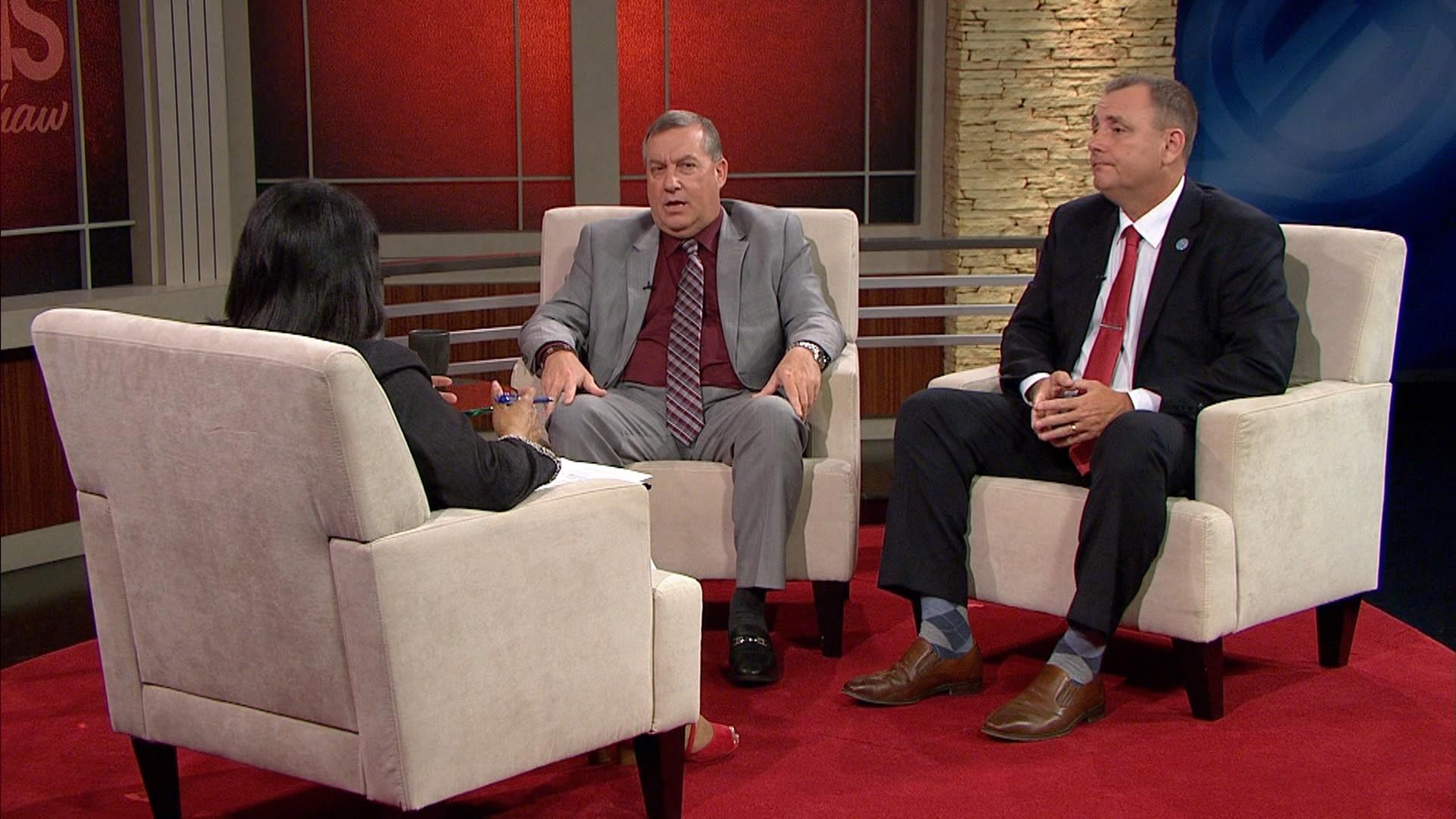
Renee speaks with Paintsville Independent Schools Superintendent David Gibson and Magoffin County Schools Superintendent Scott Helton, and Jeff Hawkins, executive director of Kentucky Valley Educational Cooperative, about improving education in rural eastern Kentucky.
Season 14 Episode 27 Length 28:13 Premiere: 05/05/19

About

Connections

KET’s Connections features in-depth interviews with the influential, innovative and inspirational individuals who are shaping the path for Kentucky’s future.

From business leaders to entertainers to authors to celebrities, each week features an interesting and engaging guest covering a broad array of topics. Host Renee Shaw uses her extensive reporting experience to naturally blend casual conversation and hard-hitting questions to generate rich and full conversations about the issues impacting Kentucky and the world.


Tune-In

KET Sundays • 11:30 am/10:30 am
KET2 Sundays • 6/5 pm

Stream

Watch on KET’s website anytime or through the PBS Video App.

Podcast

The Connections podcast features each episode’s audio for listening.


Renee Shaw is the Director of Public Affairs and Moderator at KET, currently serving as host of KET’s weeknight public affairs program Kentucky Edition, the signature public policy discussion series Kentucky Tonight, the weekly interview series Connections, Election coverage and KET Forums.

Since 2001, Renee has been the producing force behind KET’s legislative coverage that has been recognized by the Kentucky Associated Press and the National Educational Telecommunications Association. Under her leadership, KET has expanded its portfolio of public affairs content to include a daily news and information program, Kentucky Supreme Court coverage, townhall-style forums, and multi-platform program initiatives around issues such as opioid addiction and youth mental health.  

Renee has also earned top awards from the Ohio Valley Chapter of the National Academy of Television Arts and Sciences (NATAS), with three regional Emmy awards. In 2023, she was inducted into the Silver Circle of the NATAS, one of the industry’s highest honors recognizing television professionals with distinguished service in broadcast journalism for 25 years or more.  

Already an inductee into the Kentucky Civil Rights Hall of Fame (2017), Renee expands her hall of fame status with induction into Western Kentucky University’s Hall of Distinguished Alumni in November of 2023.  

In February of 2023, Renee graced the front cover of Kentucky Living magazine with a centerfold story on her 25 years of service at KET and even longer commitment to public media journalism. 

In addition to honors from various educational, civic, and community organizations, Renee has earned top honors from the Associated Press and has twice been recognized by Mental Health America for her years-long dedication to examining issues of mental health and opioid addiction.  

In 2022, she was honored with Women Leading Kentucky’s Governor Martha Layne Collins Leadership Award recognizing her trailblazing path and inspiring dedication to elevating important issues across Kentucky.   

In 2018, she co-produced and moderated a 6-part series on youth mental health that was awarded first place in educational content by NETA, the National Educational Telecommunications Association. 

She has been honored by the AKA Beta Gamma Omega Chapter with a Coretta Scott King Spirit of Ivy Award; earned the state media award from the Kentucky Society of the Daughters of the American Revolution in 2019; named a Charles W. Anderson Laureate by the Kentucky Personnel Cabinet in 2019 honoring her significant contributions in addressing socio-economic issues; and was recognized as a “Kentucky Trailblazer” by the University of Kentucky Martin School of Public Policy and Administration during the Wendell H. Ford Lecture Series in 2019. That same year, Shaw was named by The Kentucky Gazette’s inaugural recognition of the 50 most notable women in Kentucky politics and government.  

Renee was bestowed the 2021 Berea College Service Award and was named “Unapologetic Woman of the Year” in 2021 by the Community Action Council.   

In 2015, she received the Green Dot Award for her coverage of domestic violence, sexual assault & human trafficking. In 2014, Renee was awarded the Anthony Lewis Media Award from the KY Department of Public Advocacy for her work on criminal justice reform. Two Kentucky governors, Republican Ernie Fletcher and Democrat Andy Beshear, have commissioned Renee as a Kentucky Colonel for noteworthy accomplishments and service to community, state, and nation.  

A former adjunct media writing professor at Georgetown College, Renee traveled to Cambodia in 2003 to help train emerging journalists on reporting on critical health issues as part of an exchange program at Western Kentucky University. And, she has enterprised stories for national media outlets, the PBS NewsHour and Public News Service.  

Shaw is a 2007 graduate of Leadership Kentucky, a board member of CASA of Lexington, and a longtime member of the Frankfort/Lexington Chapter of The Links Incorporated, an international, not-for-profit organization of women of color committed to volunteer service. She has served on the boards of the Kentucky Historical Society, Lexington Minority Business Expo, and the Board of Governors for the Ohio Valley Chapter of the National Academy of Television Arts and Sciences. 

Host Renee Shaw smiling in a green dress with a KET set behind her.

Education in Rural Eastern Kentucky

The uphill climb that students in eastern Kentucky face can be as steep as the Appalachian Mountains that ripple through the region. There’s widespread poverty, declining population, few job opportunities, and underfunded schools, just to name a few of the challenges.

Yet amidst these negative trends, schools from Ashland to Middlesboro are working to boost the academic performance of students and bolster the economies of the communities they serve.

The Hazard-based Kentucky Valley Educational Cooperative is leading this charge. The organization represents 22 school districts and 53,000 students and teachers in the state’s Appalachian region. KVEC leaders recently issued a report that urges state and local officials to adopt policies that can make public education a catalyst to improve the region’s economy.

“The paper is really an effort on our part to demonstrate very clearly that a community can be made more vibrant by an empowered and active public education system,” says KVEC Executive Director Jeff Hawkins, “and a public education entity can be made more vibrant, more capable, and more able by a close connection to that community.”

KET’s Renee Shaw spoke with Hawkins and KVEC board members David Gibson and Scott Helton about their findings.

Fewer Jobs, People, and Tax Revenues
While the state as a whole is experiencing record employment and business investments, eastern Kentucky presents a far different picture. According to the KVEC report, the state added about 80,000 people to its labor force from 2012 to 2018, but the Appalachian counties lost more than 47,000 people from its labor force.

That decline in the workforce has contributed to a 31 percent poverty rate in the KVEC counties compared to 18 percent for the entire commonwealth.

“Population-wise, the state since 2000 has grown by 10 or 11 percent,” says Hawkins. “During the same period of time, our counties have lost 10 or 11 percent of our population.”

Those decreases have other ripple effects. KVEC Board vice chair and Paintsville Independent Schools Superintendent David Gibson says a smaller population means fewer people representing and advocating for eastern Kentucky in the state legislature.

“When you look at the 2020 census that’s coming up, predications are we may lose another House [and] potentially another Senate seat, so our voice is going to be less and less,” says Gibson.

Fewer residents and a declining industrial and business base mean smaller tax revenues to fund local needs, including public schools. Gibson says his tiny district has the 10th highest tax rate in the state. Yet he says a small tax in Paintsville might generate $80,000 for his schools, but in Scott County, the same tax would generate more than $2 million in revenues.

“We do not have the economic development, the economic drivers of industry coming into our system,” says Gibson. “So in essence, we are continually raising taxes on a poor, older population.”

’Incredible Things with Less Funding’
Fewer good-paying jobs also makes it hard to recruit quality educators to the region. Gibson says prospective teachers want to know that their spouses will be able to find employment without having to drive long distances.

KVEC Board Chair and Magoffin County Schools Superintendent Scott Helton says the dearth of jobs also makes it difficult for the local communities to keep their best students.

“Our students that we send off to college, they’re not coming back home because there’s not really anything there for them,” says Helton.

Even with all these challenges, Gibson says many KVEC schools garner distinguished rankings and have high graduation rates.

“We’re doing incredible things with less funding and less equity than any place in the United States,” says Gibson. “We are doing this with basically one hand tied behind our back.”

Federal and philanthropic dollars enable KVEC to offer mini-grants to teachers who want to create innovative projects that encourage their classes to address real-life challenges facing people in the region. For example, students are exploring ways to grow fish and vegetables using hydroponic systems.

Other classes have developed a GPS tracker that helps locate people stranded in the rugged Appalachian foothills. Still other students are learning about drones and aircraft maintenance, as well as how to design and build moveable tiny homes that can provide safe, affordable housing for needy neighbors.

“We want people to understand we’re doing some great things, but can we continue?” says Helton. “We will do the best we can, but we have to have some changes.”

Boosting Community Partnerships and Teacher Pay
KVEC’s report offers several options for possible changes. First it encourages the creation of a “rural edu-conomy zone” in which school districts and public and private community partners work together to strengthen the local economy.

“The community needs to understand what’s going on in schools, but we need to understand what’s going on in the community,” says Helton. “We can partner up and share ideas and some of the funding to make it better for everyone.”

Gibson says he also hopes state lawmakers will devote more money to K-12 education, beyond the small increase to per-pupil funding called SEEK that was part of the current state budget.

“They increased SEEK $8, but they cut thousands of dollars off of the other side that no one sees unless you’re in the weeds with us,” says Gibson.

That includes funding reductions for student transportation, textbooks, and professional development.

Teacher pay and benefits is also an issue. Helton and Gibson say their rural schools simply can’t afford to pay teachers as much as urban districts, which makes it harder to attract quality applicants. Helton says his Magoffin County system pays starting teachers about $36,000 a year.

“That’s not a lot of money, regardless of where you live,” says Helton.

And then there’s the pension crisis. Since Kentucky teachers don’t receive Social Security, Gibson says a good pension upon retirement is a critical incentive to get people into the profession. But the Kentucky Teachers’ Retirement System, like the rest of the state’s public pension plans, is mired in billions of dollars in unfunded liabilities.

“We fully understand that there needs to be fundamental changes [to KTRS]”, says Gibson. “But… let’s do that as a unified group – all stakeholders from all groups come together to figure this out.”

Gibson and Helton say KVEC superintendents have good working relationships with state lawmakers on both sides of the aisle. They say that’s important to fostering open dialogue about these issues.

“We have to be willing to give a little to get a little, and so does the legislative body,” says Gibson. “We understand that it’s going to take a bipartisan group of legislators, superintendents, community members, judges, the whole nine yards to get us to where we want to go.”

“It’s crucial that we do it now,” says Helton. “To me it’s something that we can’t wait on for another five, 10 years for eastern Kentucky.”

For his part, Hawkins says the region would also benefit from a four-year university. He says communities that have a regional university and an interstate highway such as Bowling Green or Richmond, tend to spawn a cluster of economic development.

Although the KVEC report didn’t gain much traction in the short 2019 legislative session, Hawkins says the organization will engage business, civic, education, and political leaders in discussions about how public schools can help revitalize struggling eastern Kentucky communities while they prepare the region’s students for a brighter future.

“Our schools really look at themselves as the last, best hope for those kids,” says Hawkins. “They lift them up, they build relationships, and they focus on what they are able to do by connecting a passion that that kid has to a purpose in life.”

Related Stories:
Educational Innovation in Eastern Kentucky

Kentucky Valley Educational Cooperative

Pathways for Tomorrow’s Workforce: A KET Forum

Sponsored by:

Season 14 Episodes

The 'I Was Here' Project

S14 E36 Length 27:42 Premiere Date 08/04/19

Mike Runyon and Sherita Miller; Wendy Kobler

S14 E35 Length 26:57 Premiere Date 07/28/19

Filmmaker Lynn Novick

S14 E33 Length 28:27 Premiere Date 07/14/19

Brent Hutchinson; Christine Thompson - Education

S14 E32 Length 27:37 Premiere Date 07/07/19

Lieutenant Governor Jenean Hampton - Youth Mental Health

S14 E31 Length 26:32 Premiere Date 06/02/19

Julie Cerel - Youth Suicide Prevention

S14 E29 Length 26:32 Premiere Date 05/19/19

Dale Suttles - Sunrise Children's Services

S14 E28 Length 27:33 Premiere Date 05/12/19

Education in Rural Eastern Kentucky

S14 E27 Length 28:13 Premiere Date 05/05/19

Joshua A. Douglas - Voting Rights Reform

S14 E25 Length 26:32 Premiere Date 04/21/19

Jay Box - Ky. Community & Technical College System

S14 E24 Length 26:32 Premiere Date 04/14/19

Author and Life Coach Colene Elridge

S14 E23 Length 26:19 Premiere Date 04/07/19

FIRST STEP Act - Criminal Justice Reform

S14 E22 Length 27:44 Premiere Date 03/31/19

Cheryl A. Oldham

S14 E21 Length 26:38 Premiere Date 02/22/19

Linda Hampton - Early Childhood

S14 E20 Length 29:47 Premiere Date 02/15/19

Donald Mason

S14 E19 Length 26:34 Premiere Date 02/08/19

Community Action Council; First 5 Lex

S14 E18 Length 28:53 Premiere Date 02/01/19

Seamus Carey

S14 E17 Length 26:57 Premiere Date 01/25/19

Michael Benson

S14 E16 Length 27:32 Premiere Date 01/18/19

Dr. Aaron Thompson

S14 E14 Length 28:13 Premiere Date 01/11/19

Mary Todd Lincoln and Lincoln Lexington Walking Tour

S14 E13 Length 28:55 Premiere Date 12/14/18

Youth Suicide

S14 E12 Length 29:22 Premiere Date 12/07/18

Jean Schumm and Amanda Gale

S14 E11 Length 28:22 Premiere Date 11/16/18

M. Christopher Brown II

S14 E10 Length 28:02 Premiere Date 11/09/18

Frank Harris

S14 E9 Length 25:17 Premiere Date 11/02/18

U.S. Rep. Andy Barr

S14 E8 Length 29:16 Premiere Date 10/26/18

Amy McGrath

S14 E7 Length 29:02 Premiere Date 10/19/18

Kevin Chapman - Youth Mental Health

S14 E6 Length 28:47 Premiere Date 10/12/18

Carol Cecil; Resa Gonzalez - Youth Mental Health

S14 E5 Length 26:03 Premiere Date 10/05/18

Joe Bargione - Youth Mental Health

S14 E4 Length 28:57 Premiere Date 09/28/18

WKU President Timothy Caboni

S14 E3 Length 28:40 Premiere Date 09/21/18

Dr. Neeli Bendapudi

S14 E1 Length 28:47 Premiere Date 09/14/18

See All Episodes

caret down

TV Schedules

Upcoming

No upcoming airdates

Recent

No recent airdates

Explore KET