Skip to Main Content
Watch House Chambers

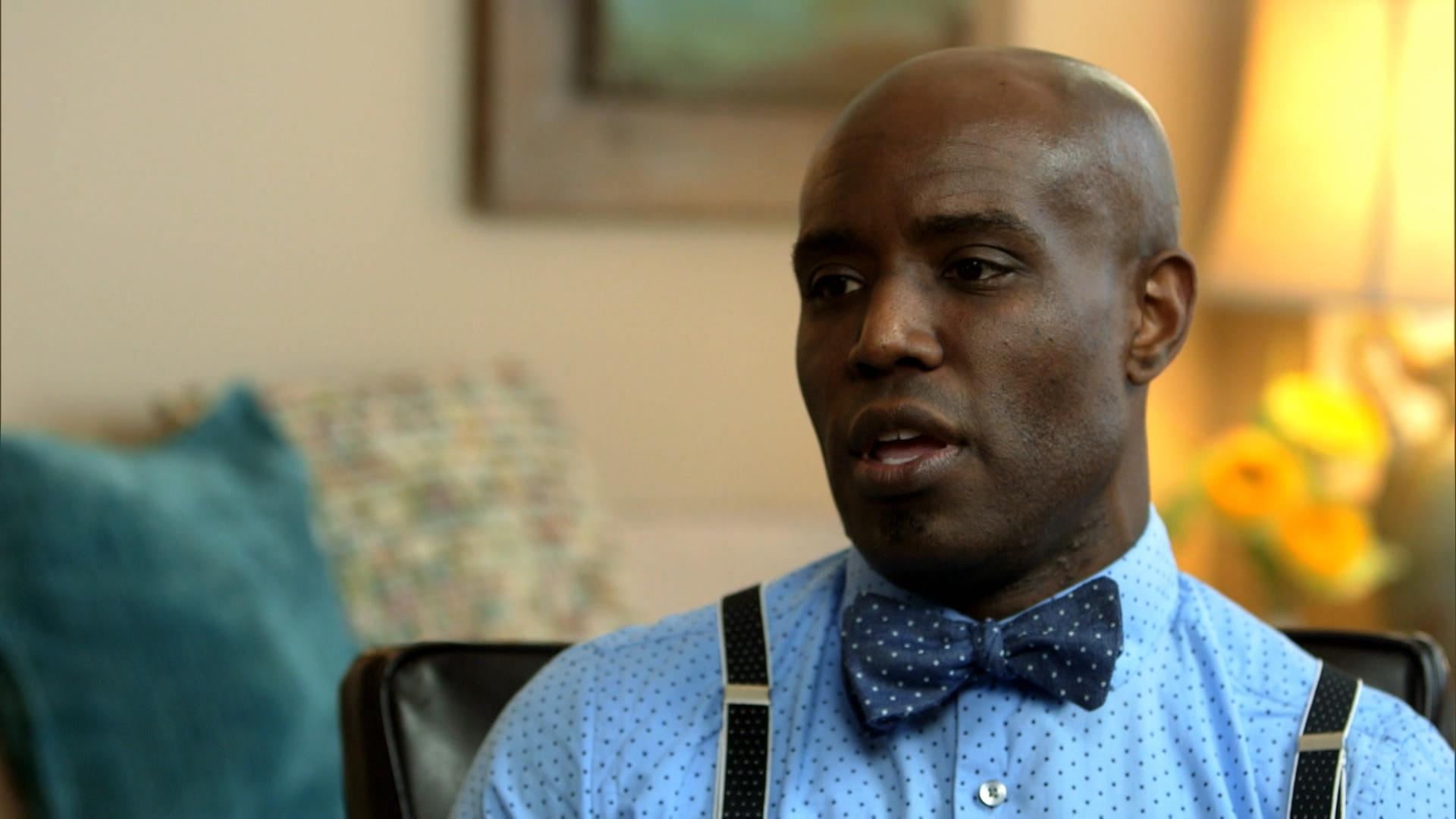
Kevin Chapman - Youth Mental Health

Renee speaks with Dr. Kevin Chapman, a licensed clinical psychologist from Louisville who specializes in treating anxiety and related disorders, about youth mental health issues.
Season 14 Episode 6 Length 28:47 Premiere: 10/12/18

About

Connections

KET’s Connections features in-depth interviews with the influential, innovative and inspirational individuals who are shaping the path for Kentucky’s future.

From business leaders to entertainers to authors to celebrities, each week features an interesting and engaging guest covering a broad array of topics. Host Renee Shaw uses her extensive reporting experience to naturally blend casual conversation and hard-hitting questions to generate rich and full conversations about the issues impacting Kentucky and the world.


Tune-In

KET Sundays • 11:30 am/10:30 am
KET2 Sundays • 6/5 pm

Stream

Watch on KET’s website anytime or through the PBS Video App.

Podcast

The Connections podcast features each episode’s audio for listening.


Renee Shaw is the Director of Public Affairs and Moderator at KET, currently serving as host of KET’s weeknight public affairs program Kentucky Edition, the signature public policy discussion series Kentucky Tonight, the weekly interview series Connections, Election coverage and KET Forums.

Since 2001, Renee has been the producing force behind KET’s legislative coverage that has been recognized by the Kentucky Associated Press and the National Educational Telecommunications Association. Under her leadership, KET has expanded its portfolio of public affairs content to include a daily news and information program, Kentucky Supreme Court coverage, townhall-style forums, and multi-platform program initiatives around issues such as opioid addiction and youth mental health.  

Renee has also earned top awards from the Ohio Valley Chapter of the National Academy of Television Arts and Sciences (NATAS), with three regional Emmy awards. In 2023, she was inducted into the Silver Circle of the NATAS, one of the industry’s highest honors recognizing television professionals with distinguished service in broadcast journalism for 25 years or more.  

Already an inductee into the Kentucky Civil Rights Hall of Fame (2017), Renee expands her hall of fame status with induction into Western Kentucky University’s Hall of Distinguished Alumni in November of 2023.  

In February of 2023, Renee graced the front cover of Kentucky Living magazine with a centerfold story on her 25 years of service at KET and even longer commitment to public media journalism. 

In addition to honors from various educational, civic, and community organizations, Renee has earned top honors from the Associated Press and has twice been recognized by Mental Health America for her years-long dedication to examining issues of mental health and opioid addiction.  

In 2022, she was honored with Women Leading Kentucky’s Governor Martha Layne Collins Leadership Award recognizing her trailblazing path and inspiring dedication to elevating important issues across Kentucky.   

In 2018, she co-produced and moderated a 6-part series on youth mental health that was awarded first place in educational content by NETA, the National Educational Telecommunications Association. 

She has been honored by the AKA Beta Gamma Omega Chapter with a Coretta Scott King Spirit of Ivy Award; earned the state media award from the Kentucky Society of the Daughters of the American Revolution in 2019; named a Charles W. Anderson Laureate by the Kentucky Personnel Cabinet in 2019 honoring her significant contributions in addressing socio-economic issues; and was recognized as a “Kentucky Trailblazer” by the University of Kentucky Martin School of Public Policy and Administration during the Wendell H. Ford Lecture Series in 2019. That same year, Shaw was named by The Kentucky Gazette’s inaugural recognition of the 50 most notable women in Kentucky politics and government.  

Renee was bestowed the 2021 Berea College Service Award and was named “Unapologetic Woman of the Year” in 2021 by the Community Action Council.   

In 2015, she received the Green Dot Award for her coverage of domestic violence, sexual assault & human trafficking. In 2014, Renee was awarded the Anthony Lewis Media Award from the KY Department of Public Advocacy for her work on criminal justice reform. Two Kentucky governors, Republican Ernie Fletcher and Democrat Andy Beshear, have commissioned Renee as a Kentucky Colonel for noteworthy accomplishments and service to community, state, and nation.  

A former adjunct media writing professor at Georgetown College, Renee traveled to Cambodia in 2003 to help train emerging journalists on reporting on critical health issues as part of an exchange program at Western Kentucky University. And, she has enterprised stories for national media outlets, the PBS NewsHour and Public News Service.  

Shaw is a 2007 graduate of Leadership Kentucky, a board member of CASA of Lexington, and a longtime member of the Frankfort/Lexington Chapter of The Links Incorporated, an international, not-for-profit organization of women of color committed to volunteer service. She has served on the boards of the Kentucky Historical Society, Lexington Minority Business Expo, and the Board of Governors for the Ohio Valley Chapter of the National Academy of Television Arts and Sciences. 

Host Renee Shaw smiling in a green dress with a KET set behind her.

Treating Anxiety Disorders

Almost everyone has something that can cause him or her to feel anxious. Maybe it’s making a public speech, taking a test, encountering an unfamiliar dog, or riding in a crowded elevator.

For many people, that feeling quickly passes. For others, the fear can become chronic and debilitating.

To make sense of anxieties and obsessive compulsive disorder, KET’s Connections talked with Kevin Chapman, a licensed clinical psychologist in Louisville. He discussed anxiety disorders and therapy options for treating them.

Although it doesn’t feel good to experience anxiety, Chapman says some amount of it is normal.

“Anxiety by definition is supposed to help us meet the demands of our environment,” he says. “It’s supposed to help us prepare for things that may or may not occur.”

If a person has a strong physiological reaction to an uncomfortable experience, such as speaking to a large crowd or having a turbulent airplane flight, then the brain establishes a powerful negative memory around that event. Chapman says the next time that person encounters that situation, or even just thinks about it, they are likely to feel the emotion of anxiety.

But it’s important to note that fear, anxiety, and panic are not the same things.

“Fear is a true alarm – I’m really in danger. Panic, on the other hand, is what we call a false alarm – it’s the fear response out of context,” Chapman says. “When I’m anxious, fear and anxiety can go hand in hand and culminate to having a panic attack… because I’ve convinced my body that that situation is dangerous when in fact it isn’t.”

Chapman says that if there is no external threat, the person can turn their panic inward, causing them to focus even more intently own their own reaction. He says that only intensifies the person’s feelings of anxiety and panic.

Social and Performance Anxieties
Another type of anxiety is social anxiety, or the fear of being negatively judged by others. Chapman says 15 million Americans experience social anxiety, making it the third most common mental health condition in the United States.

“The reason that it is (so common) is because any social situation you find yourself in has the potential of negative evaluation,” he says. “If I’m sensitive to negative evaluations, then social anxiety certainly can be chronic and be a problem.”

Young people are especially prone to social anxiety because they are at an age when they are trying to develop their own identities while they are also navigating intense peer pressures. Chapman says the problem is more pronounced among today’s youth because social media has made negative commenting and online bullying more accessible and widespread.

Students can also be prone to performance anxieties related to taking tests, playing sports, performing on stage, or making speeches before their classmates.

“It makes sense that the fear and pressure to perform is more pronounced in young people because there’s real and perceived pressures with that,” Chapman says, ranging from “being able to maintain grades to being involved in various extracurricular activities that matter early in life to prepare you for college.”

There can also be cultural and socioeconomic components to anxiety. For example, a situation that may be mildly unsettling to a white person, such as an encounter with a police officer, can be very threatening to a person of color. Chapman says people who live in high-crime neighborhoods with frequent exposure to violence can develop emotional problems as well as long-term health consequences like high blood pressure.

Although there isn’t a genetic component to anxiety, Chapman says children can learn anxiousness from behaviors they experience in their parents or other family members. He says children who have an anxious parent are three to seven times more likely to develop an anxiety disorder than a child of a non-anxious parent.

When a young person or adult is able to respond to their feelings in an adaptive way, the anxiety usually dissipates. But if the feeling lingers and becomes chronic, it can lead the person to avoiding the people or situations they deem as threatening. Such avoidance can impact relationships with family and friends and impede school, work, or social activities.

“If I’m withdrawing from those things for an extended period of time, for say a month or more,” Chapman says, “that’s typically a sign that my behavior and my activity level have declined to the point of needing professional help.”

Treating Anxiety
Medications can help those who suffer from an anxiety disorder, but Chapman says the “gold standard” of treatment is cognitive behavioral therapy, or CBT. That teaches the patient that their emotions have three parts: thoughts (how they think about themselves or other people), physical feelings in the body (increased heart rate or shortness of breath), and behaviors. The combination of those three factors fuels the person’s emotional experience of a situation and their response to it.

By gradually exposing patients to a threatening or stressful scenario, Chapman can help them learn how to appraise those situations in new ways, and to learn how those new thoughts can foster new physical and behavioral responses. As these new actions become more ingrained, patients see that they are capable of handling things once considered scary in more productive, adaptive ways.

With some patients, Chapman uses virtual reality as part of his CBT treatment protocol. The patient wears a special headset that fills their field of vision, and headphones that provide an audio accompaniment to what they are seeing. A computer program manipulates a variety of stimuli so the patient can experience the fearful situation in a carefully controlled manner. Through the immersive nature of VR, the patient can experience flying in an airplane or standing before a crowd to make a speech, all in the comfort and safety of the therapist’s office.

“They would actually learn how to process that [situation] differently, so therefore when it’s time to do the real thing, they’re able to manage that a whole lot more effectively,” Chapman says.

CBT treatments can be brief and intensive, or more gradual, but Chapman says most patients find success in as few as eight sessions.

Obsessive-Compulsive Disorder
Another chronic condition that can be addressed using CBT is obsessive-compulsive disorder. Chapman describes OCD as a cycle: A person develops a fear that if they do x, then y will happen. That creates anxiety, which leads to a certain behavior they hope will alleviate the obsession.

“The next time I get triggered by the fear,” he says, “I engage in that same response or compulsion to make me feel better. But that distress always returns and I have to continue this vicious cycle.”

For example, if someone fears contamination from touching a stair rail, they may compulsively wash their hand afterwards to prevent themselves from contracting a disease. In therapy, Chapman says he would have the patient touch a railing but then not let them wash their hands. When the patient doesn’t contract a disease, they learn that the action doesn’t lead to the reaction they expect, and the hand washing becomes unnecessary.

“Teaching the person how to confront the stimuli that they deem as distressing in a way that forms a new learning experience in their brain – and therefore eliminating rituals or responses – is the way that you treat OCD,” he says.

Sponsored by:

Season 14 Episodes

The 'I Was Here' Project

S14 E36 Length 27:42 Premiere Date 08/04/19

Mike Runyon and Sherita Miller; Wendy Kobler

S14 E35 Length 26:57 Premiere Date 07/28/19

Filmmaker Lynn Novick

S14 E33 Length 28:27 Premiere Date 07/14/19

Brent Hutchinson; Christine Thompson - Education

S14 E32 Length 27:37 Premiere Date 07/07/19

Lieutenant Governor Jenean Hampton - Youth Mental Health

S14 E31 Length 26:32 Premiere Date 06/02/19

Julie Cerel - Youth Suicide Prevention

S14 E29 Length 26:32 Premiere Date 05/19/19

Dale Suttles - Sunrise Children's Services

S14 E28 Length 27:33 Premiere Date 05/12/19

Education in Rural Eastern Kentucky

S14 E27 Length 28:13 Premiere Date 05/05/19

Joshua A. Douglas - Voting Rights Reform

S14 E25 Length 26:32 Premiere Date 04/21/19

Jay Box - Ky. Community & Technical College System

S14 E24 Length 26:32 Premiere Date 04/14/19

Author and Life Coach Colene Elridge

S14 E23 Length 26:19 Premiere Date 04/07/19

FIRST STEP Act - Criminal Justice Reform

S14 E22 Length 27:44 Premiere Date 03/31/19

Cheryl A. Oldham

S14 E21 Length 26:38 Premiere Date 02/22/19

Linda Hampton - Early Childhood

S14 E20 Length 29:47 Premiere Date 02/15/19

Donald Mason

S14 E19 Length 26:34 Premiere Date 02/08/19

Community Action Council; First 5 Lex

S14 E18 Length 28:53 Premiere Date 02/01/19

Seamus Carey

S14 E17 Length 26:57 Premiere Date 01/25/19

Michael Benson

S14 E16 Length 27:32 Premiere Date 01/18/19

Dr. Aaron Thompson

S14 E14 Length 28:13 Premiere Date 01/11/19

Mary Todd Lincoln and Lincoln Lexington Walking Tour

S14 E13 Length 28:55 Premiere Date 12/14/18

Youth Suicide

S14 E12 Length 29:22 Premiere Date 12/07/18

Jean Schumm and Amanda Gale

S14 E11 Length 28:22 Premiere Date 11/16/18

M. Christopher Brown II

S14 E10 Length 28:02 Premiere Date 11/09/18

Frank Harris

S14 E9 Length 25:17 Premiere Date 11/02/18

U.S. Rep. Andy Barr

S14 E8 Length 29:16 Premiere Date 10/26/18

Amy McGrath

S14 E7 Length 29:02 Premiere Date 10/19/18

Kevin Chapman - Youth Mental Health

S14 E6 Length 28:47 Premiere Date 10/12/18

Carol Cecil; Resa Gonzalez - Youth Mental Health

S14 E5 Length 26:03 Premiere Date 10/05/18

Joe Bargione - Youth Mental Health

S14 E4 Length 28:57 Premiere Date 09/28/18

WKU President Timothy Caboni

S14 E3 Length 28:40 Premiere Date 09/21/18

Dr. Neeli Bendapudi

S14 E1 Length 28:47 Premiere Date 09/14/18

See All Episodes

caret down

TV Schedules

Upcoming

No upcoming airdates

Recent

No recent airdates

Explore KET