Skip to Main Content

Youth Suicide

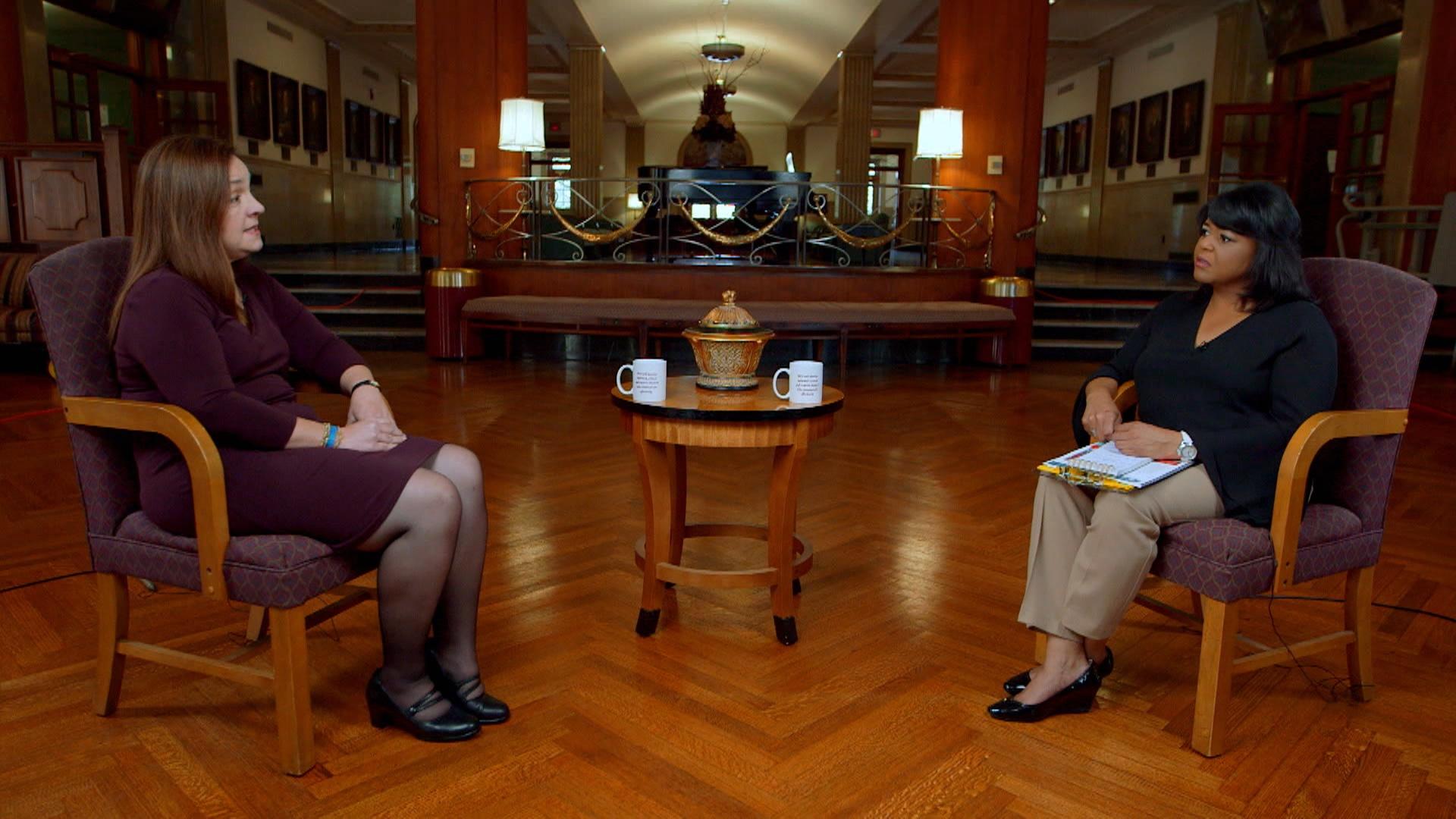
Renee Shaw and her guests discuss education and prevention of youth suicide which is the second leading cause of death for youth age 10-24. Guests include Dr. Hatim Omar, M.D., chief of the Division of Adolescent Medicine at the University of Kentucky; Melinda Moore, an Eastern Kentucky University psychology professor; and Molly and Michelle Jones who lost a loved one to suicide.
Season 14 Episode 12 Length 29:22 Premiere: 12/07/18

About

Connections

KET’s Connections features in-depth interviews with the influential, innovative and inspirational individuals who are shaping the path for Kentucky’s future.

From business leaders to entertainers to authors to celebrities, each week features an interesting and engaging guest covering a broad array of topics. Host Renee Shaw uses her extensive reporting experience to naturally blend casual conversation and hard-hitting questions to generate rich and full conversations about the issues impacting Kentucky and the world.


Tune-In

KET Sundays • 11:30 am/10:30 am
KET2 Sundays • 6/5 pm

Stream

Watch on KET’s website anytime or through the PBS Video App.

Podcast

The Connections podcast features each episode’s audio for listening.


Renee Shaw is the Director of Public Affairs and Moderator at KET, currently serving as host of KET’s weeknight public affairs program Kentucky Edition, the signature public policy discussion series Kentucky Tonight, the weekly interview series Connections, Election coverage and KET Forums.

Since 2001, Renee has been the producing force behind KET’s legislative coverage that has been recognized by the Kentucky Associated Press and the National Educational Telecommunications Association. Under her leadership, KET has expanded its portfolio of public affairs content to include a daily news and information program, Kentucky Supreme Court coverage, townhall-style forums, and multi-platform program initiatives around issues such as opioid addiction and youth mental health.  

Renee has also earned top awards from the Ohio Valley Chapter of the National Academy of Television Arts and Sciences (NATAS), with three regional Emmy awards. In 2023, she was inducted into the Silver Circle of the NATAS, one of the industry’s highest honors recognizing television professionals with distinguished service in broadcast journalism for 25 years or more.  

Already an inductee into the Kentucky Civil Rights Hall of Fame (2017), Renee expands her hall of fame status with induction into Western Kentucky University’s Hall of Distinguished Alumni in November of 2023.  

In February of 2023, Renee graced the front cover of Kentucky Living magazine with a centerfold story on her 25 years of service at KET and even longer commitment to public media journalism. 

In addition to honors from various educational, civic, and community organizations, Renee has earned top honors from the Associated Press and has twice been recognized by Mental Health America for her years-long dedication to examining issues of mental health and opioid addiction.  

In 2022, she was honored with Women Leading Kentucky’s Governor Martha Layne Collins Leadership Award recognizing her trailblazing path and inspiring dedication to elevating important issues across Kentucky.   

In 2018, she co-produced and moderated a 6-part series on youth mental health that was awarded first place in educational content by NETA, the National Educational Telecommunications Association. 

She has been honored by the AKA Beta Gamma Omega Chapter with a Coretta Scott King Spirit of Ivy Award; earned the state media award from the Kentucky Society of the Daughters of the American Revolution in 2019; named a Charles W. Anderson Laureate by the Kentucky Personnel Cabinet in 2019 honoring her significant contributions in addressing socio-economic issues; and was recognized as a “Kentucky Trailblazer” by the University of Kentucky Martin School of Public Policy and Administration during the Wendell H. Ford Lecture Series in 2019. That same year, Shaw was named by The Kentucky Gazette’s inaugural recognition of the 50 most notable women in Kentucky politics and government.  

Renee was bestowed the 2021 Berea College Service Award and was named “Unapologetic Woman of the Year” in 2021 by the Community Action Council.   

In 2015, she received the Green Dot Award for her coverage of domestic violence, sexual assault & human trafficking. In 2014, Renee was awarded the Anthony Lewis Media Award from the KY Department of Public Advocacy for her work on criminal justice reform. Two Kentucky governors, Republican Ernie Fletcher and Democrat Andy Beshear, have commissioned Renee as a Kentucky Colonel for noteworthy accomplishments and service to community, state, and nation.  

A former adjunct media writing professor at Georgetown College, Renee traveled to Cambodia in 2003 to help train emerging journalists on reporting on critical health issues as part of an exchange program at Western Kentucky University. And, she has enterprised stories for national media outlets, the PBS NewsHour and Public News Service.  

Shaw is a 2007 graduate of Leadership Kentucky, a board member of CASA of Lexington, and a longtime member of the Frankfort/Lexington Chapter of The Links Incorporated, an international, not-for-profit organization of women of color committed to volunteer service. She has served on the boards of the Kentucky Historical Society, Lexington Minority Business Expo, and the Board of Governors for the Ohio Valley Chapter of the National Academy of Television Arts and Sciences. 

Host Renee Shaw smiling in a green dress with a KET set behind her.

Youth Suicide

Two years ago this month, 23-year-old Pete Jones took his own life.

His family describes Pete as having been a brilliant young man, full of promise and working towards a graduate degree at the University of Louisville Speed School of Engineering. He had a great sense of humor and loved to make his family and friends laugh.

“But he had emotions that he wasn’t able to express,” says Pete’s mother, Molly Jones. “I’m not sure why he wasn’t able to express them. Maybe it’s because he didn’t understand them. Maybe it’s because he was afraid of what would happen if he expressed them.”

Suicide is the second leading cause of death among young people up to age 24. Among youth aged 10 to 14, it is the leading cause of death, surpassing car accidents, homicides, and medical conditions.

As part of a special series on youth mental health, KET’s Connections explored the increase in suicides among young people, as well as several public awareness and prevention efforts.

The first sign that something was wrong was when Pete Jones suddenly stopped going to school.

His mother says that surprised the family because Pete had excelled at academics. As Molly Jones recounts the change, she says Pete admitted to being depressed. In fact, he said that he had felt that way his whole life. Hearing that caused Molly to wonder if Pete had tried to communicate those feelings earlier, and if the family had overlooked the signals.

“Adults and even peers, we’re programmed to try to shut that down,” Molly says. “Anything but perfect mental health is something you shun, you run from.”

Pete went into counseling with a therapist he liked, and his mother says his outlook improved dramatically.

But then he took his own life on Dec. 9, 2016.

The Rise in Youth Suicide
The suicide rate among American teens has tripled since the 1950s, according to Dr. Hatim Omar, chief of the Division of Adolescent Medicine at UK HealthCare. He attributes some of that increase to an unraveling of American social bonds in recent decades.

“Kids… used to have a support system, whether [it’s] their family, their neighbors, their relatives, the school, their friends.” Omar says. “That’s gotten destroyed.”

Girls attempt suicide more than boys do, he says, but boys are more likely to complete it. Omar explains that’s because boys tend to use more lethal means like a firearm. But with easy access to guns in America, Omar says more girls are now starting to use them in their suicide attempts as well.

The rise of the Internet is another factor in today’s higher suicide rates. Omar says that has led to cyber-bullying and harassment that can instantly spread across social media websites. And because many young people spend so much time online and engaged with other social and school activities, they’re not getting enough rest.

“We underestimate the lack of sleep,” says Omar. “When they don’t sleep well, they don’t make good decisions.”

A decrease in sleep can also lead to feelings of insecurity, low self-esteem, and even depression, according to Omar. While depression can contribute to suicidal thoughts, Omar says it’s a far smaller factor in suicide than doctors once believed.

In fact Omar says research now indicates that about 30 percent of youth suicides involve no mental health component. He says these are known as “same-day suicides” in which a young person encounters a problem at home, at school, or with a relationship partner and is unable to see any way of getting past it.

“The only thing on their mind is, I have no hope, I have no life,” Omar says.

Not Just a Mental Health Problem
“We know that individuals who are suicidal oftentimes feel like they don’t belong, and they feel like they’re a burden,” says Melinda Moore, a psychology professor at Eastern Kentucky University. Her husband took his own life 22 years ago.

Moore and Omar agree the view of youth suicide must move beyond the search for an underlying mental health issue.

“I think what we have to do is instead of seeing it as diagnostically driven, or a mental illness-driven problem, we need to see it as kind of a behavioral problem that many different people can possibly contemplate and engage in,” says Moore.

Omar says he’s been working for two decades to change the narrative around suicide from that of a mental health problem to a public health problem. He says that the problem with linking mental health and suicidal thoughts is that by the time a mental health problem is diagnosed, it may be too late to save that person’s life.

“The idea is to anticipate, not react,” says Omar.

Intervention and Prevention
Omar and Moore want to engage everyone in the work of preventing suicides, because anyone can notice when a relative, friend, colleague, or neighbor is in distress. Moore encourages people to be direct and ask if the other person is having thoughts of suicide. She says simply asking the question doesn’t put the thought of suicide into that person’s mind because they’re likely already considering it.

If a person does admit to having suicidal thoughts, then Moore says to stay with them and call for professional help. The National Suicide Prevention Hotline is available 24-hours a day at 1-800-273-8255.

Among youth, Moore says it’s critical that teens have a trusted adult that they know they can confide in. Omar says youth also need to be encouraged to tell an adult if a friend is considering suicide. He tells teens that it’s better to have an angry friend than a dead one.

In his prevention efforts, Omar works directly with young people. In the Lincoln County public schools, Omar conducts screenings of every student at the start of the school year. He says they ask young people about a range of issues, including suicide, substance abuse, and sexual activity. And they tell the students that if they have any concerns or problems, that they can receive free and confidential help. Omar says the initiative has had dramatic results.

“Lincoln County, by most outcome measures, went from one of the worst counties to one of the best counties in the state,” he says. “Lincoln County was the only county with about a 50 percent reduction in suicide versus all other counties in the state that are going up.”

After Pete Jones’ suicide, his family established a foundation to publicize the issue through an annual music festival, and to provide prevention resources to young people and adults.

“What we would like to be is the step before suicide ever comes into play,” says Pete’s sister, Michelle. “So we’re proactively preventing suicides by raising awareness about it, giving young people the tools that they need to be able to express themselves, or other people the tools they need to be able to see signs in others and help them.”

Molly Jones says the foundation has given the family a purpose and a way to express their ongoing love for Pete.

“It doesn’t make it okay, but it helps gives us a way to go forward,” she says.

Sponsored by:

Season 14 Episodes

The 'I Was Here' Project

S14 E36 Length 27:42 Premiere Date 08/04/19

Mike Runyon and Sherita Miller; Wendy Kobler

S14 E35 Length 26:57 Premiere Date 07/28/19

Filmmaker Lynn Novick

S14 E33 Length 28:27 Premiere Date 07/14/19

Brent Hutchinson; Christine Thompson - Education

S14 E32 Length 27:37 Premiere Date 07/07/19

Lieutenant Governor Jenean Hampton - Youth Mental Health

S14 E31 Length 26:32 Premiere Date 06/02/19

Julie Cerel - Youth Suicide Prevention

S14 E29 Length 26:32 Premiere Date 05/19/19

Dale Suttles - Sunrise Children's Services

S14 E28 Length 27:33 Premiere Date 05/12/19

Education in Rural Eastern Kentucky

S14 E27 Length 28:13 Premiere Date 05/05/19

Joshua A. Douglas - Voting Rights Reform

S14 E25 Length 26:32 Premiere Date 04/21/19

Jay Box - Ky. Community & Technical College System

S14 E24 Length 26:32 Premiere Date 04/14/19

Author and Life Coach Colene Elridge

S14 E23 Length 26:19 Premiere Date 04/07/19

FIRST STEP Act - Criminal Justice Reform

S14 E22 Length 27:44 Premiere Date 03/31/19

Cheryl A. Oldham

S14 E21 Length 26:38 Premiere Date 02/22/19

Linda Hampton - Early Childhood

S14 E20 Length 29:47 Premiere Date 02/15/19

Donald Mason

S14 E19 Length 26:34 Premiere Date 02/08/19

Community Action Council; First 5 Lex

S14 E18 Length 28:53 Premiere Date 02/01/19

Seamus Carey

S14 E17 Length 26:57 Premiere Date 01/25/19

Michael Benson

S14 E16 Length 27:32 Premiere Date 01/18/19

Dr. Aaron Thompson

S14 E14 Length 28:13 Premiere Date 01/11/19

Mary Todd Lincoln and Lincoln Lexington Walking Tour

S14 E13 Length 28:55 Premiere Date 12/14/18

Youth Suicide

S14 E12 Length 29:22 Premiere Date 12/07/18

Jean Schumm and Amanda Gale

S14 E11 Length 28:22 Premiere Date 11/16/18

M. Christopher Brown II

S14 E10 Length 28:02 Premiere Date 11/09/18

Frank Harris

S14 E9 Length 25:17 Premiere Date 11/02/18

U.S. Rep. Andy Barr

S14 E8 Length 29:16 Premiere Date 10/26/18

Amy McGrath

S14 E7 Length 29:02 Premiere Date 10/19/18

Kevin Chapman - Youth Mental Health

S14 E6 Length 28:47 Premiere Date 10/12/18

Carol Cecil; Resa Gonzalez - Youth Mental Health

S14 E5 Length 26:03 Premiere Date 10/05/18

Joe Bargione - Youth Mental Health

S14 E4 Length 28:57 Premiere Date 09/28/18

WKU President Timothy Caboni

S14 E3 Length 28:40 Premiere Date 09/21/18

Dr. Neeli Bendapudi

S14 E1 Length 28:47 Premiere Date 09/14/18

See All Episodes

caret down

TV Schedules

Upcoming

No upcoming airdates

Recent

No recent airdates

Explore KET