Skip to Main Content
Watch 2026 Impeachment Committee

M. Christopher Brown II

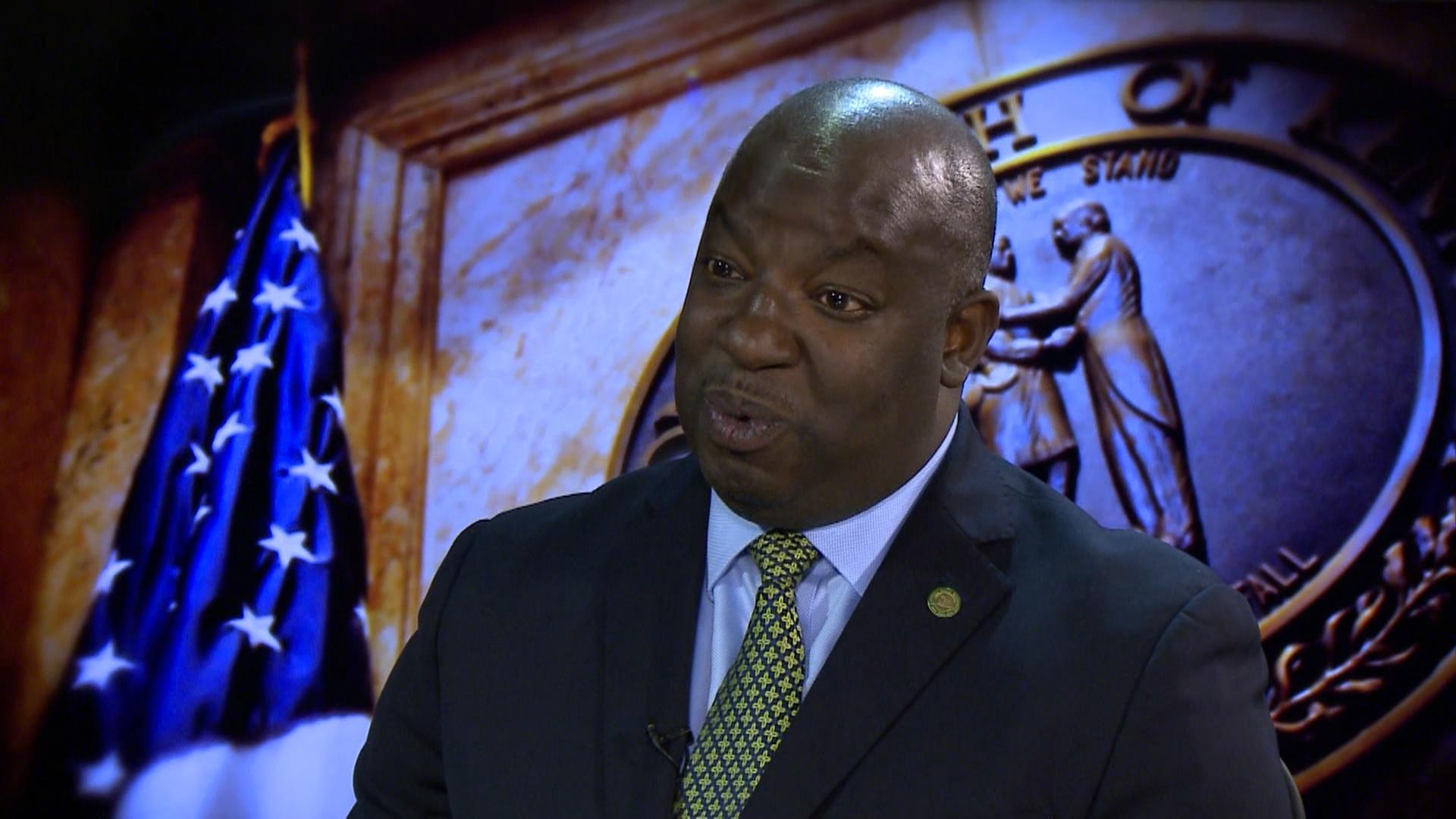
Dr. M. Christopher Brown II, president of Kentucky State University, discusses his vision for the historically black college and improving retention and graduation rates.
Season 14 Episode 10 Length 28:02 Premiere: 11/09/18

About

Connections

KET’s Connections features in-depth interviews with the influential, innovative and inspirational individuals who are shaping the path for Kentucky’s future.

From business leaders to entertainers to authors to celebrities, each week features an interesting and engaging guest covering a broad array of topics. Host Renee Shaw uses her extensive reporting experience to naturally blend casual conversation and hard-hitting questions to generate rich and full conversations about the issues impacting Kentucky and the world.


Tune-In

KET Sundays • 11:30 am/10:30 am
KET2 Sundays • 6/5 pm

Stream

Watch on KET’s website anytime or through the PBS Video App.

Podcast

The Connections podcast features each episode’s audio for listening.


Renee Shaw is the Director of Public Affairs and Moderator at KET, currently serving as host of KET’s weeknight public affairs program Kentucky Edition, the signature public policy discussion series Kentucky Tonight, the weekly interview series Connections, Election coverage and KET Forums.

Since 2001, Renee has been the producing force behind KET’s legislative coverage that has been recognized by the Kentucky Associated Press and the National Educational Telecommunications Association. Under her leadership, KET has expanded its portfolio of public affairs content to include a daily news and information program, Kentucky Supreme Court coverage, townhall-style forums, and multi-platform program initiatives around issues such as opioid addiction and youth mental health.  

Renee has also earned top awards from the Ohio Valley Chapter of the National Academy of Television Arts and Sciences (NATAS), with three regional Emmy awards. In 2023, she was inducted into the Silver Circle of the NATAS, one of the industry’s highest honors recognizing television professionals with distinguished service in broadcast journalism for 25 years or more.  

Already an inductee into the Kentucky Civil Rights Hall of Fame (2017), Renee expands her hall of fame status with induction into Western Kentucky University’s Hall of Distinguished Alumni in November of 2023.  

In February of 2023, Renee graced the front cover of Kentucky Living magazine with a centerfold story on her 25 years of service at KET and even longer commitment to public media journalism. 

In addition to honors from various educational, civic, and community organizations, Renee has earned top honors from the Associated Press and has twice been recognized by Mental Health America for her years-long dedication to examining issues of mental health and opioid addiction.  

In 2022, she was honored with Women Leading Kentucky’s Governor Martha Layne Collins Leadership Award recognizing her trailblazing path and inspiring dedication to elevating important issues across Kentucky.   

In 2018, she co-produced and moderated a 6-part series on youth mental health that was awarded first place in educational content by NETA, the National Educational Telecommunications Association. 

She has been honored by the AKA Beta Gamma Omega Chapter with a Coretta Scott King Spirit of Ivy Award; earned the state media award from the Kentucky Society of the Daughters of the American Revolution in 2019; named a Charles W. Anderson Laureate by the Kentucky Personnel Cabinet in 2019 honoring her significant contributions in addressing socio-economic issues; and was recognized as a “Kentucky Trailblazer” by the University of Kentucky Martin School of Public Policy and Administration during the Wendell H. Ford Lecture Series in 2019. That same year, Shaw was named by The Kentucky Gazette’s inaugural recognition of the 50 most notable women in Kentucky politics and government.  

Renee was bestowed the 2021 Berea College Service Award and was named “Unapologetic Woman of the Year” in 2021 by the Community Action Council.   

In 2015, she received the Green Dot Award for her coverage of domestic violence, sexual assault & human trafficking. In 2014, Renee was awarded the Anthony Lewis Media Award from the KY Department of Public Advocacy for her work on criminal justice reform. Two Kentucky governors, Republican Ernie Fletcher and Democrat Andy Beshear, have commissioned Renee as a Kentucky Colonel for noteworthy accomplishments and service to community, state, and nation.  

A former adjunct media writing professor at Georgetown College, Renee traveled to Cambodia in 2003 to help train emerging journalists on reporting on critical health issues as part of an exchange program at Western Kentucky University. And, she has enterprised stories for national media outlets, the PBS NewsHour and Public News Service.  

Shaw is a 2007 graduate of Leadership Kentucky, a board member of CASA of Lexington, and a longtime member of the Frankfort/Lexington Chapter of The Links Incorporated, an international, not-for-profit organization of women of color committed to volunteer service. She has served on the boards of the Kentucky Historical Society, Lexington Minority Business Expo, and the Board of Governors for the Ohio Valley Chapter of the National Academy of Television Arts and Sciences. 

Host Renee Shaw smiling in a green dress with a KET set behind her.

Kentucky State University President M. Christopher Brown II

When M. Christopher Brown II became the 18th president of Kentucky State University, he knew the job would be a challenge.

In recent years the land grant, historically black college in Frankfort accrued a $7 million deficit, endured declining enrollments and graduation rates, and dropped 645 students for unpaid bills. With state budget cuts to higher education, KSU even faced the possibility of closing its doors.

Brown, who became president in 2017, says he hopes to lead a renaissance at the school.

“Kentucky State’s an exceptional institution,” says Brown. “One hundred and thirty-two years of history and progress, but the last decade has not been the kindest for us for lots of reasons, and so this is an opportunity to revitalize.”

Brown appeared on KET’s Connections to discuss his plans for the school, efforts to improve student retention and graduation rates, and state funding concerns.

The KSU post actually marks Brown’s return to the commonwealth. The South Carolina native and former elementary school teacher got his master’s degree in education at the University of Kentucky. He says he arrived in Lexington by Greyhound bus and carting all of his belongings in 11 boxes.

“I lived in a one-room efficiency off of Versailles Road and had a wonderful time at UK,” Brown says.

After earning a doctorate degree at Pennsylvania State University, Brown served as president of Alcorn State University in Mississippi and provost at Southern University and A&M College System in Louisiana. He has also held executive positions at the American Association of State Colleges and Universities and the United Negro College Fund.

One of the problems that Brown says he found upon his arrival at KSU was that the school lacked a clear path to success.

“There’s scripture that says ‘Write the vision, make it plain, that he that readeth it may run,"” says Brown, who is also an ordained Baptist minister. “So I think we may have been asking people to run without having a written vision of where they were going… but now we’ve got a good roadmap.”

Addressing Student Retention
The first step, says Brown, is to recruit students who want a college degree and are academically prepared to attain one. He says in the past, KSU accepted students who had one of those factors and not enough young people who had both. Once those students are on campus, he says KSU must be equipped to help them graduate in four years and prepare them for gainful employment in today’s job marketplace.

“Four-year institutions are relatively expensive for the average family, and I don’t want to waste anyone’s money,” Brown says. “[I want] to make sure that their learner, their son, daughter, niece, nephew has a positive and successful experience, and graduates on time.”

In the past, KSU’s four-year graduation rate was as low as 6 percent, according to Brown. This year, he says he hopes that it will be at least 20 percent. Ultimately he’d like to see the school’s four- and six-year graduation rates rise to at least 70 percent.

Brown says research shows that students who leave KSU don’t drop out of college altogether, but go to other institutions and complete their degrees. He says that shows that KSU needs to improve the student experience for its enrollees.

“We’ve changed campus climate and culture to make the students want to stay,” he says. But he adds there are “still miles to go before we sleep.”

On the academic side, Brown says KSU needs to offer better cooperative and internship opportunities so students can get more on-the-job experience. As for the campus environment, Brown has plans for a new academic quadrangle as well as a clock and bell tower in front of its main library. He also hopes to put a new sculpture at the campus entrance and build new residence halls.

“When I went to college as a freshman, I went down the hall to a community shower,” says Brown. “No student is preferencing that now… They want the suites, they want the flat screens.”

To fund these projects, Brown hopes to increase charitable giving to the school and promote public-private partnerships for some campus operations like dining services and security. He also wants to boost public confidence in KSU as an institution so that more businesses will be inspired to partner with the school.

“Having more people have a vested interest in the success and the entrepreneurial profitability of the campus leads to better outcomes,” Brown says.

State Funding Concerns
Like Kentucky’s other public universities, KSU has endured dramatic cuts in recent years to the funding it receives from state government. Brown says the school is also struggling under the new performance-based funding model.

Adopted by the General Assembly in 2017, performance-based or outcomes-based funding allocates state dollars to colleges and universities based on the institution’s performance relating to key metrics of student success, course completion, and campus operations.

“I have no problems with performance funding or accountability metrics,” says Brown. “When institutions are given clear intentions on expectations and outcomes, they work to meet those, and I love an environment where that was the case.”

But most states that have performance-based funding apply the model to increases in higher education appropriations. Kentucky is applying the formula to all state funding for public universities and community colleges.

“It’s really not a performance system we’re operating. We’re operating an equilibrium redistribution system” says Brown. “That’s a little challenging, but it’s the reality in which we have to live.”

This year, KSU ranked sixth out of the eight public institutions on performance measures, according to Brown. But he says KSU got no money, while the schools in the seventh and eighth positions got millions. Over the long term, Brown fears KSU’s revitalization efforts could be hurt without changes to the funding formula.

“If we’re not careful, the progress that we have made shifting and turning the corner can be undone by an erosion of the base funding,” he says.

Promoting Student Diversity
Historically black colleges and universities were founded before the 1964 Civil Rights Act to primarily serve African American students. Brown says some HBCUs like Morehouse College in Atlanta are nearly 100 percent black, while other schools like West Virginia State University are 87 percent white.

KSU now has a near 50-50 split between students, faculty, and staff of color and those who are not. Brown says exposing students to that kind of diversity will benefit them later in their careers.

“Our students live in classrooms on a daily basis and residence halls that really prepare them for life in a global workplace,” he says.

This year Kentuckians comprise just over 70 percent of the student population at KSU. That’s up from previous years when the school attracted more students from larger urban areas in other states. Brown says KSU has a responsibility to serve students from all parts of the commonwealth, but he admits that demographic shifts make that a challenge.

“Kentucky is one of the five lowest birth-rate states in our nation,” Brown says. “Fewer children means fewer high school graduates. Fewer high school graduates means fewer college-age eligible students.”

So KSU has plans to reach beyond the traditional 18 to 24 year-olds to boost enrollment. Brown says the school will launch a “completer program” in 2019 to encourage those who dropped out of college to return to KSU and finish their degrees. The program will target adults who earned at least 90 credit hours before leaving school. Brown says those returning students will be able to earn up to nine credit hours for professional work experience.

Sponsored by:

Season 14 Episodes

The 'I Was Here' Project

S14 E36 Length 27:42 Premiere Date 08/04/19

Mike Runyon and Sherita Miller; Wendy Kobler

S14 E35 Length 26:57 Premiere Date 07/28/19

Filmmaker Lynn Novick

S14 E33 Length 28:27 Premiere Date 07/14/19

Brent Hutchinson; Christine Thompson - Education

S14 E32 Length 27:37 Premiere Date 07/07/19

Lieutenant Governor Jenean Hampton - Youth Mental Health

S14 E31 Length 26:32 Premiere Date 06/02/19

Julie Cerel - Youth Suicide Prevention

S14 E29 Length 26:32 Premiere Date 05/19/19

Dale Suttles - Sunrise Children's Services

S14 E28 Length 27:33 Premiere Date 05/12/19

Education in Rural Eastern Kentucky

S14 E27 Length 28:13 Premiere Date 05/05/19

Joshua A. Douglas - Voting Rights Reform

S14 E25 Length 26:32 Premiere Date 04/21/19

Jay Box - Ky. Community & Technical College System

S14 E24 Length 26:32 Premiere Date 04/14/19

Author and Life Coach Colene Elridge

S14 E23 Length 26:19 Premiere Date 04/07/19

FIRST STEP Act - Criminal Justice Reform

S14 E22 Length 27:44 Premiere Date 03/31/19

Cheryl A. Oldham

S14 E21 Length 26:38 Premiere Date 02/22/19

Linda Hampton - Early Childhood

S14 E20 Length 29:47 Premiere Date 02/15/19

Donald Mason

S14 E19 Length 26:34 Premiere Date 02/08/19

Community Action Council; First 5 Lex

S14 E18 Length 28:53 Premiere Date 02/01/19

Seamus Carey

S14 E17 Length 26:57 Premiere Date 01/25/19

Michael Benson

S14 E16 Length 27:32 Premiere Date 01/18/19

Dr. Aaron Thompson

S14 E14 Length 28:13 Premiere Date 01/11/19

Mary Todd Lincoln and Lincoln Lexington Walking Tour

S14 E13 Length 28:55 Premiere Date 12/14/18

Youth Suicide

S14 E12 Length 29:22 Premiere Date 12/07/18

Jean Schumm and Amanda Gale

S14 E11 Length 28:22 Premiere Date 11/16/18

M. Christopher Brown II

S14 E10 Length 28:02 Premiere Date 11/09/18

Frank Harris

S14 E9 Length 25:17 Premiere Date 11/02/18

U.S. Rep. Andy Barr

S14 E8 Length 29:16 Premiere Date 10/26/18

Amy McGrath

S14 E7 Length 29:02 Premiere Date 10/19/18

Kevin Chapman - Youth Mental Health

S14 E6 Length 28:47 Premiere Date 10/12/18

Carol Cecil; Resa Gonzalez - Youth Mental Health

S14 E5 Length 26:03 Premiere Date 10/05/18

Joe Bargione - Youth Mental Health

S14 E4 Length 28:57 Premiere Date 09/28/18

WKU President Timothy Caboni

S14 E3 Length 28:40 Premiere Date 09/21/18

Dr. Neeli Bendapudi

S14 E1 Length 28:47 Premiere Date 09/14/18

See All Episodes

caret down

TV Schedules

Upcoming

No upcoming airdates

Recent

No recent airdates

Explore KET