Skip to Main Content
Watch House Chambers

Joe Bargione - Youth Mental Health

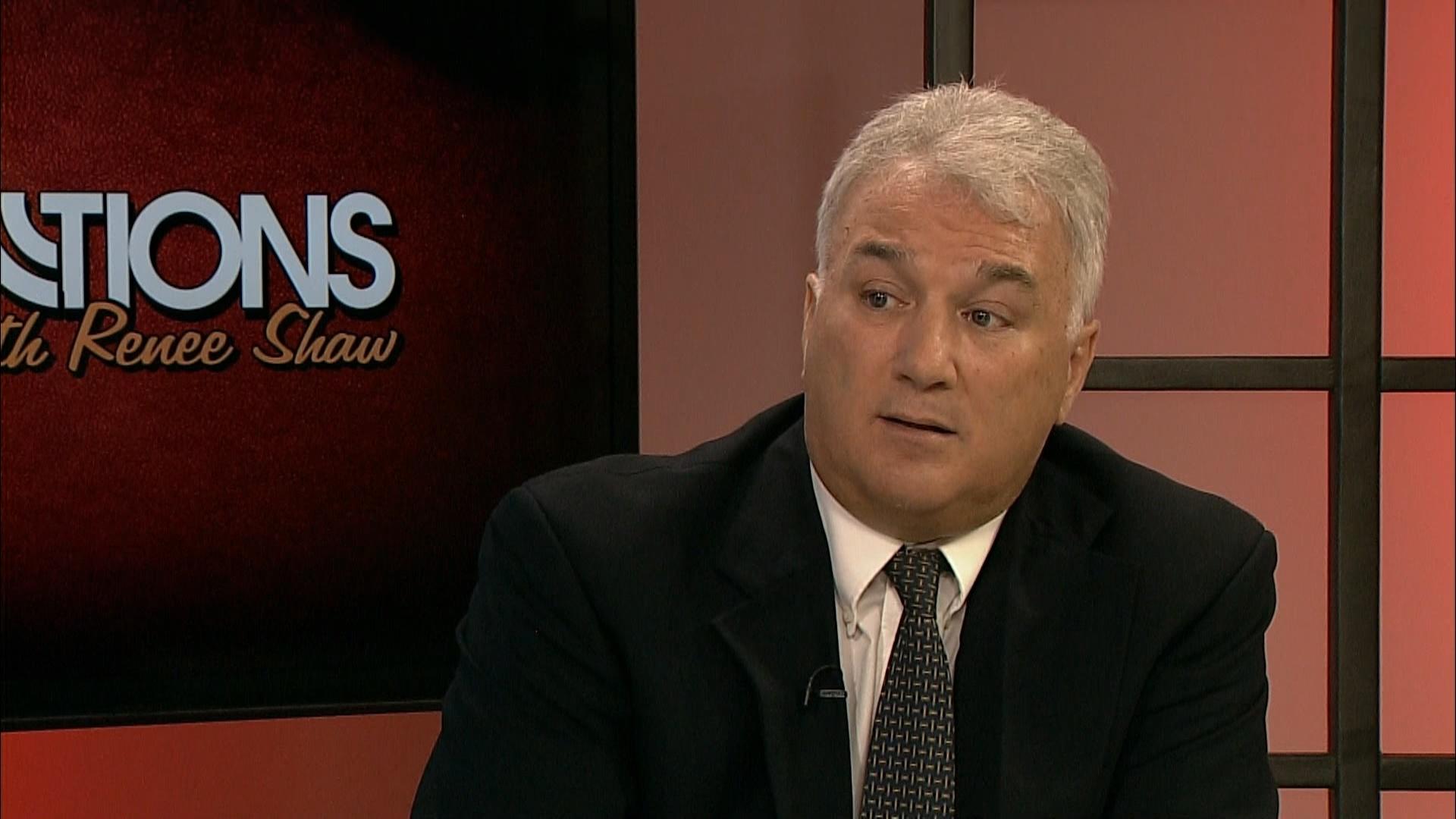
Renee speaks with Dr. Joe Bargione, a retired school psychologist with Jefferson County Public Schools, about toxic stress, trauma, suicide prevention, and other youth mental health issues. He is part of a school safety working group joining Kentucky legislators and other advocates.
Season 14 Episode 4 Length 28:57 Premiere: 09/28/18

About

Connections

KET’s Connections features in-depth interviews with the influential, innovative and inspirational individuals who are shaping the path for Kentucky’s future.

From business leaders to entertainers to authors to celebrities, each week features an interesting and engaging guest covering a broad array of topics. Host Renee Shaw uses her extensive reporting experience to naturally blend casual conversation and hard-hitting questions to generate rich and full conversations about the issues impacting Kentucky and the world.


Tune-In

KET Sundays • 11:30 am/10:30 am
KET2 Sundays • 6/5 pm

Stream

Watch on KET’s website anytime or through the PBS Video App.

Podcast

The Connections podcast features each episode’s audio for listening.


Renee Shaw is the Director of Public Affairs and Moderator at KET, currently serving as host of KET’s weeknight public affairs program Kentucky Edition, the signature public policy discussion series Kentucky Tonight, the weekly interview series Connections, Election coverage and KET Forums.

Since 2001, Renee has been the producing force behind KET’s legislative coverage that has been recognized by the Kentucky Associated Press and the National Educational Telecommunications Association. Under her leadership, KET has expanded its portfolio of public affairs content to include a daily news and information program, Kentucky Supreme Court coverage, townhall-style forums, and multi-platform program initiatives around issues such as opioid addiction and youth mental health.  

Renee has also earned top awards from the Ohio Valley Chapter of the National Academy of Television Arts and Sciences (NATAS), with three regional Emmy awards. In 2023, she was inducted into the Silver Circle of the NATAS, one of the industry’s highest honors recognizing television professionals with distinguished service in broadcast journalism for 25 years or more.  

Already an inductee into the Kentucky Civil Rights Hall of Fame (2017), Renee expands her hall of fame status with induction into Western Kentucky University’s Hall of Distinguished Alumni in November of 2023.  

In February of 2023, Renee graced the front cover of Kentucky Living magazine with a centerfold story on her 25 years of service at KET and even longer commitment to public media journalism. 

In addition to honors from various educational, civic, and community organizations, Renee has earned top honors from the Associated Press and has twice been recognized by Mental Health America for her years-long dedication to examining issues of mental health and opioid addiction.  

In 2022, she was honored with Women Leading Kentucky’s Governor Martha Layne Collins Leadership Award recognizing her trailblazing path and inspiring dedication to elevating important issues across Kentucky.   

In 2018, she co-produced and moderated a 6-part series on youth mental health that was awarded first place in educational content by NETA, the National Educational Telecommunications Association. 

She has been honored by the AKA Beta Gamma Omega Chapter with a Coretta Scott King Spirit of Ivy Award; earned the state media award from the Kentucky Society of the Daughters of the American Revolution in 2019; named a Charles W. Anderson Laureate by the Kentucky Personnel Cabinet in 2019 honoring her significant contributions in addressing socio-economic issues; and was recognized as a “Kentucky Trailblazer” by the University of Kentucky Martin School of Public Policy and Administration during the Wendell H. Ford Lecture Series in 2019. That same year, Shaw was named by The Kentucky Gazette’s inaugural recognition of the 50 most notable women in Kentucky politics and government.  

Renee was bestowed the 2021 Berea College Service Award and was named “Unapologetic Woman of the Year” in 2021 by the Community Action Council.   

In 2015, she received the Green Dot Award for her coverage of domestic violence, sexual assault & human trafficking. In 2014, Renee was awarded the Anthony Lewis Media Award from the KY Department of Public Advocacy for her work on criminal justice reform. Two Kentucky governors, Republican Ernie Fletcher and Democrat Andy Beshear, have commissioned Renee as a Kentucky Colonel for noteworthy accomplishments and service to community, state, and nation.  

A former adjunct media writing professor at Georgetown College, Renee traveled to Cambodia in 2003 to help train emerging journalists on reporting on critical health issues as part of an exchange program at Western Kentucky University. And, she has enterprised stories for national media outlets, the PBS NewsHour and Public News Service.  

Shaw is a 2007 graduate of Leadership Kentucky, a board member of CASA of Lexington, and a longtime member of the Frankfort/Lexington Chapter of The Links Incorporated, an international, not-for-profit organization of women of color committed to volunteer service. She has served on the boards of the Kentucky Historical Society, Lexington Minority Business Expo, and the Board of Governors for the Ohio Valley Chapter of the National Academy of Television Arts and Sciences. 

Host Renee Shaw smiling in a green dress with a KET set behind her.

Helping Kentucky’s Youth with Mental Health Problems

According to the U.S. Centers for Disease Control and Prevention, nearly 15 percent of Kentucky high school students have seriously considered committing suicide in the past year.

That means tens of thousands of the state’s youth thought about ending their lives before they even reached graduation.

“So what we need to be thinking about [is] how do we support those young people and get them access to services to ensure that they don’t think about suicide again,” says Dr. Joe Bargione, a retired school psychologist with Jefferson County Public Schools.

Bargione appeared on KET’s Connections to discuss suicide and suicide prevention strategies as well as other youth mental health issues.

Risk Factors for Suicide and Other Mental Health Problems
While the risk of suicide cuts across all demographics, the CDC reports a significant rise in recent years in the suicide rate among students as young as 10 years old. Suicide is also the second leading cause of death among youth and young adults.

Bargione attributes the increase to teens feeling unable to cope with greater demands at home and school. They may also face what are called “adverse childhood experiences,” such as abuse and neglect at home, food insecurity or homelessness, bullying, or exposure to violence in their communities. He says many teens often feel like they have no one to turn to for help when they face these situations.

Students may also suffer from anxiety or toxic stress, which occurs when a young person endures prolonged exposure to a threatening situation.

“Anxiety may be situation-specific,” says Bargione. “For example, I might have a fear of tests, but then the rest of the day or the rest of the week I’m OK. But with toxic stress, you never get away from it.”

To move from emotional distress to a crisis point like considering suicide usually takes a triggering event. Bargione says for young people such events can include the death of a loved one, a relationship break-up, or being rejected for a college admission.

There are signs that indicate a young person may be thinking about suicide. Bargione suggests watching for behavior changes, like sleeping too little or too much, or a sudden change in academic performance. The child may also isolate themselves from friends and family, stop participating in favorite activities, or they may give away prized possessions.

“If we can just recognize those signs,” Bargione says, “then we can intervene earlier.”

Asking a Simple Question
Bargione says a positive relationship with an adult is the top factor that can help a child who may be thinking about suicide. Such a relationship can make the child feel cared about, provide them someone they feel comfortable talking to, and can create a sense of connection and belonging.

“So with the overwhelming number of children in Kentucky, that’s mom, dad, grandma, and granddad,” Bargione says. “But there’s a bunch of young people where the parents, for whatever reason, they’re not able to be that positive adult, and that’s where the rest of us around the state have to step in.”

That could be a family friend or neighbor, someone at church, or a teacher, bus driver or lunchroom worker at school. Legislation passed by the General Assembly earlier this year requires all Kentucky middle and high school teachers and administrators to receive one hour of suicide prevention training every other year.

But since there are relatively few teachers and school counselors compared to the 650,000 public school students in Kentucky, Bargione says important for all adults to learn how to intervene with children at risk of harming themselves. One such program is QPR, which stands for question, persuade, and refer. The 90-minute training teaches people to recognize a child who is distress and to ask them a simple but very important question.

“Are you thinking about suicide?” says Bargione. “You must ask the question, and be direct and be empathic.”

The next step is to connect the child with the appropriate professional resources in their school or in the community who can evaluate their situation and get them the help that they need. A number of mental health organizations offer QPR training in Kentucky. In September alone, more than 2,200 people received QPR training in Louisville, according to Bargione.

A New Response to Inappropriate Behavior
An increasing number of schools are taking a trauma-informed approach to responding to children with behavioral or mental health issues. This technique encourages teachers, administrators, and staff to discern and respond to traumatic factors that may drive a child’s inappropriate behavior at school.

Bargione says Instead of simply disciplining a student for acting out in the classroom, the adult would first try to learn the backstory to the behavior. Is the child experiencing abuse or neglect at home, or the threat of crime and violence in their neighborhood, for example.

“I may have to be physically aggressive towards others to survive,” Bargione says. “But then when we display that same behavior in an organized setting such as a school or like an afterschool program, that’s an inappropriate behavior. So the young people have problems shifting from that.”

The impacts of such trauma can go far beyond short-term behavioral issues or thoughts of suicide. Bargione says sustained exposure to adverse experiences in childhood can lead to lifelong health problems, including anxiety, depression, substance abuse, diabetes, chronic pulmonary disease, and cancer.

“If you can take care of those traumatic events, not only are you helping that young person right now, but you’re also avoiding some of those long-term health implications,” he says. “So the person can live longer, they’re going to have healthier lives, they’re going to have better relationships with people around them.”

Bargione says the trauma-informed approach gives schools an option beyond discipline to help troubled students correct behavior issues and restore crucial relationships. He says it’s also important to teach children how to be resilient in the face of life challenges as they grow older.

“You’re going to feel terrible that my parent died or I didn’t get the job, but what are those skills we can teach you to be able to bounce back from that and being able to rationalize what happened and what can I do differently?” he says.

Long-Term Care after a School Shooting
In the wake of a shooting in January that left two Marshall County High School students dead, state lawmakers formed a special working group to explore ways to make schools safer. Bargione is a member of that group, which is traveling the state to hear testimony and collect ideas from students, school officials, and the public.

Bargione also served on the crisis response team that went to Benton just after the shooting to support survivors at the school and in the community, and to help them plan for their long-term needs. He says certain milestones like the first anniversary of the shooting may cause people to reconnect with initial trauma they experienced at the time of the incident.

“The long-term planning is what do we for next January,” Bargione says, “because one of the things you want to avoid in those kinds of situations is contagion effects or copycatting.”

Sponsored by:

Season 14 Episodes

The 'I Was Here' Project

S14 E36 Length 27:42 Premiere Date 08/04/19

Mike Runyon and Sherita Miller; Wendy Kobler

S14 E35 Length 26:57 Premiere Date 07/28/19

Filmmaker Lynn Novick

S14 E33 Length 28:27 Premiere Date 07/14/19

Brent Hutchinson; Christine Thompson - Education

S14 E32 Length 27:37 Premiere Date 07/07/19

Lieutenant Governor Jenean Hampton - Youth Mental Health

S14 E31 Length 26:32 Premiere Date 06/02/19

Julie Cerel - Youth Suicide Prevention

S14 E29 Length 26:32 Premiere Date 05/19/19

Dale Suttles - Sunrise Children's Services

S14 E28 Length 27:33 Premiere Date 05/12/19

Education in Rural Eastern Kentucky

S14 E27 Length 28:13 Premiere Date 05/05/19

Joshua A. Douglas - Voting Rights Reform

S14 E25 Length 26:32 Premiere Date 04/21/19

Jay Box - Ky. Community & Technical College System

S14 E24 Length 26:32 Premiere Date 04/14/19

Author and Life Coach Colene Elridge

S14 E23 Length 26:19 Premiere Date 04/07/19

FIRST STEP Act - Criminal Justice Reform

S14 E22 Length 27:44 Premiere Date 03/31/19

Cheryl A. Oldham

S14 E21 Length 26:38 Premiere Date 02/22/19

Linda Hampton - Early Childhood

S14 E20 Length 29:47 Premiere Date 02/15/19

Donald Mason

S14 E19 Length 26:34 Premiere Date 02/08/19

Community Action Council; First 5 Lex

S14 E18 Length 28:53 Premiere Date 02/01/19

Seamus Carey

S14 E17 Length 26:57 Premiere Date 01/25/19

Michael Benson

S14 E16 Length 27:32 Premiere Date 01/18/19

Dr. Aaron Thompson

S14 E14 Length 28:13 Premiere Date 01/11/19

Mary Todd Lincoln and Lincoln Lexington Walking Tour

S14 E13 Length 28:55 Premiere Date 12/14/18

Youth Suicide

S14 E12 Length 29:22 Premiere Date 12/07/18

Jean Schumm and Amanda Gale

S14 E11 Length 28:22 Premiere Date 11/16/18

M. Christopher Brown II

S14 E10 Length 28:02 Premiere Date 11/09/18

Frank Harris

S14 E9 Length 25:17 Premiere Date 11/02/18

U.S. Rep. Andy Barr

S14 E8 Length 29:16 Premiere Date 10/26/18

Amy McGrath

S14 E7 Length 29:02 Premiere Date 10/19/18

Kevin Chapman - Youth Mental Health

S14 E6 Length 28:47 Premiere Date 10/12/18

Carol Cecil; Resa Gonzalez - Youth Mental Health

S14 E5 Length 26:03 Premiere Date 10/05/18

Joe Bargione - Youth Mental Health

S14 E4 Length 28:57 Premiere Date 09/28/18

WKU President Timothy Caboni

S14 E3 Length 28:40 Premiere Date 09/21/18

Dr. Neeli Bendapudi

S14 E1 Length 28:47 Premiere Date 09/14/18

See All Episodes

caret down

TV Schedules

Upcoming

No upcoming airdates

Recent

No recent airdates

Explore KET