

In the wake of racial justice protests and removals of Confederate statues in recent years, the board of Lexington’s Henry Clay Center found themselves faced with a difficult decision: Should the non-profit, non-partisan organization that brings students together to explore public policy issues in a spirit of honesty, civility, and courage keep the name of a man who enslaved Black Americans and disparaged Native Americans as a lower form of life?
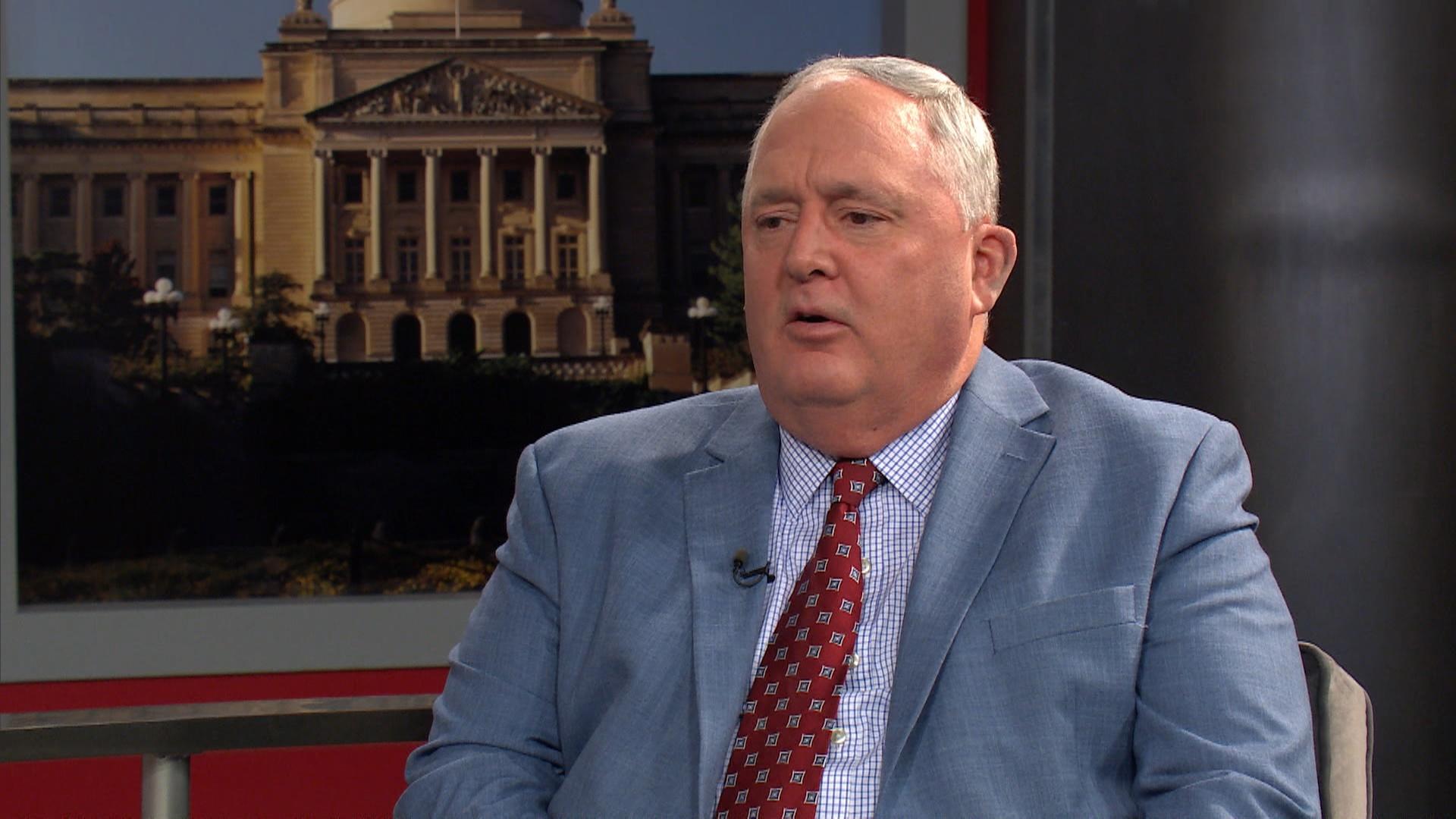
“It was a difficult conversation,” says Tom Shelton, who struggled with his own misgivings about Clay’s mixed legacy before joining the organization as executive director in August 2020.
Ultimately the choice of whether to retain the name of the Kentuckian known as the Great Compromiser came down to a compromise. The board and alumni decided to keep Clay’s name, but revamped the center’s mission and principals. Shelton says they also committed to further diversifying the organization’s board.
“We came to the decision that we had to be very clear that we did not support his views towards Native Americans, African Americans, or any other peoples that have been marginalized,” says Shelton. “But we did want to foster the good side of his legacy about what government should look like, about how we should work together.”
Now in its 14th year, the Henry Clay Center hosts annual gatherings of college and high school students from across the range of social, ethnic, and political backgrounds who come to Lexington to explore important policy issues, to listen to and debate one another, and then arrive at some resolution through compromise.
“It doesn’t mean compromising your values or beliefs. It means being willing to sit down and honestly and civilly engage in a conversation that leads to compromise that moves us forward,” says Shelton. “If you’re not honest, if you’re not courageous, you don’t have the conversations, you can’t get to that compromise.”
Exploring Policy Issues from a Different Perspective
The center’s annual college congress features one student from every state plus the District of Columbia. They usually gather in person for a week in Lexington and then a second week in Washington. The high school student congress is held in Lexington and Frankfort, and includes 50 students, most of whom come from Kentucky or nearby states. All students who are selected by an application process pay nothing to participate in the programs.
Although the COVID pandemic forced some changes to the 2021 gatherings, Shelton says the students still got to tackle some heady topics. The college congress explored the urban-rural divide in policy issues, and the high school students looked at access to health care. As they explore the issues, Shelton says students are often asked to argue policy points from a viewpoint different than their own.
“There’s no better way to understand someone else’s perspective than if you have to state it yourself,” says Shelton. “That requires them to have to listen… it’s listening to hear and to understand.”
Along the way, students are divided into teams that work on specific policy proposals. Part of their presentations includes showing how the members compromised to arrive at their proposal. Sessions are conducted by professors from the University of Kentucky Martin School of Public Policy and Administration, as well as representatives from entities like the U.S. State Department, the Bipartisan Policy Center in Washington, the Council of State Governments, the National Institute for Civil Discourse at the University of Arizona, and the Institute for Civility in Government in Houston.
Students also spend time with current and retired policymakers. In 2021, participants heard from Kentucky Congressmen John Yarmuth and Andy Barr and from former U.S. Senators Trent Lott and Tom Daschle as they talked about how lawmakers do find bipartisan compromise on many issues, despite what is often portrayed in the media.
“We want them to understand that you don’t have to follow a label of a party, you follow what makes the most sense from a policy perspective, and there’s good and bad on each side,” says Shelton. “Government would totally stall and nothing would be happening if we don’t have some level of compromise,” says Shelton.
The center is reviewing applications for its 2022 congress sessions, which Shelton hopes will be all in person. He says students who participate in the organization’s programs on civility and compromise go on to work in a wide range of fields, from politics and public policy, to business and non-profits
“That’s the thing about civil discourse and compromise,” says Shelton. “It doesn’t only work in government; it works in any type of conversation in any environment.”
Continuing a Career in Education
Shelton is no stranger to policy debates. Earlier in his career he served as superintendent in Daviess County Public Schools and in Fayette County Public Schools. As executive director of the Kentucky Association of School Superintendents, Shelton worked the halls of the state capitol, lobbying for and against education-related bills with lawmakers of both parties. Before joining the Henry Clay Center, he was the director of external relations and partnerships at the National Center on Education and the Economy in Washington.
Given his roots in public education, Shelton says he is troubled by the incivility on display in local boards of education meetings across the nation, where unpaid school board members hear from speakers from the community who engage in sometimes aggressive and even threatening behavior during debates over curricula content, COVID protocols, and other policies.
“Being a school board member is the epitome of public service,” Shelton says. “To see them have to deal with some of the things that are happening in school board meetings not only here in Kentucky but across the country is very difficult to watch.”