

Despite a range of criminal justice reform initiatives, Kentucky still has one of the highest incarceration rates in the world, and the state’s bulging prison population costs taxpayers some $500 million a year.
According to a recent Louisville Courier-Journal investigation, Kentucky’s persistent felony offender (PFO) law is a key factor driving incarceration in the commonwealth. This decades-old law has locked up thousands of Kentuckians for years beyond what their crimes might warrant, and disproportionately impacted Black defendants.
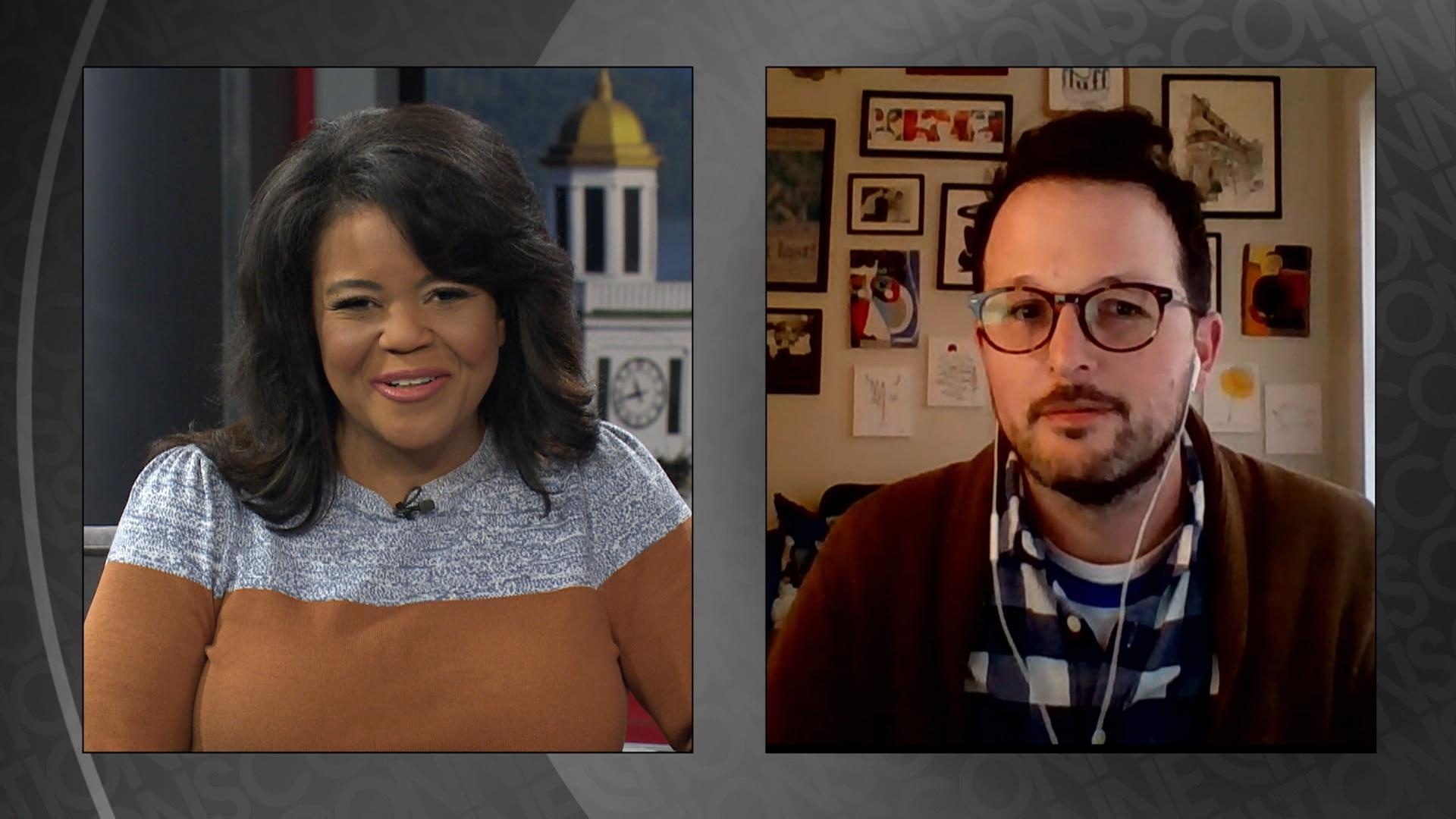
Jonathan Bullington was part of a team at the newspaper that partnered with the Vera Institute of Justice and the PBS program Independent Lens to review 140,000 PFO cases in the state from the past 43 years to learn how the law has been used in ways its authors did not intend.
The Evolution of PFO
In the early 1970s, Kentucky lawmakers decided to rewrite the commonwealth’s aging criminal code and update its existing habitual offender law. They asked University of Kentucky College of Law Professor Robert Lawson to draft new penal codes and rules of evidence for the state.
As part of the process, Bullington says Lawson created a persistent felony offender law that essentially doubled prison sentences upon an offender’s third felony conviction. The original law stated that the person had to have served their sentences for the two prior convictions. If they had a suspended sentence in either of the previous cases, the PFO law would not apply.
Lawson’s version of PFO went on the books in 1975. But within two years, lawmakers had rewritten the statute. Bullington says the updated law required only one previous felony conviction for PFO status to apply. Those charged under the updated law could face a 10-year prison term instead of a five-year sentence after just one previous conviction. Legislators also eliminated the requirement that the offender had to actually serve time for their earlier crimes.
The new law combined with the war on drugs and tough on crime policies of the 1980s drove a surge in incarceration in the commonwealth. For example, Bullington says in 1988 Kentucky only had 60 people imprisoned under PFO status. Four years later, that number jumped to 1,100. Now he says one out of every six inmates in the state has a PFO charge, and about 75 percent of them are accused of low-level felonies like property crimes and drug possession.
“A lot of states have versions of these sorts of laws that punish people for past crimes, that take into account the criminal history of a person when sentencing,” says Bullington. “What makes Kentucky’s unique is that to be considered a ‘persistent felon,’ you really only have to have one prior felony offense on your record within a certain amount of time.”
Lobbying for a Change to PFO
Marcus Jackson is a prime example of the punitive impacts of the current PFO law. The Paducah man received a 10-year sentence for marijuana possession because of a prior conviction in a shooting incident (a crime for which Jackson claims to be innocent). Bullington says Jackson’s father and brother have also been imprisoned on PFO charges, and now his son could face similar charges.
“Incarceration is a generational curse, as some have called it, and the use of PFO is no different,” says Bullington.
In an Independent Lens segment on the issue [LINK: https://youtu.be/obDI-kxXbvE], Jackson explains the impacts of losing 10 years of his life to a law that he says needs to be changed.
“I love Kentucky, but we have some backwards laws in this state and this PFO law is among the worst,” says he says.
Jackson now works for the ACLU of Kentucky and is lobbying the state legislature to change the PFO statute. Bullington says Jackson proposes allowing juries to opt out of PFO-enhanced punishments and to limit its use against offenders charged with the lowest level, non-violent Class D felonies.
“They labeled me a persistent offender,” says Jackson. “I can’t do anything about that now, but what I can do is show them what it actually means to be persistent, I won’t stop until this horrible law goes away and stops destroying families.”
In the Independent Lens clip, Jackson meets with state Rep. Nima Kulkarni (D-Louisville) about his proposed legislation. The Louisville Democrat says just getting the legislation heard in committee will be a challenge.
“There’s a whole system that makes a lot of people a lot of money,” says Kulkarni. “Now you’re talking about some bottom lines and budgets, and so that’s where all of that opposition is going to come from.”
Impacts Reach Far and Wide
The Courier-Journal’s investigation found that in 2020, Kentucky’s violent crime rate was less than half of what it was in 1992, yet PFO cases tripled during that time. Bullington says of the 140,000 cases they studied, 80,000 people were convicted as PFOs. Another 50,000 had potential PFO charges dropped because the defendants were willing to plead guilty to their charges.
“So in a massive amount of these cases, people are having their PFO cases dismissed upon a guilty plea, which is a very strong indicator that the law is being used as a really powerful negotiation tool,” says Bullington.
Bullington acknowledges that it’s difficult for lawmakers to balance punishment versus rehabilitation as well as public safety with the harms of incarceration. He points to the example of Jackson’s father, who became addicted to painkillers after he was injured on the job as an employee of the city of Paducah. Jackson’s father then started to sell drugs to support his own addiction. Yet Bullington says the law treated him as if he was a drug trafficker selling mass quantities through an illicit network of suppliers.
“Somebody who has a drug addiction and is selling drugs to feed a habit, do we need to put them behind bars and keep them there for longer?” says Bullington. “Is that the best way to get them the help they so clearly need?”
The project also found that Black offenders are three and a half times more likely to face PFO charges than white offenders. Jackson says he thinks the courts don’t give the same considerations to the impacts of long sentences on Black families as they do white families.
Bullington says he hopes his team’s reporting will encourage lawmakers to discuss the PFO law and how it affects the commonwealth.
“Every year that somebody is behind bars, the effects of that, the ripple of that, are devastating, and it’s not just that individual or their family. It’s extended family, it’s friends, it’s communities,” says Bullington. “The effects really extend far and wide.”