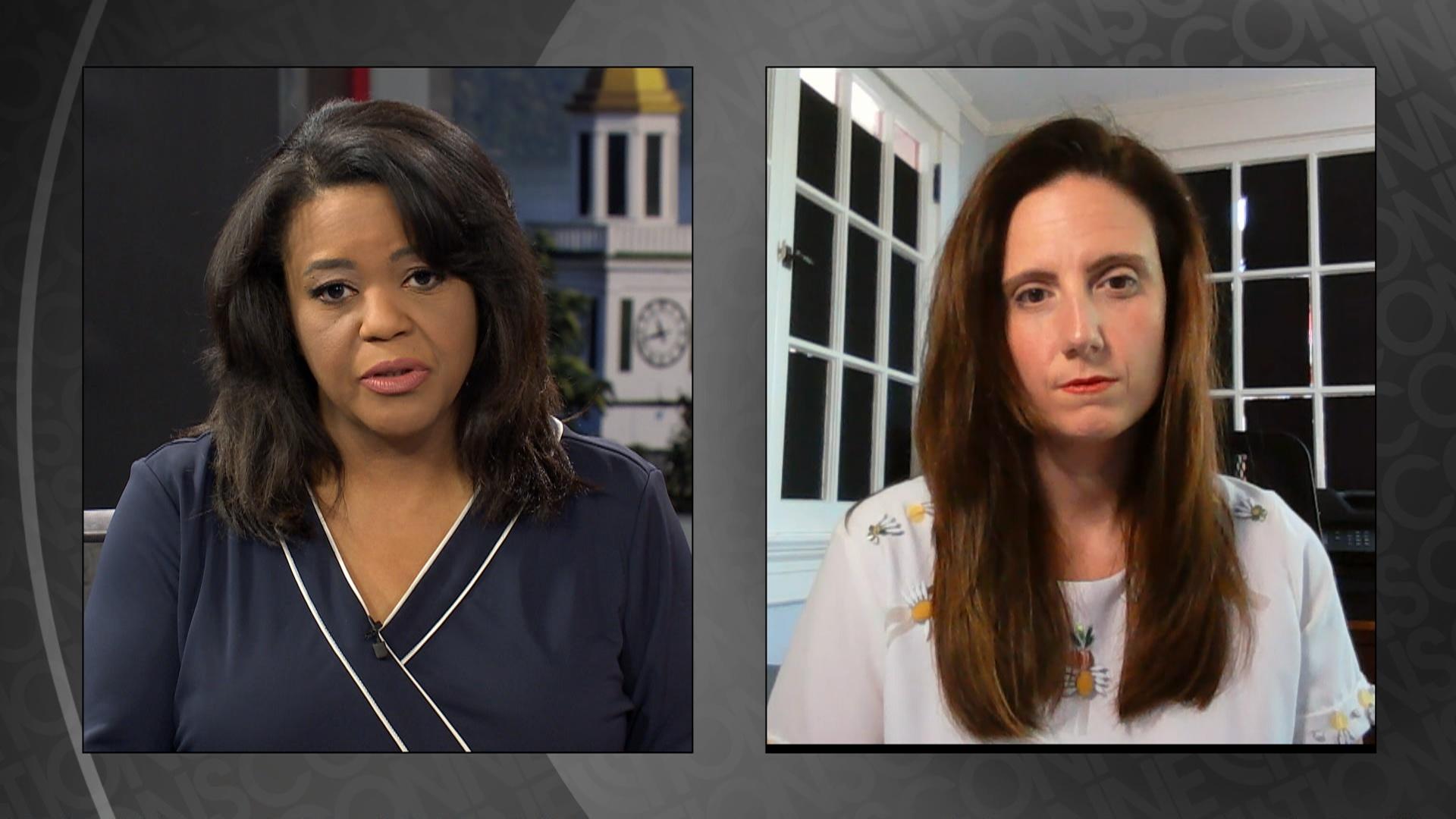


As she watched the recent coverage of the Uvalde, Texas, school shooting that left 19 students and two teachers dead, Whitney Austin felt a rush of a familiar emotions. The Louisville bank executive turned gun safety advocate is herself a survivor of a mass shooting.
“It’s a cycle of despair and frustration, and then it evolves into action,” says Austin. “So currently I’m in the activated stage where I feel this tremendous responsibility to do everything within my power to bring people together to help reduce gun violence.”
Austin was struck 12 times as she walked into a mass shooting incident in the lobby of the Fifth Third Bank headquarters in downtown Cincinnati in September 2018. Miraculously, none of those bullets struck a major organ or artery, and Austin was able to eventually return home to her family.
Driven by her sense of gratitude and responsibility, Austin co-founded Whitney/Strong, a nonprofit, nonpartisan organization to advocate for responsible firearm ownership and evidenced-based solutions to gun violence. The group seeks to engage Democrats, Republicans, and independents as well as gun owners and those who possess no firearms.
“We want a big tent that everyone feels comfortable within,” says Austin, who is a gun owner.
Intervening with Gun Owners in Crisis
A primary focus for Whitney/Strong is legislation she calls CARR, or Crisis Aversion and Rights Retention. It creates a judicial process for the temporary removal of firearms from the possession of certain at-risk individuals.
“It is designed to prevent crisis moments… when someone is intent on harming self, like suicide, or harming others in the case of mass violence,” says Austin.
Under Austin’s proposal, individuals would bring evidence to law enforcement as to why they think a family member, loved one, or friend might be a danger due to a mental health issue, drug or alcohol abuse, or other problem. The police would examine the evidence and decide if a removal of firearms should proceed. Is so, a district court judge would examine the evidence and the recommendation from law enforcement to determine if a removal order should be issued. If ordered, police would be charged with entering the person’s home and removing any firearms.
The removal order could last as long as a year, and could be extended if circumstances warrant. The gun owner also has the right to a hearing where they can present their own evidence as to why they are not a risk and should get their weapons back. While the proposal does not mandate mental health or substance abuse treatment, Austin says it does encourage people to get help and provide access to those resources.
“This is a targeted intervention that is meant just for high-risk people,” she says. “There are on ramps and off ramps for how to make this custom to the individual.”
Elements of Austin’s CARR plan are included in legislation proposed by Ohio Gov. Mike DeWine to lawmakers there. In Kentucky, Senators Paul Hornback (R-Shelbyville) and Morgan McGarvey (D-Louisville) backed a CARR bill in the 2022 General Assembly session.
“I’m very thankful for both of them and their ability to work together because both have had to sacrifice to get to a solution that works,” says Austin.
But McGarvey is now a candidate for Congress and Hornback is retiring from the legislature this year. Austin says she expects other lawmakers from both sides of the aisle to step up and support the proposal in the 2023 session.
‘We just need to see progress.’
In addition to CARR, Whitney/Strong advocates for gun locks and the safe storage of firearms to help keep weapons out of the hands of youth who may hurt themselves or others. The group is also lobbying for the federal Bipartisan Background Checks Act of 2021, which would close loopholes in the current system that allow mandatory checks to be circumvented. House Resolution 8 sets background check requirements for firearm transfers that occur between private parties.
The legislation passed the U.S. House of Representatives on a vote of 227 to 203 in March of 2021, and awaits action by the Senate. As mass shootings continue to occur across the country, Austin says it’s critical for lawmakers in the 50-50 split Senate to finally take some kind of action on gun safety.
“What I would ask is come together. You’re smart people, there are plenty of policies rooted in evidence we know work. Find the ones that you can come together on and pass those,” she says. “We just need to see progress.”
Austin says 65 percent of people who perpetrate mass shootings leak details of their plans ahead of time. As a society, she says Americans need to be better informed about how to identify the warning signs of individuals who pose a threat, and how to share those concerns with law enforcement, school administrators, or other officials.
“I think some people don’t say something because they don’t want to jump to conclusions,” says Austin. “For God’s sake, don’t just keep it inside you. We have the opportunity to prevent these moments.”
She also encourages people to lobby their elected leaders to pass common sense, evidenced-based firearms legislation that can protect public safety as well as the rights of gun owners.
“It takes all of us to raise your voices, let your state senators and your representatives know that you’re not okay with our kids being shot in schools and that you want them to come together and find solutions to stop it,” says Austin.