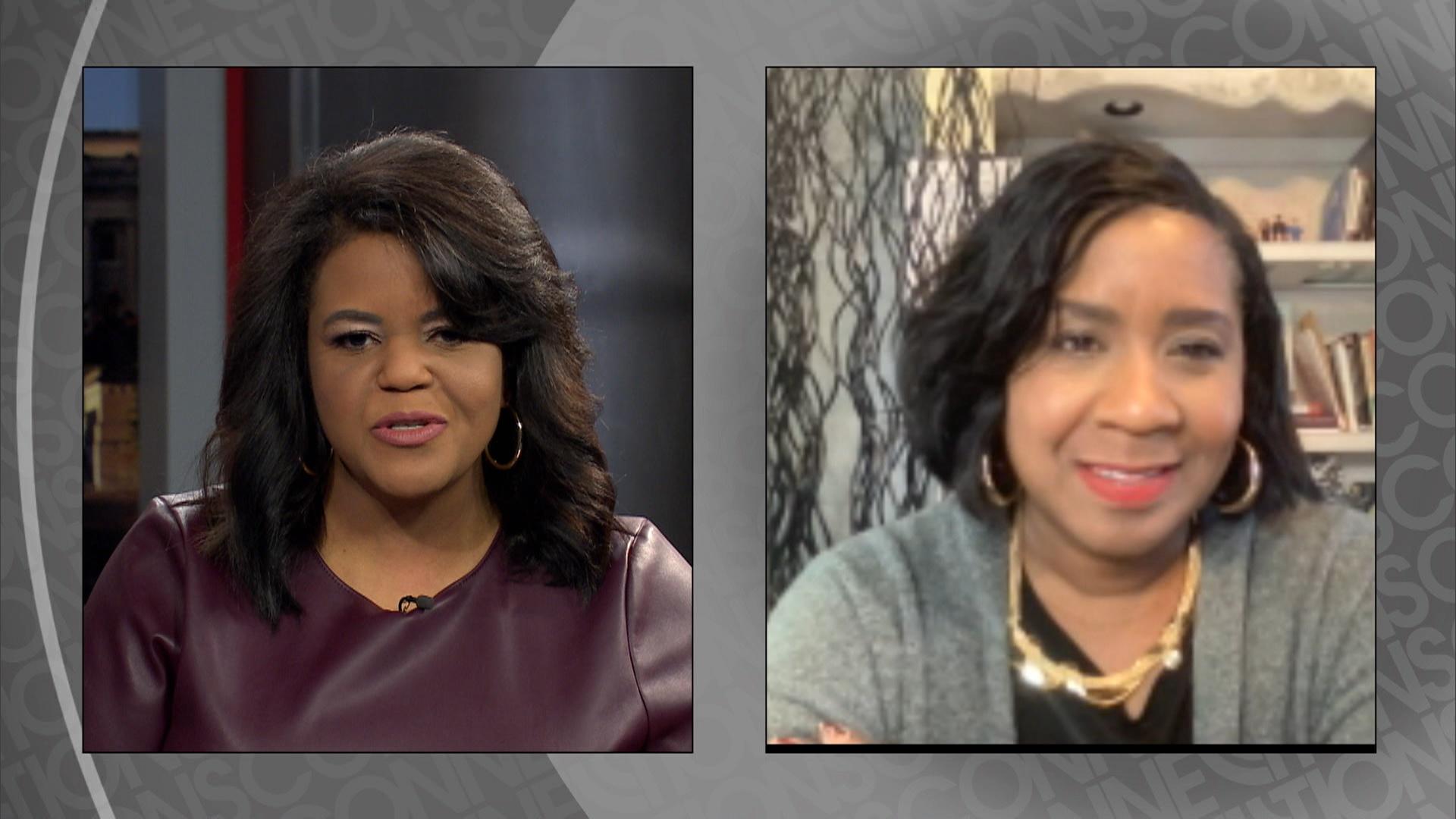


The twin upheavals of the COVID pandemic and social justice protests of 2020 caused Nikki Lanier to take a step back and reevaluate her life. The attorney and human resources expert had held executive positions in private corporations as well as in state and federal government. But the police-involved deaths of Breonna Taylor and George Floyd reminded Lanier of a professional goal she set for herself as she graduated law school: to right wrongs she saw in society.
“It ignited in me a desire to right now bring the fulsome complement of my… legal experience, my HR experience, and of course my understanding of macroeconomic theory, monetary policy – bring all of that to bear to help employers understand the economic argument around advancing and activating the potency of Black and brown talent,” she says.
So in December of last year, Lanier left her job as a senior vice president of the Louisville office of the Federal Reserve Bank of St. Louis to start her own consulting firm focused on advancing racial equity in the workplace. The name of her business, Harper Slade, comes from the names of her paternal and maternal grandmothers, who she says had their own ideas about advancing rights for African Americans.
Lanier contends the nation loses billions of dollars personal incomes, productivity, and consumption because of racial bias in the workplace that prevents individuals of color from rising into and staying in the middle class.
“In every workplace, the default inertia leans toward stunting, marginalization, and diminishment of Black and brown people,” she says. “Why? Because you operate inside of the United States, and that is the prevailing narrative… We all know it to be true but we don’t talk about it.”
While many organizations have worked in recent years to recruit more minority employees, Lanier says the problem is deeper than mere numbers. She says it’s more about changing the mentality of leadership and corporate structures that are built on white cultural norms. While that results in a certain uniformity and predictability, it can also feel unwelcoming to employees who aren’t white.
Given demographic changes underway in America, Lanier says it is critical for businesses and the nation to address these systemic issues. It’s not just the right thing to do she says. It’s about economic survival since minorities will be the majority of the workforce by 2045.
“That means we also must be the majority in the middle class to in order to sustain the sustenance of our overall economic wellbeing,” says Lanier. “It is in white America’s best interest that Black and brown America thrive.”
Moving Beyond Equality to Achieve Equity
But conversations about things like slavery, racism, and social justice are deeply unsettling to some people. Several state legislatures around the country, including here in Kentucky, are considering bills that would restrict what students are taught about America’s long history of racism and segregation.
“Part of the hesitation around teaching that and the drive toward white comfort at all costs is, I think, rooted in this idea that, ‘I feel unsafe in even acknowledging, talking about, sharing, educating about the travesty that has happened to Black people in this country,’” she says.
By avoiding those conversations in schools, Lanier says the nation will produce a generation of adults who don’t know the historical context for the push for greater equity among Americans.
The key word there is equity, not equality. Lanier argues the time for equality in America has passed. The path forward now, she says, must focus on equity. While equality involves bringing all people up to a white standard of living, according to Lanier, equity is about proportional fairness that takes into account the historical and cultural realities that people of color face today.
“Equity is about stopping the bleeding of racism and its manifestations, and also treating the now-infected wound,” she says.
In this drive for equity, Lanier says people of color can’t ease the fears of white Americans. But she says they can approach the work with grace and patience, and focus on changing systems that are white-centered rather than shaming individual white people.
“Pedaling guilt doesn’t get us there, yelling and screaming at white people doesn’t get us there. That’s not fair or effectual,” she says. “We all inherited this. None of us living today is the architect of any of these realities that we now have to disrupt.”
Lingering Reverberations from the ‘Great Resignation’
As the American workplace struggles to regain its equilibrium in the post-pandemic world, Lanier says businesses and organizations must continue to pursue policy and structural changes that will advance economic prosperity for all workers.
At the same time, she says she understands why so many Americans have resigned their jobs in the past two years. She says the isolation brought on by the pandemic inspired a period of introspection for workers who realized that what they want and need in their careers didn’t match what their jobs were providing them.
“I think many folks found that there was far too big of a chasm between the two,” she says. “Your time, your intellect, your talent all have an expiration date, so it’s incredibly important to be prudent about how and when you expend it, and where you chose to expend that.”
If employers want to lure people back to their jobs, Lanier says they will have to rethink the cultures they create at work. She contends those who joined the so-called “Great Resignation” don’t want to return to the same job environments that they left.
“We would have to assure that the workplace to be is distinctly different from the workplace as is,” she says.
And that change, according to Lanier, could reverberate through workplaces and the economy for years to come.