Skip to Main Content

Brigitte Blom - Prichard Committee for Academic Excellence

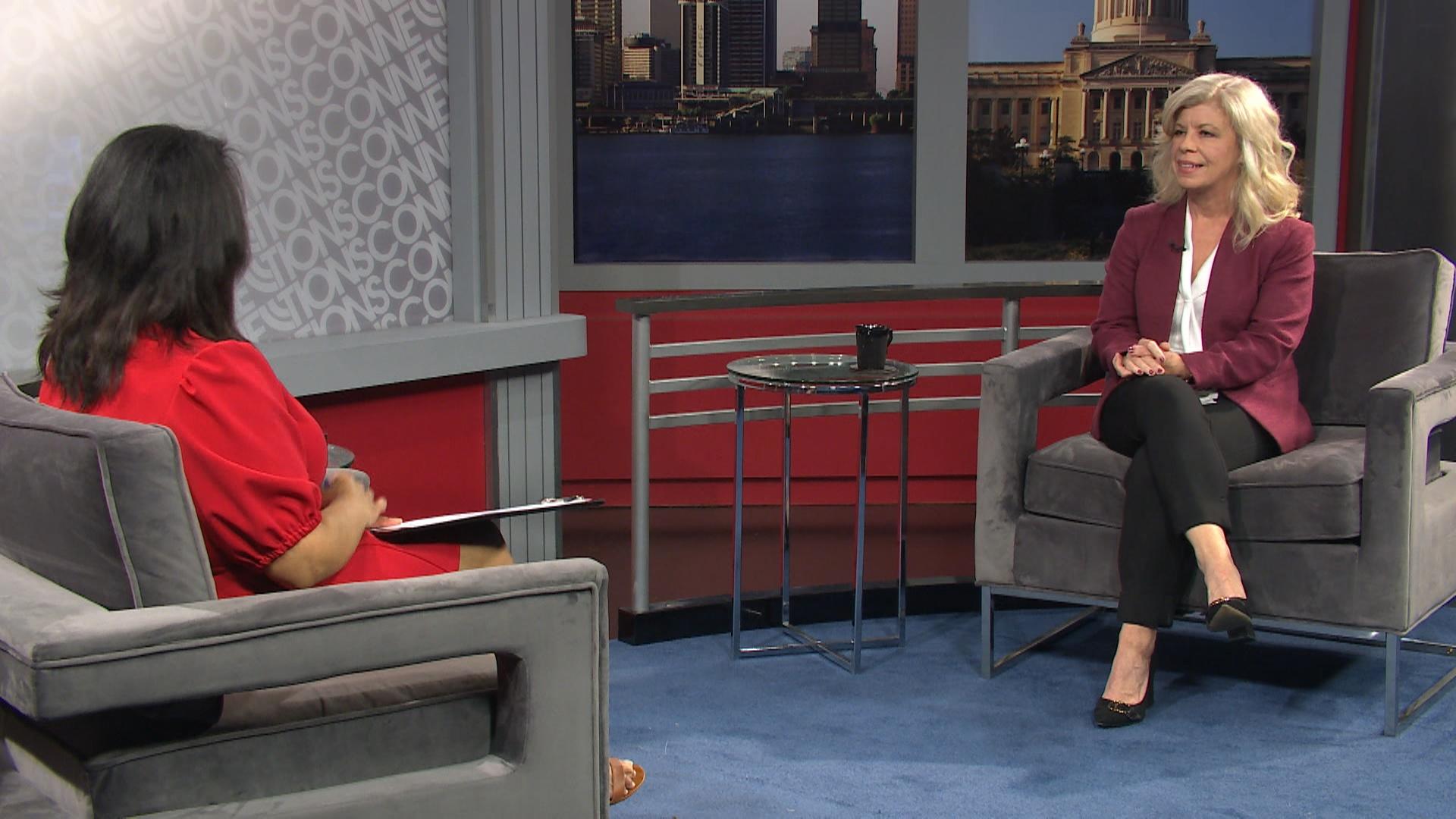
Brigitte Blom, president and CEO of the Prichard Committee for Academic Excellence, talks about how education fared during the 2022 Kentucky General Assembly and how the organization is engaged in policymaking around early childhood education, equity and student success.
Season 17 Episode 24 Length 28:02 Premiere: 05/01/22

About

Connections

KET’s Connections features in-depth interviews with the influential, innovative and inspirational individuals who are shaping the path for Kentucky’s future.

From business leaders to entertainers to authors to celebrities, each week features an interesting and engaging guest covering a broad array of topics. Host Renee Shaw uses her extensive reporting experience to naturally blend casual conversation and hard-hitting questions to generate rich and full conversations about the issues impacting Kentucky and the world.


Tune-In

KET Sundays • 11:30 am/10:30 am
KET2 Sundays • 6/5 pm

Stream

Watch on KET’s website anytime or through the PBS Video App.

Podcast

The Connections podcast features each episode’s audio for listening.


Renee Shaw is the Director of Public Affairs and Moderator at KET, currently serving as host of KET’s weeknight public affairs program Kentucky Edition, the signature public policy discussion series Kentucky Tonight, the weekly interview series Connections, Election coverage and KET Forums.

Since 2001, Renee has been the producing force behind KET’s legislative coverage that has been recognized by the Kentucky Associated Press and the National Educational Telecommunications Association. Under her leadership, KET has expanded its portfolio of public affairs content to include a daily news and information program, Kentucky Supreme Court coverage, townhall-style forums, and multi-platform program initiatives around issues such as opioid addiction and youth mental health.  

Renee has also earned top awards from the Ohio Valley Chapter of the National Academy of Television Arts and Sciences (NATAS), with three regional Emmy awards. In 2023, she was inducted into the Silver Circle of the NATAS, one of the industry’s highest honors recognizing television professionals with distinguished service in broadcast journalism for 25 years or more.  

Already an inductee into the Kentucky Civil Rights Hall of Fame (2017), Renee expands her hall of fame status with induction into Western Kentucky University’s Hall of Distinguished Alumni in November of 2023.  

In February of 2023, Renee graced the front cover of Kentucky Living magazine with a centerfold story on her 25 years of service at KET and even longer commitment to public media journalism. 

In addition to honors from various educational, civic, and community organizations, Renee has earned top honors from the Associated Press and has twice been recognized by Mental Health America for her years-long dedication to examining issues of mental health and opioid addiction.  

In 2022, she was honored with Women Leading Kentucky’s Governor Martha Layne Collins Leadership Award recognizing her trailblazing path and inspiring dedication to elevating important issues across Kentucky.   

In 2018, she co-produced and moderated a 6-part series on youth mental health that was awarded first place in educational content by NETA, the National Educational Telecommunications Association. 

She has been honored by the AKA Beta Gamma Omega Chapter with a Coretta Scott King Spirit of Ivy Award; earned the state media award from the Kentucky Society of the Daughters of the American Revolution in 2019; named a Charles W. Anderson Laureate by the Kentucky Personnel Cabinet in 2019 honoring her significant contributions in addressing socio-economic issues; and was recognized as a “Kentucky Trailblazer” by the University of Kentucky Martin School of Public Policy and Administration during the Wendell H. Ford Lecture Series in 2019. That same year, Shaw was named by The Kentucky Gazette’s inaugural recognition of the 50 most notable women in Kentucky politics and government.  

Renee was bestowed the 2021 Berea College Service Award and was named “Unapologetic Woman of the Year” in 2021 by the Community Action Council.   

In 2015, she received the Green Dot Award for her coverage of domestic violence, sexual assault & human trafficking. In 2014, Renee was awarded the Anthony Lewis Media Award from the KY Department of Public Advocacy for her work on criminal justice reform. Two Kentucky governors, Republican Ernie Fletcher and Democrat Andy Beshear, have commissioned Renee as a Kentucky Colonel for noteworthy accomplishments and service to community, state, and nation.  

A former adjunct media writing professor at Georgetown College, Renee traveled to Cambodia in 2003 to help train emerging journalists on reporting on critical health issues as part of an exchange program at Western Kentucky University. And, she has enterprised stories for national media outlets, the PBS NewsHour and Public News Service.  

Shaw is a 2007 graduate of Leadership Kentucky, a board member of CASA of Lexington, and a longtime member of the Frankfort/Lexington Chapter of The Links Incorporated, an international, not-for-profit organization of women of color committed to volunteer service. She has served on the boards of the Kentucky Historical Society, Lexington Minority Business Expo, and the Board of Governors for the Ohio Valley Chapter of the National Academy of Television Arts and Sciences. 

Host Renee Shaw smiling in a green dress with a KET set behind her.

Head of Education Advocacy Group Discusses Impact of New State Laws on Teachers and Students

Lawmakers in the 2022 General Assembly session gave public education advocates a mixed bag of legislation, ranging from increases in per-pupil funding and a greater focus on early literacy to no pay raises for teachers and a shift in some powers away from site-based decision-making councils.

“If we look at investment, yes, it’s been a good session for education… Strong investment in K-12, strong investment in post-secondary,” says Brigitte Blom, president and CEO of the Prichard Committee for Academic Excellence. “Minus a couple of areas that really caused some angst, it was a good session.”

Blom says an especially important measure was Senate Bill 9, also known as the Read to Succeed Act, which provides funding and training for teachers to help Kentucky’s youngest learners improve their literacy skills. She says this renewed emphasis on reading stems from a recent drop in proficiency scores: In 2015, Kentucky was ranked eighth in the nation in reading proficiency. But since then, the state has dropped to 26th. Blom attributes the decline to changes in state standards and school accountability as well as a disinvestment in teacher professional development.

“We haven’t given our teachers the resources they need, we haven’t given them the time to work with one another, and we’re constantly changing things for them,” she says. “At the same time, other states are moving forward and leap-frogging ahead of us.”

Under Read to Succeed, Blom says teachers will be trained to instruct children on both phonics (how combinations of letters sound) and whole language (recognizing words as a whole) skills. She describes this “balanced approach” as better for preparing teachers to help all students, regardless of any comprehension issues a child might have. Lawmakers appropriated $11 million in each year of the biennium to fund professional development in this approach.

“Within three years we should be studying the impact of this investment to be able to say whether or not it is resulting in improvements in literacy,” says Blom.

Public and Charter School Funding, Teacher Pay, and Pre-Kindergarten

Lawmakers also provided a $100 increase in both years of the biennium to per pupil funding for schools known as SEEK. Blom says those extra dollars combined with federal COVID relief aid that public schools received will give district administrators resources they need to address a range of issues.

“It’s important that we see those [federal pandemic] dollars as dollars to help districts and students catch up from learning loss,” she says, “and that those dollars coming from the state are really the stability dollars that our districts can plan with.”

The legislature also provided funds for full-day kindergarten and moved closer to providing districts with full funding for student transportation, according to Blom. But the General Assembly did not fund universal pre-kindergarten despite calls from Gov. Andy Beshear and other early childhood education advocates.

Rather than seeing pre-K strictly as an education issue, Blom says legislative leaders consider it to be more of a child care issue that impacts workforce development. She says working-class parents need high quality, reliable care for their children for a full day, whereas pre-K services generally only last half a day.

“Universal public pre-school just for four-year-olds in about four hours may benefit them from a learning standpoint, but it’s not everything that a working family needs,” Blom says. “We need to bring pre-school and child care together in a more richly funded system that results in a stronger infrastructure for early childhood.”

The General Assembly also declined to include a pay raise for teachers and school staff even as they boosted compensation for state workers. Republican legislative leaders contend they provided districts enough funding elsewhere in the budget to enable school officials to offer raises as needed within their individual districts.

Blom says that’s an understandable approach, given that other public employees work directly for state government, whereas school teachers and staff are employed by their local school districts. At the same time though, Kentucky teacher compensation continues to lag behind national averages. A recent report from the National Education Association ranks the commonwealth 44th among all states in starting teacher pay.

“School teachers are not paid at an incoming professional level relative to other areas of business,” she says, “and so that’s something we’re going to have to continue to wrestle with as a state.”

Local Versus State Control

The final version of Senate Bill 1 contained a range of education issues that impact who controls aspects of curricula and hiring within schools.

The 1990 Kentucky Education Reform Act (KERA) created school-based decision-making councils comprised of parents, teachers, and administrators to address things like school policies, principal hiring, and textbook selection.

“It is really important to note that 30-plus years ago (KERA) was Kentucky’s answer to ensuring parent voice locally, to ensuring teacher voice locally, and to ensuring more innovation within our schools,” says Blom.

But now SB 1 gives curriculum selection and principal-hiring responsibilities to district superintendents. The new law encourages superintendents to continue to seek community input on those decisions, but doesn’t actually require it. Blom says that centralization of power in one person may not yield the best outcomes in the classroom.

“The one thing we know without a doubt is that when communities are engaged in the decision making of their schools,” she says, “and districts turn outward to them, we get better results for our students because we’re all in it together,” she says.

SB 1 also integrates legislation that was called the Teaching American Principals Act that requires civics instruction on 24 specific documents and speeches from U.S. history. Blom describes the measure as “a solution searching for a problem.”

Despite an outcry among some national commentators about “critical race theory,” Blom says there’s not been a problem with how Kentucky educators teach history and civics. Unlike anti-CRT legislation in other states, Blom says Kentucky’s measure doesn’t prohibit the teaching of sensitive topics nor does it call for the removal of textbooks that might be considered controversial. She says this is another area where increased professional development training for educators would help ensure that they use appropriate strategies for teaching the nation’s history.

In House Bill 9, lawmakers finally provided a funding mechanism for charter schools that were legalized back in 2017. The legislation also calls for the creation of pilot charter programs in Jefferson County and in northern Kentucky within the next 18 months.

Blom says for now she sees somewhat more interest in charters in northern Kentucky than she does in Louisville. She says it will be up to the local authorizing entities (local school boards, local mayor’s offices, or the Northern Kentucky University Board of Regents) to review any charter applications, grant an initial contract to a school operator, and ensure the charters achieve better student outcomes than the local traditional schools can provide.

“They need to hold the applicant accountable,” says Blom. “At the end of that five-year contract, if there’s no appreciable difference, then the authorizers should be reevaluating that contract and can terminate it.”

Blom says she fears that the tight, 18-month timetable for launching pilot schools could compromise the quality of instruction that charter students might receive.

Sponsored by:

Season 17 Episodes

Lyle Roelofs - Berea College

S17 E32 Length 27:49 Premiere Date 06/26/22

Engaging Fathers; Improving Financial Literacy

S17 E31 Length 28:01 Premiere Date 06/19/22

Delanor Manson - Kentucky Nurses Association

S17 E30 Length 27:26 Premiere Date 06/12/22

School Safety in Kentucky

S17 E29 Length 29:06 Premiere Date 06/05/22

Gun Safety Advocate Whitney Austin

S17 E28 Length 27:32 Premiere Date 05/29/22

Ben Chandler - Foundation for a Healthy Kentucky

S17 E27 Length 27:51 Premiere Date 05/22/22

Advancing Mental Health Awareness in Kentucky

S17 E26 Length 27:01 Premiere Date 05/15/22

Kentucky Secretary of State Michael Adams

S17 E25 Length 27:36 Premiere Date 05/08/22

Brigitte Blom - Prichard Committee for Academic Excellence

S17 E24 Length 28:02 Premiere Date 05/01/22

Jill Seyfred - Prevent Child Abuse Kentucky

S17 E23 Length 27:17 Premiere Date 04/18/22

Child Abuse Prevention in Kentucky

S17 E22 Length 28:03 Premiere Date 04/10/22

Kidney Health: Prevention, Treatment, and Organ Donation

S17 E21 Length 26:53 Premiere Date 04/03/22

Reporter Jonathan Bullington

S17 E20 Length 28:07 Premiere Date 02/27/22

Nikki Lanier - Harper Slade

S17 E19 Length 28:01 Premiere Date 02/20/22

WFPL's Stephanie Wolf and Jess Clark

S17 E18 Length 27:51 Premiere Date 02/13/22

Felicia C. Smith - National Center for Families Learning

S17 E17 Length 27:33 Premiere Date 02/06/22

Tom Shelton - Henry Clay Center

S17 E16 Length 27:33 Premiere Date 01/23/22

Cabinet for Health and Family Services Sec. Eric Friedlander

S17 E15 Length 28:10 Premiere Date 01/09/22

Exploring Solutions to the Healthcare Worker Shortage

S17 E14 Length 27:01 Premiere Date 12/12/21

William Turner on Black Life in Appalachia

S17 E13 Length 27:54 Premiere Date 11/21/21

Kentucky Poet Laureate Crystal Wilkinson

S17 E12 Length 27:43 Premiere Date 11/14/21

Addressing Needs of Kentuckians with Disabilities

S17 E11 Length 27:36 Premiere Date 11/07/21

Chelsea Ellis-Hogan

S17 E9 Length 27:11 Premiere Date 10/31/21

2021 Kentucky Book Festival

S17 E8 Length 28:12 Premiere Date 10/24/21

Devine Carama

S17 E7 Length 27:41 Premiere Date 10/17/21

Rufus Friday

S17 E6 Length 27:56 Premiere Date 10/10/21

Aaron Thompson

S17 E5 Length 28:04 Premiere Date 10/03/21

Whitney Austin - Reducing Gun Violence

S17 E4 Length 27:01 Premiere Date 09/26/21

Filmmaker Sarah Burns

S17 E3 Length 28:11 Premiere Date 09/19/21

Charlene Buckles and Dan Wu

S17 E2 Length 27:23 Premiere Date 09/12/21

See All Episodes

caret down

TV Schedules

Upcoming

No upcoming airdates

Recent

No recent airdates

Explore KET