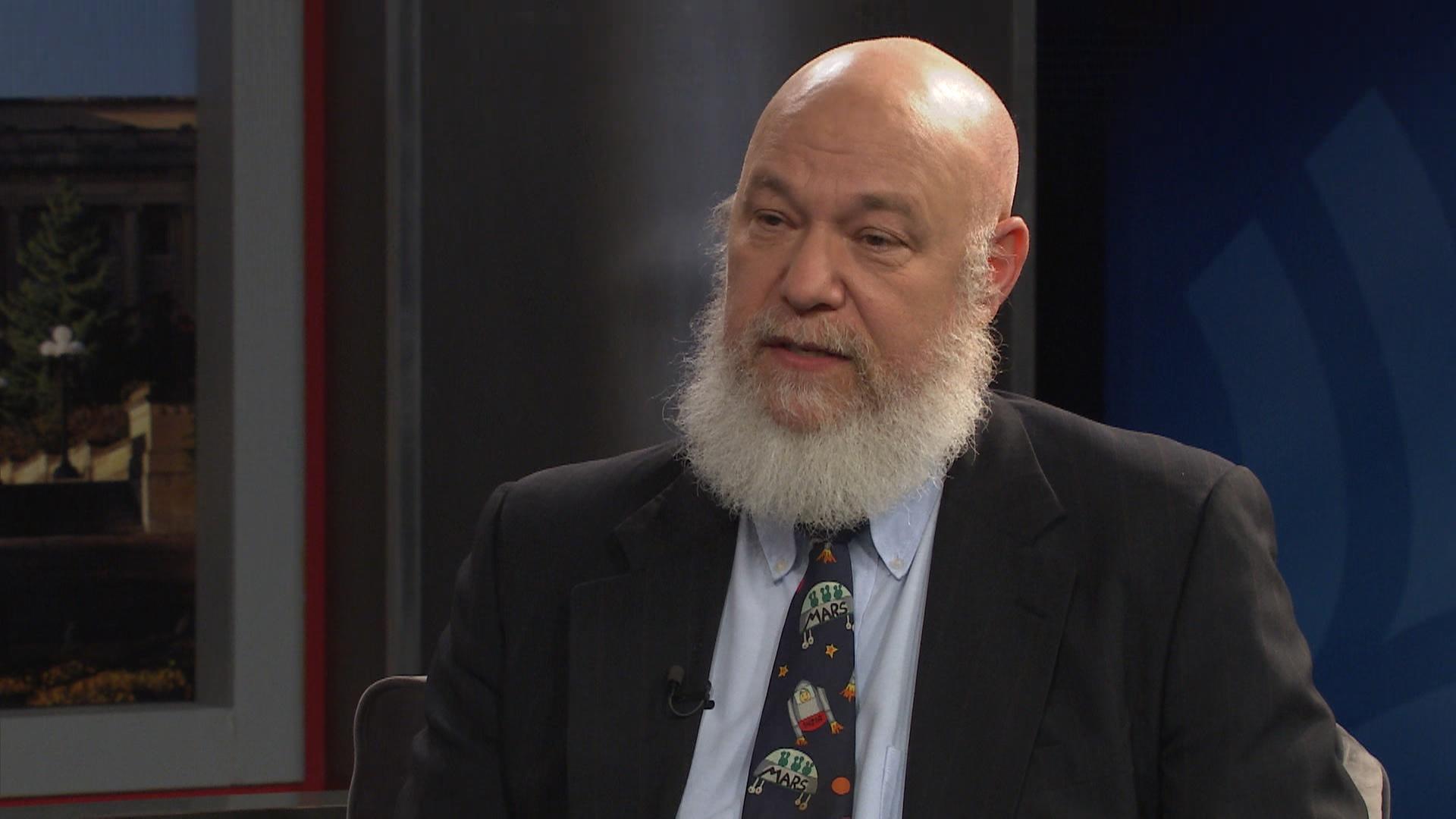


For two years, the Cabinet of Health and Family Services has been at the forefront of the Kentucky’s public health response to the COVID pandemic. Now, the largest cabinet in state government is playing a crucial role in helping victims of the recent tornados that swept through western Kentucky.
“It is probably the greatest swath of devastation I’ve ever seen,” says CHFS Secretary Eric Friedlander, who toured the region after the storms.
In addition to ensuring that Kentuckians already on state assistance continue to receive their benefits, Friedlander says the cabinet is now offering D-SNAP, also known as the Disaster Supplemental Nutrition Assistance Program. That provides an electronic benefits card to individuals in 14 counties who lost income, lost food due to power outages, or accrued other damage-related expenses as a result of the Dec.10 twisters.
Friedlander says individuals can sign up on the CHFS website, call CHFS, or visit a Department of Community Based Services office in their community. He says temporary offices have been set up in Dawson Springs at the Outwood care facility and in Mayfield at the Purchase Area Development District office. D-SNAP benefits will be available for at least one month.
CHFS personnel are also working to coordinate public health and mental health supports through local community health centers, ensure homebound seniors get their medications, and deliver other supports through school-based family resource and youth services centers.
“This isn’t going to be something that we get through in a month or two. This is a long-term recovery,” says the secretary. “We’re going to be there, we’re going to be there for the long term. We have to be.”
Friedlander says several local CHFS offices were destroyed in the tornados, along with the case files used by his staff. He says they will re-create those records using electronic backups and the memories of the case workers.
Low Vaccination Rates Hamper Progress on COVID
The highly transmissible Omicron variant has brought a new wave of COVID cases at a time when the state was already seeing many intensive care units reach full capacity. As of Jan. 10, Gov. Andy Beshear reported only 134 ICU beds available in the entire state.
Friedlander says the vast majority – upwards of 80 percent – of Kentuckians now hospitalized with COVID are unvaccinated. He says vaccination rates in the state across all age groups are still too low, but the rates among children are especially troubling. Fewer than 3 percent of children aged 5 to 11 are vaccinated, according to Friedlander. In some counties, he says, no children in that group have received their first shots.
“It is still so very important to get vaccinated,” says Friedlander. “If we’re vaccinated and boosted, the chances of us going in the hospital… are much, much less.”
The secretary says he’s perplexed why some people remain reluctant to get the vaccine given that more than 12,000 Kentuckians have died from COVID and many others are suffering with long-haul symptoms even after recovering from the virus.
“We’ve been searching for what can we say to really encourage folks who are still uncomfortable to get vaccinated,” Friedlander says. “If you lose your sense of smell and taste, that’s your brain, that’s your senses. That’s serious.”
The secretary says he fears how case numbers could continue to spike as children return to school after the holidays. He says it’s important to continue to wear a mask, and upgrade to an N95-type mask when possible, to get extra protection.
A byproduct of the pandemic has been an increase in drug overdose deaths. The state Office of Drug Control Policy says more than 1,964 Kentuckians died from drug overdoses in 2020. That’s a 49 percent increase in overdose fatalities over the previous year. Friedlander says the stress, isolation, and economic uncertainty created by COVID coupled with the rise of potentially lethal fentanyl has created a “perfect storm” of factors that can lead people to addictive behavior and overdoses.
Pay Raises for Social Workers ‘Not Enough’
While dealing with the demands of the pandemic and naturals disasters, the cabinet is also facing an exodus of workers. Friedlander says CHFS has lost some 470 social workers and 320 family support workers in the past year alone. Some are retiring, he says, while others are leaving to take other jobs that pay better. Entry level social workers make about $32,000 a year in Kentucky.
“Here are the folks that are putting themselves on the line to have an impact on children’s and family’s lives that go across generations,” Friedlander says. “These are such vital workers.”
Despite low wages, social workers must juggle an increasing number of cases. In Jefferson County alone, according to Friedlander, each social worker is assigned more than 60 cases. In addition to the sheer numbers, he says cases are also becoming more complex, requiring social workers to coordinate response plans with the courts, police, schools, and other agencies.
In early December, Gov. Beshear ordered a 10 percent pay raise for all state social workers. But Friedlander says they deserve more.
“It still isn’t enough,” he says. “I don’t know how you reward them enough.”
The budget plan released by the Republican leadership in the House of Representatives last week proposes a pay raise and retention bonus for social workers. It would also fund 200 additional social worker positions over the next biennium. The governor is set to present his budget proposal to lawmakers on Jan. 13.