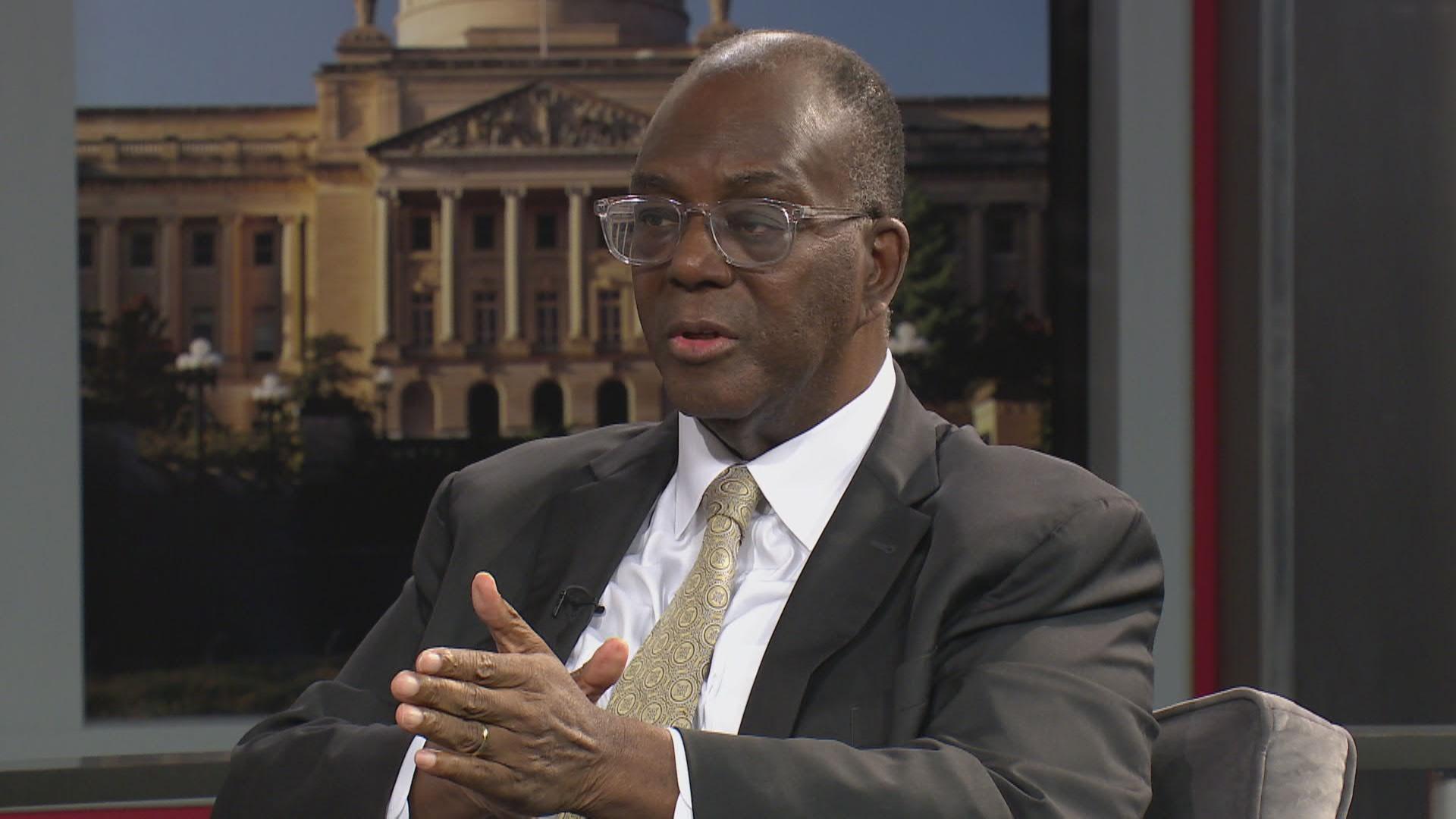


When Ronald Johnson was appointed interim president of Kentucky State University in June 2022, he was handed a school mired in crisis. Allegations of financial mismanagement had led to the resignation of the school’s former president. Without a $23 million emergency loan from the state, the 137-year-old historically Black college likely faced closure.
Johnson brought to the job vast experience in financial services, having managed multi-billion-dollar investment portfolios for Smith Graham & Company and Franklin Templeton, and having served as economist for the International Monetary Fund and the Federal Reserve System. He was also a former president of Clark Atlanta University and a consultant on leadership of historically Black colleges and universities.
“We have done a substantial amount in terms of restoration of credibility,” says Johnson after about 10 months on the job at KSU. “But you can’t just restore credibility overnight.”
Finding a Sustainable Vision for KSU
Under legislation passed by the General Assembly in 2022, Johnson and the school have to develop a management plan to improve financial accountability, and evaluate the performance of all faculty and staff at the campus in Frankfort. Johnson says House Bill 250 also called for better training of the school’s board of regents, which was totally replaced, to help the members better understand their job and oversight responsibilities.
A report from Kentucky Auditor Mike Harmon earlier this year found 20 significant issues in KSU’s finances, including wasteful spending on budget and benefits, undocumented credit card transactions, and a $2.7 million withdrawal from endowment funds to cover cash balances. Harmon’s report also said a $3.3 million federal grant to the school was also at risk.
Johnson says the previous board under former President Christopher Brown, who resigned in 2021, had been inattentive to their duties and weren’t given the financial information they needed to properly do their jobs. He says the new board understands the complexities of the work before them to bring KSU back to stability.
“My job is to be as transparent as possible, also to provide the board with information that will actually help them develop their insight,” he says.
Another goal for Johnson is to help the school discern and address the systemic issues that continue to undermine the KSU’s long-term health.
“What I see is a result of a world without vision,” he says. “If you don’t have vision, then guess what? You go nowhere, you’re just spinning around a washing machine.”
Vision must be tied to the purpose of the institution, according to Johnson. For KSU, he says that means the school must embrace three different roles: being a HBCU, a land-grant school, and a regional comprehensive institution. He also contends that KSU must provide greater value to its stakeholders through a process he calls inclusive innovation.
“Inclusive innovation means that Kentucky State University, having those three roles, should actually come to the commonwealth and say, ‘What do you need? What are you trying to do?’ And then let me see what I can do to help you,” Johnson explains. “Once you do that, now you’re becoming relevant to the community.”
As an example of this innovation, Johnson points to the recent acquisition acof a 100-acre farm that the school will use to demonstrate how sustainable agricultural practices can be profitable even on small farms. He says that kind of research can help family farmers across Kentucky.
“If you have that as your vision – that you’re going to be of service – then all of a sudden the resources come,” says Johnson.
Positioning KSU for the Future
Along with helping KSU define a vision for the future, Johnson says he is working to restore credibility to the school, realign resources to meet performance goals, and position the institution to achieve sustainability.
“You actually have to get people to believe that they can actually make the changes, and get them to understand what changes need to be made,” he says.
The school recently announced three finalists to serve as the next president of KSU. The new president is set to be named by the end of May. Johnson was not a candidate for that position. He says he already has full-time work with his interim responsibilities and developing the plan that will enable KSU to move forward into the future.
“All institutions in the 21st century have to be positioned for change,” says Johnson. “If you’re not changing, then you’re going to be left behind.”