Skip to Main Content

Darlene Thomas - GreenHouse17

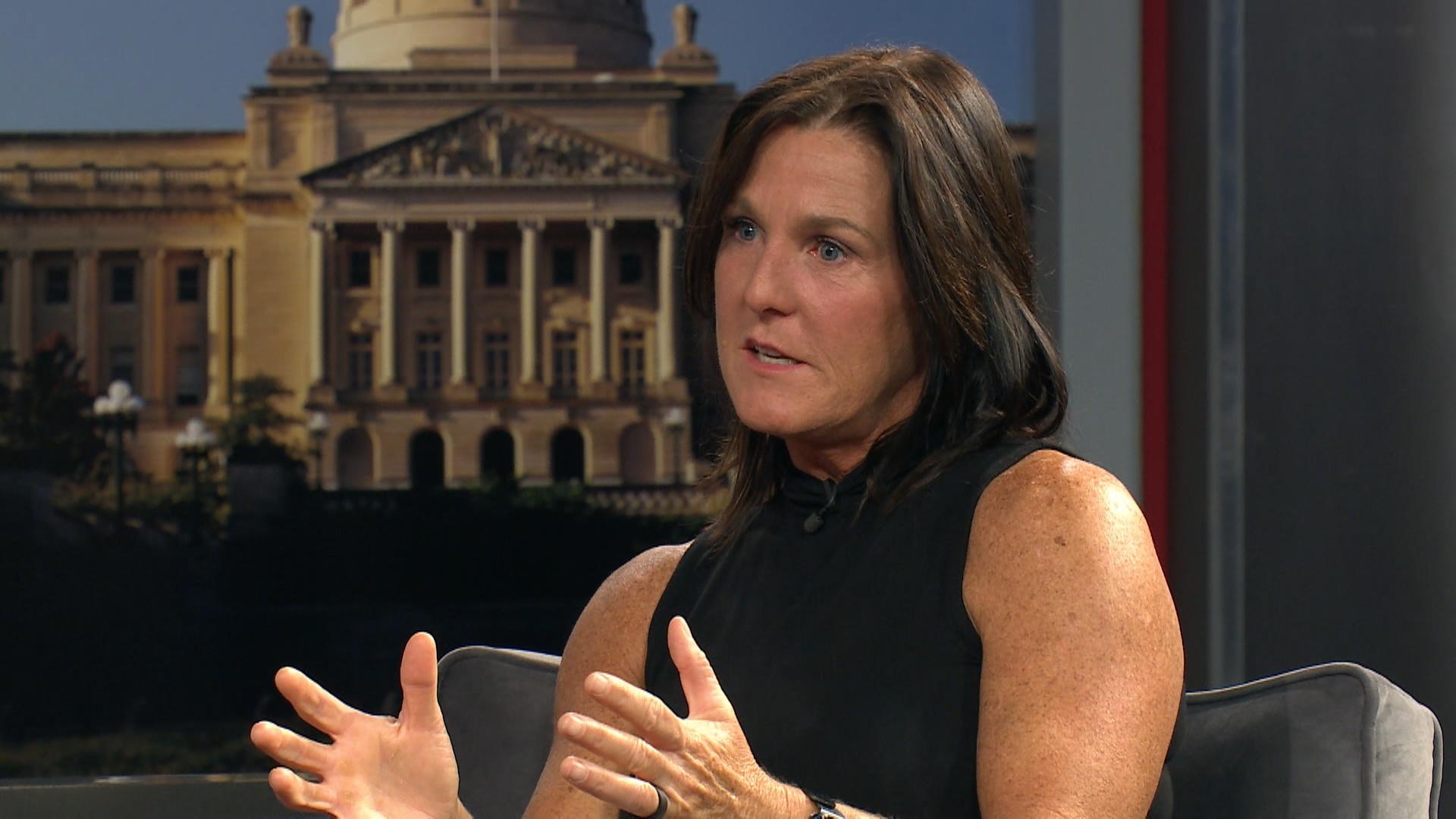
Darlene Thomas, executive director of GreenHouse17, an advocacy agency committed to ending intimate partner abuse in families and the community, talks about services provided by the agency, including a 24-hour hotline, 42-bed emergency shelter, legal advocacy and more.
Season 18 Episode 5 Length 26:57 Premiere: 10/09/22

About

Connections

KET’s Connections features in-depth interviews with the influential, innovative and inspirational individuals who are shaping the path for Kentucky’s future.

From business leaders to entertainers to authors to celebrities, each week features an interesting and engaging guest covering a broad array of topics. Host Renee Shaw uses her extensive reporting experience to naturally blend casual conversation and hard-hitting questions to generate rich and full conversations about the issues impacting Kentucky and the world.


Tune-In

KET Sundays • 11:30 am/10:30 am
KET2 Sundays • 6/5 pm

Stream

Watch on KET’s website anytime or through the PBS Video App.

Podcast

The Connections podcast features each episode’s audio for listening.


Renee Shaw is the Director of Public Affairs and Moderator at KET, currently serving as host of KET’s weeknight public affairs program Kentucky Edition, the signature public policy discussion series Kentucky Tonight, the weekly interview series Connections, Election coverage and KET Forums.

Since 2001, Renee has been the producing force behind KET’s legislative coverage that has been recognized by the Kentucky Associated Press and the National Educational Telecommunications Association. Under her leadership, KET has expanded its portfolio of public affairs content to include a daily news and information program, Kentucky Supreme Court coverage, townhall-style forums, and multi-platform program initiatives around issues such as opioid addiction and youth mental health.  

Renee has also earned top awards from the Ohio Valley Chapter of the National Academy of Television Arts and Sciences (NATAS), with three regional Emmy awards. In 2023, she was inducted into the Silver Circle of the NATAS, one of the industry’s highest honors recognizing television professionals with distinguished service in broadcast journalism for 25 years or more.  

Already an inductee into the Kentucky Civil Rights Hall of Fame (2017), Renee expands her hall of fame status with induction into Western Kentucky University’s Hall of Distinguished Alumni in November of 2023.  

In February of 2023, Renee graced the front cover of Kentucky Living magazine with a centerfold story on her 25 years of service at KET and even longer commitment to public media journalism. 

In addition to honors from various educational, civic, and community organizations, Renee has earned top honors from the Associated Press and has twice been recognized by Mental Health America for her years-long dedication to examining issues of mental health and opioid addiction.  

In 2022, she was honored with Women Leading Kentucky’s Governor Martha Layne Collins Leadership Award recognizing her trailblazing path and inspiring dedication to elevating important issues across Kentucky.   

In 2018, she co-produced and moderated a 6-part series on youth mental health that was awarded first place in educational content by NETA, the National Educational Telecommunications Association. 

She has been honored by the AKA Beta Gamma Omega Chapter with a Coretta Scott King Spirit of Ivy Award; earned the state media award from the Kentucky Society of the Daughters of the American Revolution in 2019; named a Charles W. Anderson Laureate by the Kentucky Personnel Cabinet in 2019 honoring her significant contributions in addressing socio-economic issues; and was recognized as a “Kentucky Trailblazer” by the University of Kentucky Martin School of Public Policy and Administration during the Wendell H. Ford Lecture Series in 2019. That same year, Shaw was named by The Kentucky Gazette’s inaugural recognition of the 50 most notable women in Kentucky politics and government.  

Renee was bestowed the 2021 Berea College Service Award and was named “Unapologetic Woman of the Year” in 2021 by the Community Action Council.   

In 2015, she received the Green Dot Award for her coverage of domestic violence, sexual assault & human trafficking. In 2014, Renee was awarded the Anthony Lewis Media Award from the KY Department of Public Advocacy for her work on criminal justice reform. Two Kentucky governors, Republican Ernie Fletcher and Democrat Andy Beshear, have commissioned Renee as a Kentucky Colonel for noteworthy accomplishments and service to community, state, and nation.  

A former adjunct media writing professor at Georgetown College, Renee traveled to Cambodia in 2003 to help train emerging journalists on reporting on critical health issues as part of an exchange program at Western Kentucky University. And, she has enterprised stories for national media outlets, the PBS NewsHour and Public News Service.  

Shaw is a 2007 graduate of Leadership Kentucky, a board member of CASA of Lexington, and a longtime member of the Frankfort/Lexington Chapter of The Links Incorporated, an international, not-for-profit organization of women of color committed to volunteer service. She has served on the boards of the Kentucky Historical Society, Lexington Minority Business Expo, and the Board of Governors for the Ohio Valley Chapter of the National Academy of Television Arts and Sciences. 

Host Renee Shaw smiling in a green dress with a KET set behind her.

Kentucky Nonprofit Executive Discusses a Mission to Empower Victims of Intimate Partner Violence

It takes incredible bravery to leave a relationship marked by intimate partner violence. Yet those individuals who do seek refuge at a shelter may bring with them a sense of shame about the course their lives have taken.

GreenHouse 17, the advocacy agency formerly known as the Bluegrass Domestic Violence Program, wants to change that narrative of embarrassment to one of empowerment for its clients.

“We try to create an environment where you’re proud to be there. You took great strength and courage beyond words to find your way to this building, and we’re going to celebrate you,” says Darlene Thomas, executive director of GreenHouse17. “There’s nothing to be ashamed of. The shame belongs somewhere else.”

Instead of seeing their time in a domestic violence shelter as something that’s taboo, Thomas says GreenHouse 17 works to be place of beauty and opportunity for the individuals it serves. She says that’s part of what drove the name change for the organization founded in 2004 that now serves people in 17 central Kentucky counties.

“We really wanted to capture the positive energy of survivors, and we wanted our name to reflect the possibilities,” says Thomas. “A greenhouse is a place where you grow and nurture things in a protected environment, and we believe we’re helping families grow and learn to nurture themselves while being protected by our organization.”

Domestic Violence During COVID

When the COVID pandemic started, Thomas says demand for services at GreenHouse 17 declined. She describes those first few weeks in the spring of 2020 as “eerily quiet.”

But as time went on, reports of violence began to surface from people who were trapped at home after businesses, schools, and churches shuttered.

“We were all told to be safe at home. For domestic violence victims, that’s the least safe place for them,” says Thomas. “The violence was more severe. People were calling with horrendous stories of being held prisoner.”

Instead of getting better as the world reopened, Thomas says life for domestic violence victims and their children only got worse. Abusers had less control as they saw their partners return to work and their children return to school.

“Abusers don’t like to lose power, and they’ve had more than they’ve ever had” during the pandemic, says Thomas.

Some victims seek an emergency protective order (EPO) from a judge that requires an abuser to have no contact with the person being abused, their children, or other family members. Thomas says victims feel safer having a court order, and police generally respond quicker to situations that involve an EPO.

But the orders don’t guarantee a victim’s safety. Thomas says research from the University of Kentucky indicates that EPOs are violated about 65 percent of the time.

“Without the protective order, it would’ve been violated 100 percent of the time,” she says. “None of it would stop.”

Court orders can help a victim leave an abusive relationship, but Thomas says EPOs shouldn’t be the only preparatory action a survivor takes. She says leaving requires extensive planning across a range of emotional, logistical, and financial issues: How can children and pets be protected, what clothes and personal effects will they need, what documents and bank records should they take, do they have cash, should they get a temporary cellphone. For people already struggling to survive their day-to-day existence, the thought of planning an escape can be overwhelming, especially when living under a constant threat of violence.

“We need to understand there’s greater risk in leaving than staying,” Thomas explains. “There’s still violence that’s going to happen when you stay but it really has a tendency to escalate... when you leave.”

Firearms and Domestic Violence

Research indicates that as many as 45 percent of women and 35 percent of men in Kentucky experience violence at the hands of an intimate partner. The acts aren’t just physical or sexual. Thomas says the violence can be verbal, mental, financial, or any other method someone may use to exert control or dominance over his or her partner.

Even though an individual may not be ready to leave their abuser, Thomas says it’s important to let the victim know that they do have options.

“You empower them with knowledge, you plant seeds of possibilities and hope,” she says.

While intimate partner violence is an age-old problem, Thomas says American society still struggles with how to hold perpetrators responsible. In most cases, it’s the victim and the children that end up uprooting their lives and moving into a shelter while the abuser gets to stay in the family home.

“We’re always expecting the victim to have to change, or to do better, or to protect themselves and their children,” she says. “We’re not really good yet at figuring out how we hold that batterer accountable.”

Another societal issue that has serious ramifications for intimate partner relationships is the prevalence of firearms in America. Thomas says about 80 percent of domestic violence victims who are murdered are killed with a gun. While many of those perpetrators were known to be violent either through police reports or EPOs issued on them, they were sill allowed to keep their firearms.

“Common sense says that we should remove weapons from those who we know to do harm,” says Thomas.

The ‘Healing Journey’ at GreenHouse 17

In addition to a 24-hour hotline, counseling services, legal advocacy, medical treatment, and transportation assistance, GreenHouse 17 also operates a 42-bed emergency shelter located on 40 acres in rural Fayette County. Thomas says the safe, calming atmosphere helps survivors readjust their minds and bodies to living without a constant state of fear.

“We need to help them see their beauty and their possibilities and their capabilities,” she says. “The only way to do that is with time and patience and providing so many ways for them to get their hands into new opportunities.”

During their stay at GreenHouse 17, survivors can spend time in nature, work on an active farm, and eat fresh, homegrown fruits and vegetables. Those who do choose to work on the farm receive a small stipend for their efforts. Thomas says counselors don’t place unrealistic expectations for a speedy recovery on survivors and their children, but rather help them build on the strengths they already possess.

“For victims to begin that healing journey,” she says, “they have to know that they belong to something bigger than themselves.”

Because of the stigma and shame that can so often accompany domestic violence situations, the cues that a victim may exhibit to others can be subtle. Thomas says there may be a change in the way the person dresses, or the individual may avoid making eye contact when talking. Sometimes people will stop socializing with family and friends that they previously enjoyed visiting.

Since intimate partner violence can occur in any relationship – straight or gay, married or dating – Thomas says it’s important to pay attention to sudden changes of behavior among family members, friends, or coworkers. She says someone we know and love may be a victim or a perpetrator of abuse.

“We have to take a hard look around and be willing to stand up and be a voice for what’s right and wrong,” she says. “It doesn’t mean you have to cut people out of your lives, but it does mean we have to make clear, conscious decisions about what’s appropriate and how we treat each other.”

Sponsored by:

Season 18 Episodes

Lyle Roelofs - President of Berea College

S18 E34 Length 27:25 Premiere Date 06/25/23

Angelique Johnson

S18 E33 Length 26:46 Premiere Date 06/18/23

Willie Carver and Colton Ryan

S18 E32 Length 27:31 Premiere Date 06/01/23

Matt Jones - Kentucky Sports Radio

S18 E31 Length 26:32 Premiere Date 05/21/23

KSU Interim President Dr. Ronald Johnson

S18 E30 Length 26:56 Premiere Date 05/14/23

Treating Depression and Anxiety

S18 E29 Length 26:31 Premiere Date 05/07/23

Kentucky Center for Grieving Children and Families

S18 E28 Length 26:32 Premiere Date 04/30/23

Louisville Orchestra: Playing with Yo-Yo Ma at Mammoth Cave

S18 E27 Length 26:51 Premiere Date 04/23/23

Jim Embry - Sustainable Communities Network

S18 E26 Length 26:32 Premiere Date 04/16/23

Helping to End Child Abuse and Neglect in Kentucky

S18 E25 Length 26:32 Premiere Date 04/09/23

Preventing and Treating Kidney Disease

S18 E24 Length 26:38 Premiere Date 04/01/23

Scholar and Author Anastasia Curwood

S18 E23 Length 26:34 Premiere Date 03/26/23

Jayne Moore Waldrop; Toa Green

S18 E22 Length 26:32 Premiere Date 03/19/23

Central Kentucky Chefs - Samantha Fore and Isaiah Screetch

S18 E21 Length 26:31 Premiere Date 02/26/23

Affrilachian Poet Frank X Walker

S18 E20 Length 27:30 Premiere Date 02/19/23

Aaron Thompson - Kentucky Council on Postsecondary Education

S18 E19 Length 26:40 Premiere Date 02/12/23

Dr. Monalisa Tailor - Kentucky Medical Association

S18 E18 Length 26:36 Premiere Date 02/05/23

Devine Carama - ONE Lexington

S18 E17 Length 26:31 Premiere Date 01/29/23

Congressman John Yarmuth

S18 E16 Length 26:31 Premiere Date 01/22/23

Former State Rep. Joni Jenkins

S18 E15 Length 26:31 Premiere Date 01/15/23

Lexington Mayor Linda Gorton

S18 E14 Length 27:31 Premiere Date 01/08/23

James Comer and Morgan McGarvey

S18 E13 Length 26:31 Premiere Date 12/18/22

Poet and Playwright Constance Alexander

S18 E12 Length 28:03 Premiere Date 12/11/22

Author Emily Bingham

S18 E11 Length 27:15 Premiere Date 11/20/22

Bill Goodman - Kentucky Humanities

S18 E10 Length 26:33 Premiere Date 11/13/22

Restoring American Democracy

S18 E9 Length 26:33 Premiere Date 11/06/22

Breast Cancer

S18 E8 Length 26:45 Premiere Date 10/30/22

Secretary of State Michael Adams on Election Issues

S18 E7 Length 26:32 Premiere Date 10/23/22

University of Kentucky President Eli Capilouto

S18 E6 Length 27:08 Premiere Date 10/16/22

Darlene Thomas - GreenHouse17

S18 E5 Length 26:57 Premiere Date 10/09/22

Bob Jackson - Murray State University

S18 E4 Length 26:31 Premiere Date 10/02/22

David Adkins - The Council of State Governments

S18 E3 Length 27:41 Premiere Date 09/25/22

Melynda Jamison - CASA of Lexington

S18 E2 Length 26:32 Premiere Date 09/18/22

State Treasurer Allison Ball

S18 E1 Length 26:32 Premiere Date 09/11/22

See All Episodes

caret down

TV Schedules

Upcoming

No upcoming airdates

Recent

No recent airdates

Explore KET