Skip to Main Content

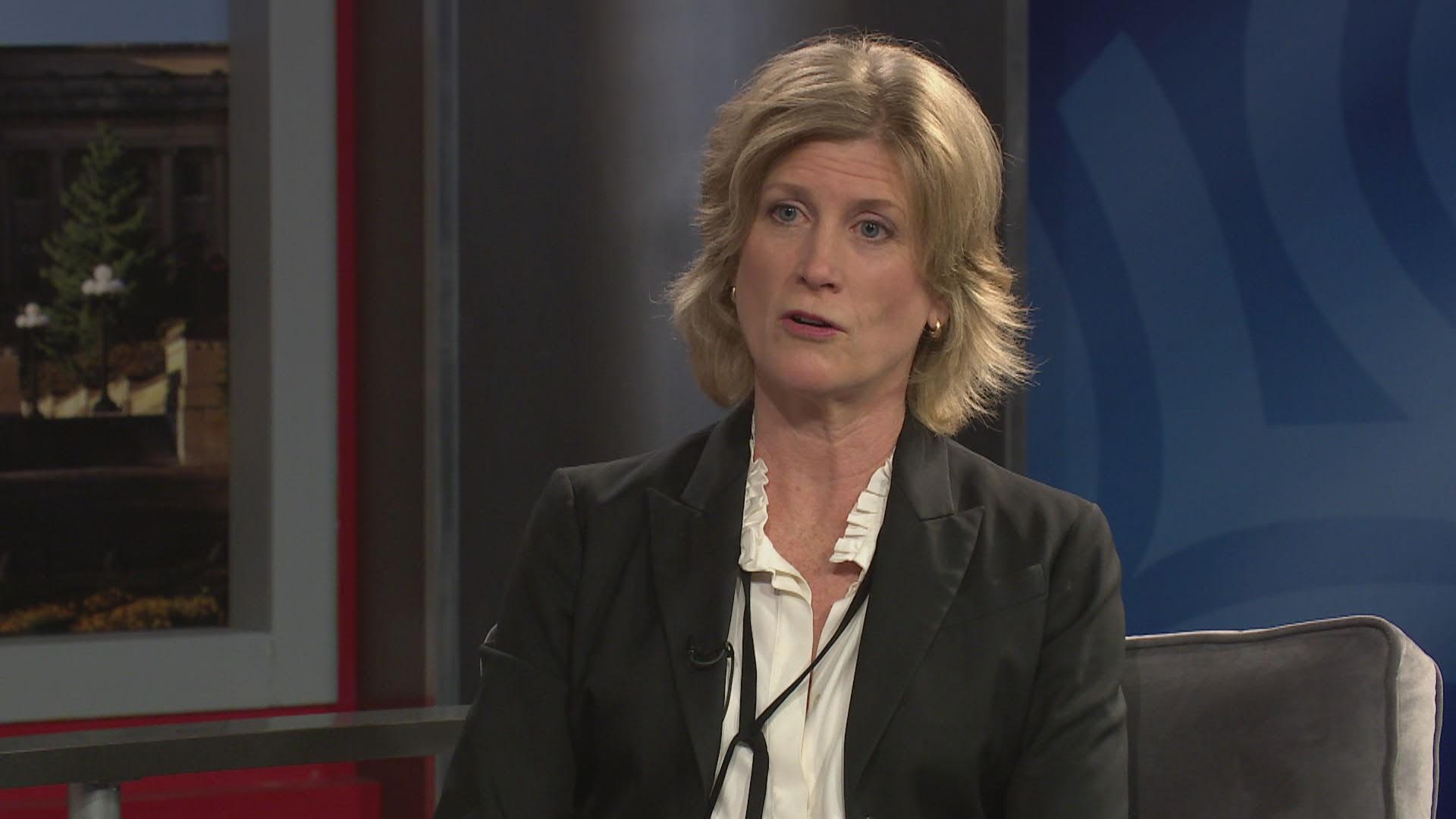
Author Emily Bingham

Kentucky's state anthem, "My Old Kentucky Home," is both a celebratory ballad evoking a sentimental feeling while, for others, outrage for its glorification of chattel slavery in the pre-Civil war south. Author Emily Bingham explores how the melody about America's original sin has evolved to become quote "a living symbol of a happy past," which was never just a song.
Season 18 Episode 11 Length 27:15 Premiere: 11/20/22

About

Connections

KET’s Connections features in-depth interviews with the influential, innovative and inspirational individuals who are shaping the path for Kentucky’s future.

From business leaders to entertainers to authors to celebrities, each week features an interesting and engaging guest covering a broad array of topics. Host Renee Shaw uses her extensive reporting experience to naturally blend casual conversation and hard-hitting questions to generate rich and full conversations about the issues impacting Kentucky and the world.


Tune-In

KET Sundays • 11:30 am/10:30 am
KET2 Sundays • 6/5 pm

Stream

Watch on KET’s website anytime or through the PBS Video App.

Podcast

The Connections podcast features each episode’s audio for listening.


Renee Shaw is the Director of Public Affairs and Moderator at KET, currently serving as host of KET’s weeknight public affairs program Kentucky Edition, the signature public policy discussion series Kentucky Tonight, the weekly interview series Connections, Election coverage and KET Forums.

Since 2001, Renee has been the producing force behind KET’s legislative coverage that has been recognized by the Kentucky Associated Press and the National Educational Telecommunications Association. Under her leadership, KET has expanded its portfolio of public affairs content to include a daily news and information program, Kentucky Supreme Court coverage, townhall-style forums, and multi-platform program initiatives around issues such as opioid addiction and youth mental health.  

Renee has also earned top awards from the Ohio Valley Chapter of the National Academy of Television Arts and Sciences (NATAS), with three regional Emmy awards. In 2023, she was inducted into the Silver Circle of the NATAS, one of the industry’s highest honors recognizing television professionals with distinguished service in broadcast journalism for 25 years or more.  

Already an inductee into the Kentucky Civil Rights Hall of Fame (2017), Renee expands her hall of fame status with induction into Western Kentucky University’s Hall of Distinguished Alumni in November of 2023.  

In February of 2023, Renee graced the front cover of Kentucky Living magazine with a centerfold story on her 25 years of service at KET and even longer commitment to public media journalism. 

In addition to honors from various educational, civic, and community organizations, Renee has earned top honors from the Associated Press and has twice been recognized by Mental Health America for her years-long dedication to examining issues of mental health and opioid addiction.  

In 2022, she was honored with Women Leading Kentucky’s Governor Martha Layne Collins Leadership Award recognizing her trailblazing path and inspiring dedication to elevating important issues across Kentucky.   

In 2018, she co-produced and moderated a 6-part series on youth mental health that was awarded first place in educational content by NETA, the National Educational Telecommunications Association. 

She has been honored by the AKA Beta Gamma Omega Chapter with a Coretta Scott King Spirit of Ivy Award; earned the state media award from the Kentucky Society of the Daughters of the American Revolution in 2019; named a Charles W. Anderson Laureate by the Kentucky Personnel Cabinet in 2019 honoring her significant contributions in addressing socio-economic issues; and was recognized as a “Kentucky Trailblazer” by the University of Kentucky Martin School of Public Policy and Administration during the Wendell H. Ford Lecture Series in 2019. That same year, Shaw was named by The Kentucky Gazette’s inaugural recognition of the 50 most notable women in Kentucky politics and government.  

Renee was bestowed the 2021 Berea College Service Award and was named “Unapologetic Woman of the Year” in 2021 by the Community Action Council.   

In 2015, she received the Green Dot Award for her coverage of domestic violence, sexual assault & human trafficking. In 2014, Renee was awarded the Anthony Lewis Media Award from the KY Department of Public Advocacy for her work on criminal justice reform. Two Kentucky governors, Republican Ernie Fletcher and Democrat Andy Beshear, have commissioned Renee as a Kentucky Colonel for noteworthy accomplishments and service to community, state, and nation.  

A former adjunct media writing professor at Georgetown College, Renee traveled to Cambodia in 2003 to help train emerging journalists on reporting on critical health issues as part of an exchange program at Western Kentucky University. And, she has enterprised stories for national media outlets, the PBS NewsHour and Public News Service.  

Shaw is a 2007 graduate of Leadership Kentucky, a board member of CASA of Lexington, and a longtime member of the Frankfort/Lexington Chapter of The Links Incorporated, an international, not-for-profit organization of women of color committed to volunteer service. She has served on the boards of the Kentucky Historical Society, Lexington Minority Business Expo, and the Board of Governors for the Ohio Valley Chapter of the National Academy of Television Arts and Sciences. 

Host Renee Shaw smiling in a green dress with a KET set behind her.

Louisville Historian Discusses the Legacy of Kentucky's Controversial State Song

In its first verse, the Stephen Foster ballad “My Old Kentucky Home” evokes a simpler time in the state’s history, painting a scene of care-free life on the farm during a languid summer afternoon in the young commonwealth. The melody, much more singable than “The Star-Spangled Banner,” flows like smooth bourbon awash in nostalgia. Yes, hard times loom, but for now everyone is merry, happy and bright.

It’s a combination of words and music so affecting that even people with no connection to Kentucky can find themselves wistful. Baltimore-born sportswriter Frank Deford once wrote, “Any good man will cloud up when they play ‘My Old Kentucky Home,’” about the annual performance of the song just before the Kentucky Derby,

But too-often lost in that soothing glow of sentimentality is the true essence of the ballad as a description of the horrors of slavery and of the fate of an estimated 80,000 Black Kentuckians that were torn from their families and sold to plantation owners in the deep south to work sugar cane and cotton fields. It is that reality that historian Emily Bingham explores in her new book “My Old Kentucky Home: The Astonishing Life and Reckoning of an Iconic American Song.”

“It was clearly the story of... someone being sold from Kentucky to die far away, never to see their loved ones again,” she says.

Creating a Myth of ‘Benevolent’ Slavery

Stephen Foster was born in Pittsburgh in 1826 and became America’s first professional songwriter, according to Bingham. In his short life – he lived only 35 years – Foster penned more than 200 pieces of music, ranging from parlor songs like “Jeanie with the Light Brown Hair” and “Beautiful Dreamer” to minstrel tunes like “Camptown Races” and “Oh! Susanna.” Minstrelsy was widely popular in the northern states in the early to mid-1800s as audiences flocked to see actors, usually white, wearing blackface makeup as they danced, sang, and performed skits.

“They acted out being enslaved people... for fun, it was entertainment,” says Bingham. “There was always a demeaning aspect to this because this was not Black people writing their own songs and stories.”

Bingham says Foster had no connection to Kentucky other than one or two brief visits to the state, and she says he certainly didn’t write “My Old Kentucky Home” at Federal Hill, the restored brick mansion that is the centerpiece of My Old Kentucky Home State Park in Bardstown.

And while some have interpreted the song to be a statement against slavery, Bingham says there’s nothing to indicate that Foster was an abolitionist despite his lyrics in the second and third verses depicting enslaved Kentuckians laboring on sugar cane plantations in the deep south.

“This seems like something that would arouse people to do something about a horrible crime against humanity, which was the slave trade,” says Bingham. “But it didn’t. It didn’t do that.”

In fact, Bingham argues, the song does the opposite, especially in the first verse that normalizes slavery in the commonwealth as a benign institution where enslaved children spend their days playing in their cabin and, in Foster’s words, “darkies are gay.”

“This creates a myth that slavery in Kentucky was benevolent, that it was fine,” Bingham says. “We in this century know that that’s a myth that has harmed countless generations of white and Black Americans.”

Although Kentucky had few large plantations compared to other southern states, it had some 38,000 slave owners by the time of the Civil War. The slave trade became a huge business in the commonwealth with auction houses in Louisville, Lexington, and elsewhere selling enslaved individuals to plantation owners farther south. Under the auctioneer’s gavel, fathers, mothers, sons, and daughters were sold away from their families and sent to distant owners. Even those that remained lived under the constant threat that they too would go on the auction block one day, according to Bingham.

Fond Memories for Some, Painful Memories for Others

Although “My Old Kentucky Home” proved a hit for Foster when he published it in 1853, its popularity continued long after the Civil War and the abolition of slavery. Bingham says Kentucky business and political leaders embraced the song in the 1920s as a way to promote the commonwealth to a nation that looked upon the state as poor, backwards, and riddled with bloody feuds. The state park in Bardstown opened in 1923, and the legislature adopted the tune as the state song in 1928. At the 1930 Kentucky Derby, according to Bingham, Churchill Downs replaced the playing of the national anthem with “My Old Kentucky Home,” thus cementing the association of the song with the legendary horse race for people around the world to the present day.

Even while white men and women teared-up at the song between sips of their mint juleps, Black Americans rankled at how it glorified an ugly part of the state’s history. (It wasn’t until 1986, that the General Assembly removed “darkies” from the official lyrics for the song.) Bingham says the late Lyman Johnson, a Louisville educator and civil rights leader, urged his high school students not to sing the song or stand when it was played. Muhammad Ali never sang the song, according to his wife, Lonnie.

Even today, University of Kentucky baseball team captain Dorian Hairston told Bingham that he will leave Rupp Arena anytime the song is played.

“I truly believe that most Kentuckians just don’t know that those feelings exist for fellow Kentuckians... it’s like we have a segregated memory,” she says. “I don’t want my fellow Kentuckians to feel that way about a symbol of our state.”

Like many people, Bingham says the song has been a part of her life since childhood when she learned to play the tune on a recorder in school. Later she heard the song on Derby Day visits to Churchill Downs with her grandfather, Barry Bingham, Sr., long-time owner of the Courier-Journal and Louisville Times newspapers.

“I grew up loving this song,” she says. “It was passed down to me as a cherished tradition.”

It wasn’t until later in life that the University of North Carolina-trained historian decided to delve into the origins of the song, how it took hold in the state’s culture, and what it means for Kentuckians today.

“I can’t sing it any more because of what I know of how it makes others feel,” says Bingham.

Some Kentuckians have encouraged the General Assembly to adopt a new state song, such as Bill Monroe bluegrass tunes “Kentucky Waltz” or “Blue Moon of Kentucky.” But rather than simply shelving Foster’s ballad in favor of another song, Bingham wants Kentuckians to reflect how “My Old Kentucky Home” has denied the full humanity of enslaved Americans of Stephen Foster’s day, and how its continued prominence impacts Black Kentuckians today. She also encourages conversations about the value of having a blackface minstrel song from the antebellum era represent the commonwealth in the 21st century.

“Whether this is a brand that makes sense for us in the next century is, I think. a question for all Kentuckians,” says Bingham. “But we’re not going to move or decide that by just leaving it up to our Black brothers and sisters.”

Sponsored by:

Season 18 Episodes

Lyle Roelofs - President of Berea College

S18 E34 Length 27:25 Premiere Date 06/25/23

Angelique Johnson

S18 E33 Length 26:46 Premiere Date 06/18/23

Willie Carver and Colton Ryan

S18 E32 Length 27:31 Premiere Date 06/01/23

Matt Jones - Kentucky Sports Radio

S18 E31 Length 26:32 Premiere Date 05/21/23

KSU Interim President Dr. Ronald Johnson

S18 E30 Length 26:56 Premiere Date 05/14/23

Treating Depression and Anxiety

S18 E29 Length 26:31 Premiere Date 05/07/23

Kentucky Center for Grieving Children and Families

S18 E28 Length 26:32 Premiere Date 04/30/23

Louisville Orchestra: Playing with Yo-Yo Ma at Mammoth Cave

S18 E27 Length 26:51 Premiere Date 04/23/23

Jim Embry - Sustainable Communities Network

S18 E26 Length 26:32 Premiere Date 04/16/23

Helping to End Child Abuse and Neglect in Kentucky

S18 E25 Length 26:32 Premiere Date 04/09/23

Preventing and Treating Kidney Disease

S18 E24 Length 26:38 Premiere Date 04/01/23

Scholar and Author Anastasia Curwood

S18 E23 Length 26:34 Premiere Date 03/26/23

Jayne Moore Waldrop; Toa Green

S18 E22 Length 26:32 Premiere Date 03/19/23

Central Kentucky Chefs - Samantha Fore and Isaiah Screetch

S18 E21 Length 26:31 Premiere Date 02/26/23

Affrilachian Poet Frank X Walker

S18 E20 Length 27:30 Premiere Date 02/19/23

Aaron Thompson - Kentucky Council on Postsecondary Education

S18 E19 Length 26:40 Premiere Date 02/12/23

Dr. Monalisa Tailor - Kentucky Medical Association

S18 E18 Length 26:36 Premiere Date 02/05/23

Devine Carama - ONE Lexington

S18 E17 Length 26:31 Premiere Date 01/29/23

Congressman John Yarmuth

S18 E16 Length 26:31 Premiere Date 01/22/23

Former State Rep. Joni Jenkins

S18 E15 Length 26:31 Premiere Date 01/15/23

Lexington Mayor Linda Gorton

S18 E14 Length 27:31 Premiere Date 01/08/23

James Comer and Morgan McGarvey

S18 E13 Length 26:31 Premiere Date 12/18/22

Poet and Playwright Constance Alexander

S18 E12 Length 28:03 Premiere Date 12/11/22

Author Emily Bingham

S18 E11 Length 27:15 Premiere Date 11/20/22

Bill Goodman - Kentucky Humanities

S18 E10 Length 26:33 Premiere Date 11/13/22

Restoring American Democracy

S18 E9 Length 26:33 Premiere Date 11/06/22

Breast Cancer

S18 E8 Length 26:45 Premiere Date 10/30/22

Secretary of State Michael Adams on Election Issues

S18 E7 Length 26:32 Premiere Date 10/23/22

University of Kentucky President Eli Capilouto

S18 E6 Length 27:08 Premiere Date 10/16/22

Darlene Thomas - GreenHouse17

S18 E5 Length 26:57 Premiere Date 10/09/22

Bob Jackson - Murray State University

S18 E4 Length 26:31 Premiere Date 10/02/22

David Adkins - The Council of State Governments

S18 E3 Length 27:41 Premiere Date 09/25/22

Melynda Jamison - CASA of Lexington

S18 E2 Length 26:32 Premiere Date 09/18/22

State Treasurer Allison Ball

S18 E1 Length 26:32 Premiere Date 09/11/22

See All Episodes

caret down

TV Schedules

Upcoming

No upcoming airdates

Recent

No recent airdates

Explore KET