Skip to Main Content

Breast Cancer

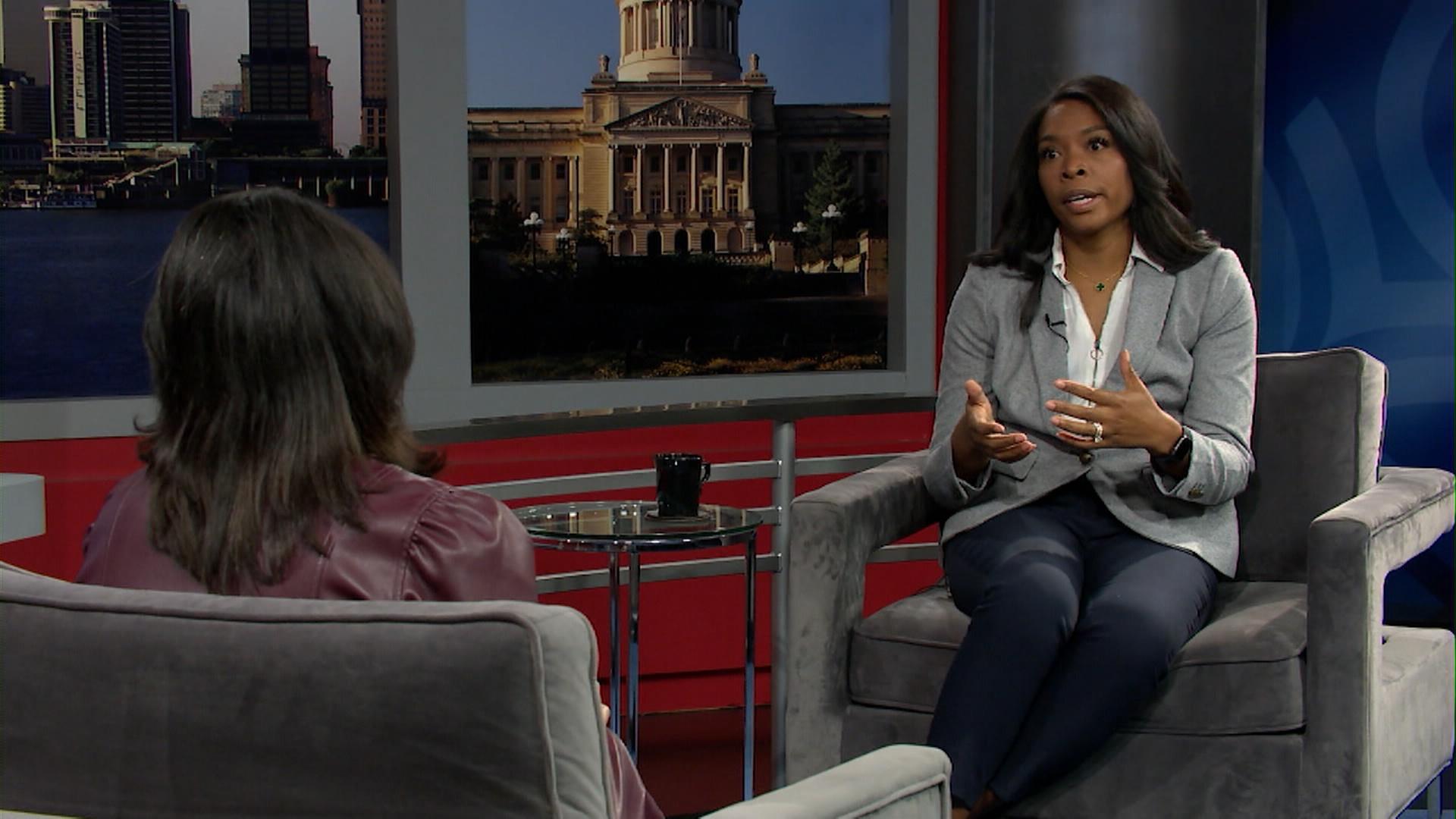
Renee Shaw talks with UK HealthCare obstetrician-gynecologist Dr. Rachel Saunders about early detection of breast cancer, treatment options and higher mortality rates in African American women. The program also features two breast cancer survivors: a young Bowling Green woman diagnosed with the disease in her 30s and a male survivor of breast cancer.
Season 18 Episode 8 Length 26:45 Premiere: 10/30/22

About

Connections

KET’s Connections features in-depth interviews with the influential, innovative and inspirational individuals who are shaping the path for Kentucky’s future.

From business leaders to entertainers to authors to celebrities, each week features an interesting and engaging guest covering a broad array of topics. Host Renee Shaw uses her extensive reporting experience to naturally blend casual conversation and hard-hitting questions to generate rich and full conversations about the issues impacting Kentucky and the world.


Tune-In

KET Sundays • 11:30 am/10:30 am
KET2 Sundays • 6/5 pm

Stream

Watch on KET’s website anytime or through the PBS Video App.

Podcast

The Connections podcast features each episode’s audio for listening.


Renee Shaw is the Director of Public Affairs and Moderator at KET, currently serving as host of KET’s weeknight public affairs program Kentucky Edition, the signature public policy discussion series Kentucky Tonight, the weekly interview series Connections, Election coverage and KET Forums.

Since 2001, Renee has been the producing force behind KET’s legislative coverage that has been recognized by the Kentucky Associated Press and the National Educational Telecommunications Association. Under her leadership, KET has expanded its portfolio of public affairs content to include a daily news and information program, Kentucky Supreme Court coverage, townhall-style forums, and multi-platform program initiatives around issues such as opioid addiction and youth mental health.  

Renee has also earned top awards from the Ohio Valley Chapter of the National Academy of Television Arts and Sciences (NATAS), with three regional Emmy awards. In 2023, she was inducted into the Silver Circle of the NATAS, one of the industry’s highest honors recognizing television professionals with distinguished service in broadcast journalism for 25 years or more.  

Already an inductee into the Kentucky Civil Rights Hall of Fame (2017), Renee expands her hall of fame status with induction into Western Kentucky University’s Hall of Distinguished Alumni in November of 2023.  

In February of 2023, Renee graced the front cover of Kentucky Living magazine with a centerfold story on her 25 years of service at KET and even longer commitment to public media journalism. 

In addition to honors from various educational, civic, and community organizations, Renee has earned top honors from the Associated Press and has twice been recognized by Mental Health America for her years-long dedication to examining issues of mental health and opioid addiction.  

In 2022, she was honored with Women Leading Kentucky’s Governor Martha Layne Collins Leadership Award recognizing her trailblazing path and inspiring dedication to elevating important issues across Kentucky.   

In 2018, she co-produced and moderated a 6-part series on youth mental health that was awarded first place in educational content by NETA, the National Educational Telecommunications Association. 

She has been honored by the AKA Beta Gamma Omega Chapter with a Coretta Scott King Spirit of Ivy Award; earned the state media award from the Kentucky Society of the Daughters of the American Revolution in 2019; named a Charles W. Anderson Laureate by the Kentucky Personnel Cabinet in 2019 honoring her significant contributions in addressing socio-economic issues; and was recognized as a “Kentucky Trailblazer” by the University of Kentucky Martin School of Public Policy and Administration during the Wendell H. Ford Lecture Series in 2019. That same year, Shaw was named by The Kentucky Gazette’s inaugural recognition of the 50 most notable women in Kentucky politics and government.  

Renee was bestowed the 2021 Berea College Service Award and was named “Unapologetic Woman of the Year” in 2021 by the Community Action Council.   

In 2015, she received the Green Dot Award for her coverage of domestic violence, sexual assault & human trafficking. In 2014, Renee was awarded the Anthony Lewis Media Award from the KY Department of Public Advocacy for her work on criminal justice reform. Two Kentucky governors, Republican Ernie Fletcher and Democrat Andy Beshear, have commissioned Renee as a Kentucky Colonel for noteworthy accomplishments and service to community, state, and nation.  

A former adjunct media writing professor at Georgetown College, Renee traveled to Cambodia in 2003 to help train emerging journalists on reporting on critical health issues as part of an exchange program at Western Kentucky University. And, she has enterprised stories for national media outlets, the PBS NewsHour and Public News Service.  

Shaw is a 2007 graduate of Leadership Kentucky, a board member of CASA of Lexington, and a longtime member of the Frankfort/Lexington Chapter of The Links Incorporated, an international, not-for-profit organization of women of color committed to volunteer service. She has served on the boards of the Kentucky Historical Society, Lexington Minority Business Expo, and the Board of Governors for the Ohio Valley Chapter of the National Academy of Television Arts and Sciences. 

Host Renee Shaw smiling in a green dress with a KET set behind her.

Guests Discuss Screening Recommendations, Financial Assistance, and Treatment of Breast Cancer in Kentucky

Breast cancer is the most common cancer among females worldwide, impacting about one in eight women in their lifetimes. Most of those cases are diagnosed in females over 50, according to the U.S. Centers for Disease Control and Prevention.

But not all patients fit neatly within those statistics. Just ask Courtney Line and Skipper Martin.

Line, a mother of two young children in Hart County, was diagnosed with breast cancer when she was in her early 30s. Martin, a long-time political operative who was chief of staff to former Gov. Paul Patton, exemplifies the rare instance of breast cancer in men.

In both cases, early detection played a critical role in containing spread of the cancer.

"Whatever you've got, catch it early," says Martin. "We're making a lot of progress in cancer, but you've got to catch it early."

Estrogen and Breast Cancer

Doctors aren't sure why breast cancer is becoming more common in younger women or why cases seem to be more aggressive. Dr. Rachel Saunders, an OB-GYN at UK Healthcare, says one theory relates to the fact that girls are getting their first periods and entering puberty at a younger age. A couple of generations ago, girls started puberty at the age of 12 or 13. Saunders says girls are now starting as early as 8 or 9 years old.

"One of the risk factors for developing breast cancer is prolonged exposure to estrogen, which is the main hormone that gives us our feminine features," says Saunders. "If you're starting your period at 8 and then you don't go through menopause or you don't stop having periods until your mid-50s, then that's a long window in which you're being exposed to estrogen."

Environmental factors could be to blame, according to Saunders. Some research indicates that exposure to synthetic chemicals in plastics and common household cleaners may trigger early onset of puberty in girls and boys.

But even as scientists struggle to understand those links, guidance on breast cancer screening remains mixed. Saunders says she follows the American College of Obstetricians and Gynecologists, which recommends women start screening at age 40 and get mammograms once every one to two years until the age of 50, when they should be screened every year.

The United States Preventive Services Task Force, which is an independent group of primary care providers and prevention experts, recommends women wait until they turn 50 to start screening and then have mammograms every one or two years.

Saunders says she recommends women take an approach tailored to their backgrounds and needs.

"Talk to your doctor and talk about your personal genetics, your personal history and come up with a screening plan that makes you feel comfortable," she says.

Cases in Men and Younger Women

It was November of 2021 when Courtney Line received confirmation that she had invasive ductal carcinoma, the most common type of breast cancer.

"I was 31 years old when I was diagnosed," says Line. "I was shocked to say the least."

Since then, Line has had surgery as well as eight doses of chemotherapy and 25 rounds of radiation treatment. Her specific cocktail of drugs includes medication to shut down her hormones, which she says drove her particular type of cancer. Line says her son and daughter sometimes don't understand why she needs to rest so much. Instead of saying that Line is sick, Courtney and her husband, Justin, tell their children that mommy needs to "get healthy."

"We knew we were going to get through it no matter what, and we just went to war," says Justin Line.

The risk of a person developing breast cancer is higher among those who share a close relative with the cancer. But Dr. Jeffrey Hargis of the Norton Cancer Institute in Louisville cautions against only looking at family history. He says about 80 to 85 percent of patients do not have a mother or a sister with breast cancer.

The male body also produces estrogen, which means men can develop breast cancer as well. The body can also convert testosterone into a form of estrogen, adding to the potential risk, albeit a small one. Saunders says about one out of 833 men will develop breast cancer.

It was nine years ago that Andrew "Skipper" Martin discovered a pea-sized knot under his right nipple while showering one day. Because breast cancer cases are so rare in men, Martin says his doctor initially told him not to worry about the lump. But on his next visit, the doctor ordered a mammogram for Martin.

"It was interesting because I went into the room with five women and I'm the only man sitting there," recalls Martin. "One lady said, 'Sir are you in the right place?'"

The lump was determined to be cancerous, which led to a mastectomy for Martin, followed by regular doses of Anastrozole, a drug that blocks production of estrogen in the body, thus limiting the growth of any potential tumors. Martin says he was fortunate he caught the cancer before it had a chance to spread to other parts of his body.

"It's something men ought to watch - they ought to look for any bumps, knots, anything else, and then go to a doctor and say, 'What is this?'" he explains. "Don't dismiss it."

The Importance of Self-Exams and Screenings

The cases of both Martin and Line point to importance of self-examinations and early detection.

"Please, please, please, do your self-breast exams," says Line. "You rush through it or you think I don't really need to do this, but you do."

"If something's different and it doesn't get better over the course of a couple weeks, you need to see a doctor," says Hargis.

Unfortunately, the COVID pandemic interrupted regular mammograms for many women, according to Pam Temple-Jennings of the Kentucky Cancer Program, a state-funded initiative to promote awareness, early detection, and screenings for a variety of cancers. She says getting screened on a regular basis is the top action people can take to prevent developing an advanced case of cancer.

For women who have avoided mammograms because they don't have insurance or can't afford the copays charged by the insurance they do have, Temple-Jennings recommends the Kentucky Women's Cancer Screening Program provided through local health departments and health care providers.

"They can actually get a mammogram or a pap smear for free," she says. "Then if something is found, it will still pay for diagnostic screening and then it can help pay for treatment options."

Racial inequities in health care are a factor in breast cancer detection among Black women, according to Saunders. She says African American females are prone to more aggressive types of breast cancer, which is made worse by the fact that they are usually diagnosed a later stage of the disease.

"Unfortunately, a large population of African American people don't have easy access to doctors, don't have easy access to insurance," says Saunders. "There's also health care discrimination."

Treatments now include immunotherapy, which trains an individual's own immune cells to attack cancer cells in the body. Oncologists also create highly customized
treatment protocols for each case, which Hargis says gives patients a much better chance of preventing a recurrence of their cancer.

"Starting in about 1990, there has been a significant fall in overall mortality from breast cancer in the United States," says Hargis. "That's probably a combination of awareness, a combination of screening, and equally important is the very good treatment we have now."

Sponsored by:

Season 18 Episodes

Lyle Roelofs - President of Berea College

S18 E34 Length 27:25 Premiere Date 06/25/23

Angelique Johnson

S18 E33 Length 26:46 Premiere Date 06/18/23

Willie Carver and Colton Ryan

S18 E32 Length 27:31 Premiere Date 06/01/23

Matt Jones - Kentucky Sports Radio

S18 E31 Length 26:32 Premiere Date 05/21/23

KSU Interim President Dr. Ronald Johnson

S18 E30 Length 26:56 Premiere Date 05/14/23

Treating Depression and Anxiety

S18 E29 Length 26:31 Premiere Date 05/07/23

Kentucky Center for Grieving Children and Families

S18 E28 Length 26:32 Premiere Date 04/30/23

Louisville Orchestra: Playing with Yo-Yo Ma at Mammoth Cave

S18 E27 Length 26:51 Premiere Date 04/23/23

Jim Embry - Sustainable Communities Network

S18 E26 Length 26:32 Premiere Date 04/16/23

Helping to End Child Abuse and Neglect in Kentucky

S18 E25 Length 26:32 Premiere Date 04/09/23

Preventing and Treating Kidney Disease

S18 E24 Length 26:38 Premiere Date 04/01/23

Scholar and Author Anastasia Curwood

S18 E23 Length 26:34 Premiere Date 03/26/23

Jayne Moore Waldrop; Toa Green

S18 E22 Length 26:32 Premiere Date 03/19/23

Central Kentucky Chefs - Samantha Fore and Isaiah Screetch

S18 E21 Length 26:31 Premiere Date 02/26/23

Affrilachian Poet Frank X Walker

S18 E20 Length 27:30 Premiere Date 02/19/23

Aaron Thompson - Kentucky Council on Postsecondary Education

S18 E19 Length 26:40 Premiere Date 02/12/23

Dr. Monalisa Tailor - Kentucky Medical Association

S18 E18 Length 26:36 Premiere Date 02/05/23

Devine Carama - ONE Lexington

S18 E17 Length 26:31 Premiere Date 01/29/23

Congressman John Yarmuth

S18 E16 Length 26:31 Premiere Date 01/22/23

Former State Rep. Joni Jenkins

S18 E15 Length 26:31 Premiere Date 01/15/23

Lexington Mayor Linda Gorton

S18 E14 Length 27:31 Premiere Date 01/08/23

James Comer and Morgan McGarvey

S18 E13 Length 26:31 Premiere Date 12/18/22

Poet and Playwright Constance Alexander

S18 E12 Length 28:03 Premiere Date 12/11/22

Author Emily Bingham

S18 E11 Length 27:15 Premiere Date 11/20/22

Bill Goodman - Kentucky Humanities

S18 E10 Length 26:33 Premiere Date 11/13/22

Restoring American Democracy

S18 E9 Length 26:33 Premiere Date 11/06/22

Breast Cancer

S18 E8 Length 26:45 Premiere Date 10/30/22

Secretary of State Michael Adams on Election Issues

S18 E7 Length 26:32 Premiere Date 10/23/22

University of Kentucky President Eli Capilouto

S18 E6 Length 27:08 Premiere Date 10/16/22

Darlene Thomas - GreenHouse17

S18 E5 Length 26:57 Premiere Date 10/09/22

Bob Jackson - Murray State University

S18 E4 Length 26:31 Premiere Date 10/02/22

David Adkins - The Council of State Governments

S18 E3 Length 27:41 Premiere Date 09/25/22

Melynda Jamison - CASA of Lexington

S18 E2 Length 26:32 Premiere Date 09/18/22

State Treasurer Allison Ball

S18 E1 Length 26:32 Premiere Date 09/11/22

See All Episodes

caret down

TV Schedules

Upcoming

No upcoming airdates

Recent

No recent airdates

Explore KET