Skip to Main Content

Disability Rates and Benefits

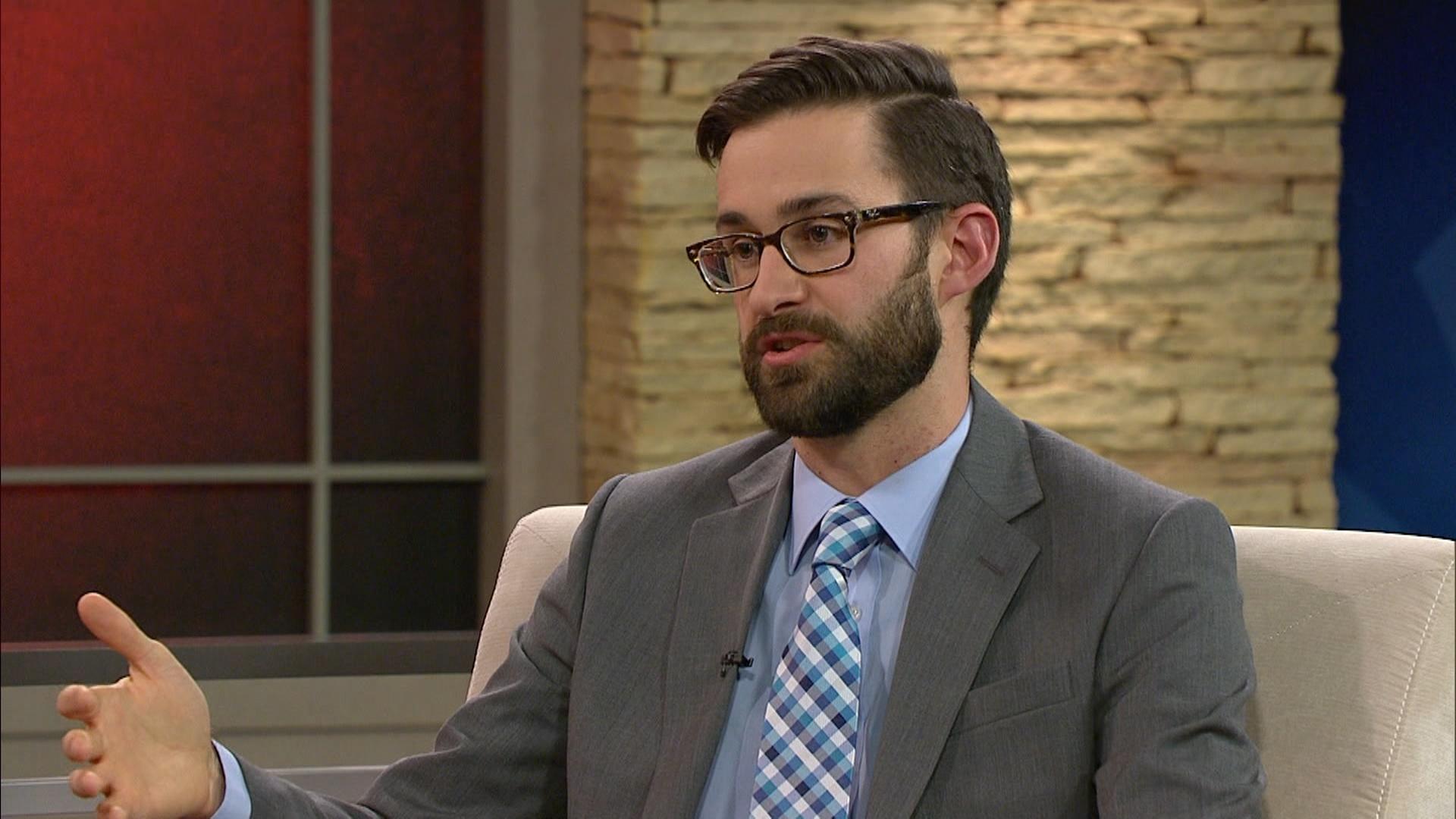
Renee and her guests discuss the growth of Kentucky's disability beneficiaries over the last 35 years and the reasons for the increase. First, she speaks with Commissioner Bryan Hubbard, Department of Income Support at the Kentucky Cabinet for Health and Family Services. Next, Renee speaks with Dustin Pugel, research and policy associate at the Kentucky Center for Economic Policy.
Season 13 Episode 13 Length 27:27 Premiere: 12/08/17

About

Connections

KET’s Connections features in-depth interviews with the influential, innovative and inspirational individuals who are shaping the path for Kentucky’s future.

From business leaders to entertainers to authors to celebrities, each week features an interesting and engaging guest covering a broad array of topics. Host Renee Shaw uses her extensive reporting experience to naturally blend casual conversation and hard-hitting questions to generate rich and full conversations about the issues impacting Kentucky and the world.


Tune-In

KET Sundays • 11:30 am/10:30 am
KET2 Sundays • 6/5 pm

Stream

Watch on KET’s website anytime or through the PBS Video App.

Podcast

The Connections podcast features each episode’s audio for listening.


Renee Shaw is the Director of Public Affairs and Moderator at KET, currently serving as host of KET’s weeknight public affairs program Kentucky Edition, the signature public policy discussion series Kentucky Tonight, the weekly interview series Connections, Election coverage and KET Forums.

Since 2001, Renee has been the producing force behind KET’s legislative coverage that has been recognized by the Kentucky Associated Press and the National Educational Telecommunications Association. Under her leadership, KET has expanded its portfolio of public affairs content to include a daily news and information program, Kentucky Supreme Court coverage, townhall-style forums, and multi-platform program initiatives around issues such as opioid addiction and youth mental health.  

Renee has also earned top awards from the Ohio Valley Chapter of the National Academy of Television Arts and Sciences (NATAS), with three regional Emmy awards. In 2023, she was inducted into the Silver Circle of the NATAS, one of the industry’s highest honors recognizing television professionals with distinguished service in broadcast journalism for 25 years or more.  

Already an inductee into the Kentucky Civil Rights Hall of Fame (2017), Renee expands her hall of fame status with induction into Western Kentucky University’s Hall of Distinguished Alumni in November of 2023.  

In February of 2023, Renee graced the front cover of Kentucky Living magazine with a centerfold story on her 25 years of service at KET and even longer commitment to public media journalism. 

In addition to honors from various educational, civic, and community organizations, Renee has earned top honors from the Associated Press and has twice been recognized by Mental Health America for her years-long dedication to examining issues of mental health and opioid addiction.  

In 2022, she was honored with Women Leading Kentucky’s Governor Martha Layne Collins Leadership Award recognizing her trailblazing path and inspiring dedication to elevating important issues across Kentucky.   

In 2018, she co-produced and moderated a 6-part series on youth mental health that was awarded first place in educational content by NETA, the National Educational Telecommunications Association. 

She has been honored by the AKA Beta Gamma Omega Chapter with a Coretta Scott King Spirit of Ivy Award; earned the state media award from the Kentucky Society of the Daughters of the American Revolution in 2019; named a Charles W. Anderson Laureate by the Kentucky Personnel Cabinet in 2019 honoring her significant contributions in addressing socio-economic issues; and was recognized as a “Kentucky Trailblazer” by the University of Kentucky Martin School of Public Policy and Administration during the Wendell H. Ford Lecture Series in 2019. That same year, Shaw was named by The Kentucky Gazette’s inaugural recognition of the 50 most notable women in Kentucky politics and government.  

Renee was bestowed the 2021 Berea College Service Award and was named “Unapologetic Woman of the Year” in 2021 by the Community Action Council.   

In 2015, she received the Green Dot Award for her coverage of domestic violence, sexual assault & human trafficking. In 2014, Renee was awarded the Anthony Lewis Media Award from the KY Department of Public Advocacy for her work on criminal justice reform. Two Kentucky governors, Republican Ernie Fletcher and Democrat Andy Beshear, have commissioned Renee as a Kentucky Colonel for noteworthy accomplishments and service to community, state, and nation.  

A former adjunct media writing professor at Georgetown College, Renee traveled to Cambodia in 2003 to help train emerging journalists on reporting on critical health issues as part of an exchange program at Western Kentucky University. And, she has enterprised stories for national media outlets, the PBS NewsHour and Public News Service.  

Shaw is a 2007 graduate of Leadership Kentucky, a board member of CASA of Lexington, and a longtime member of the Frankfort/Lexington Chapter of The Links Incorporated, an international, not-for-profit organization of women of color committed to volunteer service. She has served on the boards of the Kentucky Historical Society, Lexington Minority Business Expo, and the Board of Governors for the Ohio Valley Chapter of the National Academy of Television Arts and Sciences. 

Host Renee Shaw smiling in a green dress with a KET set behind her.

Trends Behind Growing Disability Claims in Kentucky

There’s been a dramatic spike in the number of American receiving disability benefits in the last 35 years thanks to a combination of changing demographics, a volatile economy, and court and legislative actions.

Between 1980 and 2015, disability awards to children and working-age adults increased by more than 200 percent nationally, according to a recent report from the Kentucky Cabinet for Health and Family Services. In the commonwealth, disability enrollment rose by nearly 250 percent.

KET’s Connections explored the factors fueling that increase and what state officials think could be done to ensure that the neediest individuals receive the assistance they need. The guests were Commissioner Bryan Hubbard of the Department of Income Support at the Kentucky Cabinet for Health and Family Services, and Dustin Pugel, a research and policy associate at the Kentucky Center for Economic Policy.

Why Disability Claims Increased
America’s social safety net dates back to New Deal and the passage of the original Social Security Act in 1935. In the 1950s, lawmakers added Social Security Disability Insurance (SSDI) to support working adults who suffer a serious mental or physical impairment that prevents them from holding a job. In the 1970s, a new program called Supplemental Security Income (SSI) added payments to the aged as well as child and adults who are blind or disabled.

Cabinet for Health and Family Services Commissioner Bryan Hubbard says disability filings started to sharply increase in the mid-1980s. That’s when Congress passed revisions to the Social Security Act that relaxed standards that would’ve required more stringent, objective medical diagnoses to become eligible and made enrollment in disability easier.

Then in 1990, a U.S. Supreme Court ruling changed how children would qualify for disability coverage under SSI. Hubbard says instead of having to obtain a specific medical diagnosis of disability, children would only have to display a functional limitation stemming from a disability.

A final factor contributing to the increase in disability claims arrived with the financial crisis of 2007 and 2008.

“During the last recession we had a significant number of workers, primarily those aged 50 and older, who were essentially offloaded into the Social Security disability system,” says Hubbard. “They were the workers who were of long-tenure, of higher pay, and deemed to be of long-term financial cost to those institutions who handed them the pink slips first when the financial meltdown occurred.”

The result, according to CHFS report on Social Security in Kentucky, is astounding growth in the number of people on disability. Between 1980 and 2015, those receiving SSDI and SSI grew by 211 percent nationally, and by 249 percent in the commonwealth.

“These are rates of growth which are exponentially larger than what our organic population growth has been,” Hubbard says, pointing to overall population growth in the U.S. of 42 percent, and 21 percent growth in Kentucky.

Disability and Older Workers
Dustin Pugel of the Kentucky Center for Economic Policy says some of the spike in SSDI claims could have anticipated because of changing demographics. He says with each decade of age, a worker is twice as likely to experience a disabling injury.

“So folks especially in the 50-64 [age] range… are at a higher chance of having a disability,” says Pugel. “And in the last 20 years, the Baby Boomers have aged into that category.”

Employers and employees pay into the SSDI program. To qualify for SSDI, the individual must have worked a quarter of their adult life or for five of the last 10 years. Pugel says the qualifying disability must impede an individual’s everyday activities or create the likelihood of death with five years.

Hubbard says more than 330,000 Kentuckians qualify for SSDI, and 95 percent of them will never return to productive work. He contends that has contributed to a host of other problems, especially for older adults going on disability.

“They lost their jobs, in many cases they lost their homes, and they lost everything that they worked to earn,” he says. “In return the policy solution was filter them to the Social Security disability program, which gave them a poverty check, a medical card, [and] a prescription for some pain pills.”

“The increase in dependency has fueled every problem that we have in this state when it comes to the drug-driven breakdown of families and communities,” Hubbard adds.

There is some room for hope, though. Pugel says the number of individuals on disability peaked in 2011. It’s now on the decline as those who earned SSDI age out of that system and convert to traditional Social Security retirement benefits, or as people have left SSI because they gained more income with the improving economy.

Individual Fraud Or Systemic Dysfunction?
Some politicians like to claim there is rampant fraud and abuse in entitlement programs. But Pugel say that’s not an issue for SSDI and SSI. He says fraud rates are actually very low for both programs despite high profile cases like the one involving Eric C Conn, a disability attorney in eastern Kentucky who pleaded guilty to defrauding the government out of more than $550 million.

“I think he did a lot to really damage the image of these programs that are really helpful to people who need it,” Pugel says.

“It’s actually really hard to get on disability insurance,” he adds. “Only 28 percent of applicants ever get on it, and the criteria is really exacting.”

And even those who do become eligible for the supports aren’t getting wealthy, according to Pugel.

“These benefits are very meager but important,” he says. “For SSI the benefits are about half of the poverty level and for SSDI they are right at the poverty level, so they really are not something that most folks can live off of. They’re really just to help get by.”

Instead of individual abuse of the system, Hubbard sees bigger, more bureaucratic influences at play in the growth of disability payments.

“They are driven by a systematic, premeditated expansion of the entry portals by the federal government, and the creation of a system that often functions like an apparatus of state-sponsored suicide, anesthetizing and euthanizing its dependents, a disproportionate number of whom are either young, poor, or both,” he says.

In looking to the future, Hubbard says the disability system should be refocused on objective, medically based models that give the genuinely disabled the benefits they need. Everyone else, he says, should be directed to programs that will retrain for other work in available jobs that they could physically perform. He says that will help break the cycles of poverty and long-term unemployment, alleviate the drug crisis, and improve the state’s economy.

“There’s no reason that we shouldn’t be able to expound, at every level of our government, the value that goes into a person’s autonomy, worth, and their ability to contribute to their community by being a productive citizen,” Hubbard says.

Sponsored by:

Season 13 Episodes

Marcie Timmerman - Mental Health and Wellness

S13 E43 Length 28:03 Premiere Date 08/24/18

Tiffany Manuel - Affordable Housing

S13 E42 Length 27:32 Premiere Date 08/17/18

Jessica Dueñas - 2019 Kentucky Teacher of the Year

S13 E41 Length 28:52 Premiere Date 08/10/18

2018 KIDS COUNT Data Book

S13 E37 Length 28:48 Premiere Date 07/13/18

A New Task Force on Opioids

S13 E36 Length 28:07 Premiere Date 07/06/18

Shining a Spotlight on Epilepsy

S13 E35 Length 28:02 Premiere Date 06/29/18

Criminal Justice Reform

S13 E34 Length 28:32 Premiere Date 06/22/18

Jay Box - Kentucky Community and Technical College

S13 E33 Length 28:03 Premiere Date 06/15/18

Interim Kentucky Education Commissioner Wayne Lewis

S13 E32 Length 28:03 Premiere Date 06/08/18

Bob King - Kentucky Council on Postsecondary Education

S13 E31 Length 28:09 Premiere Date 06/01/18

Rachel Childress - Lexington Habitat for Humanity

S13 E30 Length 26:22 Premiere Date 05/25/18

2018 Kentucky Primary Races

S13 E29 Length 29:52 Premiere Date 05/18/18

Dr. Donna Grigsby

S13 E28 Length 28:03 Premiere Date 05/11/18

Sexual Assault Awareness and Prevention

S13 E27 Length 28:02 Premiere Date 05/04/18

Kosair Charities Face It Movement; Terry Brooks

S13 E25 Length 28:27 Premiere Date 04/20/18

Child Marriage Laws in Kentucky - Donna Pollard

S13 E24 Length 28:42 Premiere Date 04/13/18

Remembering Dr. Martin Luther King, Jr.

S13 E23 Length 29:22 Premiere Date 04/06/18

Secretary Derrick Ramsey - Apprenticeships

S13 E22 Length 28:09 Premiere Date 02/23/18

Educational Innovation

S13 E21 Length 28:45 Premiere Date 02/16/18

Gerald Smith

S13 E20 Length 28:12 Premiere Date 02/09/18

Perry Bacon Jr.

S13 E18 Length 28:02 Premiere Date 02/02/18

DV8 Kitchen

S13 E17 Length 28:37 Premiere Date 01/19/18

Silas House, New Novel

S13 E16 Length 28:03 Premiere Date 01/16/18

Tawanda Owsley

S13 E15 Length 26:32 Premiere Date 01/05/18

Sexual Harassment Issues

S13 E14 Length 28:37 Premiere Date 12/15/17

Disability Rates and Benefits

S13 E13 Length 27:27 Premiere Date 12/08/17

Good Samaritans

S13 E12 Length 28:42 Premiere Date 11/17/17

A Salute to Heroes

S13 E10 Length 26:18 Premiere Date 11/10/17

Legislative Health Policy

S13 E9 Length 28:12 Premiere Date 11/03/17

Elder Care

S13 E8 Length 29:31 Premiere Date 10/27/17

Preventing Youth Suicide

S13 E7 Length 28:17 Premiere Date 10/20/17

A Proposal for Pension Reform

S13 E6 Length 28:02 Premiere Date 10/13/17

Rethinking Pain Medication

S13 E5 Length 28:02 Premiere Date 10/06/17

Former Gov. Steve Beshear

S13 E4 Length 28:53 Premiere Date 09/29/17

Secretary Elaine Chao

S13 E3 Length 28:52 Premiere Date 09/22/17

Smoking Cessation and Pregnancy

S13 E2 Length 29:32 Premiere Date 09/08/17

Author and Journalist Sam Quinones

S13 E1 Length 28:52 Premiere Date 09/01/17

Author and Journalist Sam Quinones

Preview Length 28:52 Premiere Date 09/01/17

See All Episodes

caret down

TV Schedules

Upcoming

No upcoming airdates

Recent

No recent airdates

Explore KET