

Times have been tough for higher education over the past decade, as tight state budgets have resulted in substantial cuts to funding for public universities and community and technical colleges in Kentucky.
Robert King knows the situation all too well. He’s been president of the Council on Postsecondary Education since 2009. During his tenure, the commonwealth’s institutions of higher learning have faced lower state appropriations coupled with higher operating expenses, which have helped drive up tuition costs. King admits it’s been a challenging time for the schools and students.
“But overall I think during my time here, the universities, despite the financial challenges, have continued to improve their performance, improve outcomes for more students, develop programs that are increasingly more related to workforces in our state,” says King. “So I’m pleased with progress that we’ve made, but… we still need to get better faster.”
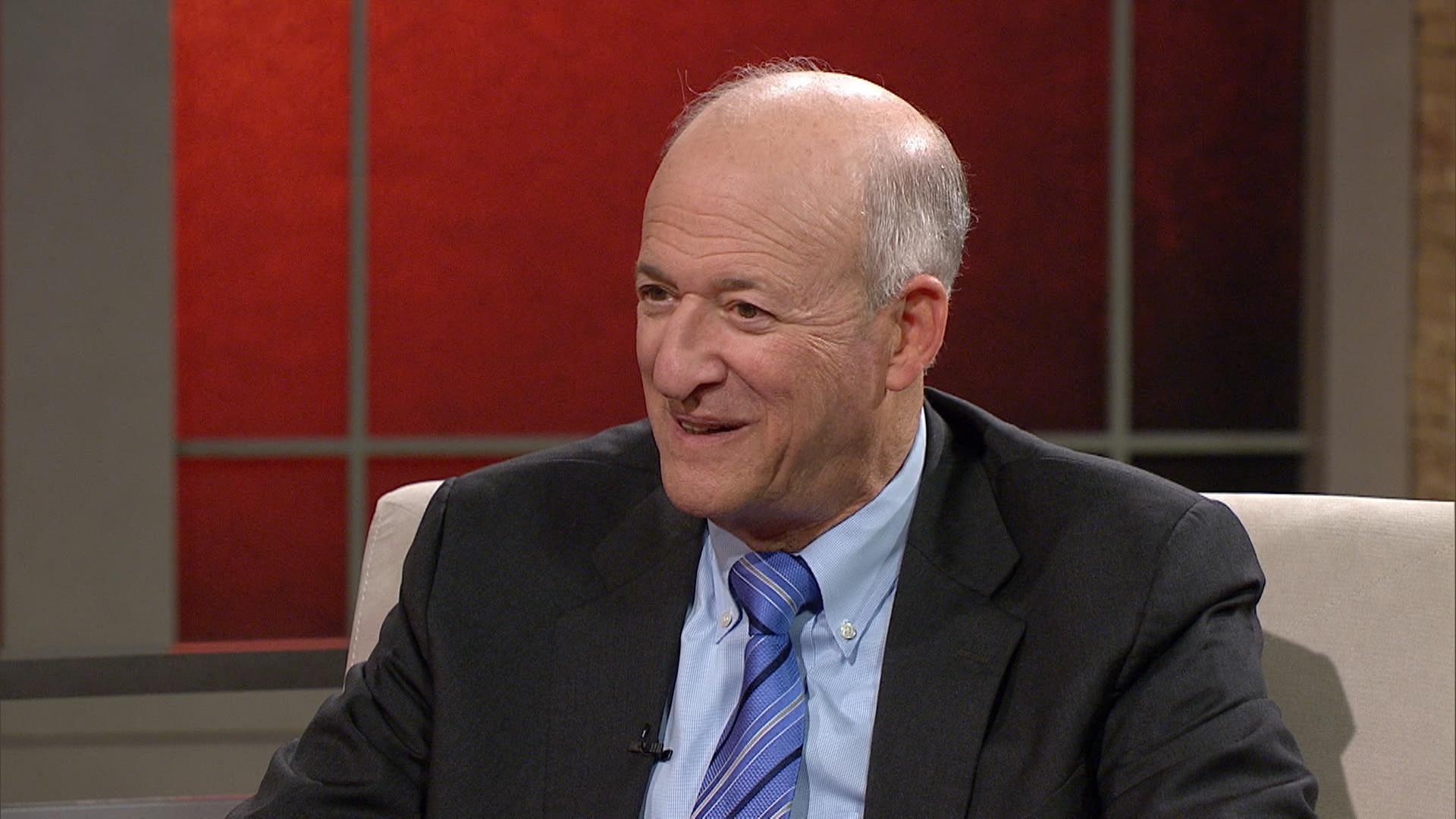
As he prepares to retire from the council, King appeared on KET’s Connections to discuss the achievements and challenges of higher education in Kentucky, and the new performance-based funding model for state colleges and universities.
Part of the improvement that King continues to seek is attracting more students to postsecondary education. CPE has set a goal that 60 percent of the state’s working-age population will have a credential or degree by the year 2030. He says today’s workforce needs demand that.
”Increasingly in the 21st century, more and more jobs out there are going to require something beyond a high school education,” King says.
But that doesn’t necessarily mean a four-year degree. It could also be a two-year associate’s degree or an industrial or professional certification that could be earned in three, six, or 12 months. King says schools need to do a better job of persuading potential students they need this additional education and providing them the services that will enable them to successfully attain their goal.
Even that’s a challenge, though. He says state colleges and universities now serve more students from lower income and minority populations who may need remedial help before tackling postsecondary course work. With schools facing tighter budgets, King says they often have fewer staff members to help students with greater needs.
Bringing Adults Back to School
Another group that CPE is targeting is those individuals who got close to attaining a bachelor’s degree but dropped out of school before completing it. King says they’ve helped more than 1,000 adults who had 90 credit hours towards a degree return to the classroom and finish their studies. Now CPE is turning its sights on those individuals who accrued 80 credit hours before dropping out.
Eventually King says they want to focus on those people who only completed a year or so of college before entering the workforce. He says completing their degree now could help them secure a raise or promotion at work.
To make it easier for those with substantial on-the-job experience to complete a degree in their field of expertise, King says some schools are embracing competency-based education. That allows adult students to accelerate their studies by applying what they already know to their course requirements.
“So they can test their way right through a course without having to complete the semester-long course,” King says. “As a result, people are actually able to complete a two-year degree, and hopefully this will translate into a four-year degrees, at a much faster pace.”
The online programs offered by Kentucky Community and Technical College System use the competency-based system, according to King. He says online courses are especially popular among adults because they don’t require students to be present in a physical classroom at specific hours. Plus, he says data indicates that students perform just as well if not better in online coursework than in traditional classroom settings.
“The biggest challenge for most people in doing online education is just having the discipline to stick to it,” says King.
Lower Revenues, Higher Costs, Fewer Programs
Higher ed suffered yet another round of cuts in the new two-year state budget passed by Kentucky lawmakers this spring. As with most government agencies, the colleges and universities will lose about 6 percent of their funding in the new biennium.
But King says that’s only part of the fiscal challenge facing postsecondary education in the commonwealth.
“There’s the revenue side, where the revenue is shrinking from the state, but there are expenses that are growing,” he says.
Pension costs have increased about 70 percent, says King, from about 49 cents of every dollar in salary to about 83 cents. Health insurance, workers compensation insurance, and unemployment insurance rates are also increasing. Plus the schools now have to pay the operating and maintenance costs on new campus buildings that the state used to fund in a separate appropriation.
That’s forced the schools to increase tuition and fees on students. In earlier years, King says those hikes could be as much as 10 to 13 percent a year. Recently, CPE capped the tuition increases a school could implement. Now they can only increase tuitions by 6 percent over two years, and no more than 4 percent in any one year.
“Our job is to try and balance the interests and concerns of our students and their families with the operating needs of the campuses,” King says.
Higher tuitions only cover about two-thirds of the increased operating costs now faced by Kentucky colleges and universities, according to King.
“The one-third that we don’t cover with tuitions is what’s driving them to have to make these very difficult decisions,” King says. “It’s forcing them to be more efficient, we hope, and more effective.”
In some cases, that means cutting faculty and staff, and ending degree programs that have too few students or that don’t mesh with today’s workforce needs. That’s raised concerns that higher education may be placing too much emphasis on so-called STEM-H degrees (in science, technology, engineering, math, and health) and not enough on traditional liberal arts programs.
“I think there’s certainly room for both, I think there’s a need for both,” King says.
Yes, today’s employers want tech-savvy workers, King says. But for every scientist or engineer a company hires, they also need sales people, bookkeepers, human resources staff, and others to make that company successful. And while there aren’t many current job openings for philosophers, King contends that someone who completes a philosophy degree has shown that he or she is an excellent student who could succeed in a variety of jobs.
“It’s easy to single out a particular course or a particular discipline and say, what do we need that for?” says King. “But I think there’s far more utility to that good old fashioned liberal arts degree than people are willing to let on.”
That doesn’t mean that every state school needs to offer a philosophy degree. King says he understands why regional schools developed many of the same course offerings. But with the new fiscal realities, he says the ideal situation would be for universities to eliminate duplicative degree programs and instead focus on investing in distinctive world-class programs that will attract the best faculty and brightest students.
“It will often mean at the expense of other [programs],” says King, “but that’s a choice that I think they are going to have to make because they are going to need that niche in the market to be able to keep their enrollments up.”
Performance-Based Funding
Not only are public institutions of higher learning receiving fewer state dollars, they’re now being allocated in a new way.
In the 2017 General Assembly session, lawmakers approved a performance-based model for dispensing funds to Kentucky universities and community colleges. Under the plan that’s being phased-in over four years, 70 percent of an institution’s state funding will be based on achieving certain metrics and outcomes. Those factors include the number of degrees awarded, the type of degree produced (such as science and technology versus liberal arts), course credit hours completed by students, and whether the school is closing achievement gaps between various student groups.
Although all the college and university presidents agreed to the plan, representatives of the smaller, regional universities have voiced fears that their schools could be at a disadvantage when competing against major metropolitan universities for funding.
King says that may be true in the first few years of the plan, when funding is more closely linked to the numbers of students served. But as the funding model reaches equalization, King says schools will judged not on volume but on their rates of improvement on the key metrics compared to the average for the entire state system.
King was scheduled to retire as CPE president on June 10, but he says his board has asked him to stay on the job until a successor is hired.
“I told them I’ll try to accommodate them as best I can,” King says.