Skip to Main Content
Watch 2026 Impeachment Committee

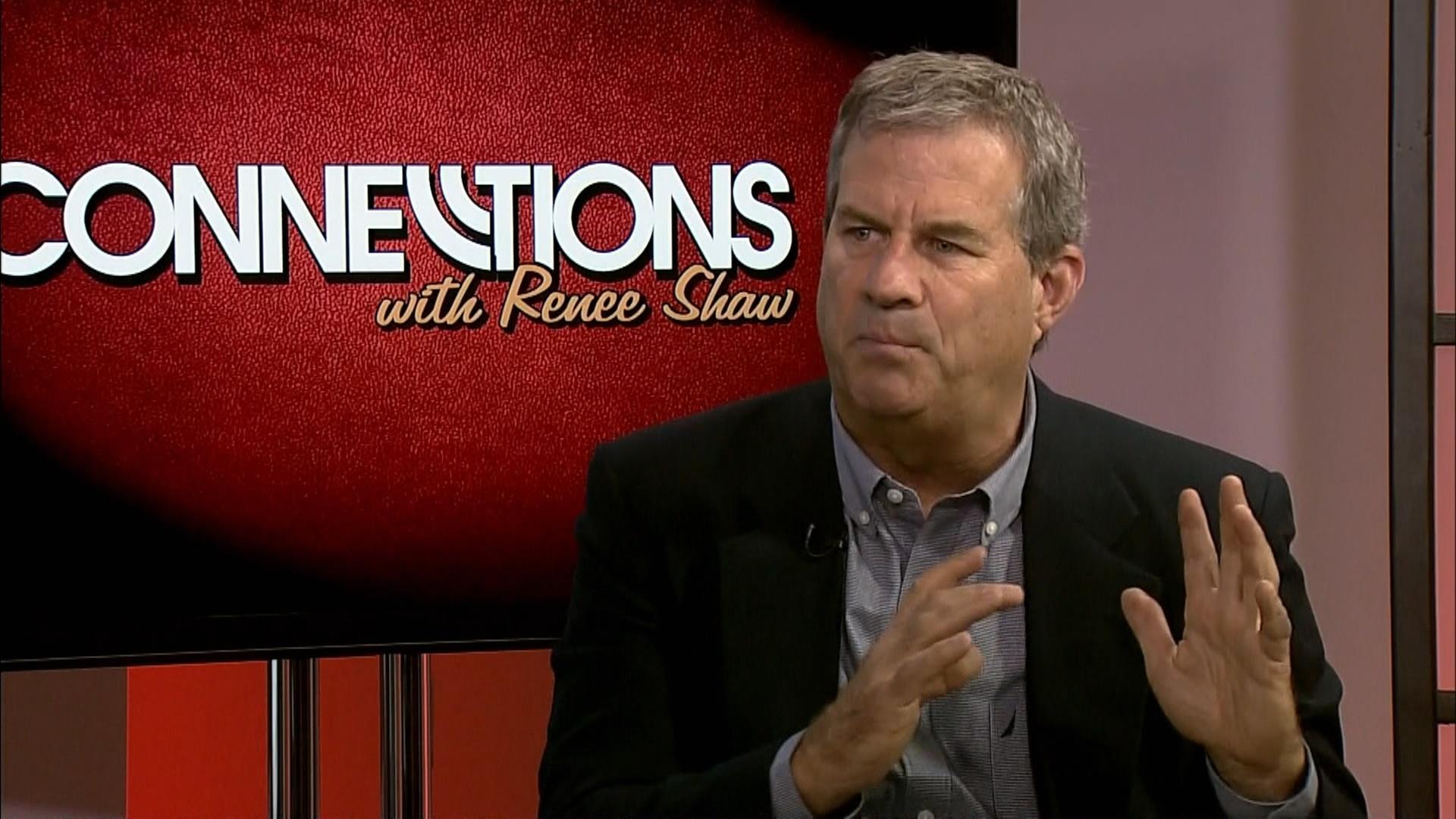
Author and Journalist Sam Quinones

Renee speaks with journalist Sam Quinones, author of "Dreamland: The True Tale of America's Opiate Epidemic" and other books. Quinones discusses the roots of America's opioid crisis and several new treatment options.
Season 13 Episode 1 Length 28:52 Premiere: 09/01/17

About

Connections

KET’s Connections features in-depth interviews with the influential, innovative and inspirational individuals who are shaping the path for Kentucky’s future.

From business leaders to entertainers to authors to celebrities, each week features an interesting and engaging guest covering a broad array of topics. Host Renee Shaw uses her extensive reporting experience to naturally blend casual conversation and hard-hitting questions to generate rich and full conversations about the issues impacting Kentucky and the world.


Tune-In

KET Sundays • 11:30 am/10:30 am
KET2 Sundays • 6/5 pm

Stream

Watch on KET’s website anytime or through the PBS Video App.

Podcast

The Connections podcast features each episode’s audio for listening.


Renee Shaw is the Director of Public Affairs and Moderator at KET, currently serving as host of KET’s weeknight public affairs program Kentucky Edition, the signature public policy discussion series Kentucky Tonight, the weekly interview series Connections, Election coverage and KET Forums.

Since 2001, Renee has been the producing force behind KET’s legislative coverage that has been recognized by the Kentucky Associated Press and the National Educational Telecommunications Association. Under her leadership, KET has expanded its portfolio of public affairs content to include a daily news and information program, Kentucky Supreme Court coverage, townhall-style forums, and multi-platform program initiatives around issues such as opioid addiction and youth mental health.  

Renee has also earned top awards from the Ohio Valley Chapter of the National Academy of Television Arts and Sciences (NATAS), with three regional Emmy awards. In 2023, she was inducted into the Silver Circle of the NATAS, one of the industry’s highest honors recognizing television professionals with distinguished service in broadcast journalism for 25 years or more.  

Already an inductee into the Kentucky Civil Rights Hall of Fame (2017), Renee expands her hall of fame status with induction into Western Kentucky University’s Hall of Distinguished Alumni in November of 2023.  

In February of 2023, Renee graced the front cover of Kentucky Living magazine with a centerfold story on her 25 years of service at KET and even longer commitment to public media journalism. 

In addition to honors from various educational, civic, and community organizations, Renee has earned top honors from the Associated Press and has twice been recognized by Mental Health America for her years-long dedication to examining issues of mental health and opioid addiction.  

In 2022, she was honored with Women Leading Kentucky’s Governor Martha Layne Collins Leadership Award recognizing her trailblazing path and inspiring dedication to elevating important issues across Kentucky.   

In 2018, she co-produced and moderated a 6-part series on youth mental health that was awarded first place in educational content by NETA, the National Educational Telecommunications Association. 

She has been honored by the AKA Beta Gamma Omega Chapter with a Coretta Scott King Spirit of Ivy Award; earned the state media award from the Kentucky Society of the Daughters of the American Revolution in 2019; named a Charles W. Anderson Laureate by the Kentucky Personnel Cabinet in 2019 honoring her significant contributions in addressing socio-economic issues; and was recognized as a “Kentucky Trailblazer” by the University of Kentucky Martin School of Public Policy and Administration during the Wendell H. Ford Lecture Series in 2019. That same year, Shaw was named by The Kentucky Gazette’s inaugural recognition of the 50 most notable women in Kentucky politics and government.  

Renee was bestowed the 2021 Berea College Service Award and was named “Unapologetic Woman of the Year” in 2021 by the Community Action Council.   

In 2015, she received the Green Dot Award for her coverage of domestic violence, sexual assault & human trafficking. In 2014, Renee was awarded the Anthony Lewis Media Award from the KY Department of Public Advocacy for her work on criminal justice reform. Two Kentucky governors, Republican Ernie Fletcher and Democrat Andy Beshear, have commissioned Renee as a Kentucky Colonel for noteworthy accomplishments and service to community, state, and nation.  

A former adjunct media writing professor at Georgetown College, Renee traveled to Cambodia in 2003 to help train emerging journalists on reporting on critical health issues as part of an exchange program at Western Kentucky University. And, she has enterprised stories for national media outlets, the PBS NewsHour and Public News Service.  

Shaw is a 2007 graduate of Leadership Kentucky, a board member of CASA of Lexington, and a longtime member of the Frankfort/Lexington Chapter of The Links Incorporated, an international, not-for-profit organization of women of color committed to volunteer service. She has served on the boards of the Kentucky Historical Society, Lexington Minority Business Expo, and the Board of Governors for the Ohio Valley Chapter of the National Academy of Television Arts and Sciences. 

Host Renee Shaw smiling in a green dress with a KET set behind her.

Sam Quinones, ‘Dreamland’ Author

Public health officials trace the current opioid epidemic to aggressive marketing by drug makers, over-prescribing by doctors, and a desire among patients to get a quick fix for their pain.

Journalist Sam Quinones would add another factor to that list: social isolation. He sees a nation divided politically and socially, and citizens who prefer to retreat into cable news channels and online chat groups that affirm their worldview rather than interact face to face with their own neighbors.

“We live in a time when we’re more connected than ever, but the connection is very, very flimsy and superficial,” says Quinones, who is author of “Dreamland: The True Tale of America’s Opiate Epidemic.”

“Heroin is almost like a poster drug for our time,” he says. “Heroin does the same thing: It brings people together who don’t want to have anything to do with anybody else who doesn’t know about where to buy dope.”

Quinones appeared on KET’s Connections to discuss the roots of the drug scourge and new approaches to respond to the crisis.

Factors Converge to Create a Crisis
The social isolation that Quinones says plagues the nation isn’t just the result of personal choices to stay within our own comfort zones.

“Hand in hand with that is the destruction of community,” he says. “Destruction through exporting jobs or just simply losing jobs but also not funding or destroying the community assets that bring people together.”

For Quinones, that trend is epitomized by the public swimming pool that’s memorialized in the title of his book. Dreamland was built in Portsmouth, Ohio, in 1929 and served generations of families in that blue-collar steel and manufacturing community.

But as industrial jobs slowly drained from the area in the 1970s and ‘80s, Portsmouth fell on hard times and so did the swimming pool. When Dreamland closed in 1993, Quinones says the heart of the town was destroyed.

Similar changes echoed across many communities around the nation, but especially in Appalachia. And they coincided with important changes in the health care industry.

“This was also a time when the pharmaceutical industry was seeing a new business model, which was, ‘you take your biggest drug and you hire huge numbers of sales reps,’” Quinones says. “It was a total revolution of the sales rep profession.”

Over a dozen years, the number of drug salespeople in this country quadrupled, according to Quinones. One of the new drugs this massive marketing force pushed was the painkiller oxycodone. Doctors had long sought better ways to treat pain, and opioid-based medicines sold under brand names like Oxycontin held great promise for doing so.

But it became all too easy for health care providers to prescribe these painkillers, Quinones says. Doctors, who felt pressured by managed care companies to see more patients, spent less and less time diagnosing individual cases. Patients wanted a quick fix for their discomfort. And pharmaceutical companies claimed their new opioid medicines were non-addictive.

“We got into this because we wanted easy answers to complicated problems,” Quinones says. “The complicated problem was the mystery of pain – how do we alleviate pain?  …The problem is we used a one-size fits all magic bullet for everybody, which was narcotic painkillers.”

Quinones says doctors began to prescribe narcotics in enormous quantities and for conditions that didn’t warrant such powerful drugs. It’s a situation Quinones experienced firsthand in 2009. After a short hospital stay for an appendectomy, Quinones says he was sent home with a 30-day supply of Vicodin. He says the hospital staff never explained to him how addictive the drug could be.

The Crack Epidemic and the Opioid Crisis
The U.S. Centers for Disease Control and Prevention says overdose deaths involving prescription opioids have quadrupled since 1999. In 2015 alone, opioids including prescription opioids, heroin, and fentanyl killed more than 33,000 people. Last year, more than 1,400 Kentuckians died from drug overdoses.

Quinones says the opioid crisis has been growing for 20 years, and it will probably take at least as long to fix the problem. He says when he first started writing his book, few friends and family members of drug overdose victims would discuss the issue.

“Nobody wanted to talk about it, I think largely because the primary victims were white,” Quinones says, “and [their families] were aghast that their prized children were now on a McDonald’s bathroom toilet, slumped over, overdosing.”

But he says the shame and stigma is starting to lift. People are willing to acknowledge overdose as the cause of death in a loved one’s obituary, and they are speaking up in public meetings about the loss they experienced. Quinones says the criminal justice response to the crisis is also evolving because of the number of middle- and upper-class white families that are being affected.

“Now that their kids are getting addicted, they are now understanding some basic realities about addiction,” he says. “…the reality of how a felony record will mangle a kid’s life for the rest of his life.”

Some African American activists have questioned why law enforcement responded to the crack cocaine epidemic that swept many black communities in the 1980s and ‘90s with tougher laws and harsher sentences, while the opioid crisis is being met with a greater emphasis on treatment. Quinones says he doesn’t believe the differing approaches are rooted in racial disparities. He contends the massive amounts of public violence that accompanied the spread of crack helped drive the stricter criminal justice response.

“I don’t know if current focus on treating addiction as a disease would be at all acceptable had we the same level of violence associated with [opioids] that we had with crack,” he says.

Expanding Treatment Options
Whatever caused the shift in perspective, public officials are responding with more funding for treatment options, needle exchange programs, and overdose reversal kits. Another positive trend, says Quinones, is to make addiction treatment more widely available to jail and prison inmates. He says some two dozen Kentucky county jails now offer intensive treatment and counseling to inmates with substance abuse issues. Quinones says that’s a much better use of corrections funding than to simply imprison those with an addiction with more hardened criminals.

“This epidemic is showing us a lot of what we’ve not been doing very well in this country,” he says. “And one way, I think, is we need to rethink jail.”

Quinones also supports medication-assisted treatment for inmates that combines behavioral therapy and medications to treat substance use disorders. Having a medication in their system that deters future illicit opioid use is especially important when inmates are released back to their communities, according to Quinones.

“We cannot have the supply of illegal and legal dope out on the street and expect people to get out of treatment without any shield from that and live,” Quinones says.

Some researchers are exploring how medical marijuana might also be used to treat opioid addiction. That idea often gets wrapped in the larger questions about marijuana legalization, which Quinones says is a complicated issue. He contends that newer strains of cultivated marijuana are significantly more potent, and there hasn’t been enough research into how those higher concentrations of THC, the chemical compound in cannabis that generates the high, might affect the brains of young adults.

“I believe that there are probably very great medical benefits that we can gain from marijuana but there also are significant downsides,” Quinones says. “Just rushing headlong into [wider legalization] is, I think, a huge mistake.”

Sponsored by:

Season 13 Episodes

Marcie Timmerman - Mental Health and Wellness

S13 E43 Length 28:03 Premiere Date 08/24/18

Tiffany Manuel - Affordable Housing

S13 E42 Length 27:32 Premiere Date 08/17/18

Jessica Dueñas - 2019 Kentucky Teacher of the Year

S13 E41 Length 28:52 Premiere Date 08/10/18

2018 KIDS COUNT Data Book

S13 E37 Length 28:48 Premiere Date 07/13/18

A New Task Force on Opioids

S13 E36 Length 28:07 Premiere Date 07/06/18

Shining a Spotlight on Epilepsy

S13 E35 Length 28:02 Premiere Date 06/29/18

Criminal Justice Reform

S13 E34 Length 28:32 Premiere Date 06/22/18

Jay Box - Kentucky Community and Technical College

S13 E33 Length 28:03 Premiere Date 06/15/18

Interim Kentucky Education Commissioner Wayne Lewis

S13 E32 Length 28:03 Premiere Date 06/08/18

Bob King - Kentucky Council on Postsecondary Education

S13 E31 Length 28:09 Premiere Date 06/01/18

Rachel Childress - Lexington Habitat for Humanity

S13 E30 Length 26:22 Premiere Date 05/25/18

2018 Kentucky Primary Races

S13 E29 Length 29:52 Premiere Date 05/18/18

Dr. Donna Grigsby

S13 E28 Length 28:03 Premiere Date 05/11/18

Sexual Assault Awareness and Prevention

S13 E27 Length 28:02 Premiere Date 05/04/18

Kosair Charities Face It Movement; Terry Brooks

S13 E25 Length 28:27 Premiere Date 04/20/18

Child Marriage Laws in Kentucky - Donna Pollard

S13 E24 Length 28:42 Premiere Date 04/13/18

Remembering Dr. Martin Luther King, Jr.

S13 E23 Length 29:22 Premiere Date 04/06/18

Secretary Derrick Ramsey - Apprenticeships

S13 E22 Length 28:09 Premiere Date 02/23/18

Educational Innovation

S13 E21 Length 28:45 Premiere Date 02/16/18

Gerald Smith

S13 E20 Length 28:12 Premiere Date 02/09/18

Perry Bacon Jr.

S13 E18 Length 28:02 Premiere Date 02/02/18

DV8 Kitchen

S13 E17 Length 28:37 Premiere Date 01/19/18

Silas House, New Novel

S13 E16 Length 28:03 Premiere Date 01/16/18

Tawanda Owsley

S13 E15 Length 26:32 Premiere Date 01/05/18

Sexual Harassment Issues

S13 E14 Length 28:37 Premiere Date 12/15/17

Disability Rates and Benefits

S13 E13 Length 27:27 Premiere Date 12/08/17

Good Samaritans

S13 E12 Length 28:42 Premiere Date 11/17/17

A Salute to Heroes

S13 E10 Length 26:18 Premiere Date 11/10/17

Legislative Health Policy

S13 E9 Length 28:12 Premiere Date 11/03/17

Elder Care

S13 E8 Length 29:31 Premiere Date 10/27/17

Preventing Youth Suicide

S13 E7 Length 28:17 Premiere Date 10/20/17

A Proposal for Pension Reform

S13 E6 Length 28:02 Premiere Date 10/13/17

Rethinking Pain Medication

S13 E5 Length 28:02 Premiere Date 10/06/17

Former Gov. Steve Beshear

S13 E4 Length 28:53 Premiere Date 09/29/17

Secretary Elaine Chao

S13 E3 Length 28:52 Premiere Date 09/22/17

Smoking Cessation and Pregnancy

S13 E2 Length 29:32 Premiere Date 09/08/17

Author and Journalist Sam Quinones

S13 E1 Length 28:52 Premiere Date 09/01/17

Author and Journalist Sam Quinones

Preview Length 28:52 Premiere Date 09/01/17

See All Episodes

caret down

TV Schedules

Upcoming

No upcoming airdates

Recent

No recent airdates

Explore KET