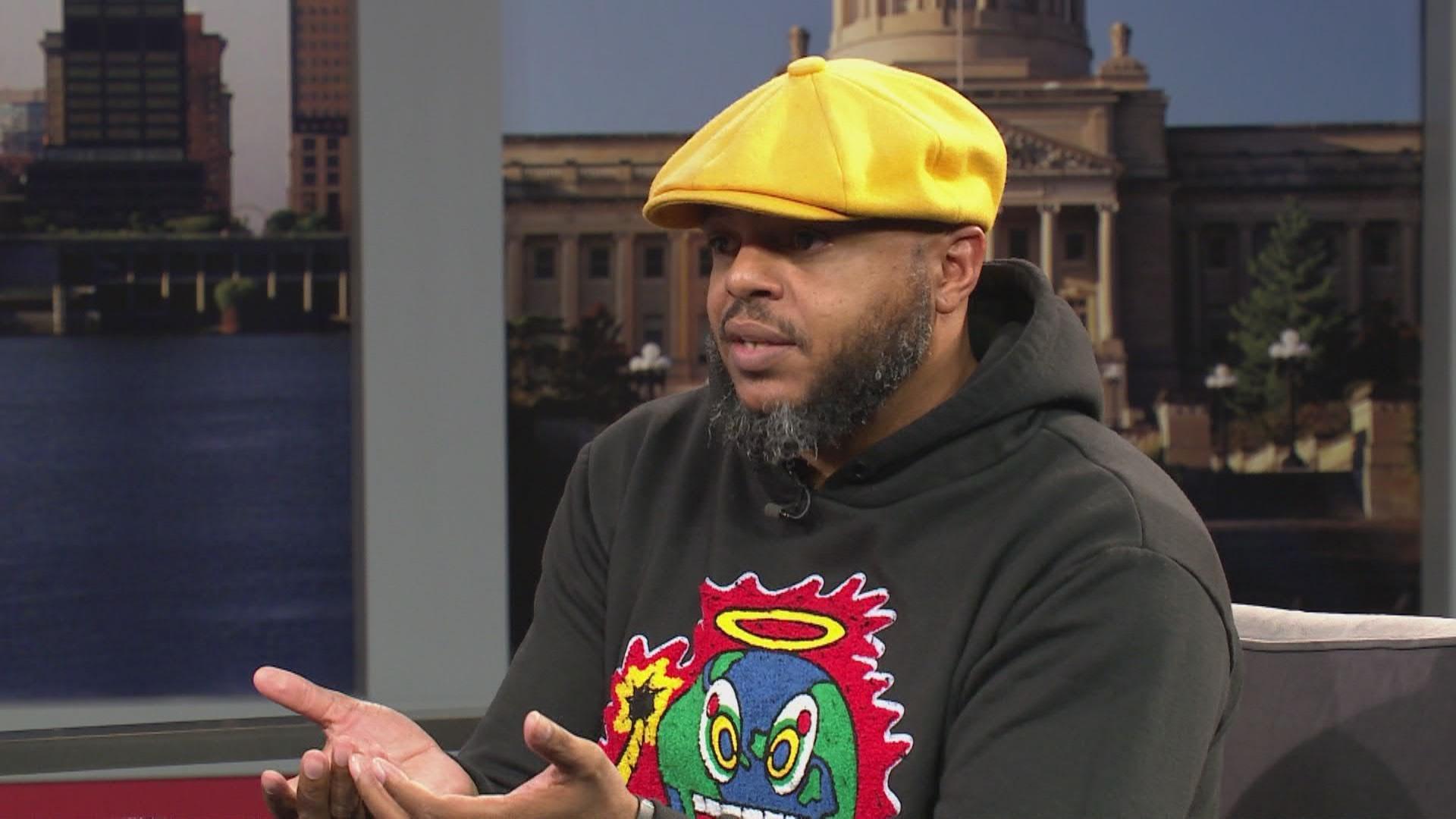


Devine Carama is something of a renaissance man – and a very busy one at that. He is a girl-dad to a five-week-old daughter as well as being the director of ONE Lexington, the initiative to reduce gun violence among youth in the city. He’s also a hip hop artist at work on another album, a community activist who collects books and coats to give to needy children, a motivational speaker, and now a published author.
With each activity, Carama finds himself touching the lives of others and strengthening the social fabric of the community.
“I don’t have college degree, I didn’t come into this with a lot of money, I was just somebody that kept my ear to God’s voice,” says Camara. “He qualified me and put me in these spaces.”
Making Strides Against Gun Violence
Lexington Mayor Linda Gorton tapped Carama to lead ONE Lexington in the wake of the COVID-19 pandemic and the racial justice protests of 2020. As violence among youth skyrocketed across the nation, civic leaders in Lexington wanted to find ways to intervene with young people before they turned to criminal activity. While they studied research about anti-crime efforts in bigger cities like Chicago and Los Angeles, Carama says it’s been important to explore solutions tailored to the unique needs of Lexington.
“I don’t think people realize how people fall through the gaps, our most underserved, when our systems and sectors are not communicating or working together,” he says. “I would like to think my presence in this position has helped bring people together.”
That means mobilizing the vast and varied resources of city-county government, the police department, schools, local non-profits, churches, neighborhood groups, and others into a coordinated effort to tackle the root causes of violent crime among youth and young adults. While violence still continues, Carama says ONE Lexington is already generating results.
“We’ve made incredible strides since 2022,” he says. “We saw almost a 50 percent drop in homicides last year. For the first time in six years, we were under 100 shootings.”
Even with those accomplishments, Carama says he sees troubling signs at the state and national levels. For example, he points to recent legislation that he says undermines efforts to promote diversity, equity, and equality.
“This directly challenges our work,” says Carama. “So, we’ve got to be careful as a society not to overreact, not to overreach because there’s real consequences that are going to have an impact on some of these underserved communities for decades if we’re not careful.”
Gaining Fame, Leaving a Legacy
Carama also uses his talents to spread positive, inspirational messages to adults and youth alike. A social media video that features Carama talking with a group of young boys about how to regulate their emotions has garnered some 20 million views. He traces the roots of all his work back to his love of hip hop music. Carama says he’s worked to stay true to the origins of the genre as a voice for the voiceless.
Even though he delivers messages about unity, rising above hardship, female empowerment, and honoring the wisdom of elders, Carama says his raps have not lost the edginess that define hip hop. He says his longevity and relevance as an artist is sustained by staying focused on the challenges experienced by minority communities.
“It can’t be sanitized, it can’t be completely clean because hip hop comes from struggle and pain, but it always had that hope,” he says.
Now Carama’s messages are finding a wider audience with recent appearances on national television, including Good Morning America and the Jennifer Hudson Show. He also won a regional Emmy Award for writing a hip hop tune that accompanies the Positively Lex 18 segments produced by WLEX TV in Lexington.
“The awards mean something in the moment, but the next day I’m moving forward,” he says. “My humility is my own personal special sauce that keeps me motivated every day.”
In February, Carama released his first book. “Pages Full of Rhymes” chronicles his two decades as an independent rap artist and features a sampling of his lyrics over the years. As an avid reader since childhood, Carama always thought it was a pipe dream to write his own book. But now he sees the project as a part of his overall legacy.
“I want one place where my children, my grandchildren can come and not only learn (about) my works of art, but what inspired me about hip hop culture,” says Carama. “How does it connect to community, what is hip hop, what was the grind like, starting from hustling mix tapes out of your trunk to uploading things on to social media.”
Although he may have once had dreams of stardom, Carama admits he probably wasn’t prepared to handle that kind of attention when he was younger. Nor did he want to become the kind of commercial artist that always seeks to be the next social media sensation. He says the more he’s focused on his own journey and inspirational voice, the more God has opened doors for him.
“I’m showing kids that you can make it in a different way,” says Carama. “You don’t have to go out and do salacious things just to get attention, to get views to go viral. You can just do positive things living your purpose.”
“I want my life to be an example for them that just because your path is unconventional doesn’t mean you can’t make it,” he says.