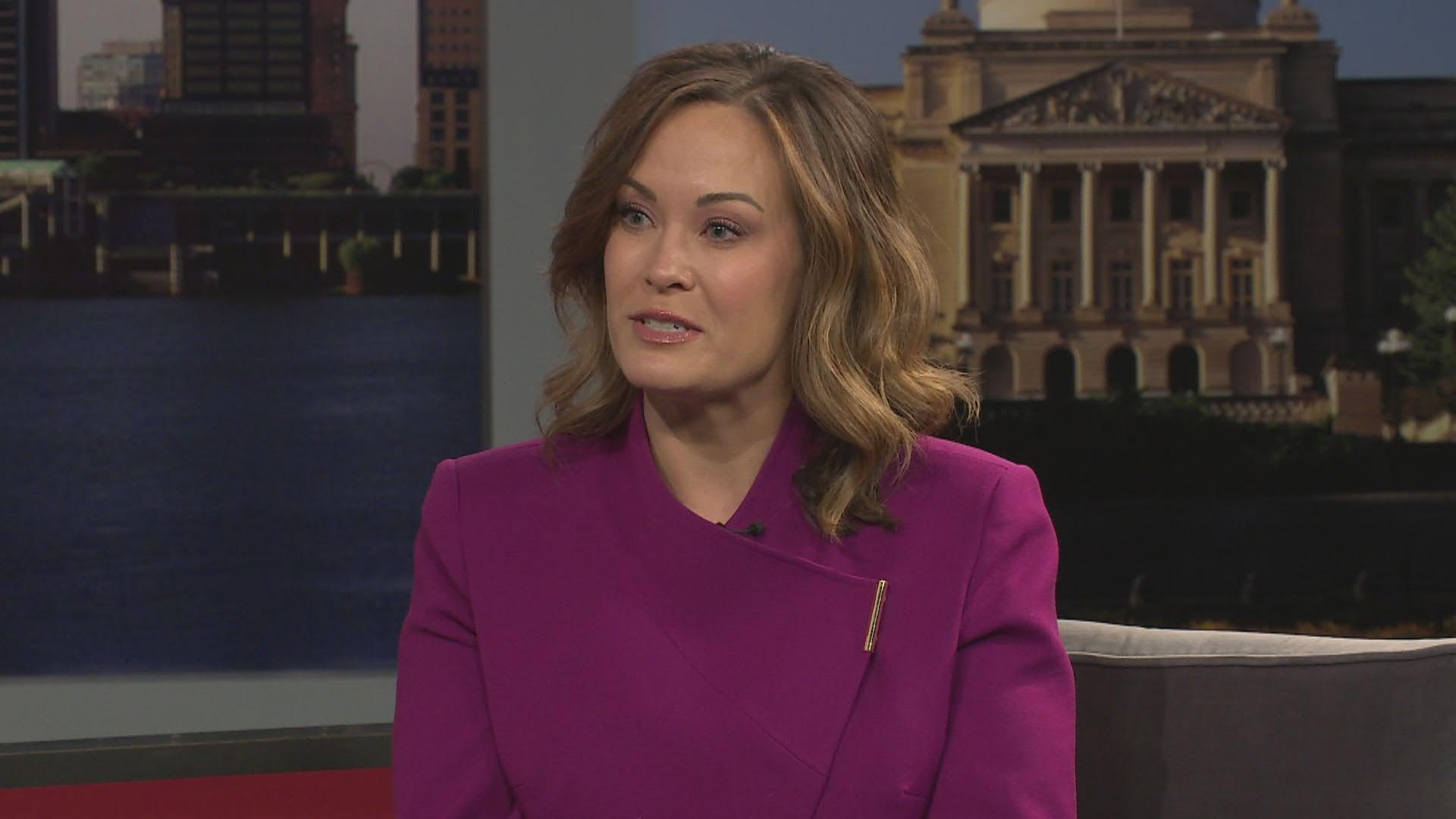


When Jacqueline Coleman became Kentucky’s 58th lieutenant governor in 2019, she entered office as a political neophyte. Before being named the running mate for fellow Democrat Andy Beshear, Coleman had only one race under her belt – a failed bid for the state House of Representatives. But after the Democrats eked out a narrow victory over incumber Gov. Matt Bevin, Coleman had to hit the ground running to assemble a staff and acclimate to life in the state capitol.
When the lieutenant governor takes the oath of office this week for her second term, the pressure will be decidedly less intense.
“This time we have all of that in place and it’s a matter of making sure that we continue putting one foot in front of the other and producing for the folks of Kentucky,” she says.
As a former history teacher, basketball coach, and assistant principal, Coleman says her priority will continue to be public education. You could say the issue is in her DNA. Coleman says her father, former state Rep. Jack Coleman, served in Frankfort during the passage and implementation of the Kentucky Education Reform Act.
Now public education is at a crossroads, according to Coleman, as schools fight for adequate funding while some Republican legislators push for money for charter schools in the commonwealth.
“We’re truly looking at a decision of, are we going to recommit ourselves to public education in Kentucky to make sure every kid, no matter their zip code, has every opportunity that they can have?” Coleman says. “Or are we going to look at going in a different direction that, in my opinion, would drastically harm our rural schools, our minority students, all of the kids that were benefitted by KERA.”
During the 2024 General Assembly session, lawmakers are expected to consider a proposed constitutional amendment that would allow state tax dollars to flow to charter schools. Coleman contends changing the state constitution is difficult and unnecessary. What’s simpler, she says, is to fund public schools so that every child can receive a quality education. She says she is willing to work with people on both sides of the aisle to make that happen.
“I’ve always believed that public education can and should be a bipartisan, nonpartisan issue,” says Coleman. “It’s truly about building the best commonwealth, the best economy, investing in kids that need it, and that should be something that we should able be to rally behind.”
Beyond better school funding and pay raises for teachers and staff, Coleman says lawmakers should also focus on other aspects of child welfare than can impact their academic performance, such as hunger and nutrition, abuse and neglect, and adequate housing.
“It’s incumbent upon all of us to make sure that all of our kids’ needs are met to the best of our ability because that’s what gives our kids the best outcome,” she says.
Working with the Legislature on Abortion
But questions remain about how well the Republican-controlled legislature will work with a second term of the Democratic Beshear-Coleman Administration. The lieutenant governor says reports of a poor working relationship between the executive and legislative branches are overblown and that the governor and his staff do talk with House and Senate leaders. She says lawmakers should work with the governor because Kentuckians voted Beshear to serve another term.
“That should incentivize the folks who are in the legislature to do the right thing for the right reasons and put politics aside,” says Coleman. “That’s what Kentuckians are asking for, that’s what they deserve.”
One social issue Coleman hopes they can agree on is enacting exemptions to the state’s abortion ban for victims of rape and incest as well as women with non-viable pregnancies. Coleman says Kentuckians have already signaled their desire for such exceptions.
“It will be interesting to see if the General Assembly takes notice of that or if they choose not to listen to the voters,” she says.
Abortion became a key issue in the gubernatorial race when a commercial featuring 21-year-old rape survivor Hadley Duvall aired around the state. Coleman says Duvall was incredibly brave to share her story of sexual abuse since women are usually told to be embarrassed about such incidents and keep them secret.
“She changed the landscape of this conversation in Kentucky for the better because we centered women’s voices in it,” the lieutenant governor says.
Coleman’s Political Future
In the past century, nine of Kentucky’s lieutenant governors have ascended to the state’s highest office. Could Coleman be number ten?
At this point, she says she’s not thinking that far ahead, saying she prefers to focus on making the next decision that comes before her and working to cement the legacy of the Beshear-Coleman Administration. Her political future can be decided later, she says.
“When the time comes, I think the decision will be clear, but that time is not right now. We’ve got so many things that we have to accomplish to finish up all of the progress we’ve made in this first term,” she says. “It’s really, truly about making that next right decision... but also keeping an open mind to opportunities out there.”
In the meantime, the lieutenant governor says she wants to be a good role model for other women considering leadership roles. She says its common for women, including her, to doubt their skills and accomplishments no matter how successful they are. She says the trick is to discover your passion in life and then find ways to get involved in it.
“And once you’re involved, don’t be afraid to step out and take the lead,” Coleman says.