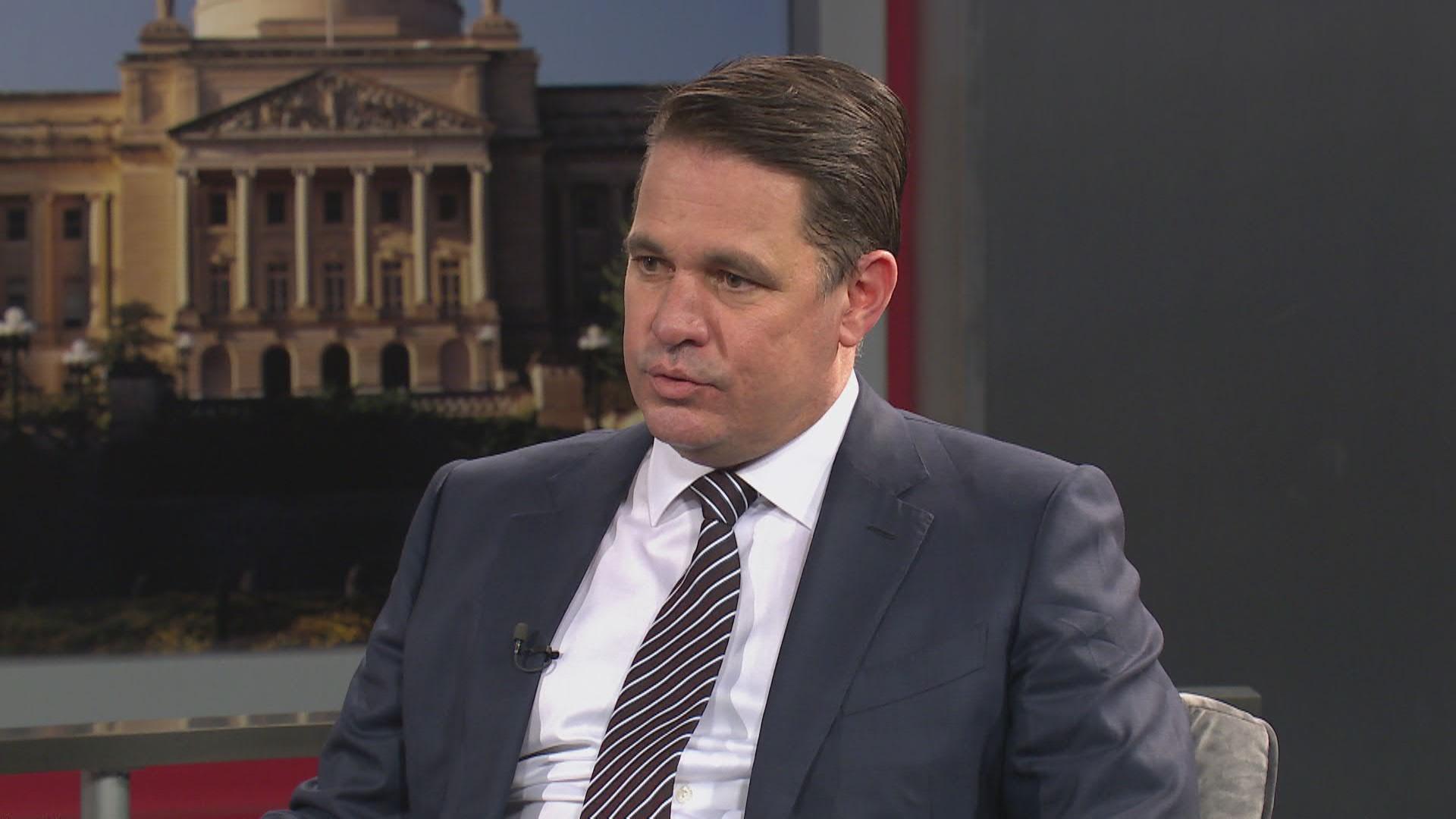


When the Jefferson County Public Schools system faces criticism from state lawmakers, Marty Pollio says he takes those comments personally. Both of his parents were JCPS teachers, and Pollio worked two decades in the district as an educator and principal. For the past seven years, he has been superintendent of what is the state’s largest school system.
“I care about JCPS and I’m going to defend it and the 17,000 employees and 96,000 students,” says Pollio. “I’m going to be a staunch defender of that at every chance I get.”
Tensions between Republican legislators and JCPS administrators have been rising for months amid concerns of financial management, transportation challenges, student discipline problems, and lingering achievement gaps among students.
Pollio acknowledges that the district has unresolved issues, but he contends some of the attacks are “false narratives.” He says his schools have also made significant gains on academic achievement. He also argues JCPS performs comparably to many other school districts around the state and similar-sized systems across the United States.
“We’ve got a long way to go, there is no doubt,” he says, “but we have laid the foundation for great outcomes to come in the near future.”
JCPS Budget Reserves and Administrative Costs
In a floor speech in late February, Senate President Robert Stivers (R-Manchester) accused JCPS of stockpiling $340 million in cash reserves while administrators complain they don’t get enough money from the state. Stivers said the district shouldn’t need more than $40 or $50 million in reserves.
Pollio says the district did have $340 million on hand at the end of fiscal year 2022, which he partially attributes to remaining COVID pandemic relief funds from the federal government. He says the district is using that money for payroll and other expenses before the district receives its annual allotment of property tax revenues. The superintendent also says keeping $40 or $50 million in reserves would be imprudent because that amount would only cover one biweekly payroll cycle.
Finally, Pollio contends the percentage of funds JCPS keeps in reserve is actually far less than other Kentucky school districts, including Stivers’ home district of Clay County.
“You can go around the state and see that other districts are almost double JCPS, so why target JCPS alone?” Pollio asks.
Stivers also questioned why JCPS wasn’t spending more to build additional schools and improve student transportation. The district made headlines last August when busing challenges on the first day of school left some children not being returned home until late in the evening.
Pollio says many school districts around the state and nation are facing severe student transportation issues. He says JCPS is already spending $90 million more than it takes in because it pays bus drivers a premium to keep them on the job. A decade ago, the district had 950 drivers, according to Pollio. Now it’s down to 550.
The superintendent says the average bus driver pay in Jefferson County is $57,000 a year, but some make more than $100,000. He says that level of spending will bring the district to a “fiscal cliff” in the next two to three years without additional support.
As for the issue of building new schools, Pollio says JCPS has opened four new schools in the past two years and plans to construct 20 new schools in the next decade. He says that will put the district on pace to do more building than it has done since the 1960s.
Finally, Pollio repudiates allegations that JCPS has a bloated central office. JCPS spends $100 per pupil on administrative costs, which he says is the lowest figure of any district in the state, according to Kentucky Department of Education. In comparison, the state’s second largest district, Fayette County, spends $225 per pupil on administration. Bowling Green Independent Schools spend $456 per student.
“If we focus on the facts, I’m ok with that and I can address those things,” says Pollio, “but it’s just the narratives that I believe are false that is a problem for me.”
Lawmakers Call for an Audit and Task Force
State Rep. Ken Fleming, a Louisville Republican, has proposed creating a task force to review the performance and governance of Kentucky school districts with more than 75,000 students, of which only JCPS would qualify. One thing such a group would study is whether Jefferson County would benefit from being split into multiple school districts.
Pollio says he has no problem with ordering a commission to study his district – as long as it’s a fair review. He says if Fleming is concerned about student outcomes, then every district with comparable or worse outcomes to JCPS needs to be studied. He says graduation rates and postsecondary readiness rates in the district are higher than ever. Pollio also points to a recent study by Harvard and Stanford Universities that put JCPS among the top urban school districts nationwide in terms of recovery from COVID on reading and math scores.
If a task force is formed, Pollio argues the panel must include representatives of all the Jefferson County stakeholders, including people of color. He contends that politicians alone aren’t qualified to evaluate the JCPS performance.
“I think the makeup of the commission clearly tells the story of whether this would be a witch hunt or not,” the superintendent says. “Someone needs to be on this commission to say, ‘I’m sorry, that’s not true.’”
The state budget proposed by House Republicans includes $1.5 million for Kentucky Auditor Allison Ball’s office to conduct a comprehensive audit of JCPS. Pollio says the district has already had six audits during his seven-year tenure as superintendent. He says he’s not opposed to another review as long as it’s not politically motivated and presents an honest assessment of the district. But he does worry that an audit would drain time from his central office staff that would be better devoted to their regular jobs.
“For example, our HR team will spend days, weeks, hours, months preparing for an audit.... as opposed to hiring teachers and bus drivers,” he says.
Instead of spending state dollars on audits and task forces, Pollio says lawmakers should focus on boosting student attendance and addressing the shortage of teachers and bus drivers. He says dire consequences await public education without a long-term solution to employee pay.
“For me, the budget ask is more about how do we compensate our teachers and our bus drivers to ensure that 10 years from now we don’t have a class size of 50 kids in a classroom,” says Pollio.