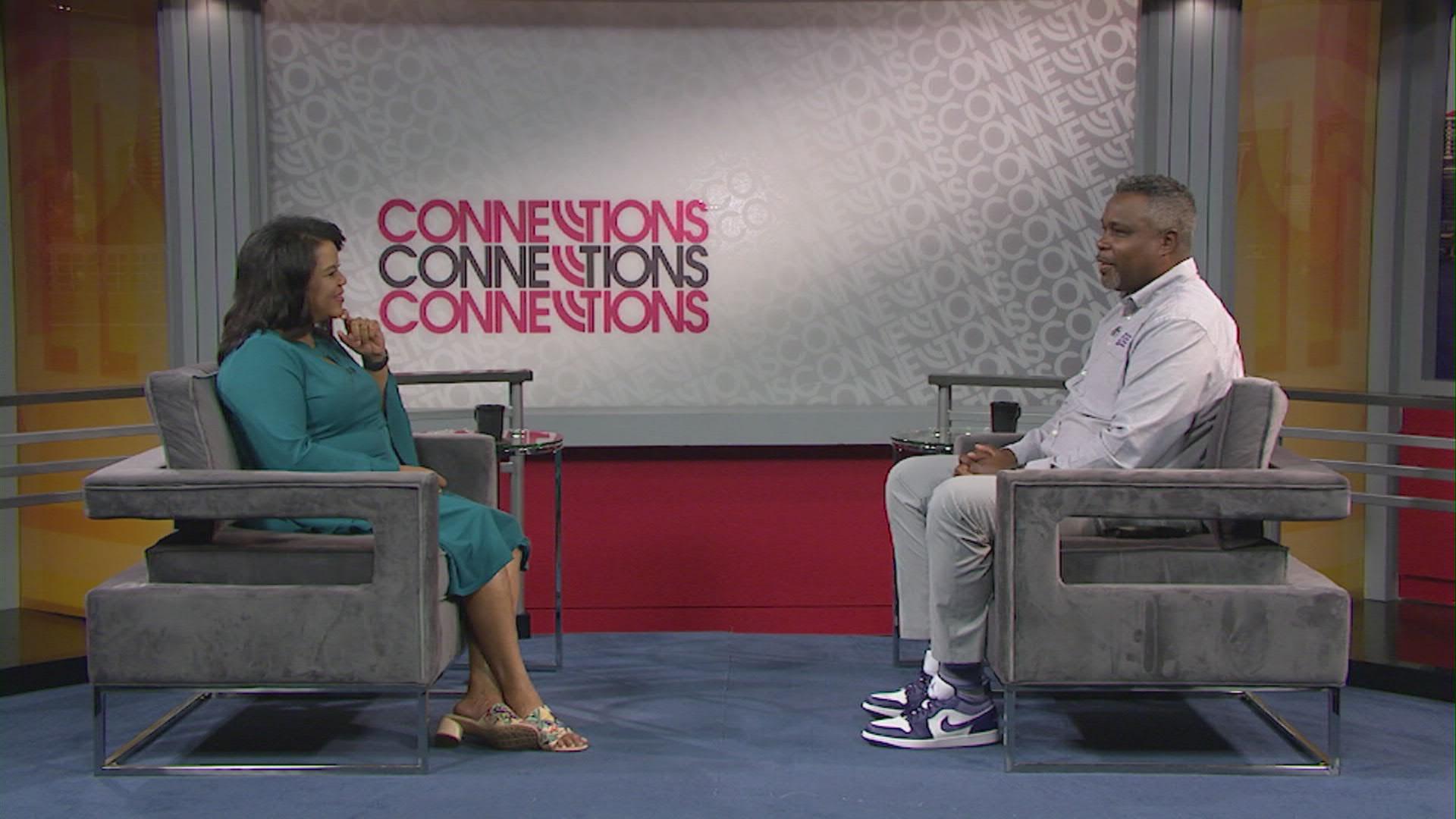


Statewide Center Promotes Engaged Fatherhood
About 30 percent of Kentucky children live in single-parent households. Lexington activist David Cozart wants to change that by ensuring more kids have the chance grow up in a family where the father is positively engaged.
“When (mothers and fathers) are working together in cooperation and complementary, we know the life outcomes of children are enhanced,” he says.
Cozart is the founder and chief visionary officer for the Commonwealth Center for Fathers and Families, a Lexington-based non-profit organization that coordinates programs and support services designed to help fathers fulfill their responsibilities as husbands and parents. Many of those men have experienced imprisonment or addiction, and Cozart contends those challenges don’t preclude an individual from redemption and growth into a positive father figure.
For 30 years, Cozart has shepherded fatherhood initiatives around Lexington and is now taking his efforts statewide. He says fathers who are a loving, supportive presence in the lives of their children bring tremendous benefits, including reductions in family poverty, maternal stress, and morbidity for the mother and children.
The center has created a KYDad Academy, which is a six-week personal and professional development course for men who want to be the best dads they can be at home and promote father engagement in their communities.
“Ultimately we want them to become ambassadors and drum majors of the work in their region,” says Cozart, “so that they can help spread the word of fatherhood.”
The center is also partnering with the Kentucky Cabinet for Health and Family Services to host a fatherhood summit in Lexington on Oct. 17 and 18. It will feature local, state, and national experts speaking on challenges facing fathers, resources available to help fathers thrive as individuals and as parents, and ways organizations across the health care, social services, and criminal justice sectors can support better fatherhood.
Looking to the future, Cozart says he wants to build partnerships that will enable his organization to create fatherhood centers across the state, which can then provide more men and families with direct services that can benefit them.
“The long-term goal is to have outposts around Kentucky, and the Commonwealth Center will be the epicenter doing relentless quality control and improvement, technical assistance keeping us up to date on emerging and promising practices, and fatherhood will be standardized across systems across this state,” he says.
Implementing such an expansive vision will take funding. But Cozart says he doesn’t worry about raising the necessary money.
“I believe it’s a divine work and the provision will come,” he says.
New Leadership and New Challenges for the ACLU of Kentucky
As the new executive director of the Kentucky chapter of the American Civil Liberties Union, Amber Duke takes over a full plate of high-profile issues to tackle. There’s ongoing work around criminal justice reform and more recent efforts to restore reproductive freedom and reverse the ban on gender-affirming medical care for transgender youth.
It’s been a steady rise through the ranks of the organization for Duke, who is the first Black woman to lead the chapter. She arrived at the ACLU about 10 years ago to serve as its first communications director in Kentucky.
“Which at the time was my absolute dream job to be able to still work with media but also highlight the really important work the ACLU of Kentucky was doing,” says Duke, who had a background in television news. “I never imagined when I walked through the doors of the ACLU that I would be there for more than a decade or even that I would be in this position, but it’s really an honor to get to serve in this role.”
The Kentucky chapter started 68 years ago as an outgrowth of legal defense efforts for Anne and Carl Braden, a white couple who were charged with sedition in 1954 for purchasing a home in a segregated Louisville neighborhood for a Black family. Since then, Duke says the chapter has worked on a range of issues from freedom of speech, to social justice, to school desegregation.
Although often associated with liberal causes, Duke says the ACLU is a non-partisan organization that will collaborate with anyone to advance civil liberties. She points to recent work by the chapter in partnership with the Kentucky Chamber of Commerce and the Catholic Conference of Kentucky to pass a bipartisan felony expungement law through the state legislature.
“Criminal justice reform has been an area where we’ve been so successful because it impacts so many different sectors and so many different aspects of life,” says Duke.
“We have folks from the religious community that are interested in seeing forgiveness and redemption and second chances. We have folks from the business community that are looking at challenges around workforce and filling jobs.”
Duke says they hope to build on that success with a new law that would make the expungement process easier. Such “clean slate legislation” would automate parts of the process so that people who have completed their prison sentences don’t have to hire lawyers to complete legal paperwork in order to have a felony conviction removed from their records.
“There have been other states who have passed this legislation that have been successful in getting more folks able to take advantage of those expungement policies that we already have in place,” she says.
In the wake of the 2022 U.S. Supreme Court decision overturning a woman’s constitutional right to an abortion and recent state laws to end abortion in the commonwealth, Duke says the ACLU is working harder than ever before on reproductive rights. In addition to helping to challenge Kentucky’s abortion ban, she says the organization also fights for better maternal health, family paid leave, and funding for child care.
“We know that there are people here in this commonwealth who don’t want to carry a pregnancy, who essentially have been forced by the state to carry the pregnancy,” says Duke. “So, we want to make sure these other policies are in place so that they can safely get through their pregnancy and have access to child care.”
Earlier this year, the ACLU and Planned Parenthood dismissed their lawsuit against the state’s abortion ban after a Kentucky Supreme Court ruling said that the doctors they represented don’t have legal standing to bring the challenge. Duke says they are now seeking a woman in need of an abortion who would be willing to be the plaintiff in a new lawsuit. She says the defeat last year of a ballot initiative that would have removed any protection for abortion rights from the state’s constitution proves that Kentuckians want reproductive choice.
“Yes, there are some very loud voices against having access to abortion in the commonwealth, but the majority of Kentuckians do believe there should be access in the state,” says Duke.